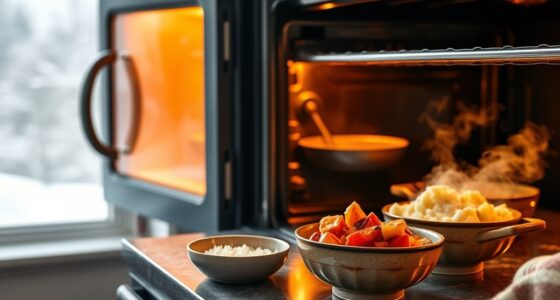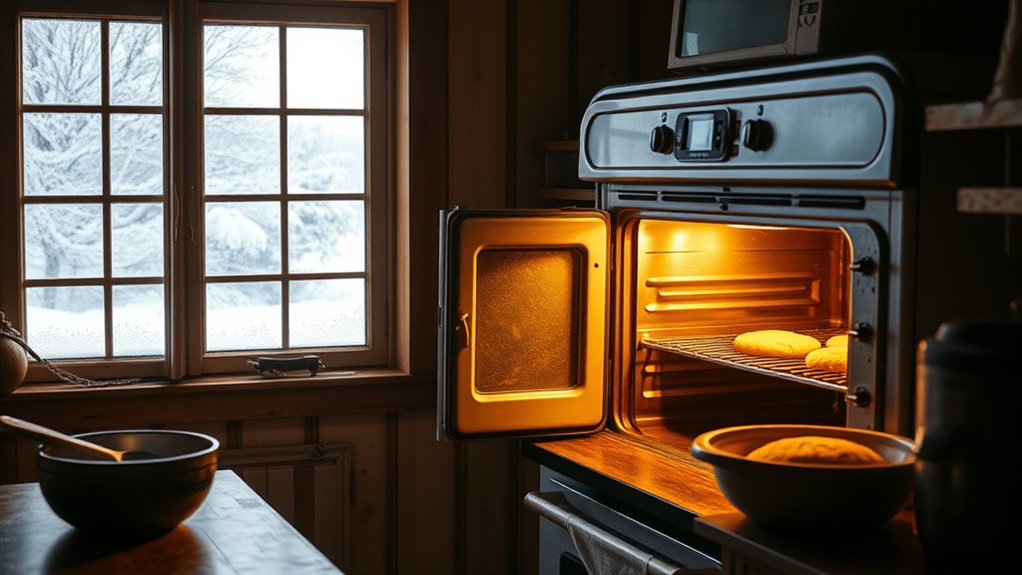

In cold weather, you should extend your oven’s preheat time by about 10-15 minutes to make certain it reaches and maintains the right temperature. This compensates for the lower ambient temperature, which slows heating and can cause uneven baking or delayed dough fermentation. Proper preheating is key for consistent results, especially in winter. Keep in mind that understanding how to adapt your oven and fermentation process can help improve your baking outcomes—keep going to find out more.
Key Takeaways
- Extend preheating by 10-15 minutes in winter to ensure the oven reaches and stabilizes at the correct temperature.
- Proper preheating prevents uneven baking and undercooked centers caused by cold oven temperatures.
- Cold weather slows oven heat-up; longer preheat compensates for this to maintain consistent baking results.
- Giving extra time for preheating helps achieve even heat distribution, essential for quality baked goods in winter.
- Always verify the oven has fully preheated before baking to avoid temperature fluctuations during cold months.
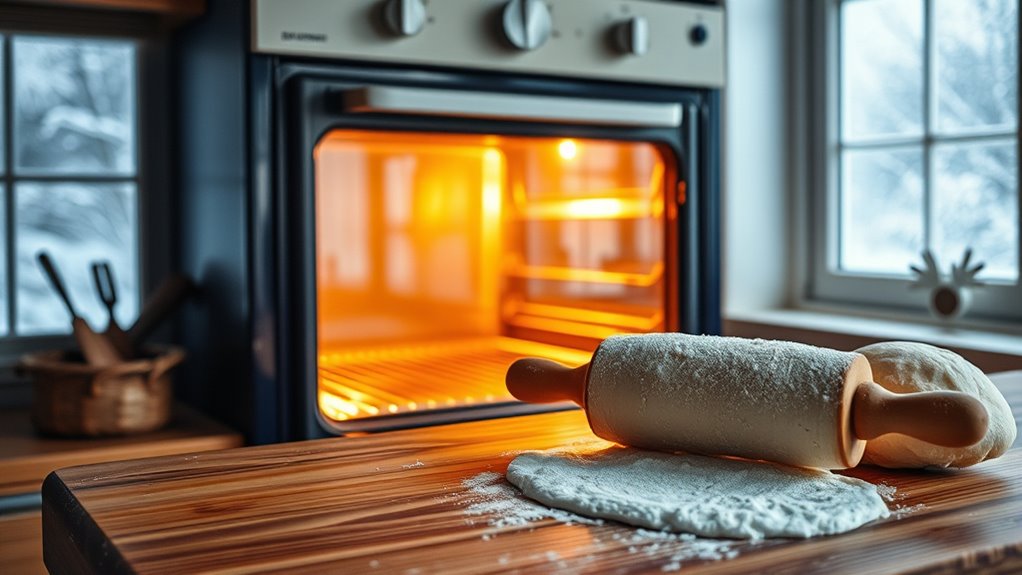
When the temperature drops outside, baking becomes more than just a culinary activity—it’s a cozy, comforting ritual. But winter’s chill can throw off your baking process, especially when it comes to preheating your oven. Unlike warmer months, you might find that your oven needs extra time to reach the right temperature. If you skip this step or rush it, your baked goods won’t turn out as intended. Proper oven temperature adjustments are essential in winter because cold air can slow down how quickly your oven heats up, leading to uneven baking or undercooked centers. To ensure your oven reaches the correct temperature, give it an extra 10 to 15 minutes of preheating time. This extra effort helps stabilize the heat, making sure your baked items cook evenly from edge to center.
Cold weather also affects dough fermentation effects. When your kitchen is colder than usual, yeast activity slows down, which can delay dough rising and impact texture. If you notice your dough isn’t fermenting as expected, consider slightly increasing the dough’s temperature. You can do this by placing the dough in a warmer spot, such as inside your turned-off oven with the light on or near a warm radiator. This helps activate the yeast more effectively, resulting in better fermentation. Keep in mind, though, that too much heat can harm the yeast, so aim for a gentle warmth—around 75-80°F (24-27°C).
Adjusting oven temperature isn’t just about the final bake; it also influences dough fermentation effects. When your oven isn’t heated properly, it can trick the fermentation process, especially if you’re proofing dough inside. An underheated oven might cause dough to rise more slowly or unevenly, affecting the final texture and rise. Conversely, if you crank up the oven too high for proofing, you risk killing the yeast. To avoid this, many bakers preheat the oven to a lower temperature, then turn it off before placing the dough inside for proofing. This creates a warm environment conducive to fermentation without risking overheating.
Frequently Asked Questions
Does Altitude Affect Oven Preheating Times in Winter?
Yes, altitude affects oven preheating times in winter. You should consider altitude adjustment because higher elevations often require longer preheating to reach the right temperature. Additionally, winter humidity can influence how your oven heats; drier air might make heating less efficient. So, pay attention to both altitude and humidity, and give your oven extra time to preheat properly, ensuring your baked goods turn out perfect.
How Can I Prevent My Oven From Cooling Down Too Quickly?
Ever notice your oven cools down quickly? You can prevent this by checking your oven insulation and door seals. Proper insulation keeps heat trapped, while tight door seals prevent warm air from escaping. Make sure these are intact and replace any worn seals. Additionally, avoid opening the oven door frequently during baking. These steps help maintain consistent heat, ensuring your baked goods turn out perfectly every time.
Are There Specific Oven Settings for Winter Baking?
You don’t need specific oven settings for winter baking, but you should focus on improving insulation and maintaining your baking temperature. Adjust your oven’s insulation by using oven liners or thermal blankets, which help retain heat. Additionally, give your oven extra preheating time to reach the desired temperature, ensuring consistent baking. These steps help counteract cold weather effects, keeping your oven at the right temperature throughout your baking process.
Does Using a Pizza Stone Impact Preheating Duration?
Think of your pizza stone as a loyal campfire, soaking up heat to keep your oven warm. It does affect preheating time, requiring you to give it extra minutes to reach the right temperature, thanks to its heat retention qualities. When you use a pizza stone, plan for a longer preheat, especially in winter, to ensure your crust comes out perfectly crispy and evenly baked.
How Do I Know When My Oven Has Fully Preheated?
You’ll know your oven has fully preheated when the preheat indicator turns off or your oven thermometers read the target temperature accurately. Always use an oven thermometer for precise readings, especially in cold weather. Rely on your oven’s built-in preheat indicator as a visual cue, but double-check with the thermometer to verify the oven reaches the right temperature before baking. This avoids undercooked or uneven results.
Conclusion
As winter’s chill settles in, think of your oven as a garden awaiting spring — it needs extra time to wake up and bloom fully. Preheating longer guarantees your baked goods rise perfectly, turning your kitchen into a cozy greenhouse of warmth and comfort. Embrace this small change, and you’ll see your treats flourish just like a garden in full bloom. Stay patient, and your winter baking will reward you with delightful, oven-fresh results.