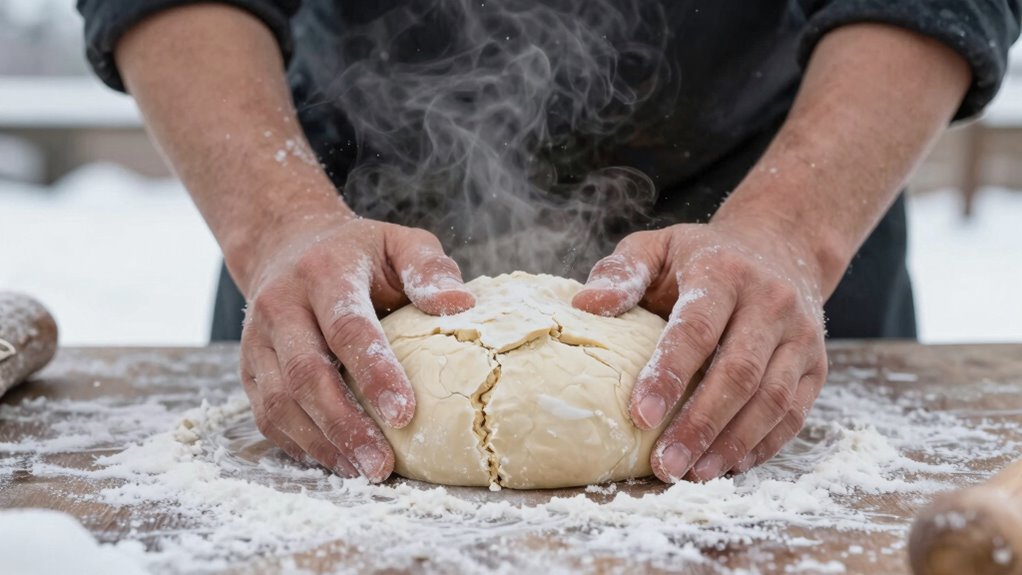

When you bake outdoors in cold air, it slows down fermentation, making yeast less active and producing less carbon dioxide. This results in less rise and denser bread. Cold temperatures also hinder gluten development, making the dough tougher and less pliable. You might notice the dough is harder to knead and doesn’t stretch well. If you want to discover more tips on managing cold conditions, keep exploring how to maintain the ideal dough temperature.

Get baking supplies delivered free with Prime
- Fast, free delivery on millions of items
- Prime Video, Amazon Music and more included
- Member-only deals all year
Key Takeaways
- Cold air slows yeast activity, leading to longer or halted fermentation and less gas production.
- Lower temperatures hinder gluten development, making dough less pliable and more resistant to kneading.
- Cold conditions can cause dough to be dense, underproofed, and difficult to stretch or shape.
- Maintaining warmth through insulation or heat sources improves fermentation and gluten formation outdoors.
- Proper temperature management prevents dough from becoming tough, ensuring better rise and structure during baking.
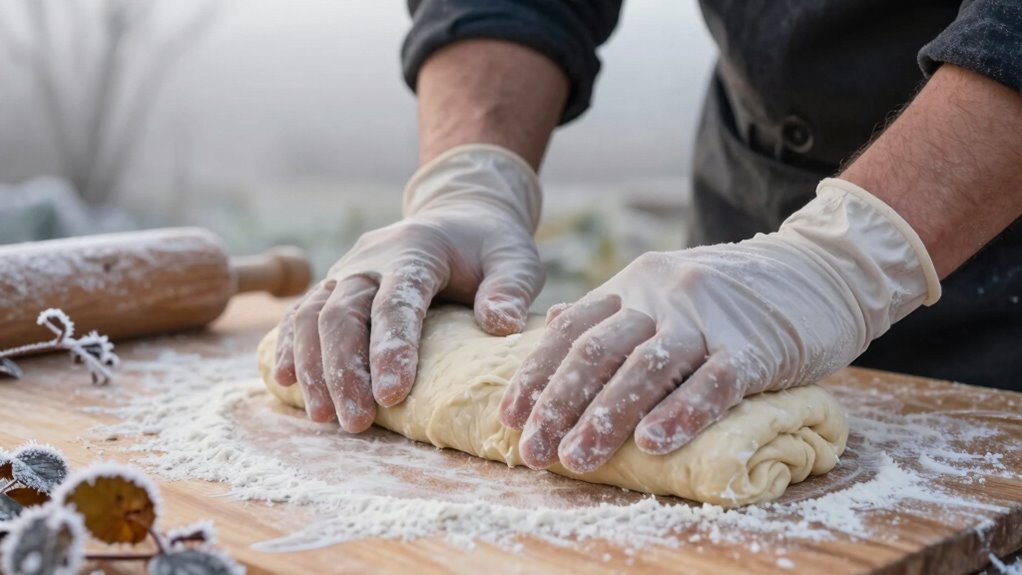
Have you ever wondered why your dough behaves differently in colder weather? When you’re outdoors prepping dough, the temperature around you can significantly influence how it reacts. Cold air causes fermentation slowdown, meaning the yeast becomes less active, and the dough takes longer to rise. You might notice that your usual rise isn’t happening as quickly, or perhaps it’s not rising at all. That’s because yeast activity depends heavily on warmth; when temperatures drop, yeast becomes sluggish, reducing the production of carbon dioxide that makes your dough expand. This slowdown can be frustrating, especially if you’re used to quick fermentation times, but understanding this process helps you adapt your method.
Cold weather slows yeast activity, making dough rise more slowly or not at all.
In addition to affecting fermentation, cold air also impacts gluten development. Gluten forms as you knead the dough, giving it structure and elasticity. When the environment is cold, the dough’s temperature drops, which can make gluten formation less efficient. Cold dough tends to be less pliable and more resistant to kneading, leading to a tougher, less extensible dough. If you’re working outdoors, you might find yourself kneading longer or more vigorously to achieve the desired gluten network. Alternatively, you might notice that the dough doesn’t stretch as easily or holds less gas during proofing. To counteract this, you can try warming the dough slightly before kneading or covering it with a damp cloth to retain some warmth. Additionally, using insulating techniques can help maintain a more consistent temperature during outdoor preparation. Incorporating temperature control strategies can further optimize the dough’s behavior in chilly conditions. Recognizing the importance of temperature management can make a significant difference in your outdoor baking success.
Outdoor prep introduces a unique challenge because the ambient temperature directly influences both fermentation and gluten development. When it’s cold, you need to adjust your approach—perhaps by using warmer water when mixing, or by creating a makeshift warm environment, like placing the dough in an insulated container or near a heat source. This helps maintain a more consistent temperature, encouraging fermentation to proceed at a reasonable pace and enabling gluten to develop properly. Without these adjustments, your dough may end up dense or underproofed, making it less ideal for baking. Recognizing how temperature affects yeast activity is crucial to achieving successful results in colder conditions. Being aware of these effects allows you to better troubleshoot and adapt in real-time, ensuring your dough reaches optimal texture and rise despite the chill. Furthermore, understanding temperature fluctuations can help you better anticipate how your dough will respond in variable outdoor environments.
In essence, cold air slows down the natural processes that make dough rise and develop structure. Recognizing the effects of temperature allows you to tweak your outdoor preparations—warming the dough, controlling kneading time, and providing a warm environment—to achieve better results. So next time you’re outdoors working with dough, remember that the chill in the air is actively shaping its behavior, and a little extra effort can make all the difference in your baking outcome.
As an affiliate, we earn on qualifying purchases.
Frequently Asked Questions
Does Cold Air Affect Different Types of Dough Differently?
Yes, cold air affects different types of dough differently. For yeast-based doughs, cold air slows down yeast activity, leading to longer fermentation times and potentially denser textures. For gluten development, cold temperatures can slow down the process, making dough less elastic initially. You might notice that your dough takes longer to rise or feels less stretchy in cold conditions. Adjust your timing accordingly to achieve the desired rise and texture.
How Quickly Does Cold Air Change Dough Temperature?
Think of cold air as a gentle hand slowing a dance; it cools your dough swiftly, often within minutes. As the temperature drops, dough elasticity decreases, making it stiffer, while yeast activity slows considerably. If you’re outdoors, expect your dough to chill quickly, which can hinder rising and affect texture. To keep control, work swiftly or insulate your dough, maintaining ideal warmth for best results.
Can Cold Air Cause Dough to Develop Cracks?
Yes, cold air can cause crack formation in your dough. When exposed to low temperatures, the dough’s elasticity decreases, making it more prone to cracking as it loses flexibility. Cold air causes the dough to contract and become stiff, which can lead to surface cracks. To prevent this, keep your dough covered or work in a warmer environment to maintain elasticity and avoid unwanted cracks during outdoor prep.
Is There an Optimal Outdoor Temperature for Dough Preparation?
Think of dough fermentation as a lively dance, and outdoor temperature is the music tempo. The ideal temperature for dough preparation is between 75-78°F, where yeast activity peaks without rushing. Cooler air slows down yeast, like a dancer moving in slow motion, while too hot speeds it up too much. Preserving this sweet spot guarantees your dough ferments perfectly, yielding elasticity, flavor, and that perfect rise you crave.
How Should I Adjust Recipes for Outdoor Cold Conditions?
When outdoor cold conditions hit, you should adjust your recipes by warming the dough slightly before fermentation, perhaps by using warmer water or letting it rest indoors first. Cold air slows dough fermentation and reduces flour absorption, so extend fermentation time and slightly increase hydration. Keep the dough covered to retain warmth, and consider using a proofing box or warmer spot to maintain consistent fermentation and achieve better results.
As an affiliate, we earn on qualifying purchases.
Conclusion
As the cold air sweeps over your dough like an uninvited winter wind, it chills and tightens the gluten, slowing down fermentation and turning your dough into a stubborn mule. But with patience and a gentle touch, you can coax it back to life, like warming a frozen pond until it dances again. Embrace the chill, knowing it’s a silent sculptor shaping your bread’s texture, transforming your outdoor prep into a delicate dance with nature’s icy hand.
As an affiliate, we earn on qualifying purchases.
As an affiliate, we earn on qualifying purchases.
Halloween Picks
halloween
As an affiliate, we earn on qualifying purchases.