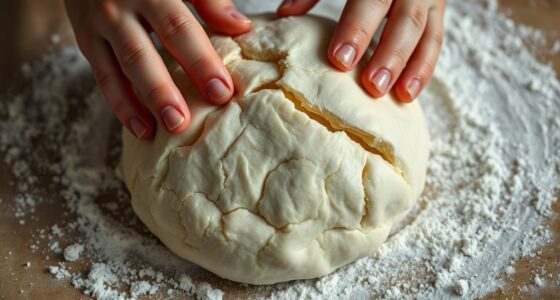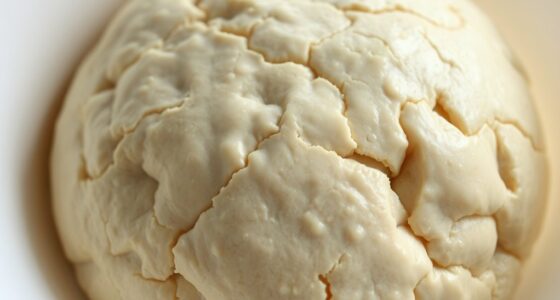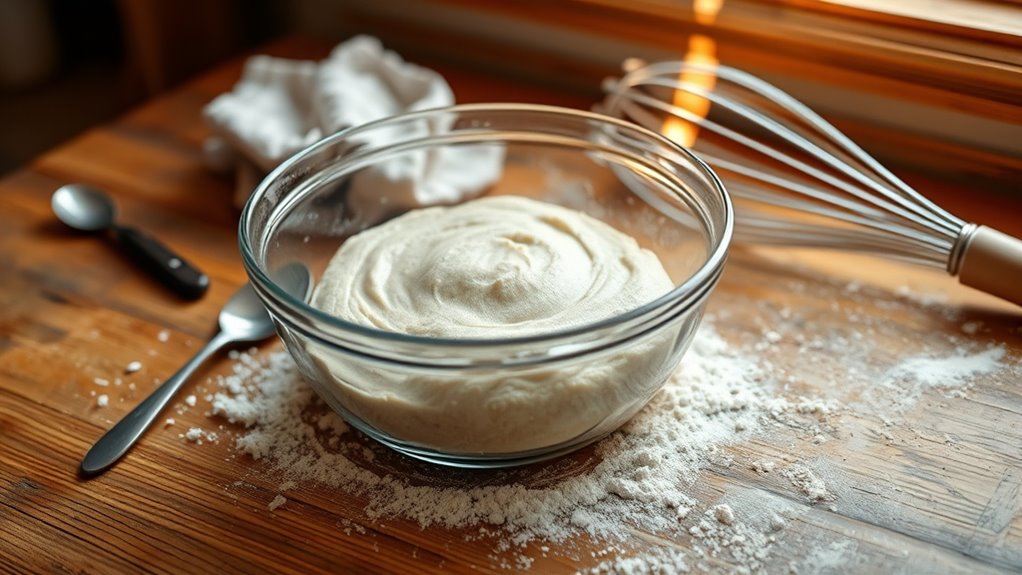

If your dough looks lumpy, streaked with dry flour, or feels sticky and overly wet, it’s likely undermixed. You might notice toughness, tearing, or difficulty shaping it, and baked goods could turn out dense or crumbly. Handling it may feel stiff or resistant, and the mixture often appears uneven with poor gluten development. Recognizing these signs helps you improve your technique, so stay tuned to learn more about fixing undermixed dough for better baking results.
Key Takeaways
- Dough shows dry pockets, streaks, or lumps, indicating incomplete mixing.
- It feels sticky, overly wet, or tears easily, reflecting poor gluten development.
- Baked goods are dense, crumbly, or have uneven crumb structure due to inadequate kneading.
- The dough appears uneven, streaked, or resistant to shaping, suggesting insufficient mixing.
- It lacks elasticity and resilience, making it difficult to handle or form into a smooth ball.
Signs of Undermixed Dough
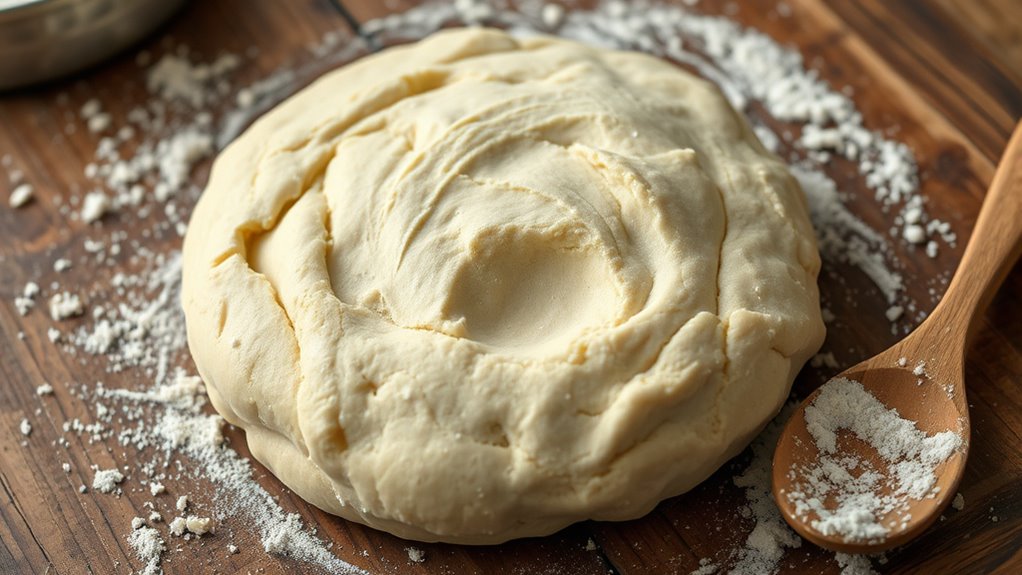
Undermixed dough often leads to baking issues that can be frustrating to identify. When your dough hasn’t been thoroughly combined, it can affect how well gluten develops during mixing, which directly impacts the dough’s overall structure and elasticity. Without proper gluten development, your dough may feel sticky, uneven, or lack the necessary strength to hold shape during baking. You might notice that your baked goods are dense or crumbly instead of light and airy. Recognizing these signs early can save you time and ingredients, preventing a batch of bread or pastry from turning out less than ideal.
One of the clearest indicators of undermixed dough is inconsistent dough consistency. If you notice dry pockets or streaks of flour still visible in your mixture, it’s a sign that the dough needs more mixing. Proper mixing ensures that all ingredients are evenly incorporated, creating a cohesive, smooth texture. When the dough is undermixed, it often feels lumpy or uneven, making it difficult to shape or knead properly. You might also observe that the dough doesn’t spring back when pressed lightly, indicating weak gluten development. This lack of resilience means your dough won’t hold its shape well during proofing or baking.
Another sign to watch for is the dough’s inability to stretch or be manipulated easily. If it feels stiff, dry, or difficult to work with, you’re likely dealing with insufficient gluten formation. Proper gluten development creates a stretchy, elastic quality that makes dough easy to handle. When undermixed, the gluten strands haven’t formed enough, resulting in a dough that tears or resists shaping. This can lead to poor oven spring and dense baked goods, as the dough lacks the necessary structure to trap gases produced during fermentation or baking.
Additionally, undermixed dough often produces irregular or uneven crumb in the finished product. You might see large holes or inconsistent texture because the ingredients and gluten network weren’t fully developed. This inconsistency stems from incomplete mixing, which prevents the dough from forming a uniform network of gluten strands. As a result, the final baked item might be unevenly risen or have a less desirable crumb structure.
Frequently Asked Questions
Can Undermixed Dough Still Be Used for Baking?
Yes, you can still use undermixed dough for baking, but be aware that dough texture may be uneven, leading to inconsistent baking outcomes. Undermixed dough might have pockets of flour or butter, affecting rise and crumb. To improve your results, try mixing until the dough is smooth and cohesive. Properly mixed dough ensures even baking and a better final product, so take the time to mix thoroughly before baking.
How Does Undermixing Affect Dough Flavor?
Undermixing can negatively impact your dough’s flavor development because it leaves uneven gluten structure, which affects fermentation and gas retention. When the gluten isn’t fully developed, yeast doesn’t work as efficiently, leading to less flavor complexity. Additionally, uneven mixing can cause inconsistent fermentation, resulting in dull or off-flavors. For best flavor, guarantee proper mixing to develop a cohesive gluten structure, allowing your dough to ferment evenly and develop rich, balanced flavors.
Is Undermixed Dough Suitable for Specific Recipes?
Undermixed dough isn’t ideal for most recipes because it affects texture quality and gluten development. You might consider it for rustic bread or certain pastries where a denser, less uniform crumb is desirable. However, for delicate baked goods requiring a smooth, elastic dough, undermixing can result in poor rise and uneven texture. Always assess your recipe’s needs before deciding if undermixed dough suits your specific baking goals.
How Long Should I Mix Dough to Avoid Undermixing?
You should mix your dough for about 8-10 minutes to avoid undermixing. During this time, focus on achieving a smooth, cohesive dough with a slightly tacky texture. Keep an eye on the dough texture, ensuring ingredients are fully incorporated without overmixing. Proper mixing duration helps develop gluten, giving your dough the right structure and elasticity, preventing issues like uneven rising or dense baked goods.
Can Undermixed Dough Be Fixed After Initial Mixing?
Yes, you can fix undermixed dough after initial mixing. To do so, you should incorporate proper mixing techniques, such as folding or kneading, to improve dough consistency. Imagine gradually blending ingredients, visualizing a smooth, elastic dough. Keep working until ingredients are evenly distributed, ensuring the dough reaches the right consistency. With patience and the right technique, you’ll transform undermixed dough into perfectly mixed, ready-to-bake perfection.
Conclusion
Remember, a little patience goes a long way in baking. If your dough shows signs of being undermixed, don’t rush to fix it—take the time to properly incorporate ingredients. As the saying goes, “Rome wasn’t built in a day,” and your perfect dough isn’t either. With attention and care, you’ll avoid common pitfalls and create baked goods that impress. Keep practicing, stay attentive, and enjoy the delicious results of well-mixed dough!