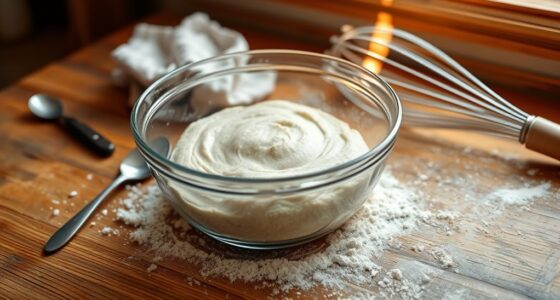
If your dough is overproofed, look for signs like slack texture, large bubbles, or a sour smell. To fix it, punch down gently, then reshape and rest the dough to regain elasticity. Using cooler temperatures or refrigerating slows fermentation and helps strengthen gluten. Avoid overhandling, and consider adding flour if it’s sticky. For better results, precise proofing and techniques will help you prevent overproofing in future bakes—stay tuned for more tips.
Key Takeaways
- Gently punch down and reshape the dough to redistribute gases and restore gluten strength.
- Refrigerate or cool the dough to slow fermentation and improve elasticity before baking.
- Incorporate additional flour during shaping to tighten the dough and prevent collapse.
- Adjust proofing times and temperatures in future batches to avoid overfermentation.
- Monitor signs like slackness, large bubbles, and sour aroma to prevent overproofing early.
Recognizing the Signs of Overproofed Dough
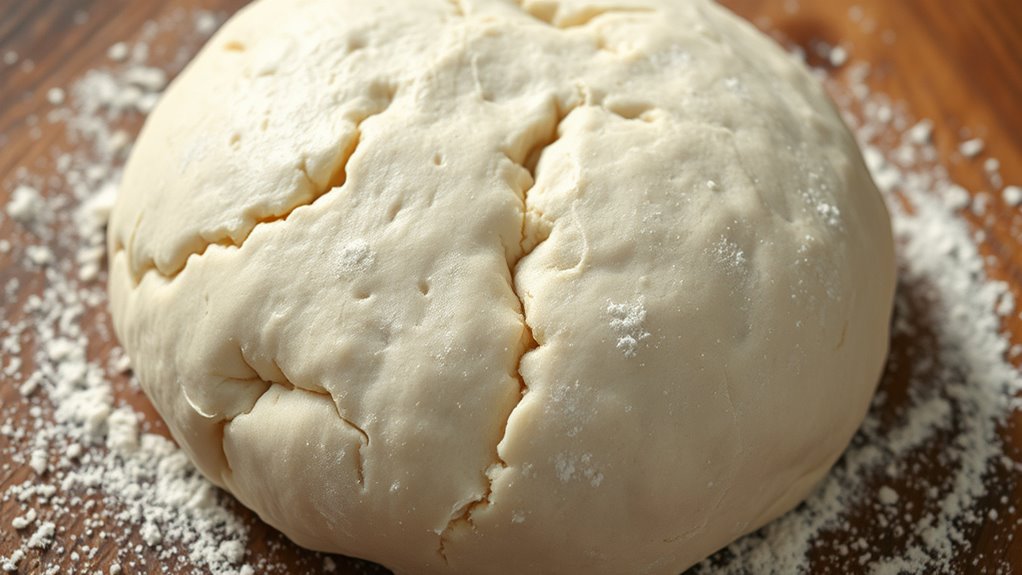
When dough is overproofed, its appearance and texture give clear signals that it has gone too far. One key sign is a loss of dough elasticity—you’ll notice it feeling slack and overly soft, unable to spring back when gently pressed. Overproofed dough often looks puffed up and may have large bubbles on the surface, indicating excessive fermentation timing. You might also see it start to collapse or deflate easily, showing that the gluten structure has weakened. The aroma can become overly sour or alcoholic due to prolonged fermentation. Recognizing these signs helps you understand when fermentation has gone beyond the ideal window. Additionally, nutritional changes in overproofed dough can occur, reflecting the extended fermentation process. By paying close attention to dough’s elasticity and how it responds to gentle handling, you can prevent overproofing and save your baked goods.
Immediate Steps to Halt Overproofing
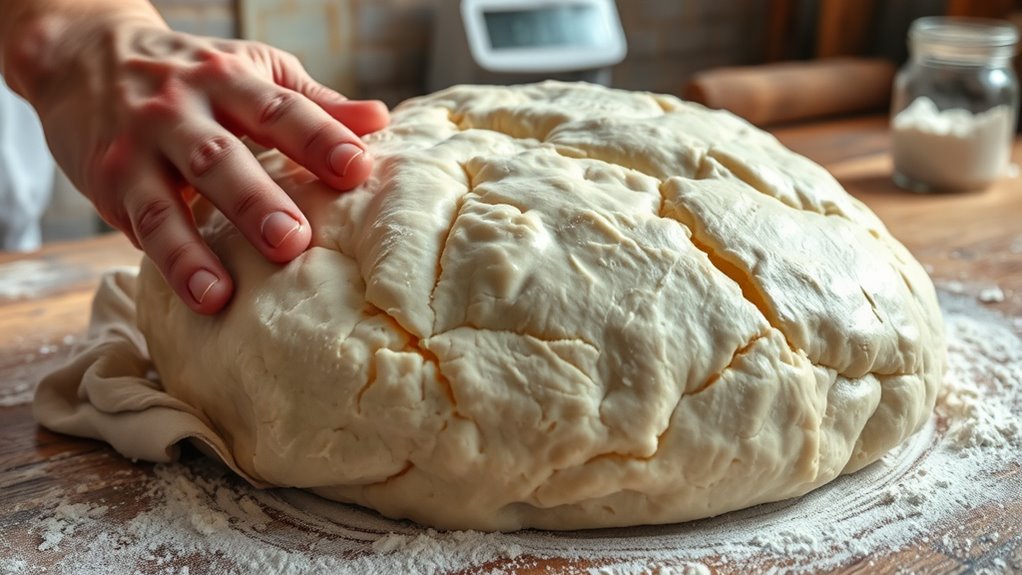
Once you notice your dough is overproofed, acting quickly can prevent further deterioration. The goal is to halt the fermentation process immediately to preserve your dough’s structure. Gently punch down the overproofed dough to release excess gas and redistribute the yeast. If it’s still pliable, transfer it to a cool spot or refrigerate it to slow down fermentation, aiding in dough recovery. Using cold temperatures reduces yeast activity and helps stabilize the dough’s texture. Avoid overhandling, which can weaken gluten structure. If the dough feels overly sticky or slack, consider adding a small amount of flour to tighten the dough slightly. Additionally, understanding appliance energy efficiency can help you better manage your kitchen environment to prevent issues like overproofing in the future. These immediate steps can buy you time and improve your chances of salvaging the overproofed dough effectively.
How to Reshape and Reinforce Overproofed Dough
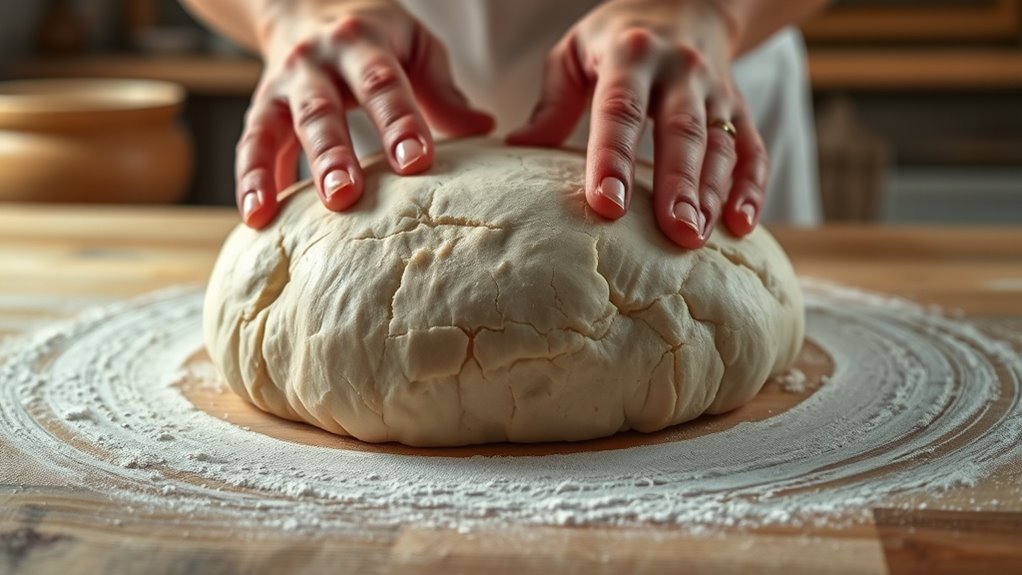
After you’ve gently punched down the overproofed dough, the next step is to reshape it carefully to restore its structure. Focus on redistributing the dough’s hydration evenly, which helps improve elasticity. Gently knead the dough to re-engage the gluten network, aiding fermentation control and preventing further overproofing. Avoid overworking it, as this can deflate the dough too much. Lightly shape it into a round or loaf, pressing out air bubbles without collapsing its structure. If needed, let it rest briefly to allow gluten to relax. Reinforcing overproofed dough requires balancing gentle handling with proper hydration, ensuring it maintains enough strength to rise again without becoming overly slack. This process helps prepare it for a second proof or baking. Understanding the Best Modern Toilet features can also inspire you to create a more comfortable and efficient baking environment.
Techniques for Punching Down and Resting
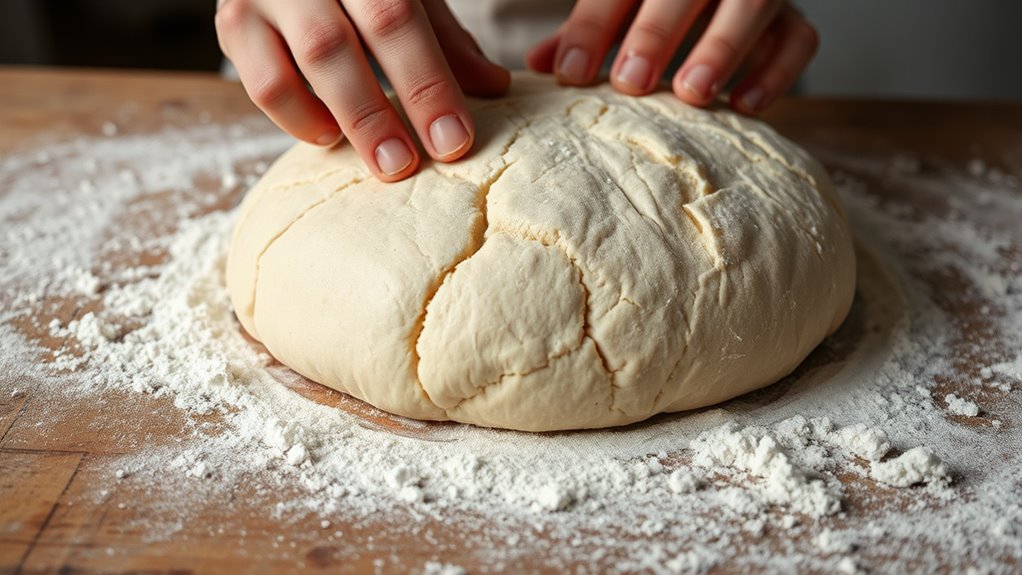
Gently punching down overproofed dough helps release excess gas and redistributes the dough’s structure, making it easier to reshape. This technique restores some dough elasticity, preventing it from becoming too slack or fragile. When you punch down, you’re controlling fermentation by stopping the yeast activity momentarily, which helps prevent further overproofing. Resting the dough after punching down allows gluten strands to relax, improving elasticity and making shaping easier. During this rest period, avoid overhandling to preserve the dough’s strength. Proper punching down and resting ensure the dough maintains enough structure for a good rise without collapsing. Additionally, understanding the importance of contrast ratio in home theater projectors can help you select the right equipment for optimal visual clarity, which can be especially beneficial when viewing detailed images during your baking process. These steps are vital for managing overproofed dough and setting the stage for a successful final bake.
Adjusting Recipes to Compensate for Overproofing
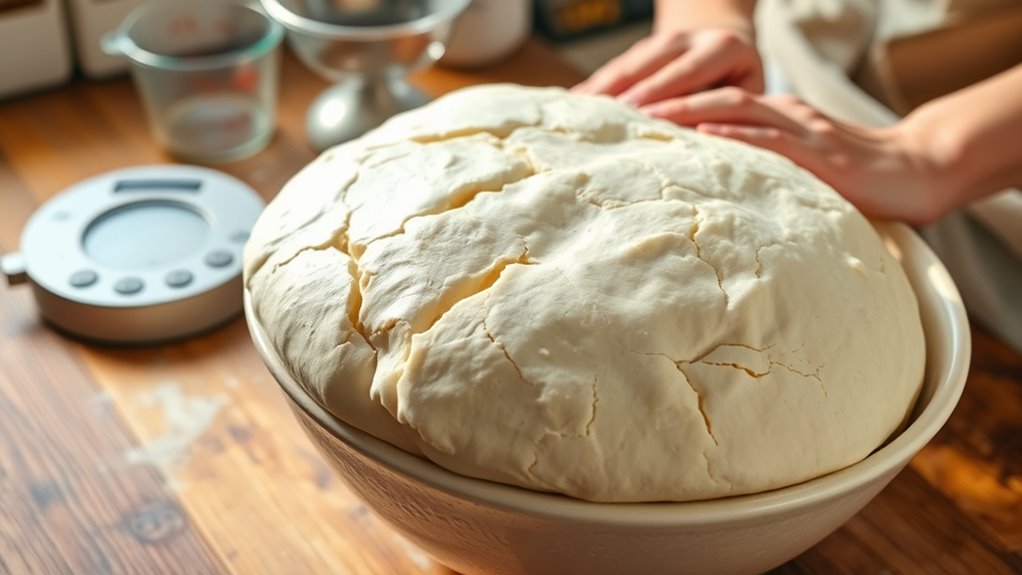
When you realize your dough has overproofed, adjusting your recipe can help salvage the batch. Focus on fermentation timing by shortening the rising period in future attempts or placing the dough in a cooler environment to slow fermentation. For this batch, consider ingredient adjustments—reducing the amount of yeast or adding a bit more flour can help tighten the gluten structure and improve texture. You might also fold in additional flour during shaping to reinforce elasticity. If the dough is too slack, refrigerate it for a short period to slow fermentation and strengthen the gluten. These tweaks won’t reverse overproofing but can help improve the dough’s structure and flavor, making it more manageable and closer to your desired result. Incorporating proper storage techniques can also prevent overproofing in future baking sessions.
Baking Tips to Improve Texture and Flavor
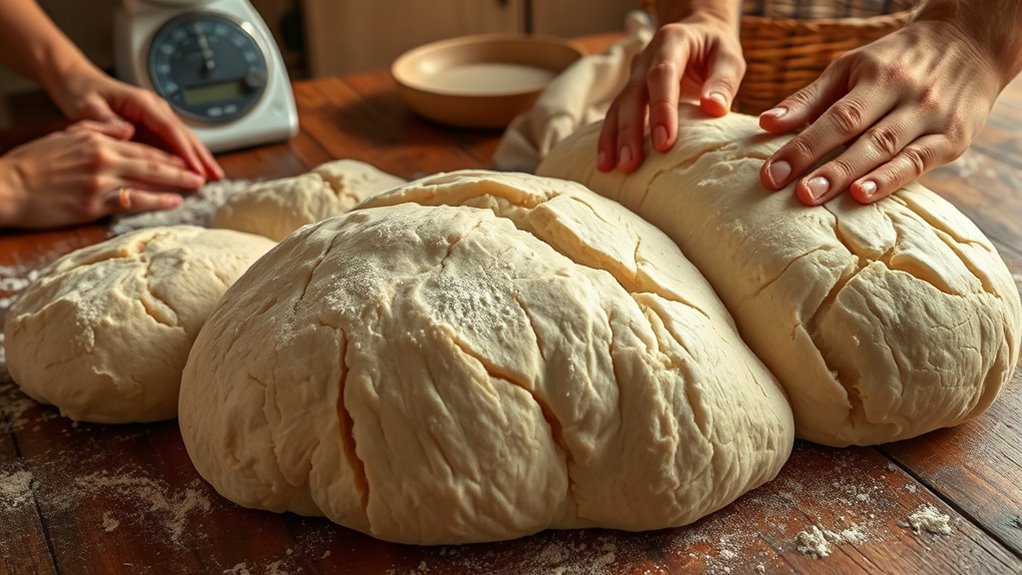
To enhance the texture and flavor of your baked goods, focus on precise baking techniques and ingredient choices. Controlling fermentation is key—avoid overfermentation by monitoring proofing times and temperature. This helps prevent overproofed dough and preserves desirable crumb structure and chewiness. When adjusting flavors, consider ingredient substitutions that boost taste without compromising texture. For example, swap some white flour for whole wheat or rye to add depth and complexity, or incorporate natural flavor enhancers like honey or malt. Proper baking temperature and steam management also improve crust development and overall mouthfeel. Additionally, staying informed about cybersecurity vulnerabilities can help protect your digital recipes and baking plans from cyber threats. By fine-tuning fermentation control and thoughtfully choosing ingredients, you can elevate your baked goods, ensuring better texture, richer flavor, and a more satisfying eating experience.
Preventing Overproofing in Future Bakes
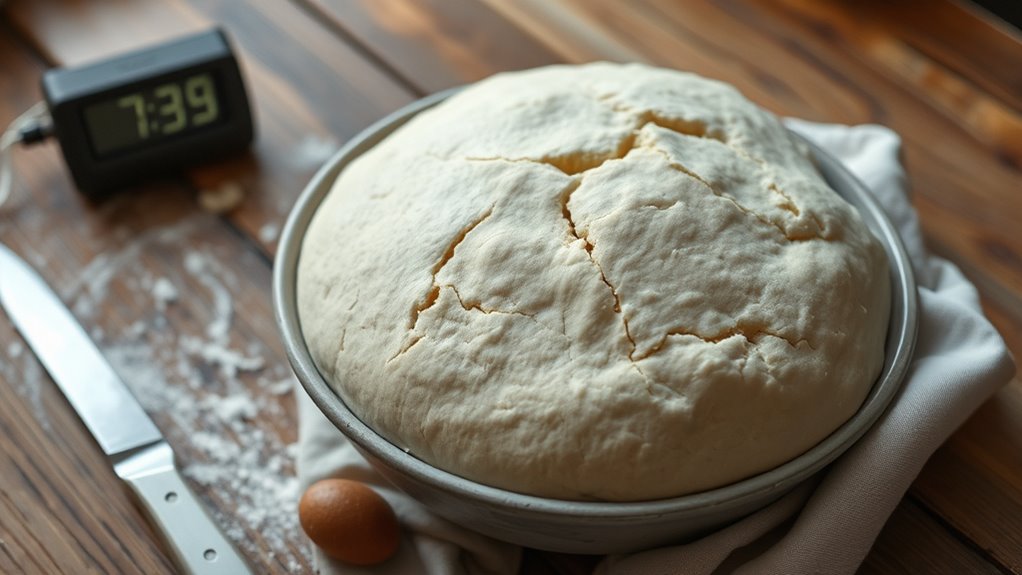
Preventing overproofing starts with paying close attention to your dough’s signs of readiness. You need to monitor fermentation control carefully—look for dough that has doubled in size and displays increased dough elasticity. Overproofed dough often shows excessive rise, a slack texture, and weak gluten structure. To avoid this, set a timer based on your recipe’s guidelines, but also trust your senses. Keep an eye on how the dough feels: it should be airy but still hold its shape. Use a proofing schedule suited to your environment, especially if it’s warm or humid. Adjust fermentation times as needed, and don’t rush the process. Practicing these steps helps you develop a better feel for perfect proofing, reducing the risk of overproofing in future bakes. Understanding cookie categories and their impact on fermentation can further refine your control over proofing times.
Frequently Asked Questions
Can Overproofed Dough Be Salvaged for Different Types of Baked Goods?
Yes, you can salvage overproofed dough for different baked goods. To do a dough revival, gently punch down and reshape it, then let it rest briefly. This bread rescue method helps restore some structure and elasticity. While it may not be perfect for all recipes, overproofed dough can still be transformed into flatbreads, focaccia, or pizza crusts, making it a versatile option for creative baking.
How Does Overproofing Affect Gluten Development and Dough Structure?
Did you know that overproofing can weaken the gluten network by over-expanding the dough? When this happens, your dough loses its elasticity, making it slack and less able to hold gas. As a result, the structure becomes flatter and denser. Overproofed dough struggles to retain gases, so it’s essential to monitor proofing times carefully to maintain proper gluten development and achieve a light, airy texture in your baked goods.
Are There Specific Ingredients That Help Recover Overproofed Dough?
Yes, you can use ingredients like essential wheat gluten to improve gluten structure and recover overproofed dough. Adjusting ingredients, such as adding a bit more flour or water, helps restore elasticity and strength. Additionally, incorporating flavor enhancers like a touch of sugar or olive oil can improve taste and texture. These ingredient adjustments not only help salvage your dough but also boost overall flavor, making your baked goods more enjoyable.
What Tools Can Assist in Detecting Overproofing Early?
Imagine you’re a baker in a noir film, eyes sharp for clues — your tools include a reliable thermometer to check dough temperature, ensuring accuracy, and a window to observe dough elasticity. These tools help detect overproofing early, as a dough that’s overly elastic or too warm signals overproofing. By monitoring these signs, you catch issues before they worsen, saving your bread from collapse and ensuring perfect results every time.
How Does Overproofing Influence Fermentation and Yeast Activity?
Overproofing causes fermentation slowdown by exhausting the yeast’s available sugars, which weakens its activity. As the dough overproofs, yeast enters dormancy, reducing carbon dioxide production and causing the dough to lose its structure. You’ll notice bubbles popping and the dough becoming overly slack. This diminished yeast activity results in less rise, flatter bread, and a less desirable texture, so catching overproofing early helps maintain ideal fermentation and dough quality.
Conclusion
By understanding the signs of overproofed dough and acting quickly, you can salvage your baked goods and improve future results. notably, some bakers believe that overproofed dough can develop a unique, tangy flavor similar to sourdough, challenging the idea that it’s always a mistake. With the right techniques—reshaping, punching down, and adjusting recipes—you can turn overproofing into an opportunity for experimentation and better bread. Don’t fear overproofing; use it to enhance your baking skills.