
To build an efficient topping station, place your most popular toppings front and center for easy access, and position less common ones to the sides. Use clear, labeled containers to help staff quickly identify items, and keep backup supplies nearby for quick restocking. Guarantee good lighting to make toppings appealing and organize tools for hygiene and speed. Maintaining cleanliness and minimizing staff movement are key—continue exploring for more tips to streamline your setup.
Key Takeaways
- Strategically place high-demand toppings at the front-center for easy access.
- Use clearly labeled, transparent containers of various sizes to streamline identification and organization.
- Regularly monitor inventory levels and keep backup supplies nearby for quick replenishment.
- Incorporate appropriate lighting to enhance visibility and showcase the freshness of toppings.
- Maintain cleanliness through frequent surface and tool sanitation to ensure hygiene and efficient service.

Building a topping station can considerably enhance your food service setup by streamlining the process of adding condiments and toppings. When you focus on a well-designed topping station setup, you make it easier for both staff and customers to quickly access what they need. This not only saves time but also improves the overall flow of your operation. Efficient topping organization is the key to creating a smooth, hassle-free experience. Start by evaluating the types of toppings you offer most frequently and place them in the most accessible locations. Keep essentials like sauces, shredded cheese, and fresh vegetables within easy reach, ensuring that staff can quickly grab what they need without unnecessary movement.
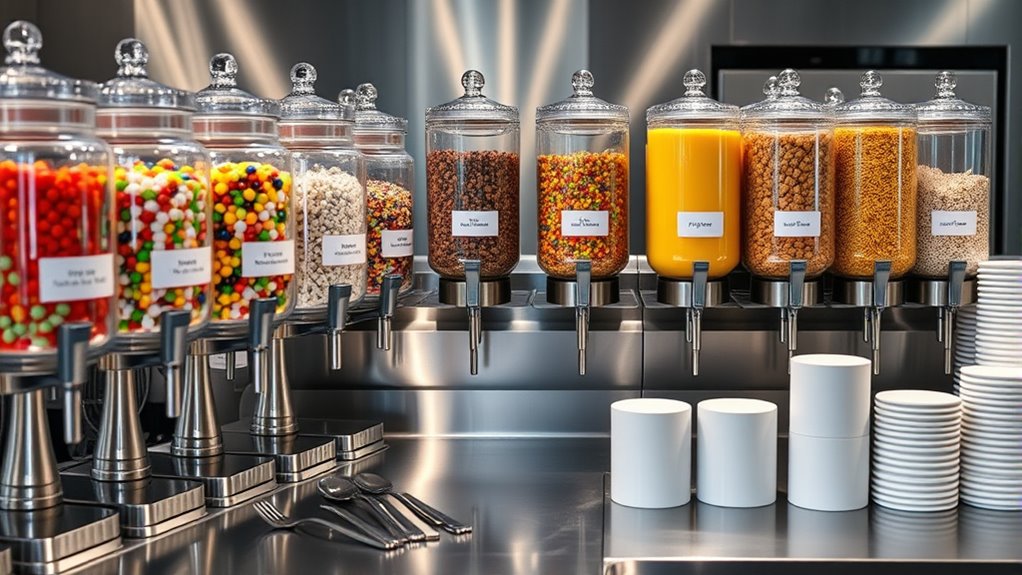
Invest in sturdy, clearly labeled containers for each topping. Transparent bins work well because they let staff and customers see what’s inside at a glance, reducing confusion and delays. Use different sizes depending on the quantity needed—larger containers for popular toppings and smaller ones for less common items. Maintaining a consistent height and arrangement helps create a tidy and organized look, which encourages cleanliness and efficiency. When setting up your topping station, think about the workflow. Position the most frequently used toppings toward the front or center, and place less common options slightly to the side or in less accessible spots. This layout minimizes movement and keeps the flow of service uninterrupted.
Use clear, labeled containers of various sizes positioned by popularity for efficient topping station setup.
Another important aspect of efficient topping organization involves storage and replenishment. Regularly check your inventory to prevent shortages during busy hours. Prepare backup supplies and keep them close by so you can quickly restock without disrupting the line. Implement a system for rotating toppings—use the first-in, first-out method—to keep ingredients fresh and prevent waste. Labeling isn’t just for containers; consider adding signage or instructions for customers, especially if they are self-serve. Clear labels help guide them to the correct toppings and reduce confusion, speeding up the process. Additionally, understanding the contrast ratio of your setup can help in selecting lighting that makes the toppings more visible and appealing.
Lastly, think about the overall cleanliness of your topping station setup. Keeping everything sanitized and tidy not only meets health standards but also encourages customers to use the toppings confidently. Regularly wipe down surfaces and containers, and organize tools like spoons or tongs so they’re always clean and accessible. When your toppings are organized efficiently, it creates a seamless experience that benefits everyone—customers enjoy quick service, and staff can work more effectively. A well-thought-out topping station setup is an investment in your operation’s success, making every dining experience smoother and more enjoyable.
Frequently Asked Questions
What Are the Best Materials for Topping Station Containers?
You should choose containers made from durable materials like plastic or stainless steel, as they withstand frequent use and cleaning. Opt for transparent containers so you can easily see the toppings, ensuring efficient restocking and serving. These materials balance durability and visibility, helping you organize your topping station effectively. Avoid fragile or opaque options that can hinder operation and require frequent replacement, keeping your station running smoothly and efficiently.
How Do I Prevent Cross-Contamination Between Toppings?
You can prevent cross-contamination by strictly following sanitization protocols, regularly cleaning all containers and utensils. Use separate tools for each topping, and consider color-coded utensils to avoid mix-ups. Implement allergy management practices by clearly labeling toppings and ensuring staff are trained to handle allergens carefully. These steps help protect your customers and maintain a safe, efficient topping station, reducing the risk of contamination and allergy issues.
What Is the Ideal Temperature for Storing Different Toppings?
You should keep most toppings refrigerated at 32°F to 40°F for ideal temperature control and freshness. For dairy-based toppings like whipped cream or cream cheese, aim for 35°F to 38°F, while fruit toppings like berries should stay around 34°F to 36°F. Follow storage guidelines carefully to prevent spoilage. Regularly monitor temperatures with a thermometer to ensure your toppings stay within safe, perfect ranges for quality and safety.
How Often Should I Restock or Replace Toppings?
Restock your toppings regularly, like a well-oiled machine, to keep everything fresh. You should check and replace toppings weekly or sooner if they spoil or run low. Follow storage guidelines to maintain quality, and stay in touch with supplier sourcing to guarantee you get fresh supplies. This way, your topping station stays efficient, and customers always enjoy tasty, fresh options without any hassle or waste.
What Safety Precautions Are Necessary During Setup and Maintenance?
During setup and maintenance, follow strict hygiene protocols like wearing gloves and hairnets, and wash your hands frequently. You should also conduct hazard identification to spot any potential risks, such as broken equipment or spills. Keep surfaces clean and sanitized, and make sure refrigeration is maintained at proper temperatures. These precautions help prevent contamination and ensure a safe, efficient topping station operation.
Conclusion
By organizing your toppings efficiently, you create a symphony of flavors waiting to be unleashed. When everything is in its place, speed and creativity flourish—transforming a simple station into a masterpiece of convenience. Remember, a well-ordered topping station isn’t just about speed; it’s about harmony. Just like a conductor guides an orchestra, your organization guides your success. So, embrace order, and let your toppings dance effortlessly, turning every creation into a work of art.