
TL;DR

Get baking supplies delivered free with Prime
- Fast, free delivery on millions of items
- Prime Video, Amazon Music and more included
- Member-only deals all year
A November 2019 Tedium report examined how parchment paper developed from a material associated with prepared animal skin into treated plant-based paper used in cooking and food storage. It traced references from an ancient cookbook to 19th-century chemical treatment and historical accounts of kitchen and packaging uses, while noting uncertainty around some early references.
Tedium published a history of parchment paper on November 21, 2019, tracing how a term associated with animal-skin writing material came to describe chemically treated plant-based paper used in kitchens. The report follows references from an ancient Roman cookbook through 19th-century experiments and accounts of food storage, offering historical context for a familiar baking aid.
The report distinguishes modern parchment paper from parchment in its older sense. The latter generally refers to prepared animal skin used for writing, according to the U.S. National Archives, while the paper used in contemporary kitchens is made from plant cellulose. Tedium also describes modern parchment paper as involving silicone, a polymer that contributes to its nonstick qualities.
One early reference appears in a recipe attributed to the ancient Roman cookbook De Re Coquinaria, commonly associated with Apicius. Tedium says a recipe translated as “Creamed Kid Flavored with Laurel” refers to meat cooked on a skewer, and that the version it consulted comes from a 1936 translation. The report cautions that the wording may have been modernized, so the reference does not establish precisely what material the original recipe used.
The report identifies 1847 as a key date in the development of plant-based parchment paper. It credits French scientists Jean-André Poumarède and Louis Figuier with a chemical treatment process that gave paper some qualities associated with parchment. A chemistry manual published in 1874 described dipping unsized paper in a mixture of concentrated sulfuric acid and water, then washing it with water and ammonia. The process described is historical; the report does not present it as a home method.
From Manuscript Material to Kitchen Tool
The history helps explain why the name can be misleading: modern baking parchment is not animal-skin parchment. The shift to plant-based paper came through chemical treatment, and later developments such as silicone helped produce the nonstick material familiar to many cooks. The report connects those changes to practical uses that go beyond baking.
Historical accounts cited by Tedium show parchment paper serving in food storage and distribution. In 1859, researcher A.W. Hoffman described vegetable parchment as a possible replacement for animal membrane used to cover preserve vessels. An 1889 account in the Kansas Farmer recommended it for wrapping butter, arguing that a close wrap could limit exposure to air and help retain flavor during storage and shipping. These sources show how the material’s usefulness was understood in its own time, not how well every modern product performs.
For readers, the story puts a common kitchen item in a longer history of materials and food handling. It also clarifies that the words used for baking paper vary by place and language; the report mentions “backpapier” as a German term. The historical record gives examples of changing uses, but does not establish a single inventor or a complete path from early paper-making to current products.
Products Worth Considering

Vitamix 5200 Professional-Grade Blender, 64 oz. Container, Black

Ninja DCT451 12-in-1 Smart Double Oven with FlexDoor, Stainless Steel
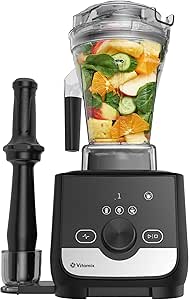
Vitamix Ascent X3 Professional-Grade Blender, 3 Programs, Shadow Black
As an affiliate, we earn on qualifying purchases.
The Sources Behind the Timeline
Tedium’s 2019 article was prompted by a question from writer Gretchen McCulloch about the origins of baking sheets, parchment paper and related terminology. The writer framed the subject as a historical investigation rather than a company-origin story: parchment paper had developed over centuries, and its early record was not as easy to trace as a branded product’s corporate history.
The account draws on sources from different periods, including an ancient cookbook in a much later translation, an 1859 journal article, a chemistry manual from 1874 and an 1889 newspaper for farmers. Together, these provide examples of how the material was discussed and used. They do not, by themselves, give a complete manufacturing history or prove that every modern product is made using the same process.
The distinction between parchment and vellum also matters. The report, citing the U.S. National Archives, associates parchment generally with prepared animal skin and describes vellum as a similar material commonly made from calf skin. Modern paper, by contrast, relies on cellulose from plants. The shared name reflects a perceived resemblance in qualities, not the same underlying material.
“If unsized paper be dipped for a few seconds in a cold mixture of two volumes of concentrated sulfuric acid and one volume of water, and then washed with water and ammonia, the so-called parchment paper is obtained.”
— A Manual of the Chemistry of the Carbon Compounds, published in 1874, as quoted by Tedium
Gaps in the Early Record
The early cookbook reference is not definitive. Tedium located it in a 1936 translation of De Re Coquinaria and explicitly noted that the translation may have modernized the wording. The source therefore cannot establish whether the ancient recipe used the same kind of paper now called parchment paper, or even what material its wording originally described.
The report also does not provide a complete account of who first commercialized parchment paper, when silicone-coated baking paper became widely available, or how production methods changed over time. It describes the modern material in broad terms but does not compare brands or verify manufacturing details for specific products. The cited historical sources record particular claims and uses; they are not controlled tests of how well the paper preserved food or performed in an oven.
What the Historical Record Shows
Tedium’s article is a retrospective report, not an announcement of a new product or an ongoing investigation with a stated next milestone. Its account leaves room for further research into commercial production, terminology and modern manufacturing, particularly where surviving records are incomplete. No additional findings or follow-up publication are specified in the supplied material.
For readers using parchment paper today, the article’s history does not replace product directions. Follow the manufacturer’s instructions for oven use and temperature limits, and do not treat the historical acid-treatment description as a recipe. The report’s central takeaway remains historical: the familiar baking material’s name refers to an older resemblance, while the modern paper is based on plant material and later developments.
Key Questions
Is baking parchment made from animal skin?
No. Tedium describes modern parchment paper as plant-cellulose paper, distinct from traditional parchment, which is generally prepared animal skin.
When did plant-based parchment paper appear?
The report points to 1847, when French scientists Jean-André Poumarède and Louis Figuier developed a chemical treatment process for plant-based paper with parchment-like qualities.
Did ancient Romans use modern baking paper?
The report identifies a reference in a recipe in De Re Coquinaria, but it comes from a 1936 translation that may have modernized the wording. It does not prove that the recipe used modern baking parchment.
What did people use parchment paper for besides baking?
Nineteenth-century sources cited by Tedium describe uses in covering preserve vessels and wrapping butter for storage and delivery. The accounts reflect historical recommendations, not modern product testing.
Source: tedium.co