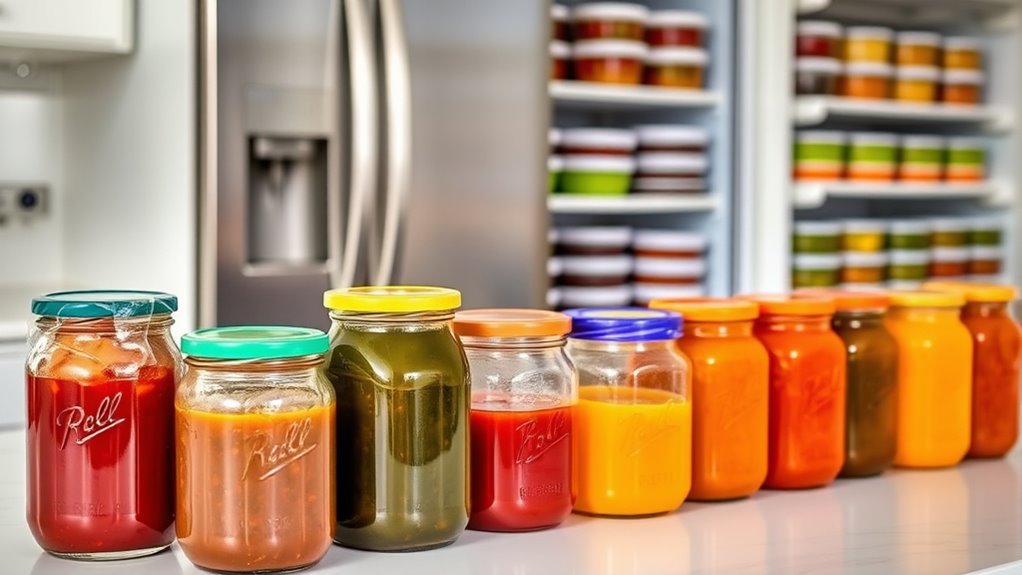

To store your sauces properly, use airtight containers like glass jars or food-grade plastic to prevent contamination and flavor loss. Keep sauces refrigerated at or below 40°F to slow bacteria growth, and label containers with dates to monitor freshness. For longer storage, freeze sauces in freezer-safe containers, leaving space for expansion and removing excess air to prevent freezer burn. If you stick with these tips, you’ll maintain quality and safety longer—discover more to perfect your storage methods.
Key Takeaways
- Use airtight, preferably glass or food-grade plastic containers to prevent contamination and maintain freshness.
- Store sauces in the refrigerator at or below 40°F (4°C), labeling with storage dates to monitor freshness.
- Freeze sauces in freezer-safe containers, leaving headspace for expansion and removing excess air to prevent freezer burn.
- Divide sauces into smaller portions before freezing for easier thawing and to reduce waste.
- Thaw frozen sauces in the refrigerator or reheat directly from frozen, stirring frequently to preserve flavor and texture.
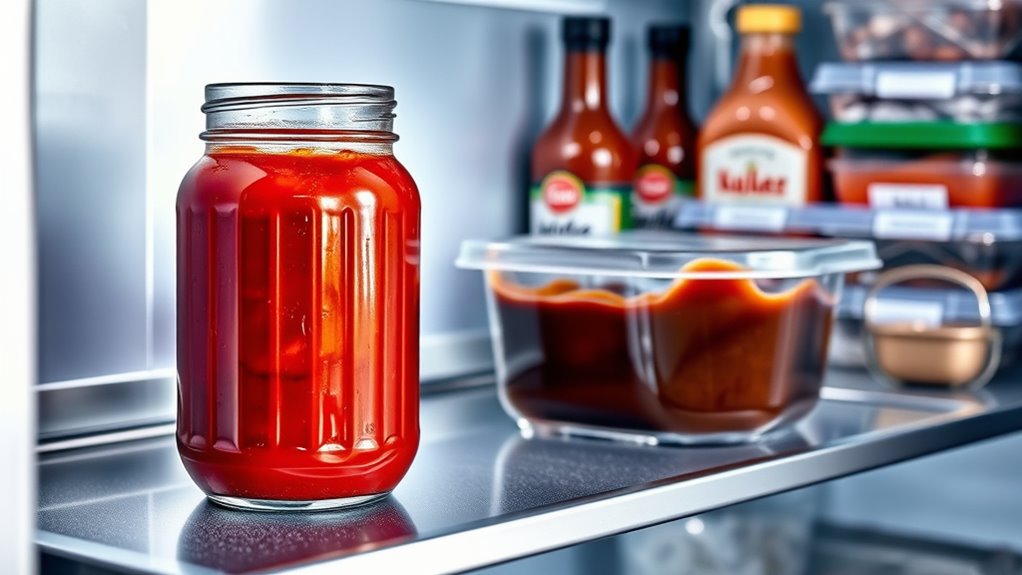
Storing sauce properly guarantees it stays fresh, flavorful, and safe to eat. Whether you’ve just cooked a batch or bought it from the store, taking the right steps for sauce preservation is essential. The first key is choosing the proper container choices. Using airtight containers helps prevent contamination and minimizes exposure to air, which can cause spoilage and flavor loss. Glass jars with tight-fitting lids are ideal because they don’t absorb odors, are easy to clean, and don’t react with acidic ingredients. Plastic containers are convenient and lightweight, but ensure they are food-grade and have secure lids to maintain freshness. Avoid leaving sauce in its original packaging if it’s not resealable or if you plan to store it for an extended period. Transferring sauces to appropriate containers not only prolongs shelf life but also makes portioning easier for future use. Additionally, maintaining proper storage conditions is essential for safety and quality.
When it comes to sauce preservation, proper storage temperatures are equally important. Refrigeration is the go-to method for most sauces, especially those that contain dairy, eggs, or fresh herbs. Keeping your sauce in the fridge at or below 40°F (4°C) slows bacteria growth and maintains quality. Remember to label your containers with the date of storage; this helps you keep track of how long your sauce has been stored and prevents you from using spoiled leftovers. For sauces that you rarely use or want to keep longer, freezing provides an excellent solution. Before freezing, consider dividing the sauce into smaller portions using ice cube trays or small airtight containers. This way, you only thaw what you need, reducing waste and preserving flavor and texture.
Choosing the right storage containers is critical for preventing freezer burn and maintaining flavor. When freezing sauces, ensure your containers are freezer-safe and leave some headspace. Liquids expand as they freeze, and sealed containers without room for expansion might crack or burst. To maximize sauce freshness, try to remove as much air as possible from the containers before sealing. This minimizes freezer burn and flavor degradation. When you’re ready to use your frozen sauce, thaw it in the refrigerator overnight or gently heat it directly from frozen—just be mindful to stir frequently to ensure even reheating. Proper container choices combined with correct storage techniques are crucial to maintaining the integrity of your sauce, whether refrigerated or frozen. By paying attention to these details, you’ll enjoy delicious, fresh-tasting sauces whenever you need them, with minimal waste and maximum flavor retention.
Frequently Asked Questions
How Long Can Sauce Safely Stay at Room Temperature?
You shouldn’t leave sauce at room temperature for more than two hours, as bacteria growth accelerates and temperature safety drops. If the room is particularly warm, like above 90°F, limit this time to just one hour. After that, bacteria can multiply quickly, making the sauce unsafe to consume. To keep it fresh and safe, refrigerate or freeze the sauce promptly, especially if you’re not planning to use it right away.
Can I Store Homemade Sauce in Glass Jars?
Yes, you can store homemade sauce in glass jars. Make sure to sterilize the jars thoroughly before use to prevent bacteria growth. Use proper glass storage tips, like leaving headspace for expansion if freezing. Seal the jars tightly to keep the sauce fresh longer. Store in the refrigerator for short-term or freeze for extended storage. Always label with date to track freshness and guarantee safety.
What Signs Indicate Sauce Has Gone Bad?
If your sauce has gone bad, you’ll notice signs of deterioration, like mold or a slimy texture. An off odor is a key indicator that it’s no longer safe to eat. Trust your senses—if it smells sour or rancid, discard it. Also, if the color has changed markedly or you see bubbles, these are signs it’s spoiled. Always err on the side of caution to avoid foodborne illness.
Is It Better to Freeze Sauce in Bulk or Small Portions?
Freezing sauce is like packing away memories—smaller portions make it easier to grab just what you need. You should opt for portion control, freezing in small containers or ice cube trays for better freezer storage. This way, you avoid thawing more than you’ll use, reducing waste and keeping your sauce fresh. Small portions also freeze faster, ensuring quality stays intact until you’re ready to enjoy your flavorful addition again.
How Do I Thaw Frozen Sauce Safely?
To thaw frozen sauce safely, start with proper thawing techniques like transferring it to the refrigerator overnight, which guarantees even thawing and maintains safety. Avoid thawing at room temperature to prevent bacteria growth. For quicker options, use the microwave’s defrost setting, but stir frequently. Always follow safety precautions by checking that the sauce is heated thoroughly before serving to prevent any foodborne illnesses.
Conclusion
Now that you know how to properly store your sauces, imagine opening your fridge and seeing those jars or bottles waiting patiently, their rich flavors preserved and ready to enhance your next meal. Whether chilled or frozen, your sauces become little treasures, ready to add a splash of flavor whenever you crave it. With these tips, your pantry becomes a vault of delicious possibilities, always at your fingertips, just waiting to turn simple dishes into memorable bites.