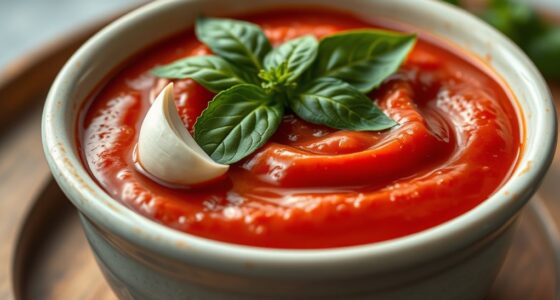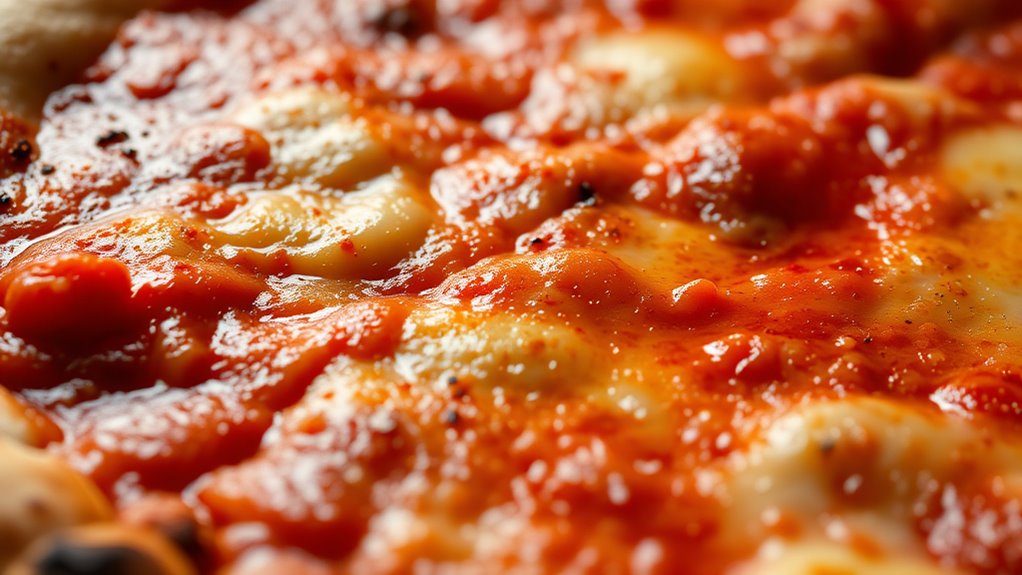

To avoid a soggy crust, aim for a balanced sauce-to-cheese ratio by applying a moderate amount of sauce—too much adds moisture and risks sogginess—then layer your cheese evenly to help absorb excess moisture. Too saucy or cheesy can make the crust soggy, so keep quantities in check. Controlling moisture through this balance is key for crisp crusts, and if you keep that in mind, you’ll master the perfect pizza texture every time.
Key Takeaways
- Maintain a moderate sauce-to-cheese ratio to prevent excess moisture from sogging the crust.
- Use thicker, well-drained sauces to reduce added moisture on top of the cheese.
- Balance cheese quantity to avoid overly wet toppings that can compromise crust crispness.
- Pre-cook or thicken sauces to minimize moisture content before applying.
- Bake at high temperatures to quickly evaporate moisture and set the toppings without sogginess.
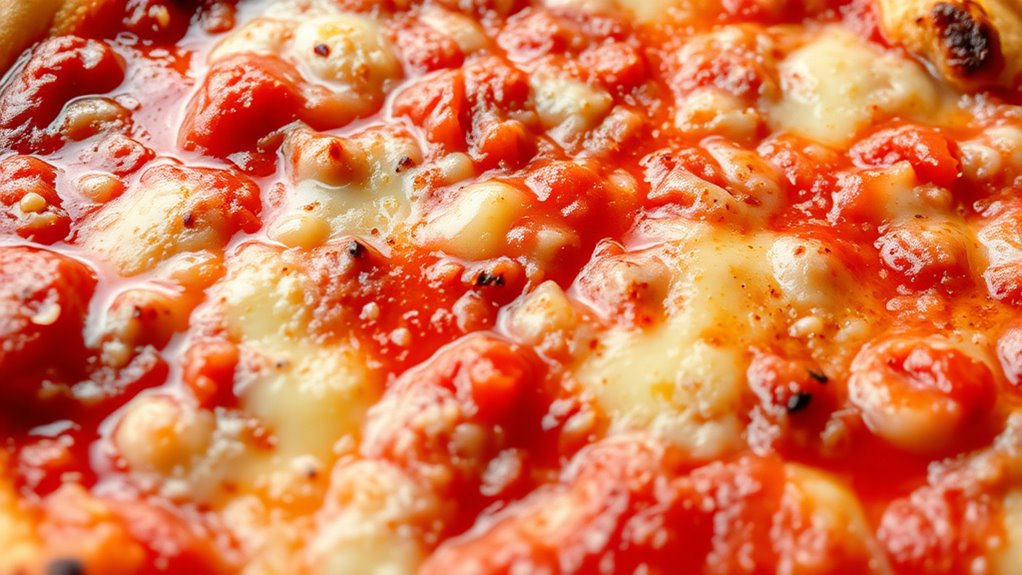
Have you ever wondered how the perfect sauce-to-cheese ratio can make or break a dish? It’s all about balancing moisture so your crust stays crispy and delicious. When you add too much sauce or cheese, the moisture seeps into the dough, making it soggy and dull. To prevent this, you need to pay close attention to your dough thickness and baking temperature. These two factors work together to control how moisture interacts with your crust during baking. If your dough is too thin, it won’t support the moisture from the sauce and cheese, increasing the risk of sogginess. Conversely, a thicker dough provides a sturdy base that resists excess moisture, helping keep the crust crisp. But don’t just focus on thickness; your baking temperature plays a vital role too. Baking at too low a temperature allows moisture to linger longer in the oven, soaking into the dough, while a higher heat quickly evaporates excess water, creating a dry, crisp crust.
When preparing your dough, aim for a thickness that’s sturdy enough to hold toppings without being overly thick, which can also lead to uneven baking. Usually, a thin to medium layer works best for most pizzas or baked dishes. Use a rolling pin or your hands to achieve consistent thickness, ensuring even heat distribution and uniform baking. This helps prevent sogginess caused by uneven moisture absorption. As for baking temperature, preheat your oven to a high temperature—typically between 450°F and 500°F. This intense heat quickly seals the surface of the dough, creating a barrier that limits moisture penetration. It also helps evaporate excess moisture from the sauce and cheese, maintaining a crispy crust. Keep in mind, the baking time should be adjusted according to the dough’s thickness and oven temperature. Thin, high-temperature baking usually takes around 10-15 minutes, which is enough to set the crust and evaporate moisture without overcooking. Controlling sustainable practices in your process can also help improve ingredient quality and consistency.
Incorporating these elements into your cooking process gives you better control over the sauce-to-cheese ratio’s impact on your crust. Remember, a well-thought-out dough thickness combined with a proper baking temperature ensures your dish remains moist enough for flavor but not so wet that it turns soggy. Achieving this balance means your crust will stay crisp, toppings will stay intact, and every bite will be just right. It’s all about understanding how these variables interact, so don’t be afraid to experiment with different thicknesses and temperatures until you find what works best for your recipe.
Frequently Asked Questions
How Does Oven Temperature Affect Sauce-To-Cheese Balance?
You find that oven heat directly impacts the sauce-to-cheese balance by influencing sauce evaporation. Higher oven heat causes the sauce to evaporate faster, preventing excess moisture and sogginess. Conversely, lower temperatures may not evaporate enough moisture, leading to a soggy crust. You should adjust the oven temperature to achieve ideal evaporation, ensuring your pizza has the right moisture level for a crisp crust and perfectly balanced toppings.
What Cheese Types Are Best for Optimal Moisture Balance?
You should choose cheeses with good melt properties and moderate moisture content for ideal moisture balance. Mozzarella is ideal because it melts well and has a balanced moisture level, preventing sogginess. Cheeses like provolone and gouda also work well, offering good melt and controlled moisture. Avoid overly moist cheeses like ricotta, which can add excess moisture, making your crust soggy. Picking the right cheese ensures a perfect melt without compromising crust crispness.
Can Pre-Baking the Crust Help Control Sogginess?
Think of pre-baking your crust as giving it a spa day, drying out excess moisture for a crisp finish. Yes, pre-baking crust helps control moisture, preventing sogginess by creating a barrier that keeps toppings from turning your pizza into a soggy mess. Just a few minutes in the oven before adding sauce and cheese works wonders, ensuring your crust stays firm and delicious, not floppy and sad.
How Does Pizza Thickness Influence Sauce and Cheese Proportions?
You should adjust sauce and cheese proportions based on pizza thickness to guarantee even cooking and avoid sogginess. Thinner crusts need less sauce and cheese, as their dough elasticity makes them more delicate. For thicker crusts, you can add slightly more toppings, but focus on balanced topping distribution to prevent moisture overload. This approach keeps your crust crisp and ensures your toppings cook evenly without becoming soggy.
Are There Specific Ingredients That Increase Sogginess Risk?
Think of your pizza as a delicate dance, where moisture content and ingredient selection lead. Ingredients like fresh tomatoes, high-moisture vegetables, or fatty meats send water rushing to the surface, risking sogginess. To keep the rhythm steady, choose lower-moisture options or pre-cook ingredients. By managing moisture content, you prevent sogginess and make certain your crust stays crisp and perfect, like a well-choreographed performance.
Conclusion
Think of your pizza as a delicate symphony, where sauce and cheese must harmonize perfectly. By balancing the sauce-to-cheese ratio, you prevent a soggy crust from overshadowing your toppings. Too much sauce is like a tempest drowning the melody, while too little leaves the tune incomplete. Aim for that sweet spot, and your pizza will rise as a masterpiece—crispy, flavorful, and unforgettable. Master this balance, and every slice becomes a harmonious work of art.