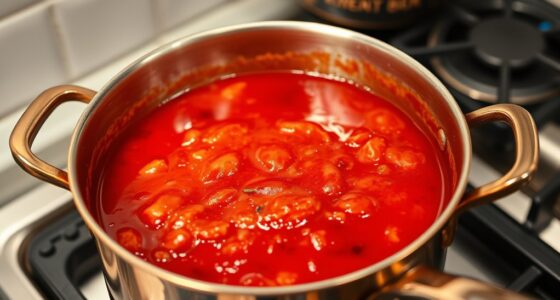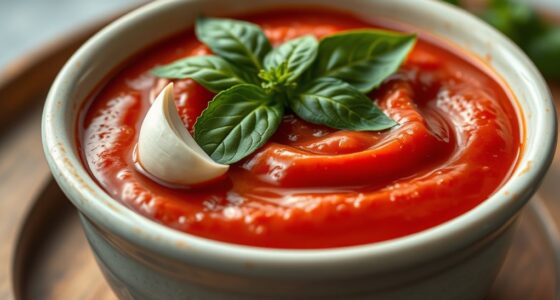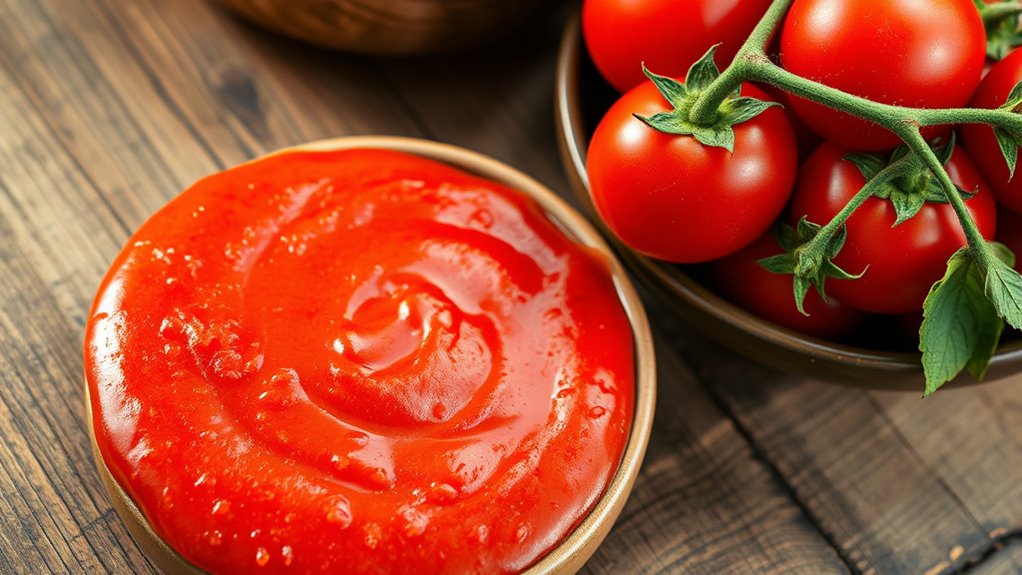

When choosing between tomato passata and whole tomatoes, consider the texture and cooking time needed for your dish. Passata offers a smooth, quick-cooking base ideal for sauces and soups, while whole tomatoes give you more control over texture and work well in rustic stews or roasted dishes. Both provide great nutrition; your choice depends on whether you want a seamless sauce or a chunkier, customized result. If you’re curious about which suits your recipe best, keep exploring the details.
Key Takeaways
- Tomato passata offers a smooth, ready-to-use texture ideal for quick, seamless sauces, while whole tomatoes provide texture control for chunky dishes.
- Passata cooks faster and integrates easily into recipes, whereas whole tomatoes require chopping or pureeing and are better for longer simmering.
- Both are nutritious, but passata’s processing enhances lycopene absorption, while whole tomatoes retain more natural nutrients with minimal additives.
- Use passata for smooth, quick sauces; choose whole tomatoes when a textured or rustic appearance is desired.
- Selection depends on recipe needs—passata for convenience and uniformity, whole tomatoes for control and texture variation.
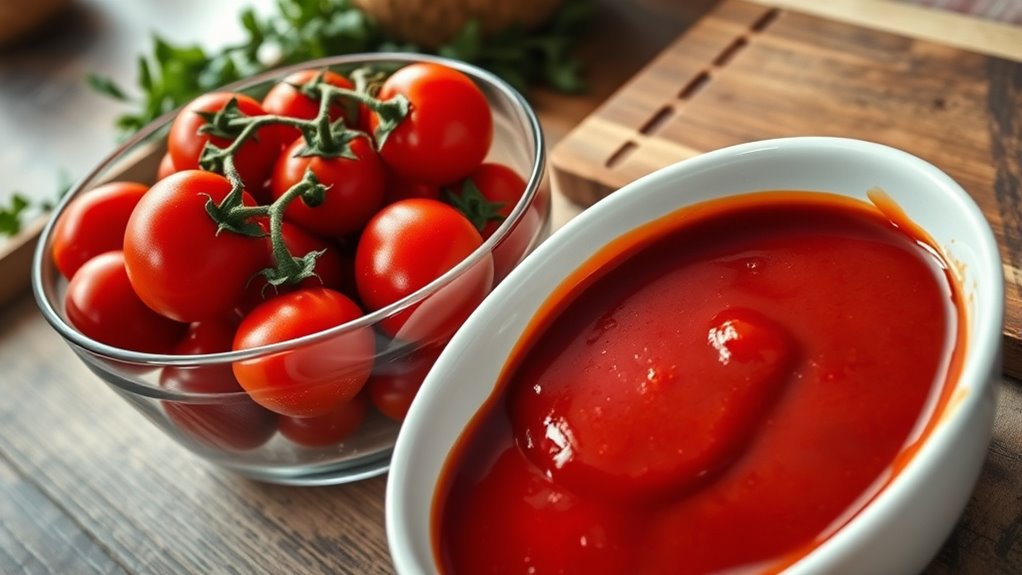
When choosing between tomato passata and whole tomatoes for your cooking, understanding their differences can substantially impact your dishes. The way you prepare and incorporate these ingredients depends on their texture, flavor, and how they respond to various cooking methods. Tomato passata is a smooth, strained puree that’s ideal for recipes requiring a seamless, uniform sauce. It cooks quickly and integrates easily into dishes like soups, sauces, and stews, giving you a consistent texture without extra effort. Whole tomatoes, on the other hand, are usually canned or fresh, with their skins intact. They need to be chopped, crushed, or pureed before use, which offers more control over the final texture of your dish. If you prefer a chunky sauce or want to customize the consistency, whole tomatoes are more flexible.
Choosing between passata and whole tomatoes depends on your desired texture and cooking style.
When it comes to nutritional differences, both options are rich in vitamins A and C, lycopene, and antioxidants, but their processing can influence nutrient levels slightly. Tomato passata, being strained, retains most of the nutritional content but tends to have a slightly higher concentration of lycopene because the process breaks down the tomato’s cell walls, making this antioxidant more bioavailable. Whole tomatoes, especially if canned, may contain added ingredients like salt or preservatives, which can affect their nutritional profile. Fresh whole tomatoes typically have fewer additives and retain more of their natural nutrients, but their nutrient levels can diminish slightly during processing or storage. If you’re aiming for maximum nutrients, fresh or minimally processed whole tomatoes might be the better choice, though both options provide significant health benefits.
Cooking methods also play a role in your decision. Tomato passata’s smooth texture means it works best in quick-cooking sauces and dishes where you want a uniform consistency. It’s perfect for simmering into pasta sauces or as a base for soups. Whole tomatoes are more versatile in recipes that benefit from texture, such as rustic stews, chunky salsas, or oven-roasted dishes. They hold up better during longer cooking times, breaking down gradually to develop richer flavors. Additionally, the choice can influence your preparation time; passata saves you the step of crushing or pureeing, while whole tomatoes require more prep but allow greater control over the final texture.
Ultimately, your selection hinges on your recipe’s needs, preferred cooking methods, and nutritional priorities. Both tomato passata and whole tomatoes have their strengths, and understanding these differences helps you make better choices, ensuring your dishes turn out just the way you want.
Frequently Asked Questions
Which Is More Cost-Effective: Passata or Whole Tomatoes?
Passata is generally more cost-effective than whole tomatoes because of its lower pricing comparison and longer shelf stability. You’ll save money by buying passata in larger quantities, and it stays fresh longer without refrigeration, reducing waste. Whole tomatoes may be cheaper per can initially, but their shorter shelf life and the need for additional preparation make passata the smarter, more economical choice for frequent use.
How Does Storage Differ Between Passata and Whole Tomatoes?
Ever wonder which lasts longer? When it comes to storage, passata is often kept in jars, requiring proper jar preservation techniques to prevent spoilage, especially if unopened. Once opened, refrigeration is essential to maintain freshness. Whole tomatoes, however, can be stored in the fridge or canned for long-term use, but they need careful handling to avoid spoilage. So, your choice impacts how you handle storage and preserve your tomato bounty.
Can Passata Be Used as a Substitute for Fresh Tomatoes?
Yes, you can use passata as a substitute for fresh tomatoes. It offers great cooking versatility, especially when you want a smooth, rich sauce. However, keep in mind that the texture is different—passata is pureed, so it lacks the chunkiness of fresh tomatoes. Adjust your recipe accordingly, and consider your texture preferences to guarantee your dish turns out just right.
Are There Flavor Differences Between Passata and Whole Tomatoes?
Imagine tasting a ripe, sun-soaked tomato and then a smooth, velvety passata—each offers distinct flavor nuances. Passata provides a consistent, mellow sweetness, while whole tomatoes deliver more vibrant, complex notes with textured bits. Texture differences are notable too; passata is silky, perfect for smooth sauces, whereas whole tomatoes add a hearty bite. Your choice depends on whether you want uniformity or a more textured, flavorful experience.
How Do Nutritional Values Compare Between Passata and Canned Whole Tomatoes?
You’ll find that the nutritional content of passata and canned whole tomatoes is quite similar, as both come from ripe tomatoes. However, processing methods can slightly affect nutrient levels; passata is strained, which may reduce some fiber, while whole tomatoes retain more of their natural form and nutrients. Both options offer vitamins like C and A, but check labels for added ingredients or preservatives that might impact overall nutritional quality.
Conclusion
Choosing between tomato passata and whole tomatoes is like picking the brush for your culinary masterpiece—each brings its own flavor and texture to the canvas. Passata offers a smooth, consistent base, while whole tomatoes provide bursts of freshness and versatility. Ultimately, it depends on your recipe and mood. Whichever you choose, trust your instincts and let your taste buds lead the way—after all, cooking is your personal symphony.