To best preserve the delicate textures and bright flavors, add burrata or fresh mozzarella immediately after baking your dish. Wait until the residual heat has softened the cheese slightly, but avoid overexposing it to heat, which can make it stringy or greasy. For mozzarella slices, sprinkle near the end of baking, then place burrata or dollops of fresh mozzarella on top right after removing from the oven. Keep going to discover detailed techniques for perfect cheese placement.
Key Takeaways
- Add burrata or fresh mozzarella immediately after baking to preserve their delicate, creamy texture and vibrant appearance.
- Place slices or dollops on hot pizza or dish right after removal from the oven for gentle warming.
- Wait until residual heat has subsided to prevent cheese from becoming overly runny or losing freshness.
- Use thin slices or small dollops for even warming without excessive melting or stringiness.
- Adding cheese post-baking ensures optimal flavor, texture, and visual appeal without overexposure to heat.
Knowing the right moment to add burrata or mozzarella after baking can make all the difference in achieving the perfect cheesy dish. The timing impacts how the cheese melts, influences the texture, and affects the overall presentation. When it comes to cheese melting, you want your cheese to reach that ideal gooey consistency without becoming overly runny or losing its fresh qualities. This is especially important with burrata and fresh mozzarella, as their textures are delicate and can easily be overwhelmed by heat. To preserve their creamy textures and vibrant flavors, consider your topping techniques carefully.
Adding burrata or mozzarella at the right moment preserves their delicate, fresh textures and vibrant flavors.
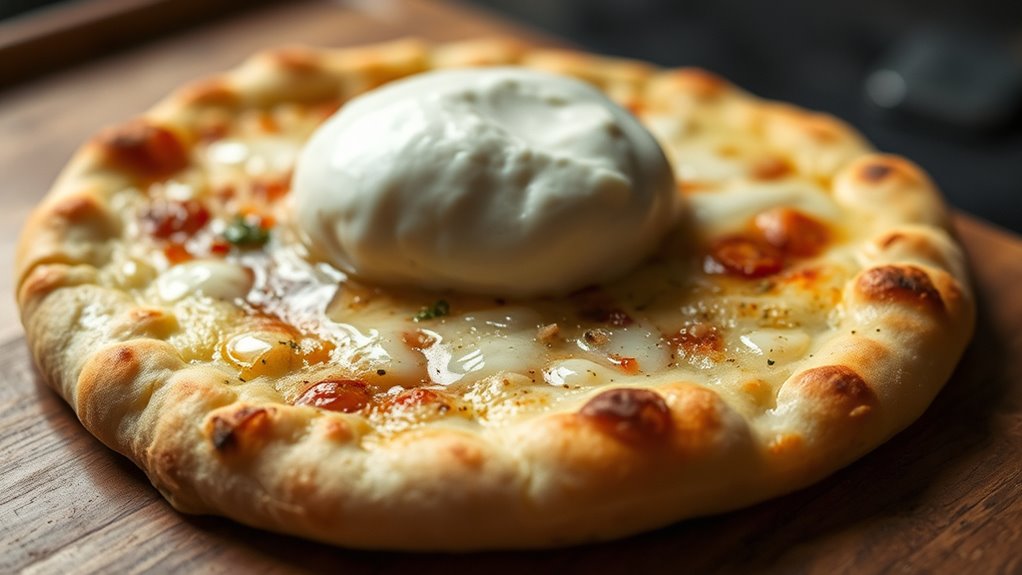
If you add mozzarella or burrata immediately after baking, the residual heat from the dish will gently melt the cheese, creating a luscious, cohesive top layer. This approach allows the cheese to soften without losing its fresh, slightly firm texture. For example, if you’re baking a pizza or casserole, sprinkle shredded mozzarella toward the end of the bake, then remove it just before serving. The residual heat will melt the cheese perfectly, giving you that desirable stretch and cheese pull. Conversely, placing slices of fresh mozzarella or burrata on top right after baking ensures they retain their delicate texture and flavor. These cheeses don’t need long to melt; their best qualities shine through when they’re gently warmed or simply served fresh.
Topping techniques play an essential role here. Thin slices or small dollops work best, as they heat evenly and prevent clumping or uneven melting. When adding fresh mozzarella, consider slicing it thinly so it melts quickly and evenly, blending seamlessly into the dish. Burrata, being soft and creamy, benefits from being added in larger dollops after baking, allowing the heat to slightly soften the outer shell while keeping the interior luxuriously creamy. The goal is to achieve a beautiful balance: enough warmth to enhance flavors and create an appealing melt, but not so much that the cheese loses its signature freshness and texture.
Timing also influences presentation. Adding cheese after baking keeps its visual appeal intact, with fresh, glossy surfaces that look inviting and vibrant. Over-melting can cause the cheese to become stringy or greasy, detracting from the dish’s appearance. Additionally, understanding the chemistry of cheese melting helps you better control the texture and appearance of your finished dish. By understanding the nuances of cheese melting and applying the right topping techniques, you ensure each bite delivers the perfect blend of flavor, texture, and visual appeal. So, whether you’re finishing a pizza, pasta, or roasted vegetable dish, remember that the timing of adding burrata or mozzarella is essential to achieving that ideal cheesy finish.
Frequently Asked Questions
Can I Add Burrata or Mozzarella Before Baking Instead?
You can add burrata or mozzarella before baking, but it may affect their cheese texture and flavor infusion. Baking melts the cheese nicely, creating a gooey, flavorful layer, but adding them beforehand risks over-melting or drying out delicate burrata. If you want a richer cheese flavor, sprinkle it on early; for a creamier texture, add it after baking. Adjust based on your desired cheese consistency and flavor intensity.
How Does Adding Cheese After Baking Affect Flavor?
Adding cheese after baking preserves its delicate texture and enhances flavor without becoming rubbery. You’ll notice a richer, fresher flavor, as the cheese’s natural creaminess remains intact. This method allows the cheese’s subtle nuances to shine through, giving your dish a more vibrant taste. Plus, it creates a pleasing contrast between the hot dish and the cool, creamy cheese, elevating the overall flavor experience and providing a satisfying textural balance.
Will Cheese Added Post-Baking Melt Properly?
Did you know that adding cheese after baking can still result in some melting? While fresh mozzarella and burrata may not melt fully like aged cheeses, they soften and release rich flavors, enhancing your dish’s taste. If you want better cheese melting, add it during the last few minutes of baking. Post-baking cheese can still improve flavor, but for perfect melting, timing is key.
Is It Safe to Add Fresh Cheese After Baking?
Yes, it’s safe to add fresh cheese after baking, but you should handle it properly. Keep your cheese stored at the right temperature to prevent spoilage and ensure food safety. Adding cheese post-baking helps preserve its delicate flavor and texture, offering a fresh, creamy contrast to the hot dish. Just make sure to add it immediately after baking, so it maintains its quality without risking bacterial growth.
What Dishes Benefit Most From Added Cheese After Baking?
You’ll find that dishes like roasted vegetables, flatbreads, and grilled meats benefit most from added cheese after baking. By doing so, you preserve the cheese’s delicate texture and enhance the flavor, creating a fresh, creamy contrast. Adding burrata or fresh mozzarella at the end keeps their texture soft and buttery, giving your dish an elevated, rich flavor profile that’s perfect for finishing touches.
Conclusion
Think of adding burrata or fresh mozzarella like finishing a masterpiece—timing is everything. Adding these cheeses after baking preserves their creamy, luscious texture and bright flavor, much like a delicate brushstroke highlights a painting. So, wait until your dish just comes out of the oven, then sprinkle or dollop on these cheeses to enjoy their full, fresh flavor. It’s a simple step that transforms your dish into something truly special, like a final touch on a work of art.