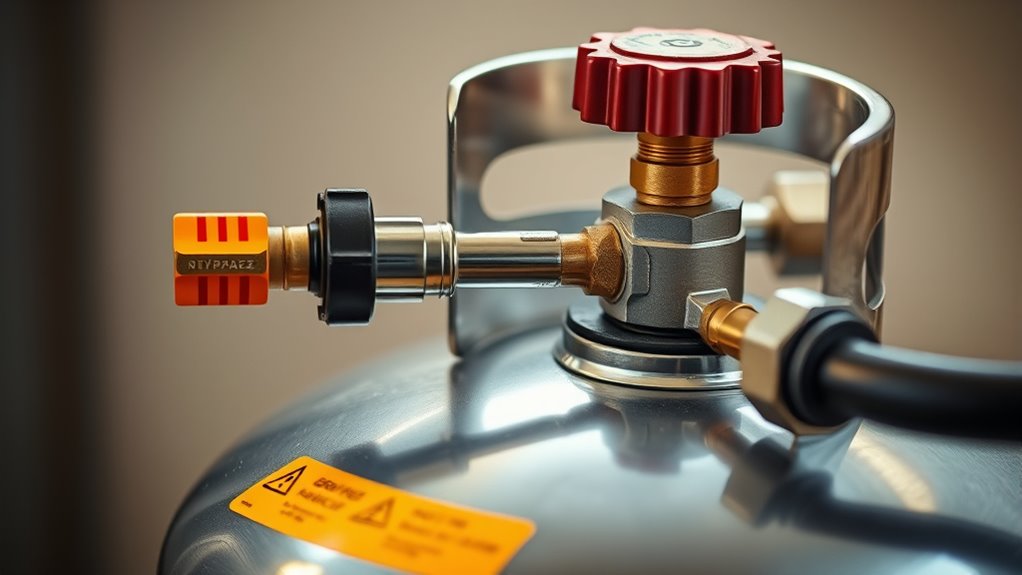

To handle propane safely, always store cylinders upright in well-ventilated areas, away from heat or flames. Check for leaks with soap solution before use, and make certain all connections are tight and equipment is designed for propane. Never handle or operate in enclosed spaces, turn off the supply after use, and keep safety gear nearby. Following essential safety steps reduces risks—stay tuned to learn all the vital rules to protect yourself and others.
Key Takeaways
- Proper storage and handling prevent leaks, damage, and ensure safety during transport and use.
- Regular leak detection and equipment inspection are essential to avoid dangerous gas escapes.
- Never overfill tanks; maintain proper ventilation and outdoor use to prevent hazardous indoor buildup.
- Use equipment designed for propane, ensuring tight connections and compatibility to avoid leaks.
- Emergency preparedness, including quick shutdowns and regular safety checks, is crucial for propane safety.
Always Store Propane Cylinders Upright and in Well-Ventilated Areas
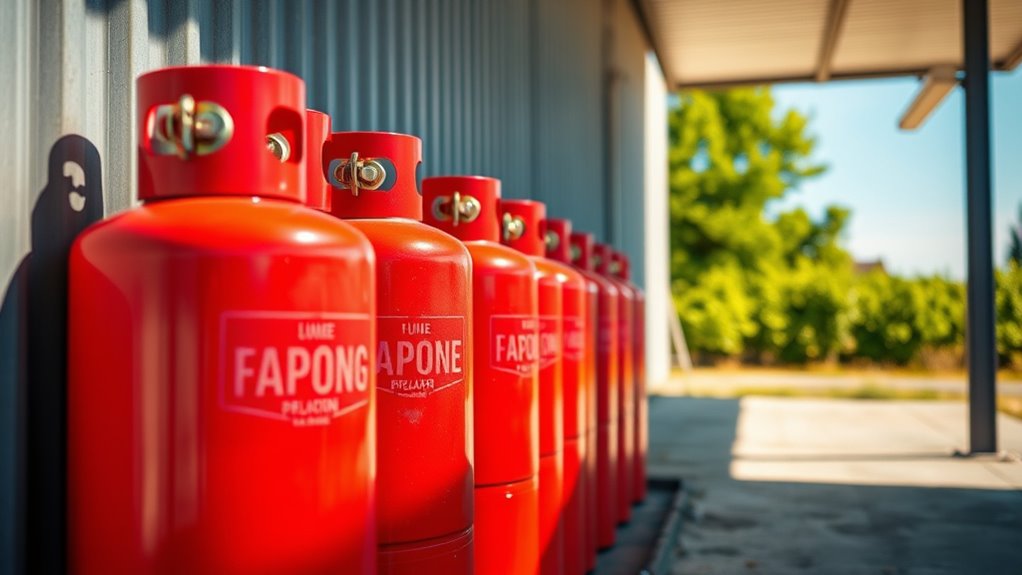
To guarantee safety, always store propane cylinders upright in well-ventilated areas. Proper storage begins with clear cylinder labeling to identify contents and prevent mishandling. Use a sturdy storage container designed for propane, which helps contain leaks and keeps cylinders secure. Storing cylinders upright ensures the pressure relief valve functions correctly, reducing the risk of leaks or explosions. Choose a location away from heat sources, open flames, or direct sunlight to prevent overheating. Ventilation is critical; it disperses any gas that might escape, minimizing danger. Regularly check the storage area for leaks and damage. Keeping cylinders properly labeled and in a suitable storage container not only promotes safety but also makes handling easier and more organized. Additionally, understanding security zone info can help you select the safest and most compliant storage practices.
Check for Leaks Before Using Propane Equipment
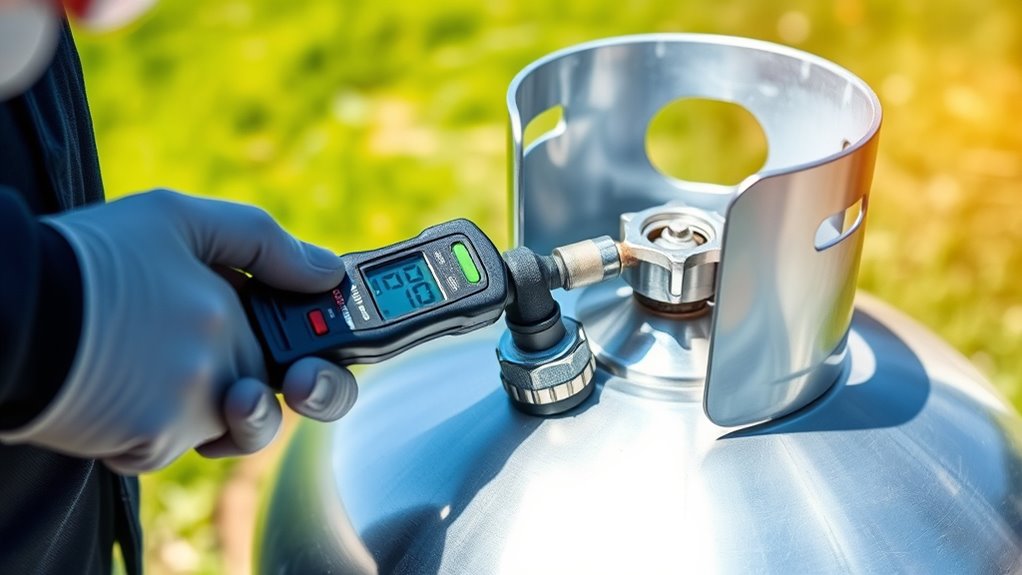
Before using propane equipment, always check for leaks to stay safe. You can do this by applying a soap solution to connection points and looking for bubbles, inspecting the fittings closely, and smelling for gas odors. Taking these quick steps can prevent dangerous leaks and guarantee your equipment is safe to operate. Additionally, ensure proper ventilation in the area to disperse any accidental leaks effectively.
Use Soap Solution Test
Checking for leaks with a soap solution is a simple yet essential step to guarantee your propane equipment is safe to use. The soap test helps with leak detection by revealing escaping gas through bubbling. To perform the test, mix a small amount of dish soap and water, then apply it to connection points and hoses. Turn on the propane supply without igniting it. If bubbles form, you’ve found a leak. Here’s a quick reference:
| Step | Action |
|---|---|
| 1 | Prepare soap solution |
| 2 | Apply to connection points |
| 3 | Observe for bubbles |
Additionally, ensuring proper color accuracy in your propane setup can help you identify any issues with your equipment’s visual indicators, enhancing safety during operation.
Inspect Connection Points
Inspecting connection points for leaks is a crucial step before operating your propane equipment. You need to perform a connection points inspection to ensure all fittings are secure and maintain fitting integrity. Start by checking each connection thoroughly, looking for cracks, corrosion, or damaged threads. Tighten fittings carefully if needed, but avoid over-tightening, which can compromise sealing. Use a soap and water solution to detect leaks—apply it around the connection points and watch for bubbles. If you see any signs of gas escaping, disconnect and recheck the fittings or replace damaged parts. Ensuring proper connection points inspection and maintaining fitting integrity help prevent leaks, keeping you safe and your propane system functioning smoothly. Regularly conducting visual inspections can help catch issues early before they become hazardous. Never skip this vital safety step before use.
Look for Gas Odor
Have you ever noticed a strong, unfamiliar smell near your propane equipment? That’s a sign to perform gas odor detection immediately. Propane has a distinctive odor, often described as rotten eggs or skunk-like, added intentionally to alert you to leaks. Don’t rely on odor masking techniques, which can hide leaks and create false security. Always check for gas odor before using your equipment. If you detect the smell, turn off the gas supply and ventilate the area. Never ignore a gas odor—prompt action can prevent accidents. Regularly inspecting connection points and listening for hissing sounds also helps identify leaks early. Remember, trusting your nose is a crucial safety step in propane handling.
Use Proper Regulators and Connectors Designed for Propane
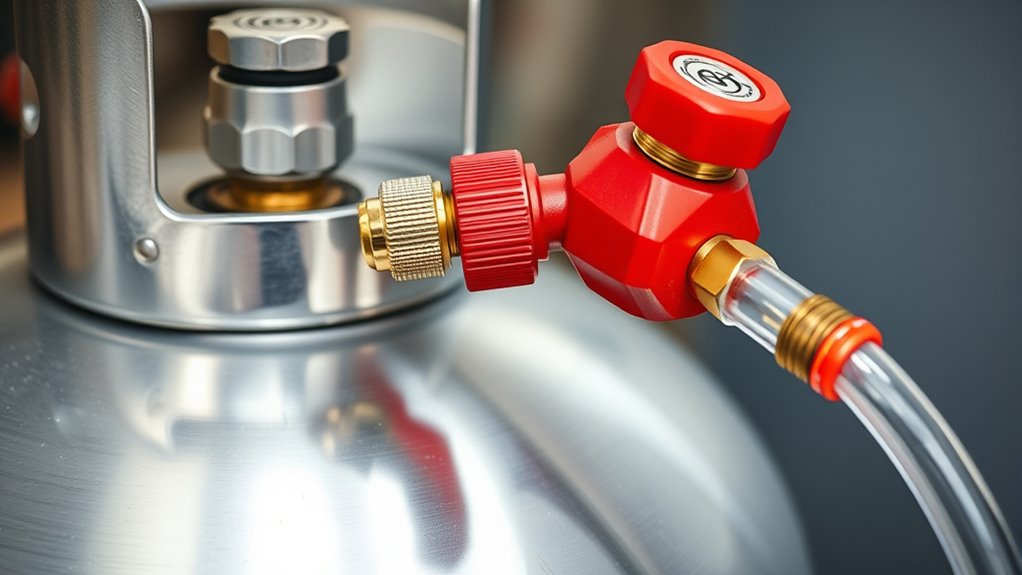
Using the right regulators and connectors for propane is essential for safety and efficiency. You need to make certain they are compatible with your equipment and installed correctly to prevent leaks. Proper installation techniques help keep your system safe and functioning properly. Additionally, always ensure that your propane handling equipment meets safety standards and is regularly inspected for wear and tear.
Compatibility With Equipment
Ensuring you use the right regulators and connectors designed specifically for propane is essential for safe and efficient handling. Compatibility with your equipment and cylinders is critical to maintain storage safety and prevent accidents. Always check that your regulator fits your propane cylinder’s valve type to avoid leaks or disconnections. Using incompatible connectors can compromise the integrity of the connection, leading to potential hazards. Properly matching regulators and connectors guarantees a secure fit, reducing the risk of leaks or damage during use. Remember, equipment designed specifically for propane is built to handle its pressure and safety requirements. Never force incompatible parts together. Staying aware of cylinder compatibility and using the correct equipment helps keep your propane handling safe and effective.
Ensuring Leak Prevention
To prevent leaks during propane handling, it’s essential to select regulators and connectors specifically designed for propane. Using the right equipment enhances storage safety and makes leak detection easier. Always verify that connectors are compatible with your propane tank and appliance, and avoid makeshift fixes that can cause leaks. Proper regulators ensure that pressure stays consistent, reducing the risk of leaks or accidents. Regularly inspect connections for signs of wear or damage, and replace any faulty parts immediately. Tighten fittings securely but avoid over-tightening, which can cause damage. Incorporate leak detection methods, such as soapy water applied to connections, to catch leaks early. Additionally, understanding the effects of eye patches can help in choosing appropriate skincare routines for maintenance. Prioritizing proper equipment and vigilant checks helps maintain a safe handling environment.
Proper Installation Techniques
Proper installation begins with selecting regulators and connectors specifically designed for propane. Using the right equipment guarantees storage safety and meets installation standards. Improper fittings can lead to leaks or dangerous pressure build-up, risking accidents. Always verify that regulators are compatible with your tank and appliances. Secure connections tightly but avoid over-tightening, which can damage fittings. Regularly inspect hoses and connectors for wear or damage, replacing them immediately if needed. Follow manufacturer instructions carefully to prevent leaks and ensure safe operation. Proper installation techniques help maintain a safe environment and prolong the lifespan of your propane system. Additionally, using appropriate tools during installation can help ensure a secure fit. Remember, adherence to these standards is essential for safe, reliable propane use. Keep safety first with correct, certified components and careful setup.
Keep Away From Open Flames or Sparks During Handling
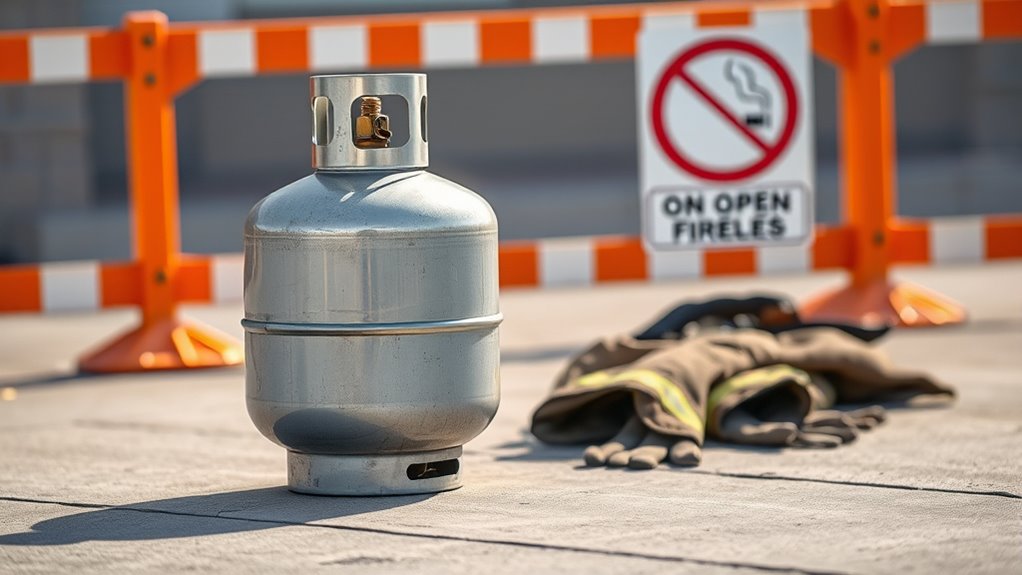
Propane is highly flammable, so you must keep it away from open flames or sparks during handling. Exposure to fire hazards can cause explosions or fires, risking serious injury and property damage. Always handle propane in well-ventilated areas and avoid any sources of ignition. Spark prevention is critical—never smoke or use electrical devices that could generate sparks nearby. Ensure all equipment is grounded properly to reduce static buildup. Keep open flames, matches, and smoking materials at a safe distance. When transferring or connecting propane, double-check that all connections are secure and free of leaks before proceeding. Staying vigilant about fire hazards and practicing spark prevention helps ensure your safety and prevents dangerous accidents. Additionally, proper water safety measures can help prevent accidents related to propane mishandling near water sources.
Turn Off Propane Supply When Not in Use
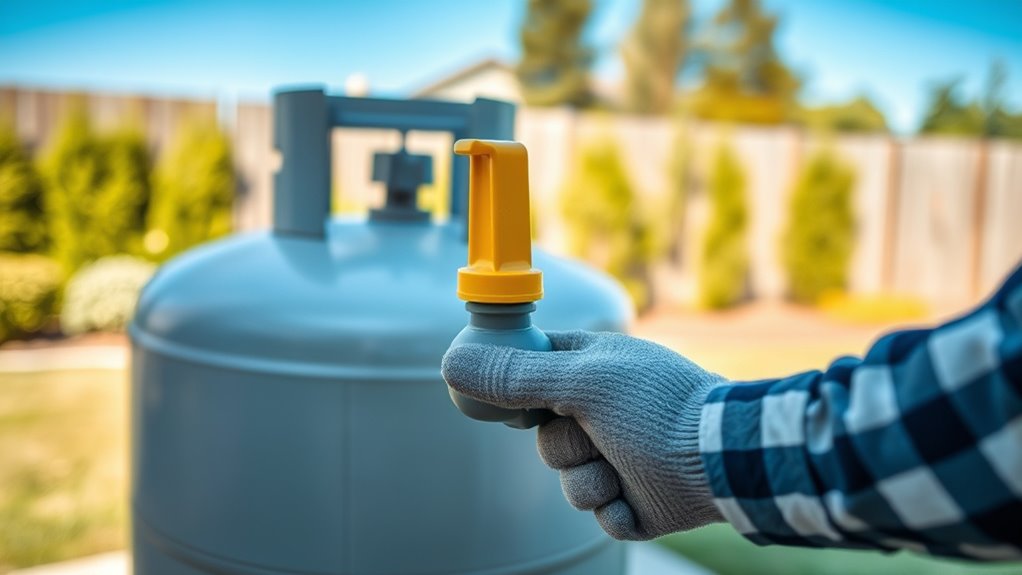
Always turn off the propane supply when you’re finished using it. This simple step helps prevent leaks and reduces fire risk. When you shut off the propane supply, you activate the safety shutdown feature, ensuring no gas escapes unintentionally. Additionally, turning off the supply minimizes the chances of gas buildup during storage, enhancing overall safety. Here’s why it matters:
- Prevents accidental leaks and fire hazards
- Protects against gas buildup during storage
- Ensures safety during maintenance
- Conserves propane by stopping flow when not needed
- Maintains overall safety of your setup
Always double-check that the propane supply valve is fully closed after use. This practice minimizes risks and keeps your environment safe. Remember, a quick safety shutdown can make a big difference in preventing dangerous incidents.
Never Overfill Propane Tanks or Cylinders
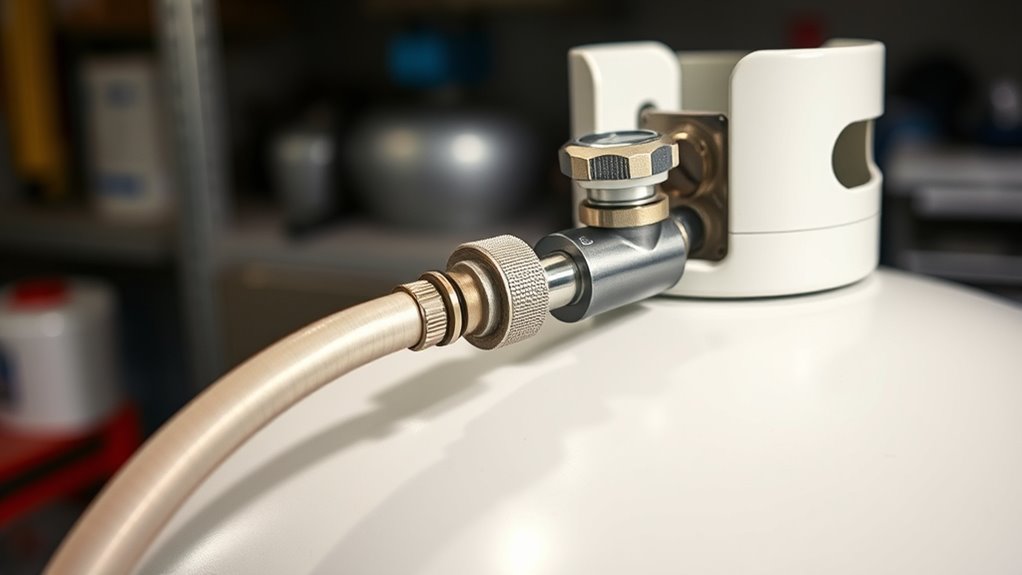
After turning off the propane supply when you’re finished, it’s equally important not to overfill the tanks or cylinders. Overfilling can create safety hazards, so always pay attention to tank capacity. During filling procedures, fill the tank only to about 80% of its total capacity; this allows room for expansion as the propane warms. Never force more propane into the tank once the level reaches this limit. Use proper equipment and follow manufacturer guidelines to ensure accurate filling. Overfilling increases the risk of leaks and dangerous pressure buildup. Always double-check the level before sealing the tank, and avoid trying to top it off. Proper filling procedures help maintain safety and ensure your propane system functions efficiently.
Handle and Transport Cylinders With Care to Avoid Damage
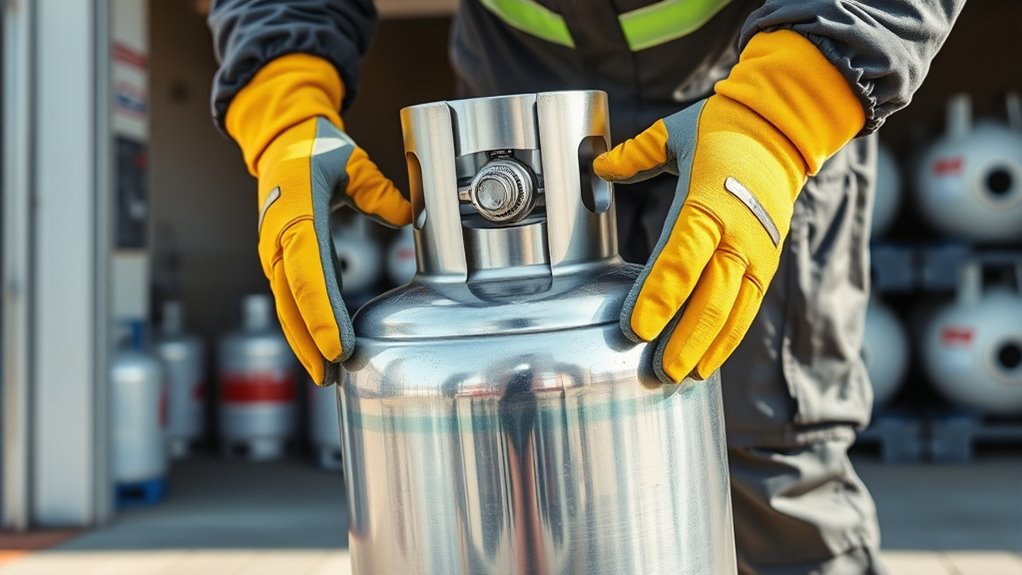
Handling and transporting cylinders carefully is essential to prevent damage that could lead to leaks or dangerous failures. Always check cylinder labeling before moving, making sure you handle the correct type safely. Use proper equipment, like carts or straps, to avoid dropping or knocking over cylinders. Secure propane containers during transport to prevent shifting, which can cause dents or leaks. Regular propane container maintenance, including inspecting valves and fittings, keeps cylinders in good shape. Never stack cylinders improperly or expose them to extreme temperatures. Damage to the cylinder body or valve can compromise safety. Proper handling minimizes risks and prolongs cylinder lifespan. Additionally, understanding hydrogen safety measures is crucial when dealing with alternative fuels to prevent accidents. Keep these practices in mind to ensure safe, damage-free transportation, and always follow manufacturer guidelines.
Regularly Inspect for Rust, Damage, or Corrosion
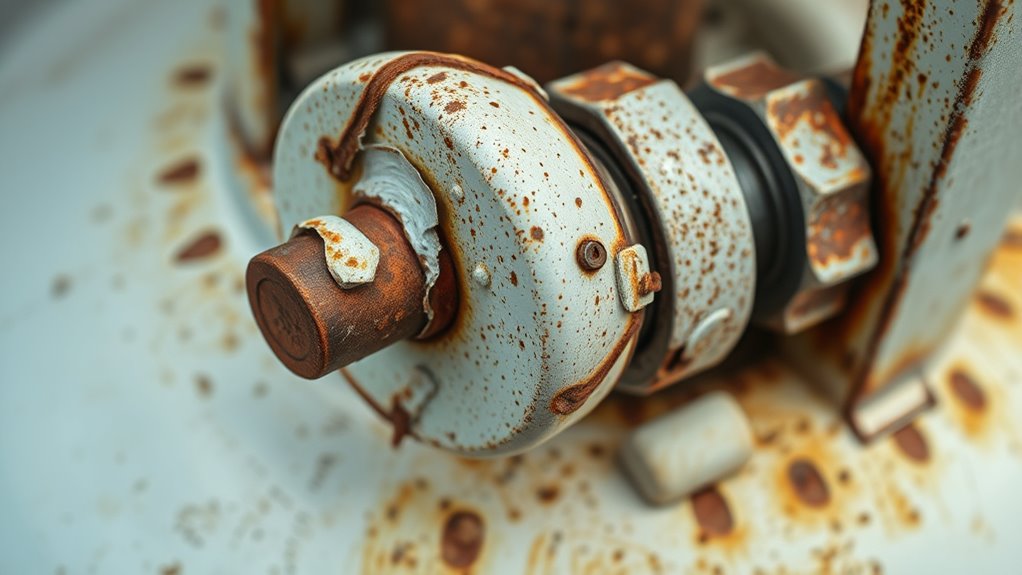
You should regularly check your propane cylinders for any signs of rust or corrosion. Keep an eye out for dents, cracks, or other damage that could compromise safety. Addressing these issues promptly helps guarantee your propane remains safe to use.
Check for Rust
Regularly inspecting propane tanks for rust, damage, or corrosion is essential to guarantee safety and proper functioning. Rust prevention is key to maintaining your tank’s integrity, so keep an eye out for signs of corrosion inspection failure. Catching early rust or corrosion helps prevent leaks and potential accidents.
- Look for surface discoloration or flaking paint
- Check for bubbling or blistering metal
- Feel for rough or uneven spots
- Examine welds and seams carefully
- Use a wire brush to remove loose rust for better inspection
Performing regular corrosion inspection and addressing rust promptly keeps your tank safe and prolongs its lifespan. Remember, early detection is your best defense against costly repairs or hazards.
Monitor for Damage
To guarantee your propane tank remains safe and reliable, it’s important to regularly inspect it for any signs of damage, rust, or corrosion. Conduct a thorough visual inspection, checking for dents, cracks, or other damage signs that could compromise the tank’s integrity. Look closely at the connections, valves, and fittings for leaks, corrosion, or wear. Damage signs like discoloration or bulges indicate potential issues that need immediate attention. Make sure the tank’s surface is free of rust, which can weaken the metal over time. If you notice any damage signs or corrosion, don’t delay—consult a professional or replace the tank to prevent leaks or accidents. Regular monitoring keeps your propane system safe and functioning properly.
Keep Emergency Equipment Nearby When Using Propane
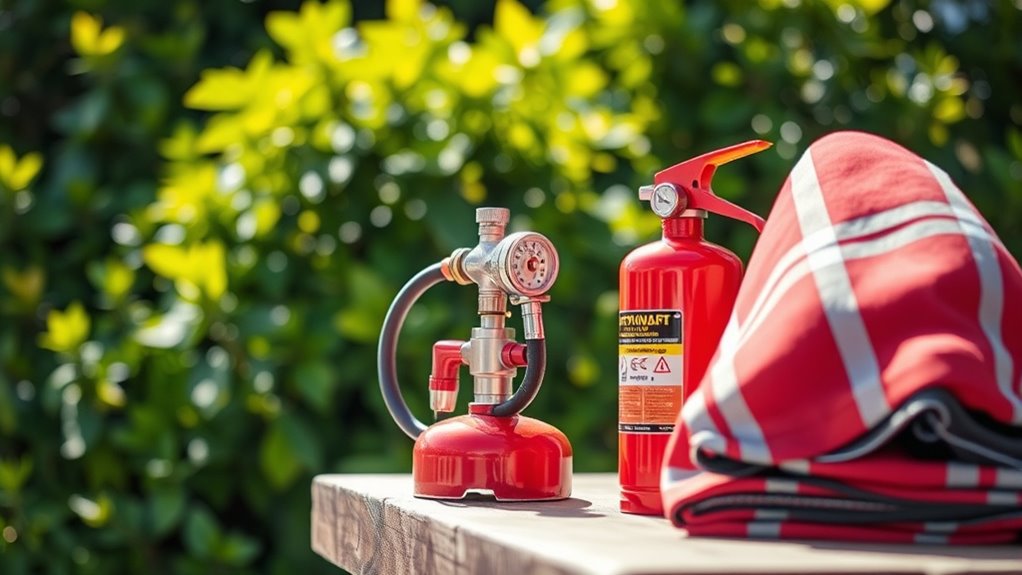
Having emergency equipment nearby is essential whenever you’re working with propane, as accidents can happen unexpectedly. Proper emergency preparedness ensures you can respond quickly if a leak or fire occurs. Keep these items within reach:
- Fire extinguisher rated for gas fires
- First aid kit for minor injuries
- Leak detection solution for quick inspections
- Emergency shut-off valve key
- Protective gloves and goggles
Storing propane safely involves knowing where your emergency equipment is, especially near propane storage areas. Being ready helps prevent small issues from escalating into dangerous situations. Always check that your safety gear is in good condition and accessible. Staying prepared minimizes risks and keeps your workspace safe. Remember, quick action can make all the difference if an emergency arises during propane handling.
Follow Manufacturer Instructions and Safety Guidelines Carefully
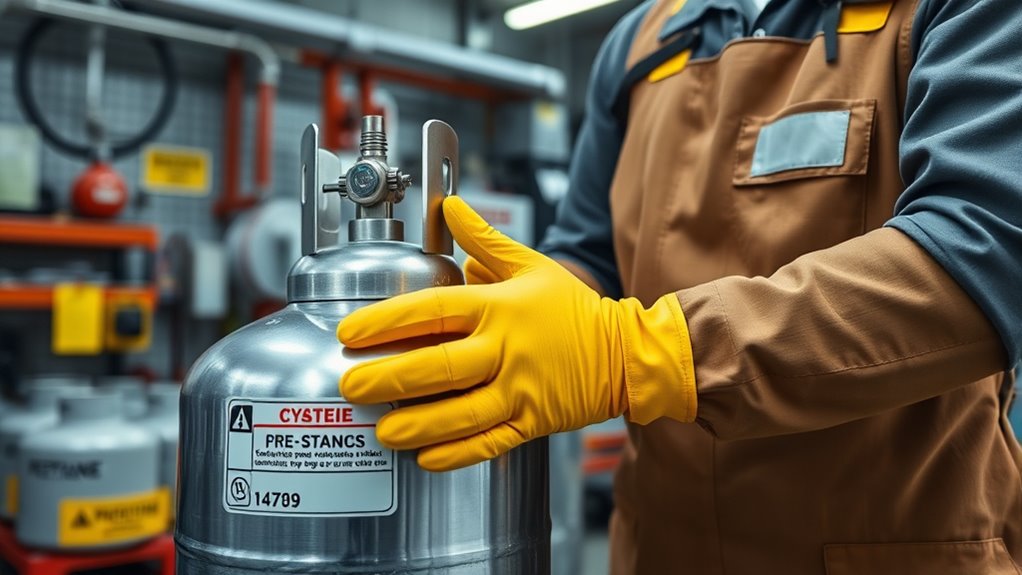
Following the manufacturer’s instructions and safety guidelines is essential for preventing accidents and ensuring safe propane use. Always read and follow the specific instructions provided with your propane equipment, especially regarding storage safety. Properly stored cylinders should be kept in a well-ventilated, upright position, away from heat sources and direct sunlight. Pay close attention to cylinder labeling; labels indicate important information such as pressure limits, expiration dates, and safety warnings. Adhering to these guidelines helps you avoid leaks, ruptures, or other dangerous situations. Never modify or ignore manufacturer recommendations, as they’re designed to keep you safe. By respecting these instructions, you reduce risks and promote safe handling, storage, and use of propane in your home or workplace.
Avoid Using Propane in Enclosed or Poorly Ventilated Spaces
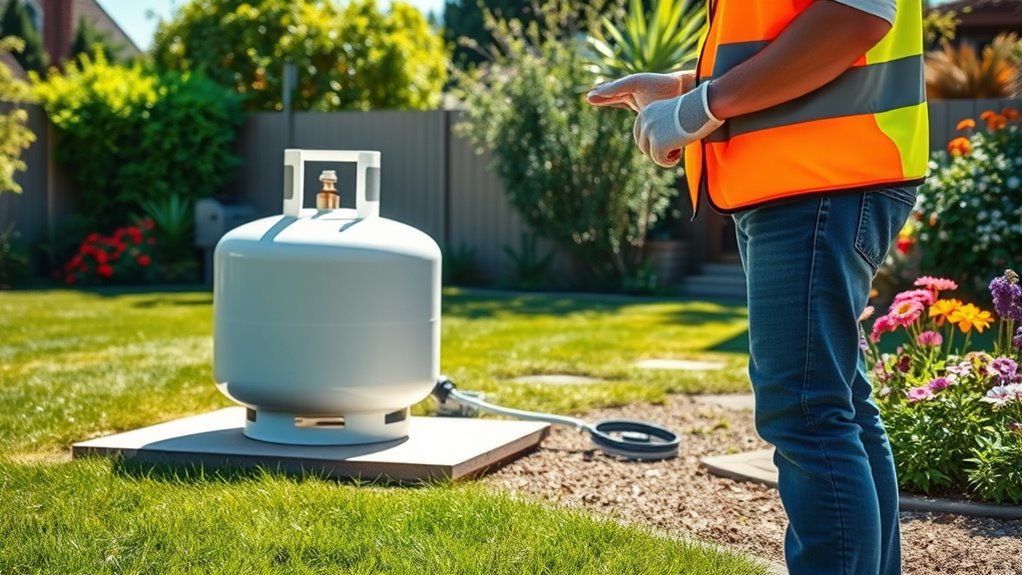
Using propane in enclosed or poorly ventilated spaces can quickly lead to dangerous buildup of flammable gases. Indoor hazards increase markedly when ventilation importance is ignored. Without proper airflow, propane fumes can accumulate unnoticed, risking explosions or carbon monoxide poisoning. To prevent this, keep these precautions in mind:
Using propane indoors without proper ventilation can cause dangerous gas buildup and hazards.
- Always use propane outdoors or in well-ventilated areas
- Never use propane appliances in small, confined spaces
- Install proper ventilation systems when using propane indoors
- Regularly check for leaks with soapy water to ensure safety
- Avoid storing propane cylinders near heat sources or windows
Understanding the ventilation importance helps you avoid hazardous indoor conditions. Proper handling and awareness can prevent accidents, keeping you and those around you safe from propane-related dangers.
Educate Yourself on Proper Shutdown and Emergency Procedures
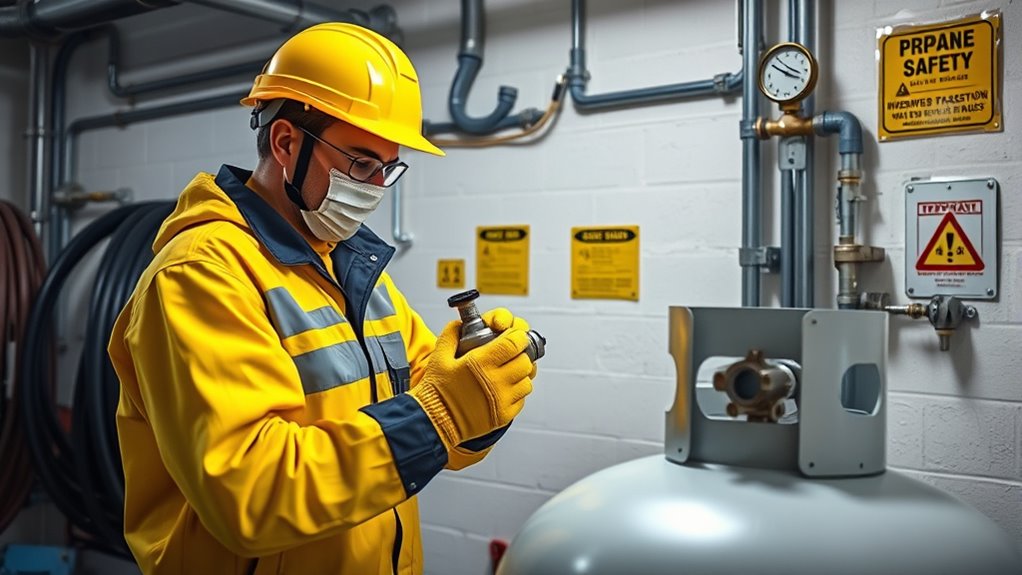
Properly shutting down propane equipment and knowing emergency procedures can prevent accidents from escalating into serious incidents. You should familiarize yourself with the correct shutdown steps and keep emergency contacts accessible. In case of a leak or fire, act quickly by turning off the supply and ventilating the area. Always have a plan for proper disposal of residual propane or damaged cylinders. Maintain a list of emergency contacts, including fire, medical, and local authorities, and review it regularly. Use the table below as a quick reference:
| Action | Important Details |
|---|---|
| Shutdown Equipment | Turn off valves, disconnect tanks |
| Alert Authorities | Call emergency services if needed |
| Evacuate Area | Ensure safety first |
| Proper Disposal | Follow local regulations |
| Follow Up | Inspect for leaks, repairs needed |
Stay prepared to act swiftly and safely.
Frequently Asked Questions
Can Propane Cylinders Be Stored or Used Indoors Safely?
You should never store or use propane cylinders indoors unless they’re specifically designed for indoor use and stored in well-ventilated areas. Proper indoor storage requires good ventilation to prevent gas buildup, which could lead to dangerous leaks or explosions. Always follow ventilation requirements and safety guidelines when handling propane, and keep cylinders away from heat sources, open flames, and electrical sparks to guarantee safety.
What Signs Indicate a Propane Leak or Cylinder Damage?
Did you know that over 30% of propane incidents involve unnoticed leaks? You can spot leak indicators by smelling a strong odor like rotten eggs, hearing hissing sounds, or seeing a white cloud or bubbling around the cylinder. Look for cylinder damage such as dents, rust, or corrosion. If you notice any signs of leaks or damage, shut off the gas immediately, move to safety, and get professional help.
How Often Should Propane Cylinders Be Inspected or Replaced?
You should inspect your propane cylinders regularly, ideally every 12 months, following the recommended inspection schedule. Check for signs of damage, corrosion, or leaks. Replace the cylinder immediately if you notice cracks, rust, or persistent leaks. Proper inspection and timely cylinder replacement guarantee safety and prevent accidents. Always follow manufacturer guidelines and local regulations to maintain safe propane handling practices.
Are There Specific Regulations for Transporting Propane Across State Lines?
Yes, you need transportation permits and must follow interstate regulations when transporting propane across state lines. These rules guarantee safe handling, proper documentation, and compliance with federal and state laws. You should check with the Department of Transportation (DOT) and the Pipeline and Hazardous Materials Safety Administration (PHMSA) for specific requirements. Always secure your cylinders properly and carry necessary permits to avoid fines or delays during transit.
What Are the First Steps in a Propane Leak or Fire Emergency?
If you detect a propane leak or fire, immediately activate the emergency shutdown to stop the flow of gas. Evacuate everyone from the area quickly, ensuring they stay a safe distance away. Call emergency services and inform them of the situation. Do not use open flames or electrical switches. Follow evacuation procedures precisely, and wait for trained professionals to handle the situation before returning. Safety is your top priority.
Conclusion
Handling propane safely is like steering a calm river—you need to stay alert and follow the rules to avoid splashing into danger. Always store cylinders properly, check for leaks, and keep flames away. Remember, your vigilance keeps everyone safe, just like a lighthouse guides ships away from rocks. By following these simple rules, you make sure your propane experience stays smooth and secure, turning potential hazards into safe journeys.