
To be prepared for pizza oven emergencies, regularly check your fire extinguisher’s pressure gauge, ensuring it’s not in the red zone. Keep it mounted in a visible, unobstructed spot near the oven, and verify that the pull pin and tamper seal are intact. Schedule annual professional inspections to confirm proper charge and functionality. Being aware of how to operate it confidently during an emergency can make all the difference—continue to learn more to stay fully prepared.
Key Takeaways
- Regularly inspect the fire extinguisher’s pressure gauge, pin, and seal to ensure immediate readiness for oven fires.
- Position the extinguisher visibly and within easy reach near the pizza oven for quick access during emergencies.
- Schedule professional inspections annually to verify internal condition, charge levels, and proper functionality.
- Train staff on proper extinguisher operation and fire response procedures specific to pizza oven fires.
- Maintain clear signage and unobstructed access to fire safety equipment to ensure swift action when needed.

Have you ever considered whether your fire extinguisher is truly ready to perform in an emergency? It’s easy to overlook, but ensuring your fire extinguisher is prepared can make all the difference during a kitchen fire, especially when dealing with a pizza oven flare-up. To keep it in top shape, you need to be familiar with fire safety protocols, which include regular extinguisher maintenance. This means more than just having a device on hand; it requires ongoing attention to ensure it functions effectively when you need it most.
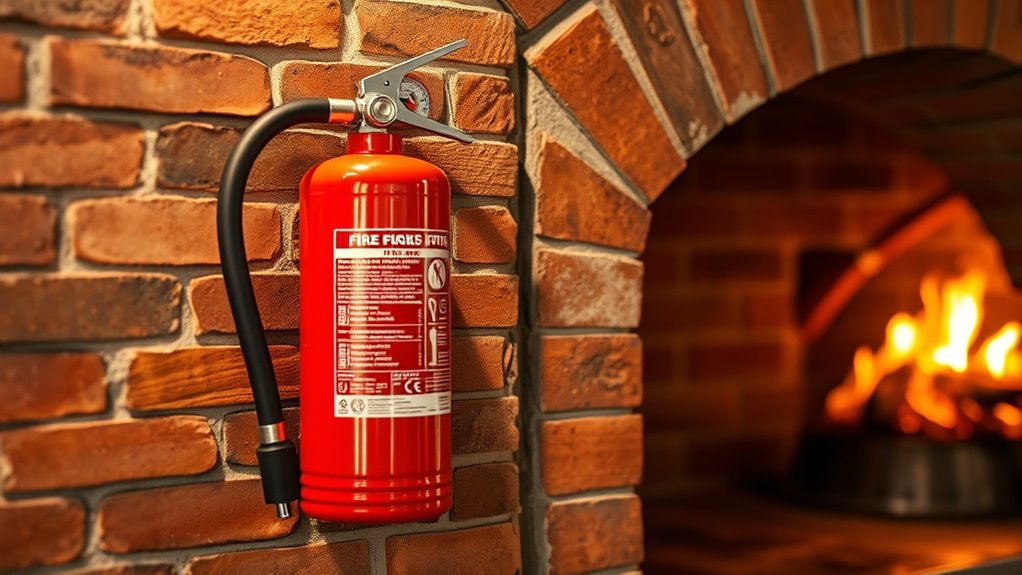
First, you should check your extinguisher’s pressure gauge regularly. If it’s in the red zone, it’s time to recharge or replace the unit. Many extinguishers also have a pull pin and tamper seal that need to be intact. If these are missing or damaged, the extinguisher might not operate properly. A quick visual inspection can reveal obvious issues, but it’s equally important to perform a more thorough inspection periodically, adhering to fire safety protocols. These protocols often specify a maintenance schedule, typically once a year, which should include professional servicing to check for internal corrosion, proper charge levels, and overall functionality.
Beyond visual checks, you should also ensure the extinguisher’s accessibility. It needs to be mounted in a visible, unobstructed location close to the kitchen area, especially near the pizza oven where fires are more likely. If it’s hidden behind boxes or stored in a cabinet, it might not be reachable quickly during an emergency. Clear signage and a designated spot help remind everyone of its location and importance.
Remember, extinguisher maintenance isn’t just about visual inspections. You should also familiarize yourself with how to operate the device correctly. Practice using it with a fire extinguisher training session, which can boost your confidence and reaction time if a fire breaks out. Proper maintenance and training align with fire safety protocols designed to minimize damage and prevent injuries.
Additionally, understanding the top 5 projectors for gaming enthusiasts can help you create a safer environment for entertaining or relaxing, as proper setup can prevent accidents and improve visibility in your space. Proper maintenance and understanding of your equipment are essential components of overall safety and preparedness.
In short, keeping your fire extinguisher ready involves a combination of regular checks, proper storage, and understanding how to use it effectively. It’s a small investment of time that can have a significant impact when a fire occurs. Staying proactive in extinguisher maintenance and adhering to fire safety protocols ensures you’re prepared for any pizza oven mishaps, giving you peace of mind knowing you can respond quickly and effectively in an emergency.
Frequently Asked Questions
How Often Should a Pizza Oven Fire Extinguisher Be Inspected?
You should inspect your pizza oven fire extinguisher at least once a year during your annual maintenance. Regular inspections guarantee the extinguisher is in proper working condition and easily accessible. Check its placement to confirm it’s in a visible, reachable spot, and look for any signs of damage or low pressure. Staying diligent with these inspections helps you stay prepared and compliant with safety standards.
Can a Regular Fire Extinguisher Be Used on Pizza Oven Fires?
Think of using a fire extinguisher on a pizza oven fire as trying to tame a wild flame. A regular fire extinguisher, often water-based, isn’t suitable for pizza oven fires caused by hot oil or electrical issues. Fire extinguisher types like Class K or ABC are designed for such fires and are safe for pizza oven materials. Always choose the right extinguisher to prevent turning a small flame into a bigger problem.
What Training Is Needed to Effectively Operate a Fire Extinguisher?
You need proper fire safety and extinguisher training to operate a fire extinguisher effectively. This training teaches you how to identify the type of fire, select the right extinguisher, and use it correctly in emergencies. You’ll learn the PASS technique—Pull, Aim, Squeeze, and Sweep—and practice handling the extinguisher confidently, ensuring you’re prepared to respond swiftly and safely during a pizza oven fire or other incidents.
Are There Specific Extinguishers Recommended for Grease Fires?
Think of grease fires as sneaky flames that demand special tools. You should always have grease fire extinguishers, specifically Class K extinguishers, nearby. These extinguishers are like fire-fighting wizards that can safely tame kitchen blazes caused by cooking oils and fats. Using a regular extinguisher could make things worse, but a Class K extinguisher’s unique design targets grease fires directly, keeping your kitchen safe and your mind at ease.
How Do Weather Conditions Affect Fire Extinguisher Performance Outdoors?
Weather effects can considerably impact fire extinguisher performance outdoors. Cold temperatures may cause the extinguisher’s contents to thicken or freeze, reducing effectiveness, while high heat can increase fire risks and strain the device. Wind can blow extinguishing agents away, making it harder to control fires. For outdoor safety, make sure your fire extinguisher is suitable for weather conditions, regularly maintained, and easily accessible to respond quickly during emergencies.
Conclusion
Think of your fire extinguisher as your shield and lighthouse—standing ready to protect and guide you through the smoke and flames. When you’re prepared, you’re holding a steady beacon that can stop a small spark from turning into a blazing storm. Keep it accessible, know how to use it, and stay vigilant. With your extinguisher at your side, you’re not just ready; you’re the guardian of your home and loved ones, shining bright against danger.