
To batch toppings efficiently, start by analyzing your customer preferences and sales data to identify popular options. Prepare ingredients in small, measured batches using calibrated scoops for consistency. Use clear, airtight containers labeled with dates to maintain freshness and prevent spoilage. Organize toppings logically and avoid overfilling containers to reduce spills. Follow best practices for storage and portioning, ensuring quality and waste reduction. Keep these tips in mind, and you’ll learn more ways to optimize your topping process.
Key Takeaways
- Pre-measure toppings into standard portions using calibrated scoops or ladles for consistency.
- Batch similar toppings together to streamline prep and reduce cross-contamination.
- Label containers with prep and expiration dates to monitor freshness and rotation.
- Store toppings in airtight, clearly labeled containers to prevent spoilage and maintain quality.
- Analyze sales data regularly to adjust batching quantities and avoid overproduction or shortages.
Assessing Your Topping Needs and Planning Ahead
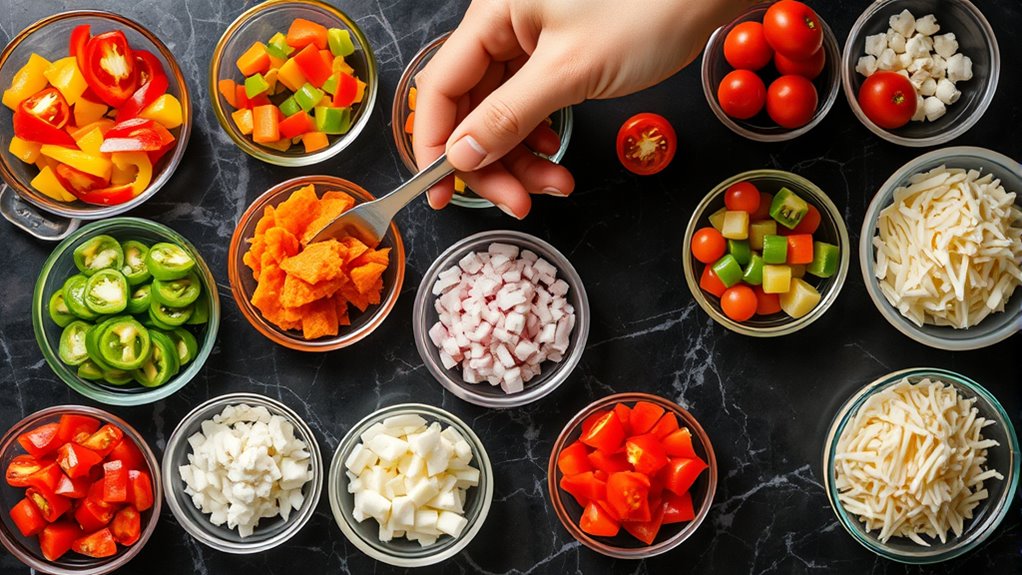
Before you start batching toppings, it’s essential to assess what you actually need. Start by evaluating your topping variety and understanding your customer preferences. If your customers favor classic options like chocolate and caramel, focus on batching those first. Consider seasonal or trending toppings to keep your offerings fresh and appealing. Analyzing sales data helps identify which toppings are most popular, so you don’t overprepare or waste ingredients. Planning ahead guarantees you stock enough of the essentials without cluttering your workspace with unnecessary items. Being aware of ingredient shelf life can help prevent spoilage and ensure freshness. By aligning your topping variety with customer preferences, you streamline your prep process and improve customer satisfaction. This proactive approach saves time, reduces waste, and makes your topping station more efficient.
Preparing and Storing Toppings for Maximum Freshness

To guarantee your toppings stay fresh and appealing, proper preparation and storage are essential. Start by prepping ingredient variations in small batches to prevent spoilage and maintain quality. Label containers clearly to track freshness and prevent mix-ups. When storing, use airtight containers to lock in flavor combinations and keep out moisture. Keep toppings at consistent temperatures, ideally refrigerated, to preserve their vibrant colors and textures. Consider how different ingredients react over time to avoid sogginess or drying out. Properly stored toppings will stay flavorful longer, saving you time and reducing waste. Additionally, understanding storage conditions can help extend the shelf life of your ingredients and maintain their optimal quality.
Utilizing Proper Containers and Tools for Batching

Choosing the right containers and tools is essential for effective batching of toppings. Proper container organization helps keep toppings accessible and prevents cross-contamination. Use clear, stackable containers to easily identify contents and maximize space. When selecting tools, opt for scoops, spatulas, and ladles that match the portion sizes you need. Sharp, durable tools make transferring toppings quick and clean, reducing waste. Consistent tool selection also ensures uniform portions, saving time during busy periods. Avoid overcrowding containers, which can lead to spills and confusion. Instead, organize toppings logically—group similar items together and label containers if needed. Proper container organization combined with the right tools streamlines your batching process, keeps toppings fresh longer, and helps maintain a tidy, efficient workspace. Awareness of supermarket hours can also help plan shopping for supplies at optimal times.
Implementing Consistent Portioning Techniques

Implementing consistent portioning techniques guarantees each serving meets quality standards and minimizes waste. By mastering portion control, you ensure every customer receives the right amount, enhancing satisfaction and reducing costs. To optimize your topping variety, use standardized tools and procedures that deliver uniform servings each time. This consistency builds trust and streamlines your workflow.
Consider these key tactics:
- Use calibrated scoops and ladles for precise portion control.
- Train staff to follow standardized serving sizes.
- Batch toppings in pre-measured amounts for quick assembly.
- Regularly audit portions to maintain consistency and customer confidence.
These steps make your topping batching more efficient, reduce waste, and elevate the overall quality of your offerings.
Maintaining Quality and Freshness During Storage

Once you’ve established consistent portioning techniques, maintaining the quality and freshness of toppings during storage becomes your next priority. Proper storage preserves flavor combinations and ensures toppings stay appealing for customers. Use airtight containers to prevent exposure to air, which can cause spoilage and flavor loss. Keep toppings at the correct temperature—cold items in refrigeration, warm toppings in controlled environments—so they stay fresh longer. Label containers with the date to track freshness and rotation. For topping variations, group similar items together to avoid cross-contamination and flavor transfer. Regularly check for signs of spoilage or drying out, discarding compromised items promptly. Implementing proper storage practices is essential for maintaining optimal freshness and flavor. This approach guarantees that your toppings remain flavorful, fresh, and ready to deliver the best customer experience.
Frequently Asked Questions
How Often Should I Review My Topping Inventory?
You should review your topping inventory weekly to stay on top of stock levels and guarantee freshness. Follow proper storage guidelines to prevent spoilage, and monitor inventory turnover to identify slow-moving items. Regular reviews help you adjust orders promptly, reduce waste, and maintain quality. By consistently checking your inventory, you keep your toppings fresh, minimize costs, and streamline your operations, making your topping management efficient and effective.
What Are Signs of Topping Spoilage I Should Watch For?
You notice a strange odor or a slimy texture, and suddenly, topping spoilage indicators become obvious. Watch for changes in topping freshness, like discoloration, mold, or an off smell. If your toppings develop a sour or pungent aroma, discard them immediately. These spoilage indicators signal it’s time to replace your toppings to guarantee quality and safety. Stay vigilant, because fresh toppings make all the difference in your dishes.
Can Batching Toppings Reduce Overall Food Waste?
Yes, batching toppings can reduce overall food waste by allowing you to use reusable containers and implement portion control. When you prepare toppings in bulk, you minimize excess and avoid spoilage. Using reusable containers keeps ingredients fresh longer, and portion control ensures you’re serving the right amount each time. This approach helps you manage inventory better, cut down on waste, and save money while maintaining quality.
What Is the Ideal Shelf Life for Different Toppings?
You might worry about spoilage, but proper topping preservation and storage guidelines guarantee safety and freshness. Typically, dairy-based toppings last 5-7 days, vegetable toppings stay fresh for 3-5 days, and oil-based toppings can last up to two weeks if refrigerated. Always label and date your batches, and keep them at consistent cold temperatures to maximize shelf life. These practices help prevent waste and maintain quality.
How Do I Prevent Cross-Contamination During Batching?
To prevent cross-contamination during batching, you should practice proper sanitation by thoroughly cleaning all utensils and surfaces before handling different toppings. Use separate containers for each topping and avoid double-dipping. Store toppings at appropriate temperatures to guarantee storage safety, and always wash your hands before switching tasks. Implementing these steps helps maintain hygiene and keeps your toppings safe for consumption.
Conclusion
By following these batching tips, you’ll master the art of topping prep like a pro, saving time and reducing waste. When you plan ahead, store smartly, and portion consistently, you’ll keep your toppings fresher than ever—almost like capturing a piece of perfection in every bite. Say goodbye to guesswork and hello to efficiency that’ll transform your kitchen into a well-oiled topping machine. Get ready to impress your customers with toppings so perfect, they’ll think you’re a culinary wizard!