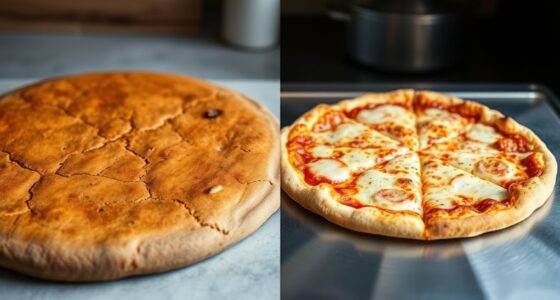
To cook different pizza styles, adjust your oven temperature accordingly. For Neapolitan, crank it up to 800-900°F for a quick 60-90 second bake, aiming for a blistered, airy crust. For New York-style, set your oven to around 475°F and bake for 7-12 minutes for a balanced, chewy crust. For Sicilian, lower the heat to about 425°F and extend baking to 15-20 minutes for a thick, crispy crust. Keep experimenting to perfect each style’s unique texture.
Key Takeaways
- Use high oven temperatures (800-900°F) for Neapolitan pizza to achieve quick baking and characteristic blistered crust.
- Set your oven to around 475°F for New York-style pizza to balance crust crispness and baking time.
- Bake Sicilian-style pizza at approximately 425°F for longer (15-20 minutes) to develop a thick, tender crust.
- Preheat oven and baking surface (stone or steel) thoroughly to ensure even heat transfer for all styles.
- Adjust baking duration based on crust thickness: quick for Neapolitan, moderate for NY, extended for Sicilian.

Cooking different styles allows you to explore a variety of flavors and techniques from around the world, enriching your culinary repertoire. When it comes to mastering pizza, adjusting your approach based on the style you want to achieve is essential. Neapolitan, New York, and Sicilian pizzas each have unique characteristics, primarily driven by differences in dough preparation and baking techniques. Understanding how to modify temperature settings for each style will help you produce authentic results, whether you’re using a traditional oven or a home setup.
Starting with Neapolitan pizza, the goal is to create a light, airy crust with a slightly charred flavor. To achieve this, you need to focus on high-temperature baking. In professional pizzerias, ovens reach 800 to 900°F, but at home, you should aim for the highest temperature your oven can safely reach, typically around 500 to 550°F. Preheat your oven and pizza stone or steel for at least 45 minutes. This intense heat quickly cooks the pizza, creating that signature blistered, chewy crust. When working with pizza dough for Neapolitan style, you’ll want to keep it thin and stretch it gently. The baking technique involves sliding the topped pizza onto the hot surface and baking for 60-90 seconds, which requires precise temperature control to avoid burning the crust while ensuring the toppings are perfectly cooked. Using a pizza peel helps transfer the pizza smoothly onto the hot surface for better results.
In contrast, New York-style pizza has a thicker, more substantial crust that’s still crisp on the outside but chewy inside. To replicate this, you should bake at a slightly lower temperature, around 475°F. This allows the dough to cook evenly without burning the outer layer before the inside is fully done. The pizza dough for this style often contains a bit more oil or sugar, which promotes browning and a tender crumb. The baking technique involves a longer bake, about 7-12 minutes, giving you enough time for the crust to develop a golden-brown color while keeping it flexible enough to fold in your hand. Using a baking stone or steel helps evenly transfer heat, vital for a consistent bake. Proper oven calibration and monitoring can also help maintain accurate temperature control.
Sicilian pizza, known for its thick, rectangular crust, benefits from even lower baking temperatures, around 425°F. Its dough is often enriched with olive oil and has a bread-like texture. The goal here isn’t just quick baking but ensuring the thick crust is thoroughly cooked through. You’ll want to bake it for approximately 15-20 minutes, which allows the dough to puff up and develop a crisp exterior while remaining tender inside. The baking technique emphasizes even heat distribution, so using a well-heated oven with a sturdy baking sheet or pan is key. Additionally, oven temperature consistency is crucial for achieving the desired texture and crust quality.
Mastering these temperature adjustments and baking techniques lets you produce authentic styles, each with its distinctive texture and flavor. The key is understanding how your oven’s heat interacts with your pizza dough and tailoring your approach accordingly, whether you’re aiming for the quick, blistered Neapolitan or the hearty, thick Sicilian.
Frequently Asked Questions
How Does Ambient Humidity Affect Pizza Baking Temperature?
Humidity effects can make pizza baking tricky, as higher moisture levels in the air can cause your dough to absorb extra moisture, leading to a softer crust. To counter this, you need better moisture control by adjusting your oven temperature or using a dehumidifier in your workspace. Lower ambient humidity helps achieve a crisp crust, while high humidity requires you to bake at slightly higher temperatures to compensate for the moisture.
Can Different Oven Types Influence Optimal Cooking Temperatures?
Yes, different oven types influence ideal cooking temperatures. You should consider the oven material, like stone or metal, which affects heat retention and distribution. Insulation efficiency also plays a role by maintaining consistent temperature levels. For example, a well-insulated brick oven requires lower temperatures compared to a metal oven. Adjust your settings accordingly to achieve the best crust and toppings, depending on your oven’s construction and insulation quality.
What Are the Signs of Undercooked or Overcooked Pizza?
You’ll notice undercooked pizza crust feels doughy, soft, and lacks crispness, while overcooked crust becomes hard, dark, and possibly burnt. For the cheese melt, undercooked pizza has unmelted, gooey cheese, and overcooked pizza shows burnt, crispy cheese. Keep an eye on these signs to make certain your pizza is perfectly baked—aim for a golden crust and evenly melted cheese for the best result.
How Does Dough Hydration Level Impact Baking Temperature Requirements?
You might think higher hydration levels always need lower baking temperatures, but that’s not entirely true. Increased dough hydration enhances elasticity and gluten development, which can require higher temperatures to achieve crispness without over-raising the dough. A well-hydrated dough is more pliable, but if baked at too low a temperature, it may become gummy. Adjust your oven temperature based on hydration to balance elasticity and proper baking.
Are There Safety Concerns When Adjusting High-Temperature Ovens?
When adjusting high-temperature ovens, you should prioritize oven safety and make certain the proper temperature calibration. Always verify that your oven reaches the set temperature accurately to avoid risks like overheating or uneven cooking. Regularly check safety features like door seals and emergency shut-off functions. Proper calibration prevents accidents and ensures consistent results, so never skip routine maintenance. Stay cautious, follow manufacturer guidelines, and keep safety protocols in mind when working with high temperatures.
Conclusion
So, next time you’re experimenting with pizza styles, remember that temperature truly is your secret weapon. Some say that higher heat creates authentic Neapolitan bubbles, while cooler temps develop traditional Sicilian crusts. But here’s a fun theory: perhaps it’s not just temperature, but the combination of heat, dough hydration, and timing that truly defines each style. So, play around, trust your instincts, and uncover your perfect pizza—because innovation often starts with a simple change.