
To manage oven shutdown safely, first allow it to cool completely before handling or cleaning—don’t open the door prematurely. Wear protective gloves and make sure the interior feels comfortably cool. Remove debris gently and clean with mild solutions, avoiding harsh abrasives. Double-check that all parts are dry and properly reassembled before turning it back on. Proper cooling and cleaning help keep your oven safe, efficient, and long-lasting—discover more tips to maintain it effectively.
Key Takeaways
- Allow sufficient time for the oven to cool completely before handling or cleaning.
- Wear protective gloves and ensure proper ventilation during shutdown and cleaning.
- Avoid opening the oven door repeatedly during cooling to prevent heat trapping.
- Remove loose debris and clean interior surfaces with mild solutions, avoiding harsh abrasives.
- Confirm all parts are dry and properly reassembled before turning the oven back on.
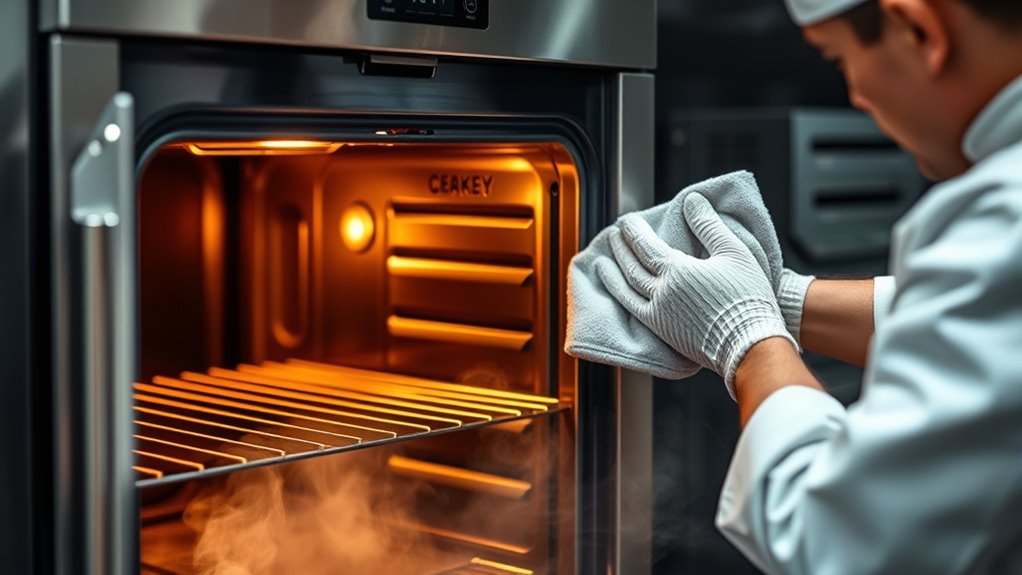
Managing Oven Shutdown
Shutting down an oven properly is essential to guarantee safety, maintain equipment longevity, and prepare it for future use. When you turn off your oven, the first thing to consider is oven safety. You want to ensure that it cools down adequately before handling any components or cleaning it. Rushing this process can lead to burns or other accidents, especially if residual heat remains. Once the oven indicator shows it’s no longer hot, you can begin the cleaning procedures, but always keep safety in mind. Wear protective gloves to shield your hands from hot surfaces or cleaning chemicals. Also, make sure the area around the oven is well-ventilated to avoid inhaling fumes from cleaning agents.
Proper oven shutdown ensures safety, prevents burns, and extends equipment life.
Cooling the oven properly is a critical step. You should allow enough time for it to cool to a safe temperature before attempting to clean or service it. This cooling period helps prevent burns and reduces the risk of damaging sensitive parts. During this time, avoid opening the oven door repeatedly, as this can trap heat and slow down the cooling process. Instead, keep the door closed and wait until the interior feels comfortably cool to the touch. If your oven has a cooling fan, make sure it has fully stopped before proceeding with cleaning or maintenance. This ensures that no moving parts are exposed to moisture or cleaning chemicals while in operation. Properly managing oven safety is also crucial to prevent accidents during maintenance.
Cleaning procedures are an essential part of managing an oven shutdown. Once cooled, you should remove all loose debris, crumbs, and spills from the oven interior. Use a soft cloth or sponge with a mild cleaning solution suitable for oven surfaces. Avoid harsh abrasives that could scratch or damage the oven’s finish. Pay close attention to the oven racks, door seals, and corners where grime can accumulate. Regular cleaning not only keeps your oven looking good but also improves heat efficiency and prolongs its lifespan. Be sure to follow the manufacturer’s guidelines for cleaning agents and methods, as improper cleaning can lead to damage or safety hazards.
After cleaning, double-check that all parts are dry and correctly assembled before turning the oven back on. Properly managing oven shutdown isn’t just about turning it off; it’s about doing so safely, cooling it down effectively, and thoroughly cleaning it to keep it in top condition. This routine helps prevent future issues, ensures safe operation, and maintains optimal performance for years to come.
Frequently Asked Questions
How Often Should I Clean My Oven After Shutdown?
You should clean your oven after every use to maintain proper oven maintenance and guarantee it functions efficiently. For routine cleaning, wipe down surfaces weekly, especially if you notice spills or grease buildup. Deep cleaning can be done monthly or as needed, depending on how often you cook. Regular cleaning frequency helps prevent residue buildup, extends your oven’s lifespan, and keeps it safe and hygienic for your cooking needs.
Can I Use My Oven Immediately After Cleaning?
You can use your oven immediately after cleaning, but don’t rush! After cleaning, make sure you’ve thoroughly removed all cleaning residues and odors, as lingering oven odor removal issues can turn your next meal into a disaster. For best results, wait until the oven’s completely dry and cooled. Regular cleaning frequency keeps your oven fresh and safe, preventing the buildup of grime that could cause smoke or unpleasant smells during use.
What Safety Precautions Are Essential During Oven Cooling?
To guarantee oven safety during cooling, always wait until the oven is completely cool before touching or cleaning it. Use cooling precautions like opening the door slightly for ventilation and wearing heat-resistant gloves. Never rush the cooling process, as hot surfaces can cause burns. Keep children and pets away to avoid accidents. Following these steps helps prevent injuries and maintains safe oven operation after shutdown.
Are There Specific Cleaning Agents for Different Oven Types?
Think of your oven as a garden needing the right nutrients; specific oven cleaning agents are essential for each type. You should choose products compatible with your oven type—whether it’s a self-cleaning, conventional, or microwave oven—to avoid damage. Always check labels for oven type compatibility. Using the right cleaning agents guarantees a gentle, effective clean, preserving your appliance’s longevity and performance while keeping your kitchen shining bright.
How Do I Prevent Oven Damage During Cooling and Cleaning?
To prevent oven damage during cooling and cleaning, you should monitor the oven temperature and avoid rapid temperature changes. Use gentle cooling methods like leaving the door ajar or turning off the oven early. Clean with appropriate agents for your oven type, and never use harsh chemicals or abrasive tools. This careful approach helps maintain your oven’s integrity and prolongs its lifespan.
Conclusion
As you carefully shut down your oven, imagine the gentle hush of heat fading away, like a calm sunset after a busy day. The warm, inviting glow dims, leaving behind a cool, silent shell ready for cleaning. By safely cooling and cleaning your oven, you safeguard your kitchen and guarantee it’s ready for your next culinary adventure. Embrace this calming routine, knowing you’re maintaining a safe, efficient space where delicious memories are made.