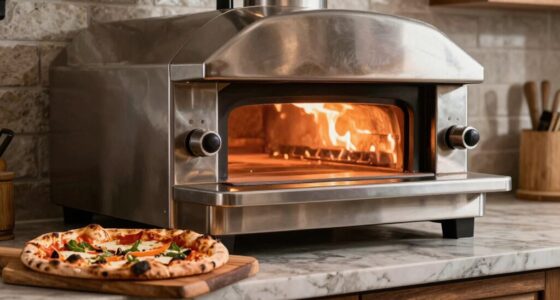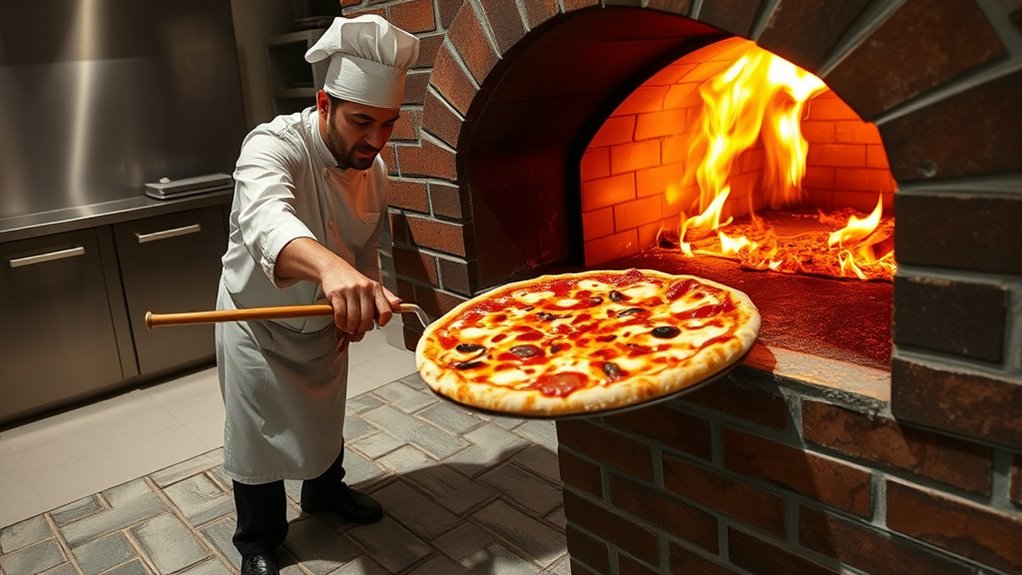

To combat uneven floor temperatures in your oven, it’s crucial to move your pizza periodically during baking. Shifting it from the center to the edges or swapping positions on different racks helps expose it to various heat zones, promoting even cooking. Regular rotation prevents hot spots from scorching your pizza and ensures toppings melt uniformly. If hot spots persist, more techniques can make a difference—keep going to discover how to perfect your baking process.
Open a free Amazon Business account
Business pricing, bulk buying and tax-exempt orders.
As an affiliate, we earn on qualifying purchases.
Key Takeaways
- Regularly move the pizza between different oven zones to expose it to even heat distribution.
- Rotate the pizza from top to bottom racks to prevent hot spots from burning or undercooking.
- Shift the pizza from the oven floor to a higher position if the bottom browns too quickly.
- Use a pizza stone or baking surface that promotes uniform heat transfer across the crust.
- Monitor cooking progress and adjust positions proactively to compensate for identified hot spots.
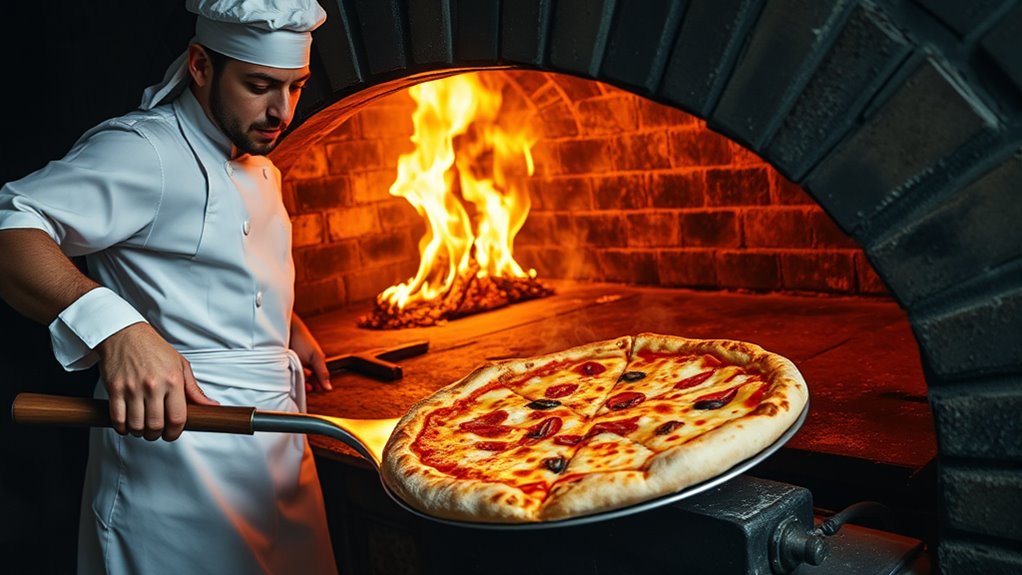
When baking pizzas, moving them around the oven is vital to guarantee even cooking and a perfectly crispy crust. If you’ve ever noticed certain spots on your pizza cooking faster or burning while others remain underdone, it’s likely due to uneven floor temperatures. Ovens, especially commercial or home models, often have hot spots caused by poor oven circulation and uneven heat distribution. These hot spots can lead to inconsistent results, making it necessary to adjust the pizza’s position during baking.
To combat this, you should regularly rotate your pizza throughout the baking process. Moving the pizza from the center of the oven to the edges, or from the top rack to the bottom, helps expose it to different heat zones. This practice guarantees that no one part of the pizza is subjected to more direct heat than another, promoting uniform cooking. When you rotate your pizza, you’re effectively balancing the heat distribution, which is vital for achieving an evenly baked crust and properly melted toppings.
Understanding how heat moves inside your oven can help you make smarter adjustments. Most ovens depend on convection currents and radiant heat, but these can create uneven temperature zones, especially near the walls or the floor. By shifting the pizza periodically, you allow it to benefit from these varying heat patterns, preventing overcooking or burning in one area. Additionally, if you notice the bottom of your pizza browning too quickly, it’s a sign that the oven’s floor temperature is higher in that spot. Moving the pizza can help avoid scorching the crust while ensuring the toppings are cooked properly.
In some cases, you might need to adjust your oven’s temperature or use a pizza stone to improve heat distribution. A pizza stone absorbs and radiates heat evenly, helping to reduce hot spots and create a more consistent baking environment. But even with a stone, moving the pizza during baking can make a difference, especially if your oven’s hot spots are persistent. The key is to be attentive and proactive, checking your pizza frequently and rotating it as needed. This approach guarantees that every part of your pizza receives the same level of heat, resulting in a uniform crust and perfectly cooked toppings.
Additionally, proper oven calibration and hot spot management can significantly improve baking results by addressing uneven heat distribution at its source.
As an affiliate, we earn on qualifying purchases.
Frequently Asked Questions
How Do I Identify Hot and Cold Spots in My Oven?
To identify hot and cold spots in your oven, start with oven calibration to guarantee accurate temperature readings. Use thermal imaging or an infrared thermometer to scan the oven floor and walls, revealing temperature variations. Look for areas that are noticeably warmer or cooler than the set temperature. This helps you pinpoint uneven spots, so you can adjust your cooking or consider oven calibration to improve heat distribution.
What Tools Can Help Me Move Pizzas More Safely?
Think of your tools as your trusty sidekicks on a pizza adventure. A sturdy pizza peel acts like a magic wand, smoothly sliding pies into and out of the oven’s fiery depths. Pair it with oven mitts that shield your hands like a knight’s armor, ensuring safe moves. Master your pizza peel techniques, and you’ll dance around hot spots confidently, turning oven chaos into a well-choreographed pizza ballet.
How Often Should I Rotate My Pizza During Baking?
You should rotate your pizza every 2-3 minutes during baking to guarantee even cooking. Keep an eye on dough thickness and sauce placement, adjusting as needed to prevent uneven browning. Moving the pizza allows hot spots to even out, especially if your oven has uneven floor temperatures. Use tools like a pizza peel to turn it safely, helping you achieve a perfectly cooked crust with consistent toppings distribution.
Does Oven Type Affect How I Move Pizzas Around?
Think of your oven as a dance floor where each step matters. Yes, the oven type influences how you move your pizza. For example, convection ovens with better insulation and well-placed heating elements promote even heat, reducing the need to shuffle pizzas frequently. In contrast, traditional or poorly insulated ovens may require more attention, so keep an eye on hot spots and rotate your pizza accordingly to avoid uneven cooking.
Can Adjusting Oven Racks Improve Heat Distribution?
Yes, adjusting oven racks can improve heat distribution. By ensuring proper oven calibration, you help the heat spread evenly. Positioning your baking stone correctly, ideally in the center or slightly lower, enhances heat transfer. Move the racks to different levels during baking to avoid hot spots and promote uniform cooking. Regular calibration and strategic baking stone placement make a noticeable difference in consistent, perfectly cooked pizzas.
As an affiliate, we earn on qualifying purchases.
Conclusion
Just like a skilled chef adjusts pizzas to avoid hot spots, you can master oven heat by shifting your pies. I once watched a baker rotate a pizza, and suddenly, the uneven heat transformed into perfect, golden crusts. Remember, small adjustments make a big difference—think of your oven as a dance partner, responding best when you move in harmony. With patience and practice, you’ll turn uneven temps into perfectly cooked masterpieces every time.
As an affiliate, we earn on qualifying purchases.
As an affiliate, we earn on qualifying purchases.
Flea & tick season Picks
flea and tick prevention
As an affiliate, we earn on qualifying purchases.