
Before you start using an IR thermometer, make sure you understand how it works, including key factors like surface emissivity, distance, and angle, which can affect accuracy. Calibrate the device regularly, keep the lens clean, and follow manufacturer instructions for setup. Use proper aiming and avoid reflective surfaces or adverse environmental conditions. If you continue exploring, you’ll find detailed tips to ensure precise, safe measurements every time.
Key Takeaways
- Understand the principles of infrared measurement and ensure proper device calibration before use.
- Prepare the environment by avoiding extreme conditions and cleaning the lens for accurate readings.
- Follow manufacturer guidelines for correct distance, angle, and aiming to prevent measurement errors.
- Adjust emissivity settings based on surface material and clean surfaces for reliable results.
- Perform regular maintenance, calibration, and adhere to safety precautions to ensure device accuracy and user safety.
What Is an IR Thermometer and How Does It Work?
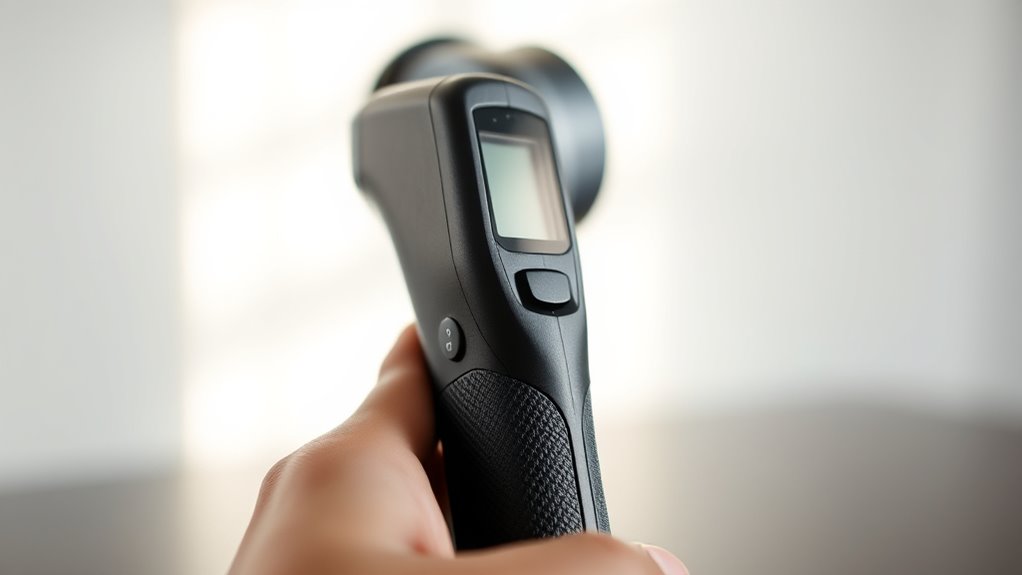
An IR thermometer is a device that measures temperature from a distance by detecting infrared radiation emitted by an object. It operates based on infrared principles, meaning it senses the heat energy radiated naturally from surfaces. Inside the device, a sensor captures this infrared radiation and converts it into an electrical signal. This signal is processed to give you a temperature reading. Some IR thermometers use thermal imaging to display a visual map of temperature variations across a surface, providing more detailed insights. Because it doesn’t require contact, it’s ideal for measuring hot, dangerous, or hard-to-reach objects. Understanding these infrared principles helps you appreciate how the device accurately detects temperature without physical contact, making IR thermometers a versatile tool for many applications. Infrared principles are fundamental to understanding how these devices work effectively and accurately.
Which Situations Benefit Most From Using an IR Thermometer?
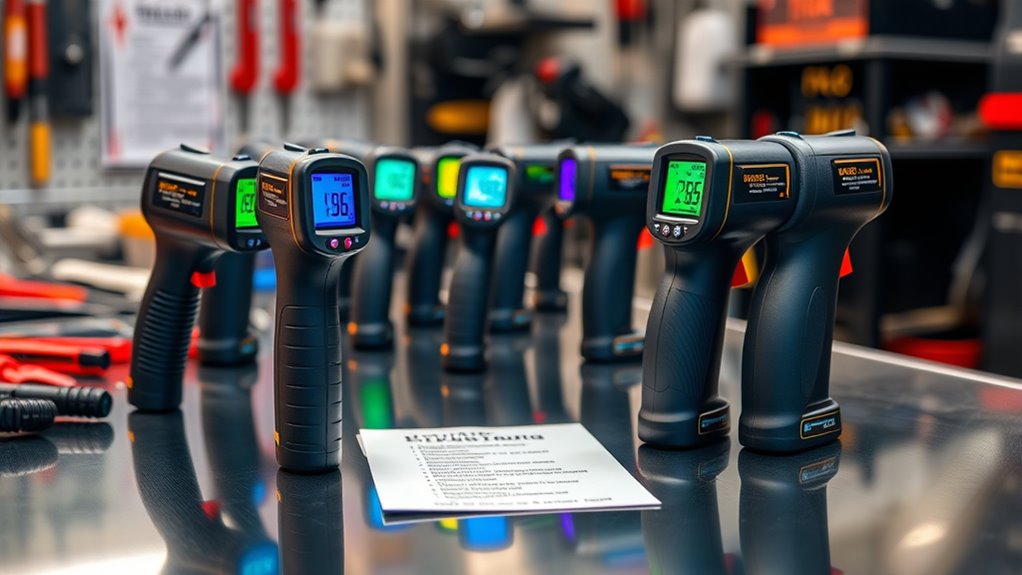
IR thermometers are especially useful in situations where quick, contactless temperature readings are essential. You’ll find them valuable for food safety checks, monitoring health, and inspecting industrial equipment. Understanding these key uses helps you maximize the benefits of your IR thermometer. Additionally, they can be helpful in detecting temperature anomalies, which may indicate underlying issues or hazards.
Food Safety Checks
Wondering when an IR thermometer can best guarantee food safety? It’s especially useful during cooking when verifying that food reaches the proper cooking temperatures. Using an IR thermometer helps prevent undercooked or overcooked dishes, reducing foodborne illness risks. It’s ideal for checking the surface temperatures of meats, poultry, and seafood quickly and accurately. By confirming that the internal temperature hits safe levels, you ensure your food is safe to eat. This is vital for maintaining food safety standards, especially when grilling, roasting, or frying. An IR thermometer offers a fast, contactless way to monitor temperatures, making it easier to consistently achieve safe, properly cooked meals and avoid the dangers of unsafe food handling. Additionally, understanding the tuning modifications your equipment has undergone can help interpret temperature readings more accurately during food preparation.
Medical and Health Monitoring
Have you ever needed to quickly check a fever or monitor body temperature without contact? IR thermometers excel in medical and health monitoring because they provide fast, accurate readings with minimal disturbance. For reliable results, verify your device is properly calibrated and offers precision measurement. They’re ideal in hospitals, clinics, or at home when monitoring children or elderly patients. Using an IR thermometer reduces cross-contamination, making it safer for multiple users. Keep in mind, regular device calibration maintains accuracy over time. Here’s when they’re most beneficial:
| Situation | Advantage | Notes |
|---|---|---|
| Fever detection | Quick, contactless readings | Verify device calibration |
| Monitoring infants | Gentle, fast measurements | Use for frequent checks |
| Screening at healthcare facilities | Reduces cross-contamination | Verify device calibration |
| Home health checks | Easy, non-invasive monitoring | Maintain precision measurement |
Additionally, understanding the significance of angel number soulmates can enhance your awareness of love opportunities, especially when using your device to monitor health during emotional or stressful times.
Industrial Equipment Inspection
When inspecting industrial equipment, using an IR thermometer allows you to quickly identify overheating components and mechanical issues without shutting down machinery. This is especially useful for thermal imaging applications and evaluating heat distribution. To get accurate readings, ensure proper emissivity adjustment for different materials. Here are situations where IR thermometers excel:
- Detecting hotspots in electrical panels and motors, preventing failures.
- Monitoring conveyor belts and bearings to avoid breakdowns.
- Checking heat loss in insulated pipes and tanks for energy efficiency.
Additionally, understanding thermal properties helps optimize the use of IR thermometers across various inspection scenarios.
How Do I Prepare My IR Thermometer for Accurate Readings?
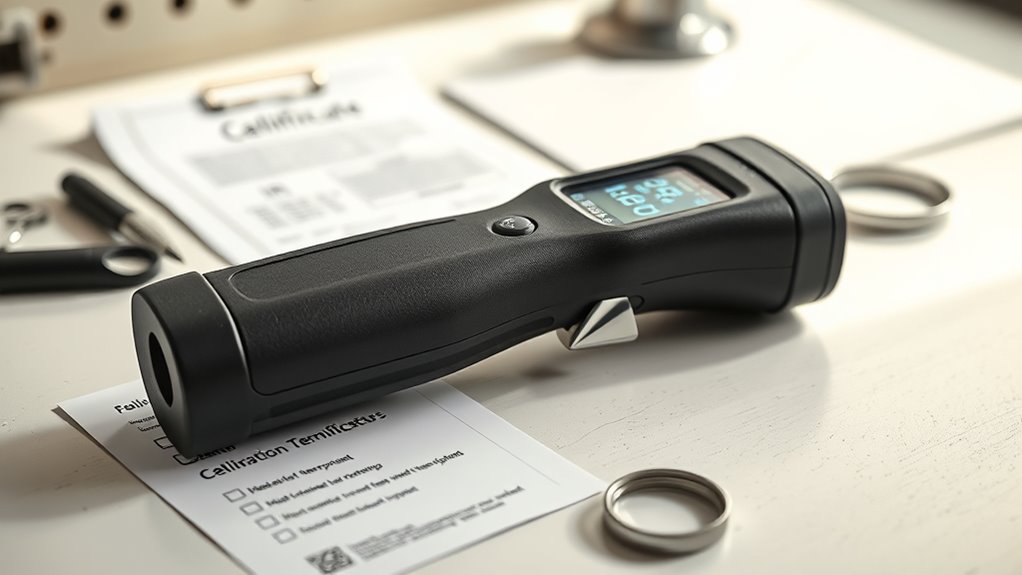
To guarantee your IR thermometer provides accurate readings, start by calibrating it according to the manufacturer’s instructions. Proper calibration procedures ensure the device measures temperatures correctly and remains reliable over time. Before use, check the battery maintenance needs; a fresh, fully charged battery ensures consistent performance. Replace batteries if they’re weak or showing signs of corrosion. Clean the lens with a soft, dry cloth to avoid dirt or smudges that could distort readings. Store your thermometer in a dry, protected place when not in use. Regularly reviewing calibration procedures and maintaining the battery helps keep your IR thermometer functioning accurately, so you get precise temperature readings every time. Proper preparation minimizes measurement errors caused by equipment issues or neglect. Additionally, using professional-grade equipment can enhance measurement precision and reliability.
What Factors Can Affect the Accuracy of Measurements?
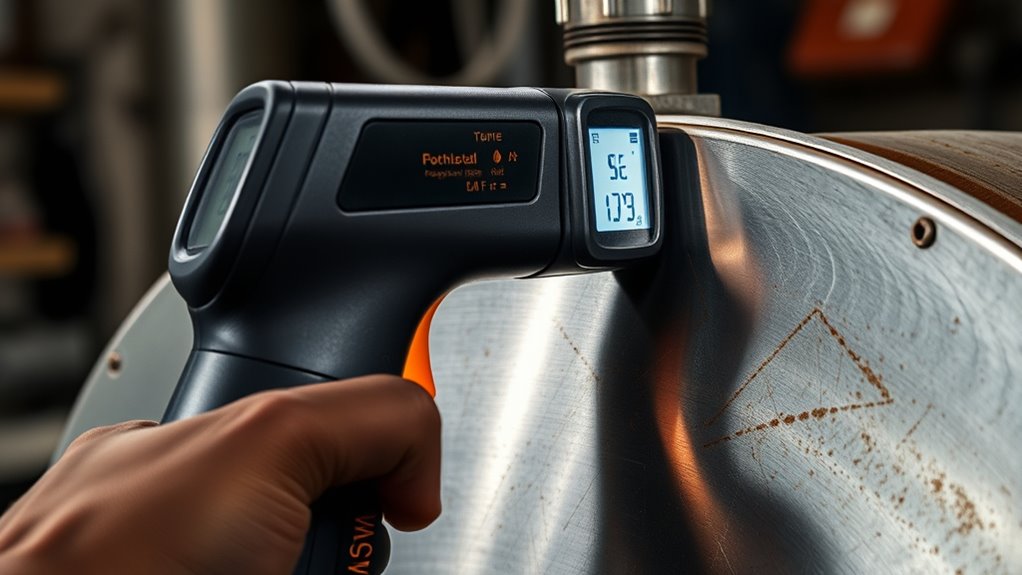
Several factors can influence the accuracy of your IR thermometer’s measurements. Environmental factors, such as ambient temperature, humidity, and air drafts, can cause fluctuations in readings. Make sure to use the thermometer in stable conditions for best results. Surface emissivity also plays a vital role; different materials emit infrared radiation differently, affecting measurement accuracy. Here are key factors to consider: 1. Environmental conditions: Extreme temperatures or drafts can skew results. 2. Surface emissivity: Surfaces with low emissivity, like shiny metals, may require adjustments or special settings. 3. Distance and angle: Holding the thermometer too close or at an incorrect angle can reduce accuracy, but this will be discussed further in the next section. Additionally, understanding air quality concerns and their impact can help optimize measurement conditions. Keeping these factors in mind ensures more reliable and precise measurements.
How Should I Aim and Distance Myself From the Target?
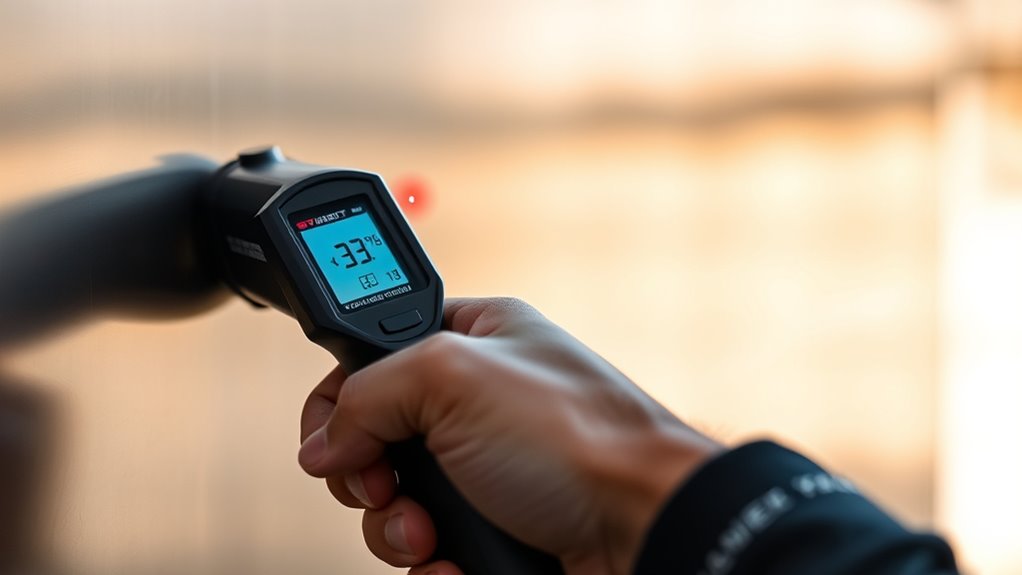
Proper aiming and maintaining the correct distance are essential for accurate IR thermometer readings. To guarantee aiming accuracy, keep the device’s laser pointer steady and directly aimed at the target’s surface. Avoid angling the thermometer, as this can lead to inaccurate results. Follow the distance guidelines specified by the manufacturer; many IR thermometers have a recommended distance-to-spot ratio that determines how far you can be from the target while still capturing a precise reading. Staying within this range helps prevent measurement errors caused by too much background or surrounding heat. Keep the thermometer steady during measurement, and ensure nothing obstructs the laser beam. Understanding the device’s specifications and the right distance ensures reliable, consistent temperature readings every time.
What Are the Best Practices for Measuring Different Surfaces?
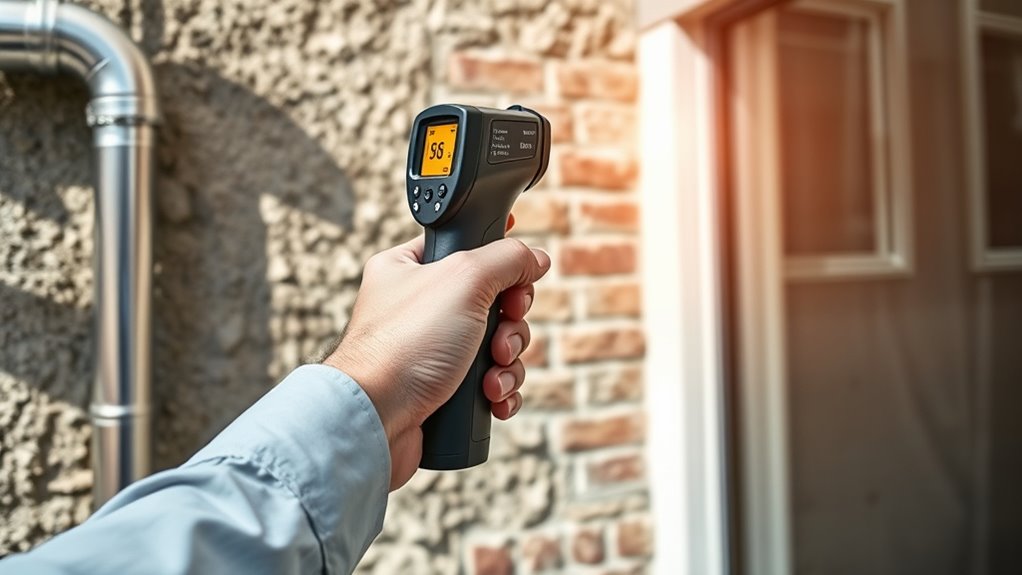
Different surfaces can affect the accuracy of your IR thermometer readings, so it’s important to select the right techniques for each type. Surface textures and material differences influence how well the infrared sensor detects temperature. To ensure precise measurements, keep these best practices in mind:
- Clean the surface before measuring to remove dust, grease, or debris that can distort readings.
- Adjust for surface texture by ensuring the thermometer’s emissivity setting matches the material; rough or shiny surfaces may need special attention.
- Use the correct distance-to-spot ratio to avoid measuring beyond the target area, especially on uneven or textured surfaces.
- Be aware that material properties such as reflectivity and emissivity can significantly impact the accuracy of IR temperature readings.
Following these practices will help you account for surface textures and material differences, ensuring more reliable temperature readings.
How Do I Interpret the Readings From My IR Thermometer?
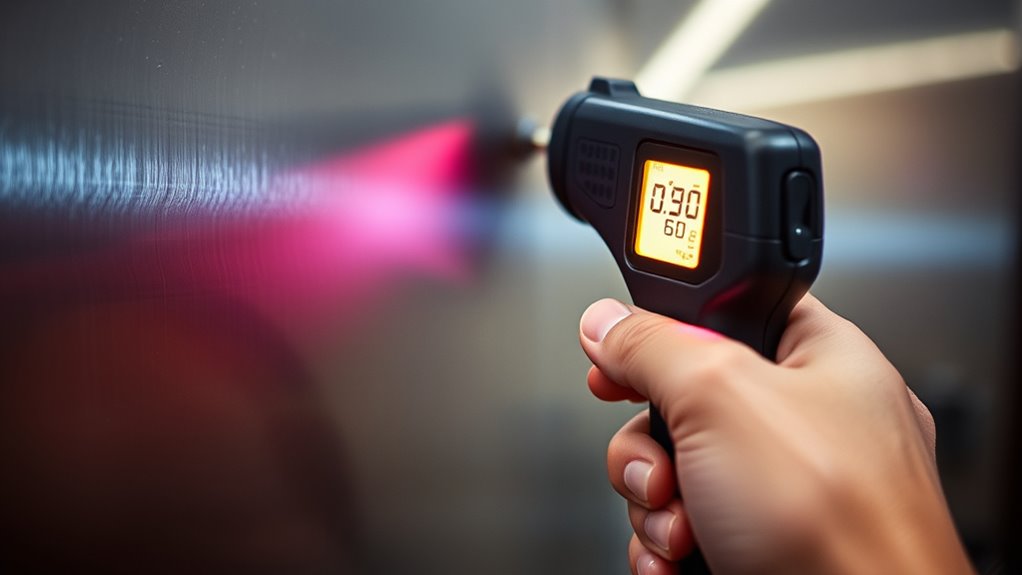
How do you make sense of the temperature readings from your IR thermometer? First, understand that the display shows a specific temperature, but interpreting it requires knowledge of color interpretation. Many IR thermometers use color scales to represent temperature ranges visually, making it easier to spot hot or cold spots quickly. For example, red might indicate higher temperatures, while blue shows cooler areas. Keep in mind the device’s specified temperature ranges; readings outside these limits may be inaccurate. Use the color indicators and the device’s calibration data to assess whether the surface is within the desired temperature range. Proper interpretation helps you make informed decisions, whether you’re checking equipment, food, or environmental conditions. Additionally, be aware of potential cybersecurity vulnerabilities associated with remote devices like IR thermometers connected via Wi-Fi or Bluetooth, which could compromise the integrity of your measurements.
What Maintenance and Calibration Steps Are Necessary?

Regular maintenance and calibration are vital to guarantee your IR thermometer provides accurate and reliable readings over time. Proper calibration procedures help ensure consistent performance, while maintenance tips keep your device functioning at its best. To maintain accuracy, consider these steps:
- Perform regular calibration checks using a known temperature source to verify readings.
- Clean the lens gently with a soft cloth to prevent dust and smudges that can distort measurements.
- Store your thermometer properly in a dry, stable environment to avoid damage or drift over time.
Following these maintenance tips will extend your device’s lifespan and keep it precise. Always revisit calibration procedures periodically, especially if the readings seem off or after long periods of disuse. Proper care ensures reliable, accurate results every time.
Are There Safety Precautions I Should Be Aware of When Using an IR Thermometer?
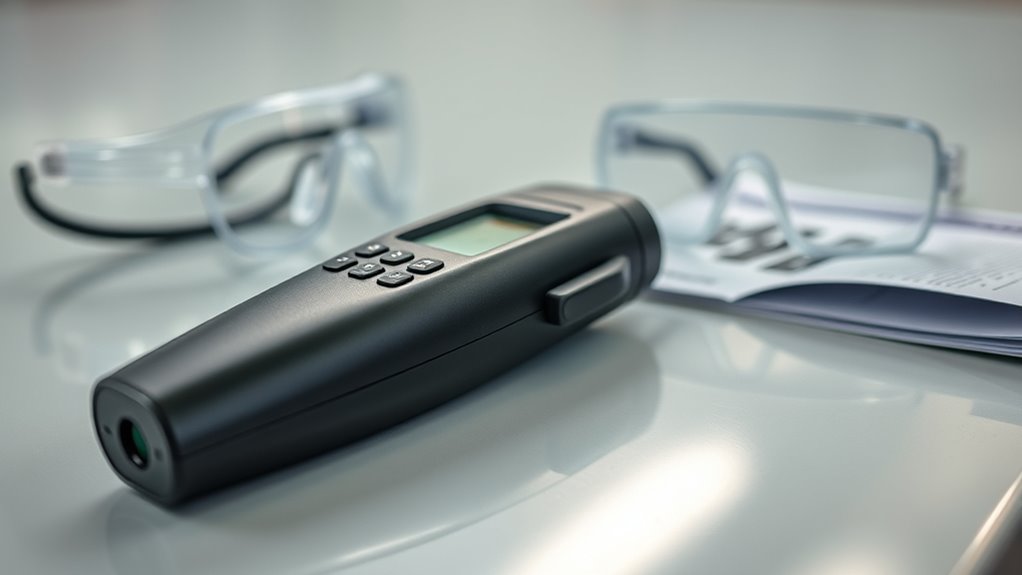
While IR thermometers are generally safe to use, it’s important to follow specific safety precautions to prevent misreading or accidental injury. Always adhere to safety protocols by avoiding direct eye exposure to the laser beam, which can cause eye damage. Be aware of hazard zones, especially when measuring hot surfaces or electrical equipment, to prevent burns or electrical shocks. Maintain a steady hand and ensure the device is calibrated correctly to avoid inaccurate readings that could lead to unsafe decisions. Keep the thermometer away from moisture, chemicals, or extreme temperatures that might impair its function. Being mindful of hazard awareness helps you operate the IR thermometer safely and accurately, ensuring both your safety and reliable measurements in any environment.
Frequently Asked Questions
Can IR Thermometers Measure Through Transparent or Reflective Surfaces?
IR thermometers generally can’t measure through transparent or highly reflective surfaces due to surface reflectivity and transparency issues. Reflective surfaces, like glass or shiny metals, bounce infrared signals away, making accurate temperature readings impossible. Similarly, transparent surfaces don’t emit or absorb IR radiation effectively, so they aren’t suitable for direct measurement. For precise results, avoid using IR thermometers on such surfaces or consider alternative methods for transparency measurement.
How Does Ambient Temperature Influence IR Thermometer Accuracy?
Think of your IR thermometer like a vintage radar, scanning the environment. Ambient influence can make readings less accurate if the surrounding temperature varies considerably. To keep it precise, use temperature correction features if available, adjusting for ambient conditions. Always check the device’s calibration in different environments, especially if the ambient temperature is much higher or lower than your target. This ensures reliable, consistent temperature measurements.
Are There Specific IR Thermometer Models Suited for Industrial Use?
Yes, there are specific IR thermometer models suited for industrial use. Look for industrial models with a rugged design, built to withstand harsh environments and frequent use. These models often feature higher temperature ranges, enhanced durability, and precise readings despite challenging conditions. Choosing an industrial IR thermometer guarantees reliable performance, making it ideal for maintenance, manufacturing, and other demanding applications where durability and accuracy matter most.
How Long Does Calibration Typically Take for an IR Thermometer?
Calibration typically takes about 15 to 30 minutes, depending on the IR thermometer model and calibration procedures. You should perform calibration frequently, especially if you use the device often or in critical applications. Regular calibration ensures accuracy and reliable readings. Keep in mind that following manufacturer guidelines for calibration frequency helps maintain peak performance and prevents measurement errors. Always document calibration results for future reference.
What Are Common Mistakes That Lead to Inaccurate IR Thermometer Readings?
Poor pointing, improper calibration, and skipping surface preparation cause inaccurate IR thermometer readings. User error, like holding the device too close or too far, can distort data. Don’t forget to clean the lens regularly and avoid measuring through glass or reflective surfaces. Remember, consistent calibration is vital for accuracy. By avoiding these mistakes, you guarantee precise, dependable temperature readings every time, making your measurements more meaningful and reliable.
Conclusion
Mastering your IR thermometer means more than just measurement; it’s about maintaining precision, practicing patience, and prioritizing safety. With proper preparation, pinpoint accuracy, and proactive upkeep, you’ll confidently capture clear, consistent readings. Embrace expertise, enhance efficiency, and guarantee safety every step of the way. Remember, your careful control creates correct, consistent, and dependable data—delivering peace of mind and perfect results. Keep learning, keep leveraging, and let your IR thermometer work wonders!