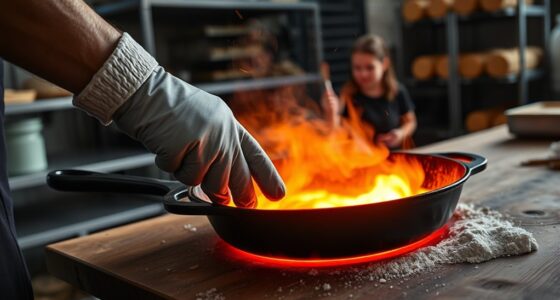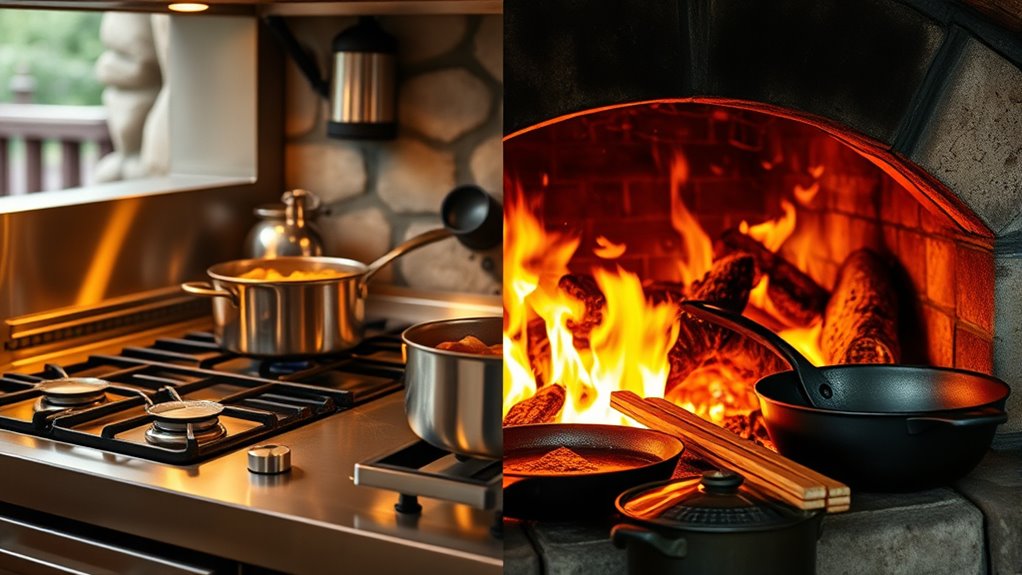

Cooking with gas offers quick temperature control, convenience, and consistent heat, making it ideal for busy schedules and precise cooking. In contrast, wood fires provide smoky, rustic flavors and a tactile, immersive experience, but require more time and effort to manage. Gas keeps things simple, while wood adds flavor complexity. To master your technique and choose the right method for your culinary style, explore the detailed pros and cons that follow.
Key Takeaways
- Gas offers quick, precise temperature control ideal for delicate dishes and convenience, while wood provides smoky flavor and a rustic cooking experience.
- Gas cooking is cleaner and easier to start, whereas wood requires preparation, tending, and adds flavor complexity through smoke.
- Using gas ensures consistent heat and faster cooking adjustments, whereas wood fires need ongoing management for temperature stability.
- Wood imparts unique smoky, earthy flavors customizable by wood type, unlike gas which maintains a neutral flavor profile.
- The choice depends on flavor preference, convenience, and cooking style, with gas suited for efficiency and wood for flavor depth.
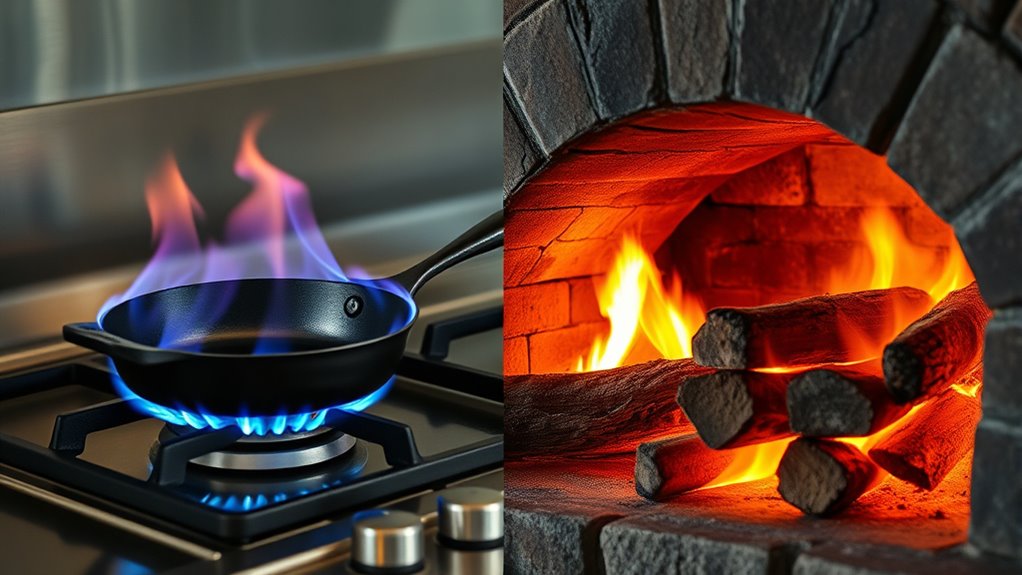
When choosing between cooking with gas or wood, your decision can markedly impact your kitchen experience, flavor, and convenience. One of the most noticeable differences lies in the flavor profiles each method offers. Cooking with wood imparts a smoky, earthy aroma that can elevate your dishes with complex, rustic flavors. The type of wood you choose—hickory, mesquite, apple, or oak—further influences the taste, allowing you to customize your culinary experience. Gas, on the other hand, provides a cleaner, more neutral flavor, letting the ingredients’ natural tastes shine through without adding extra smoky notes. If you’re aiming for subtlety and consistency, gas is often preferred, especially for delicate dishes where the flavor of the ingredients should take center stage.
Another vital aspect to consider is temperature control. Gas stoves and grills excel in offering precise, immediate adjustments. With a turn of a knob, you can lower or raise the heat, giving you better control over the cooking process. This precision is especially valuable when cooking foods that require specific temperatures, like sauces or delicate proteins. Wood fires, however, demand a different approach. Managing temperature with wood involves tending the fire—adding more wood to increase heat or adjusting airflow to modulate the temperature. It’s a more manual, less immediate process, but it allows for a different kind of control that can influence the flavor development. For example, a slow, steady burn produces a steady, gentle heat ideal for roasting or smoking, while a hotter, more vigorous fire is perfect for searing steaks.
The experience of cooking with each method also differs markedly. Gas offers convenience and quick start-up times. You turn it on, and within moments, you’re ready to cook. It’s ideal for busy weeknights or when you need reliable, consistent heat. Wood fires require more preparation—gathering, chopping, and lighting wood—plus patience as the fire builds. However, this process can be rewarding, especially if you enjoy the ritual of fire-building and the ambiance it creates. The visual appeal of flames flickering in a wood-fired oven or grill adds to the overall cooking experience, making it more engaging and atmospheric.
Frequently Asked Questions
Which Option Is More Energy-Efficient for Long-Term Use?
Gas generally offers better energy efficiency for long-term use because it has lower energy consumption and heats more quickly, saving you time and money. Wood can be cost-efficient initially, but its energy output varies and requires more effort to maintain consistent heat. If you prioritize cost efficiency and lower energy consumption over time, gas is your best choice. You’ll find it more reliable and easier to control, making it ideal for long-term use.
How Do Maintenance Requirements Compare Between Gas and Wood Setups?
You’ll find gas setups easier to maintain, as they require regular gas line inspections and occasional checks for leaks. Coincidentally, they rarely need chimney cleaning since there’s no soot buildup. Wood setups demand more effort—regular chimney cleaning to prevent creosote buildup and frequent inspections to ensure safety. While gas systems are low maintenance, wood setups need ongoing attention, but both require consistent upkeep to stay safe and efficient.
Can Indoor Cooking Be Safely Done With Wood or Gas?
Indoor cooking with gas or wood can be safe if you prioritize proper ventilation and indoor safety measures. Make certain your space has adequate ventilation to prevent harmful fumes and carbon monoxide buildup. Use exhaust fans, open windows, and install carbon monoxide detectors. Never operate a gas stove or wood-burning appliance in poorly ventilated areas, and always follow manufacturer safety guidelines. With these precautions, indoor cooking with gas or wood can be done safely.
Which Method Offers Better Temperature Control for Precise Cooking?
Think of your stove as a symphony conductor—gas offers you precise control, like a maestro adjusting each note. With accurate thermometers and steady heat stabilization, gas lets you fine-tune temperatures effortlessly, ensuring perfect results. Wood, however, feels more like riding a wave—less predictable, requiring constant attention. For the most precise cooking, gas wins, giving you the ability to reign in heat and keep it steady.
Are There Environmental Impacts Associated With Each Fuel Type?
You should know that both fuel types have environmental impacts. Gas burns cleaner, producing fewer greenhouse gases, making it more sustainable overall. However, extracting and transporting natural gas still affects the environment. Wood, being renewable, can be sustainable if sourced responsibly, but illegal logging and deforestation pose risks. Consider these sustainability factors and environmental impacts when choosing your fuel, aiming to minimize your carbon footprint.
Conclusion
Choosing between gas and wood depends on your preferences, your cooking style, and your kitchen setup. Gas offers convenience, control, and quick heat, while wood provides flavor, tradition, and a rustic touch. Both require care, both demand attention, and both can turn a simple meal into a memorable experience. So, whether you crave precision or crave authenticity, whether you seek ease or tradition, your choice shapes your cooking, your flavor, and your story.