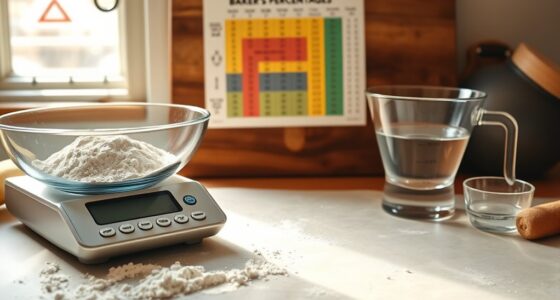
Many people believe cold dough is easier to stretch, but it’s actually stiffer and prone to tearing, especially if you don’t let it warm slightly. Using the same method for all dough types, overworking it, or adding too much flour can make the dough tough and difficult to handle. Resting, proper gluten development, even thickness, and controlled temperature are key. Continue exploring how understanding these mistakes and the stretch dough calculator can improve your technique.
Key Takeaways
- Cold dough is stiff and prone to tearing; proper warming improves elasticity before stretching.
- Overhandling dough reduces gluten elasticity, increasing tearing risk; resting relaxes gluten for easier stretching.
- Excess flour dries out dough, making it tough and more likely to tear; precise moisture management is essential.
- Different dough types require tailored techniques; a one-size-fits-all approach causes tearing and uneven results.
- Using a stretching calculator helps determine optimal thickness and size, preventing over-stretching and tearing.
Believing Cold Dough Is Easier to Stretch
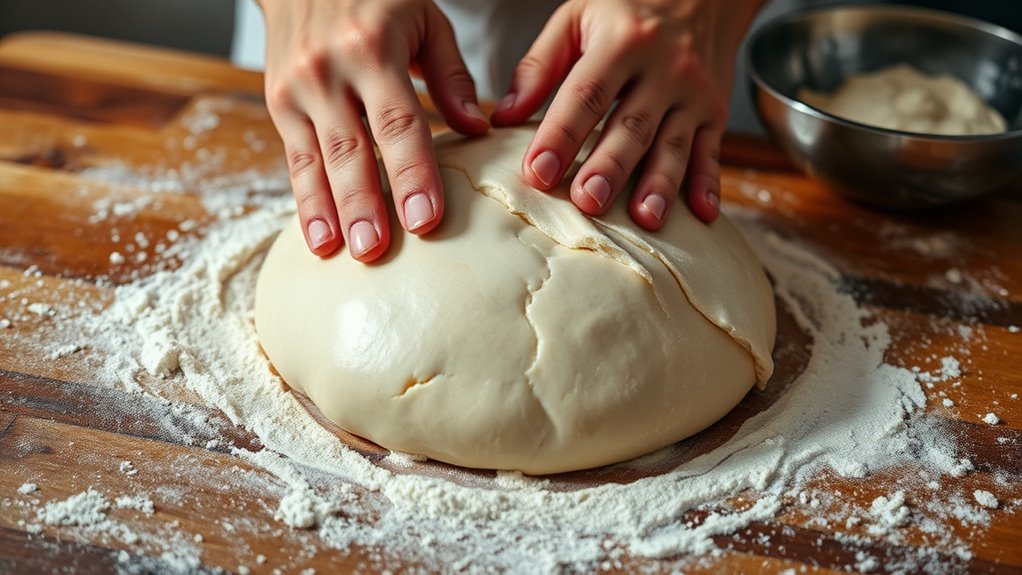
Many people believe that cold dough is easier to stretch because it feels firmer and less sticky. However, dough elasticity heavily depends on temperature control. When dough is too cold, it loses flexibility, making it prone to tearing instead of stretching smoothly. Warmer dough typically has better elasticity, allowing you to stretch it more evenly without tearing. Cold dough can feel firm, but this firmness doesn’t mean it’s easier to work with; it often requires more effort and can lead to tearing if not warmed properly. Instead of focusing solely on temperature, pay attention to how the dough responds as you stretch. Proper temperature management enhances elasticity, giving you a more manageable and tear-free dough-stretching experience. Additionally, understanding dough elasticity can help optimize your technique for better results.
Thinking All Dough Types Require the Same Stretching Method

Not all doughs respond the same way when you stretch them, so using a single method for every type can lead to tears or uneven results. Different doughs vary in dough temperature, elasticity, and hydration, meaning you need to adjust your approach. For example:
- Thin, delicate doughs benefit from gentle stretching with your hands, avoiding excessive tension.
- Stiffer doughs may require a rolling pin and more patience, especially if they’re cold.
- Using the right stretching tools, like a dough scraper or gloves, helps prevent tearing and maintains even thickness.
Additionally, understanding the properties of different doughs can help you select the most suitable stretching technique for each type.
Overworking the Dough Before Stretching
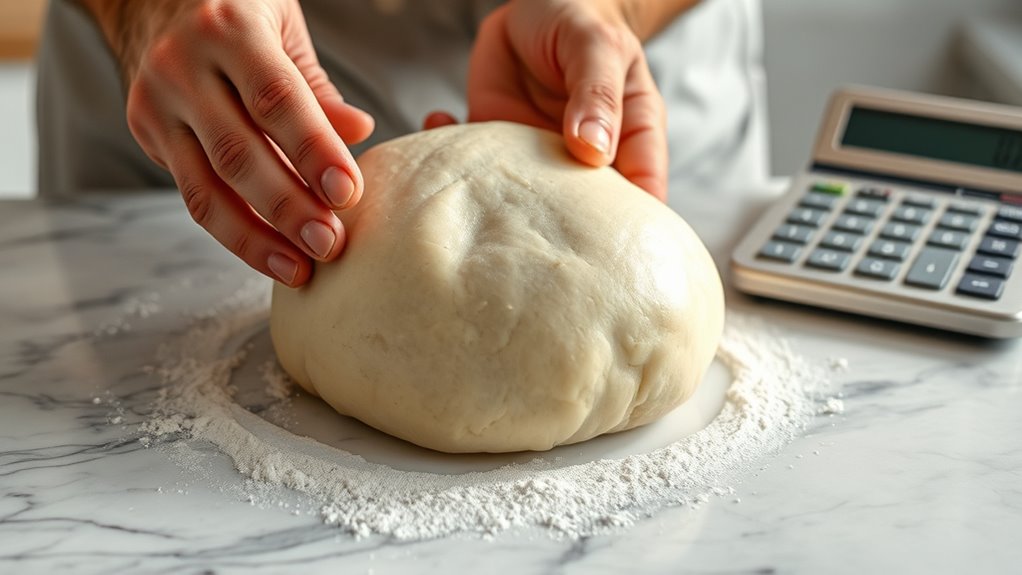
Handling the dough too much can make it tough and prone to tearing. To avoid this, give your dough enough rest so it relaxes and becomes easier to stretch. Proper resting and gentle handling are key to a smooth, tear-free stretch. Additionally, understanding the trustworthiness of AI models can help you stay informed about potential vulnerabilities that might affect automated baking tools or recipes.
Prevent Over-Handling
To prevent tearing, it is essential to avoid over-handling your dough before stretching. Excess handling can diminish dough elasticity and reduce stretching flexibility, making it more prone to tears. To keep your dough in ideal condition:
- Handle it gently, using light touches to preserve its natural elasticity.
- Limit kneading time; over-kneading can make the dough tough and less pliable.
- Rest the dough briefly if it feels overly elastic or resistant, allowing gluten to relax.
- Using unique and creative planters can encourage a relaxed mindset, which may help you handle your dough more gently.
Rest Dough Properly
After you’ve finished kneading your dough, giving it enough time to rest is essential for successful stretching. Resting allows the dough’s gluten structure to relax, improving dough elasticity and making it easier to shape without tearing. Proper resting times vary depending on the recipe, but generally, a 20 to 30-minute rest is effective. During this period, the dough becomes more pliable, reducing resistance when you stretch it. Overworking the dough before stretching can cause the gluten to tighten excessively, leading to tears. To avoid this, cover the dough loosely with a damp cloth or plastic wrap and let it rest in a warm, draft-free area. This step ensures your dough is ideally relaxed, making stretching smoother and more controlled. Additionally, understanding the risks associated with new payment technologies can help businesses better plan for operational adjustments during their product development phases.
Using Too Much Flour, Making the Dough Dry and Tough
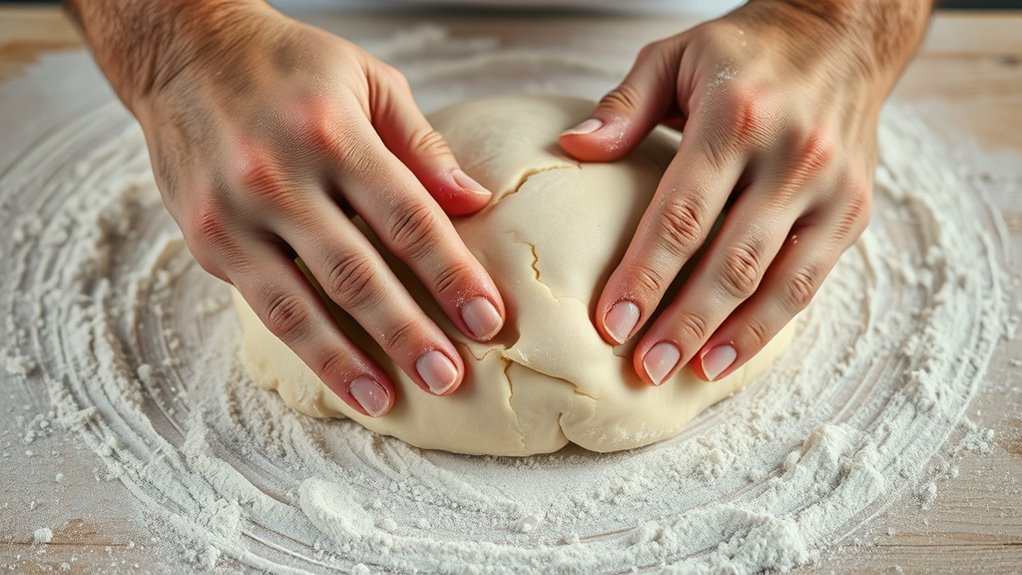
Using too much flour can make your dough dry and tough, making it harder to stretch smoothly. When you add excess flour, it absorbs moisture and alters the dough’s balance, leading to a less pliable texture. Keeping the right moisture level is key to achieving a stretchy, tear-free dough. Overloading with flour can also impact the elasticity of the dough, reducing its ability to stretch without tearing.
Excess Flour Effects
When you add too much flour to your dough, it can quickly turn from manageable to tough and dry. Excess flour affects not only the dough’s texture but also its elasticity, making stretching more difficult. Poor flour quality or over-application reduces dough’s flexibility, leading to tearing. Here’s what happens:
- Reduced Dough Elasticity: Too much flour stiffens the dough, preventing it from stretching smoothly.
- Dry, Crumbly Texture: Over-floured dough loses moisture, becoming dry and prone to cracking.
- Difficulty in Handling: Excess flour creates a barrier, making it harder to shape and stretch without tearing.
Controlling flour amounts and understanding how flour quality impacts elasticity help prevent these issues, ensuring a more pliable, easier-to-work-with dough.
Moisture Balance Importance
Adding too much flour disrupts the moisture balance in your dough, causing it to become dry and tough. When moisture control isn’t maintained, the dough loses its natural elasticity, making it harder to stretch without tearing. Proper moisture levels keep the dough supple, allowing for better elasticity and easier stretching. Over-flouring can absorb moisture and create a barrier that prevents the dough from staying hydrated, leading to a stiff, crumbly texture. To avoid this, use just enough flour to prevent sticking but not so much that it dries out the dough. By maintaining a good moisture balance, you’ll find it easier to stretch your dough smoothly, achieving the ideal elasticity needed for perfect pizza or bread without risking tears. Additionally, understanding the importance of proper hydration can help you achieve consistent results and a better texture in your baked goods.
Not Letting the Dough Rest Enough Before Stretching
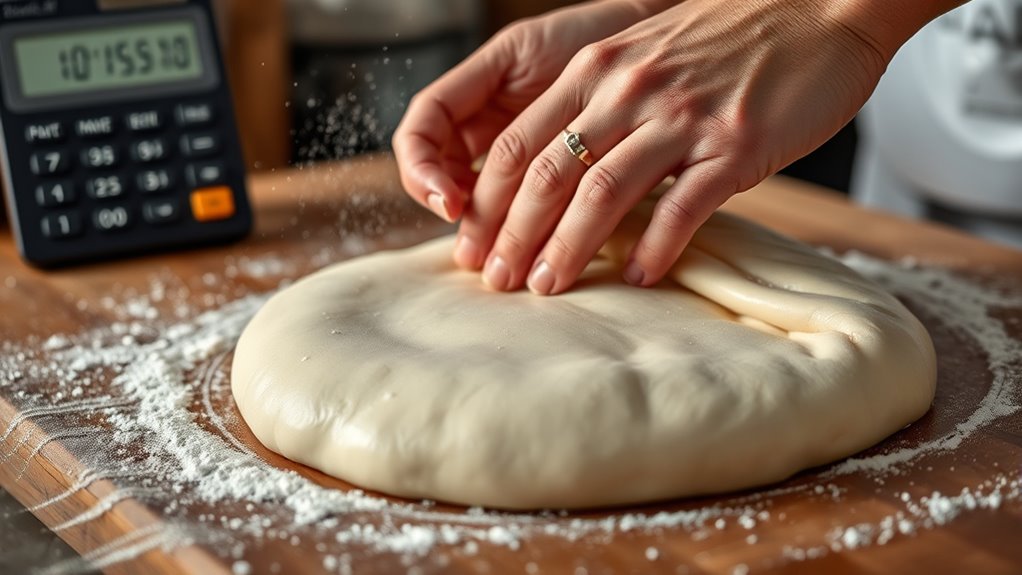
If you skip letting the dough rest, it’s more likely to tear when you start stretching it. Resting time allows the dough to develop better dough elasticity, making it easier to stretch without tearing. Without enough rest, the gluten strands haven’t relaxed, resulting in a tough, resistant dough. To avoid this, keep these points in mind:
- Rest the dough for at least 30 minutes, or longer for better elasticity.
- Cover it with a damp cloth to prevent drying out during resting.
- Use a gentle touch when stretching to avoid putting too much tension on under-rested dough.
- Understanding how automation enhances efficiency can help streamline your baking process for more consistent results.
Proper resting time guarantees the gluten relaxes, making the dough more pliable and less prone to tearing during stretching.
Ignoring the Importance of Proper Dough Hydration
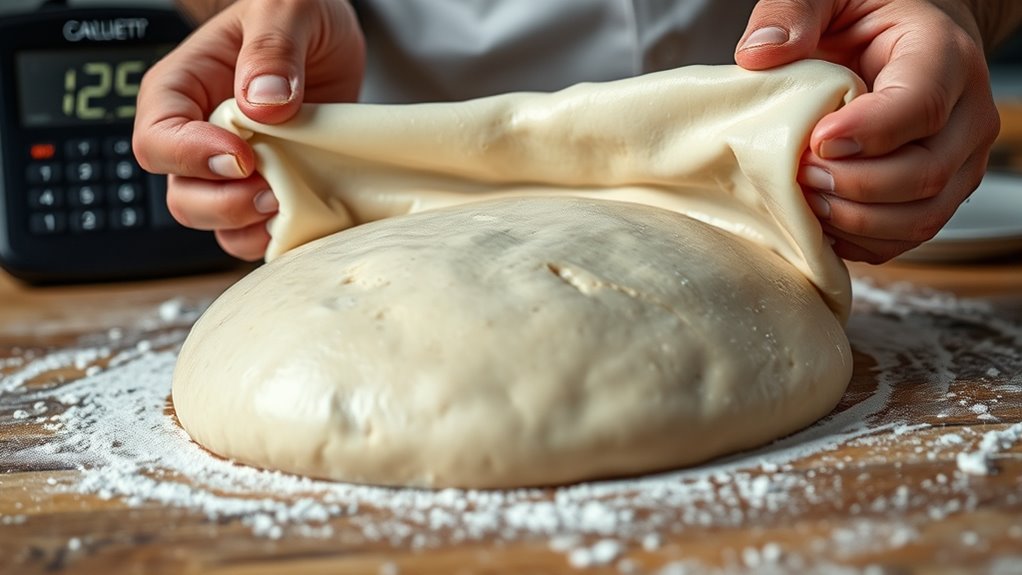
If your dough isn’t properly hydrated, it can be tough to stretch without tearing. Too little water makes it stiff and difficult to work with, while too much causes it to be sticky and unruly. Paying attention to hydration levels guarantees your dough is easy to handle and less prone to tearing. Proper hydration is also essential for achieving the breakthrough technologies that improve the overall quality and consistency of your baked goods.
Hydration Levels Matter
While some bakers overlook the importance of proper dough hydration, it actually plays a crucial role in stretching dough without tearing. Proper hydration affects dough elasticity and ensures consistent handling. When hydration levels are just right, the dough becomes easier to stretch, maintaining strength without ripping. Achieving the right hydration level ensures your dough has ideal elasticity, allowing you to stretch it easily without risking tears. Pay attention to hydration levels, and you’ll notice a significant difference in your dough’s stretchability. Additionally, understanding dough elasticity can help you better anticipate how your dough will behave during stretching.
Overhydration Causes Issues
Overhydration can severely compromise your dough’s structure, making it difficult to work with and increasing the risk of tearing. Hydration mistakes, especially overhydration, lead to a sticky, slack dough that’s hard to handle. When you add too much water, the gluten network becomes overwhelmed, causing overhydration issues like excessive stickiness and lack of elasticity. This makes stretching more challenging and raises the chance of tearing. To avoid these problems, measure water carefully and follow recommended hydration ratios. Recognizing signs of overhydration helps you adjust quickly, preventing frustration and dough damage. Proper hydration is critical for a sturdy, workable dough—too much water weakens its integrity, so always balance your ingredients to maintain ideal dough texture and elasticity.
Relying Solely on Manual Stretching Without Tools or Techniques
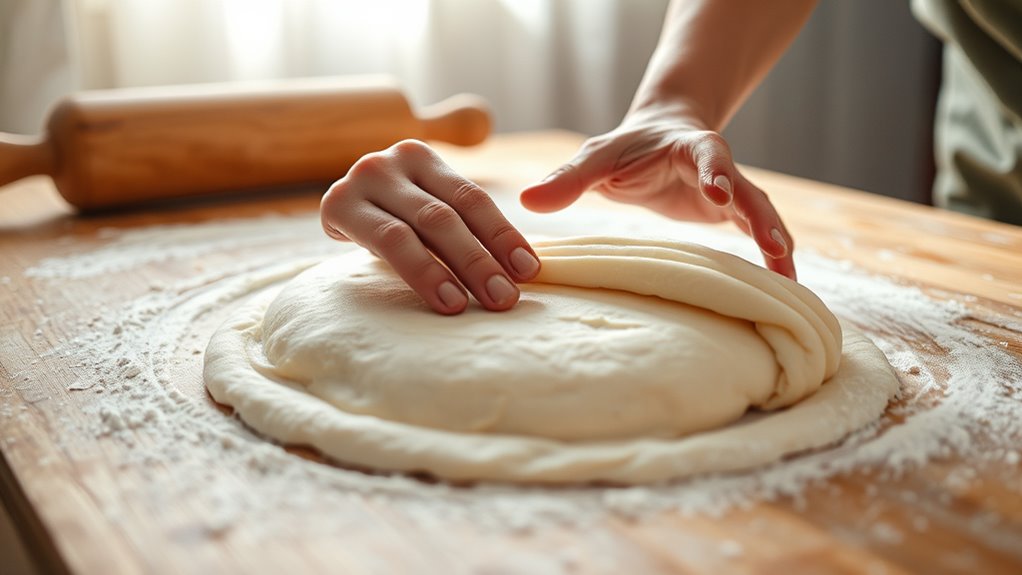
Relying solely on manual stretching without tools or specialized techniques requires patience and a gentle touch. Without proper tools, you depend entirely on your hands, which can lead to inconsistent results. Manual techniques can be effective but have tool limitations, especially when trying to achieve uniform thickness.
Consider these points:
- You might struggle to stretch the dough evenly, risking tears or thin spots.
- The lack of tools limits your control over the dough’s elasticity and size.
- Relying only on manual effort increases the chance of applying uneven pressure, leading to tears or over-stretching.
While manual techniques are accessible, understanding their limitations helps you avoid common mistakes and improves your dough-stretching success.
Stretching Dough Too Quickly or Forcefully
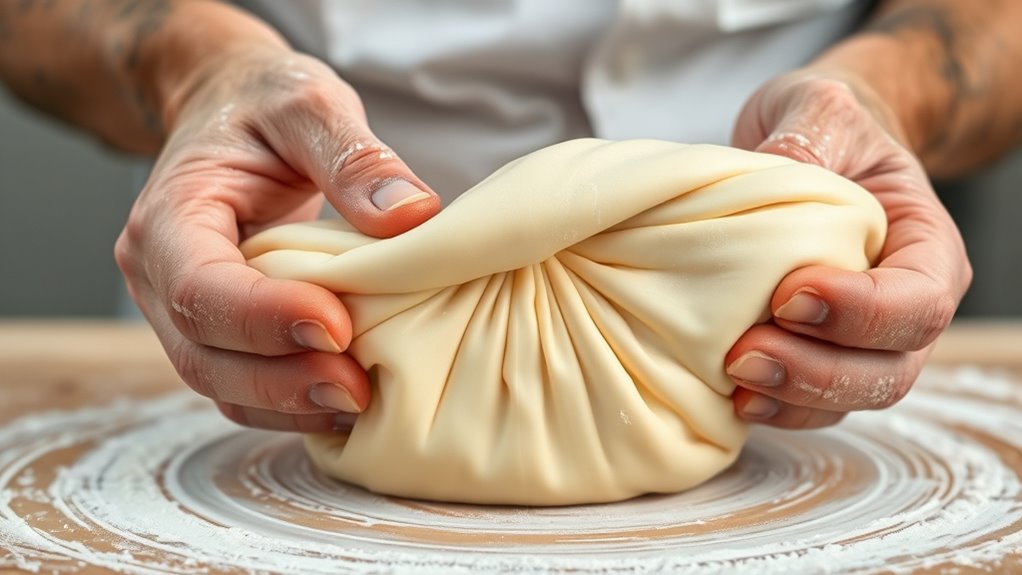
Stretching dough too quickly or forcefully can cause tearing and compromise the dough’s structure. When you stretch too fast, you don’t give the dough enough time to utilize its natural dough elasticity, increasing the risk of thin spots or tears. Using gentle, consistent stretching techniques allows the dough to expand gradually, maintaining its integrity. Focus on applying even pressure and letting the dough’s elasticity do most of the work, rather than forcing it beyond its limits. Rushing the process weakens the gluten network, which is essential for a smooth, elastic stretch. Mastering proper stretching techniques helps you avoid tearing and ensures a well-formed dough with the right texture for baking. Patience and gentle handling are key to successful dough stretching.
Forgetting to Use a Dough Stretching Calculator for Precise Measurements
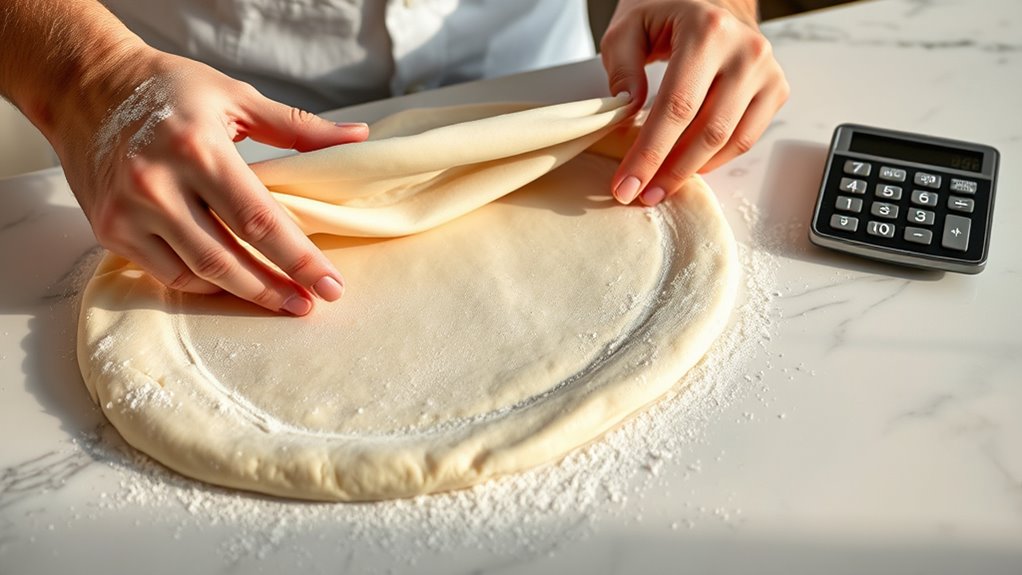
Even with the best stretching technique, if you don’t use a dough stretching calculator, you risk misjudging how much the dough can handle. Without precise measurements, you might stretch beyond your dough’s elasticity or overlook how flour absorption affects its flexibility. A calculator helps you determine the ideal thickness and size based on your dough’s properties.
Here’s what can go wrong without it:
- Overestimating dough elasticity, leading to tears.
- Underestimating flour absorption, causing uneven stretching.
- Failing to maintain consistent measurements, resulting in inconsistent results.
Using a dough stretching calculator ensures you account for these factors. It guides you to stretch just enough without risking tears, especially when working with different flours or doughs with varying elasticity.
Assuming a Perfectly Round Shape Is Necessary From the Start
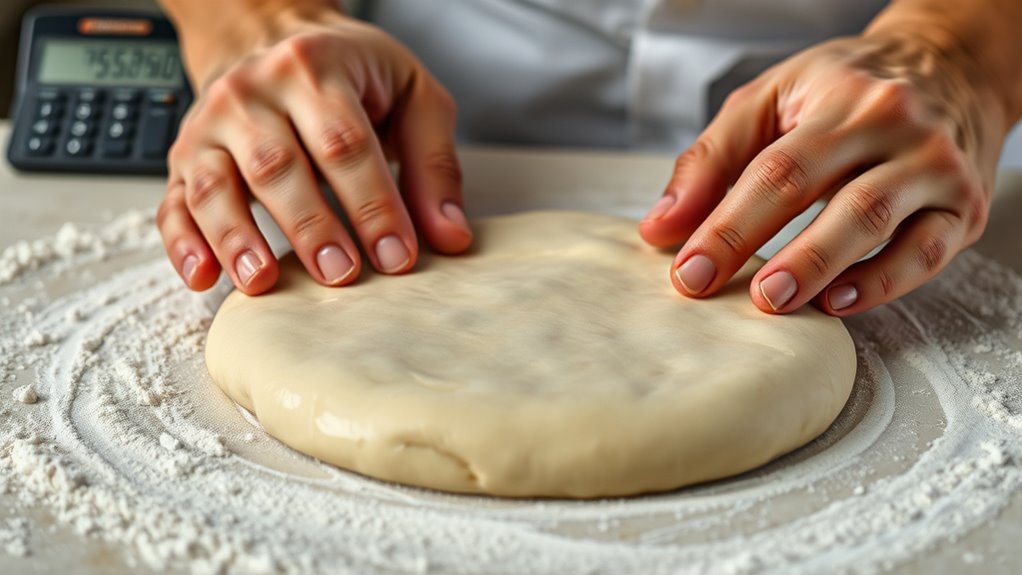
Many bakers assume their dough must start perfectly round to achieve a professional look, but that’s not always necessary. Shape assumptions often lead to unnecessary stress and uneven dough handling. Focusing solely on a perfectly round shape can distract you from achieving dough uniformity, which is more vital for even baking and texture. Dough naturally pulls into irregular shapes during stretching, and trying to force it into a circle early on can cause tears. Instead, concentrate on gently stretching the dough into an even, thin disc, regardless of its initial shape. Over time, your dough will become more uniform in appearance, and the final product will still look professional. Remember, perfect roundness isn’t a requirement—functionality and even thickness matter more.
Neglecting to Handle the Dough Gently to Prevent Tearing
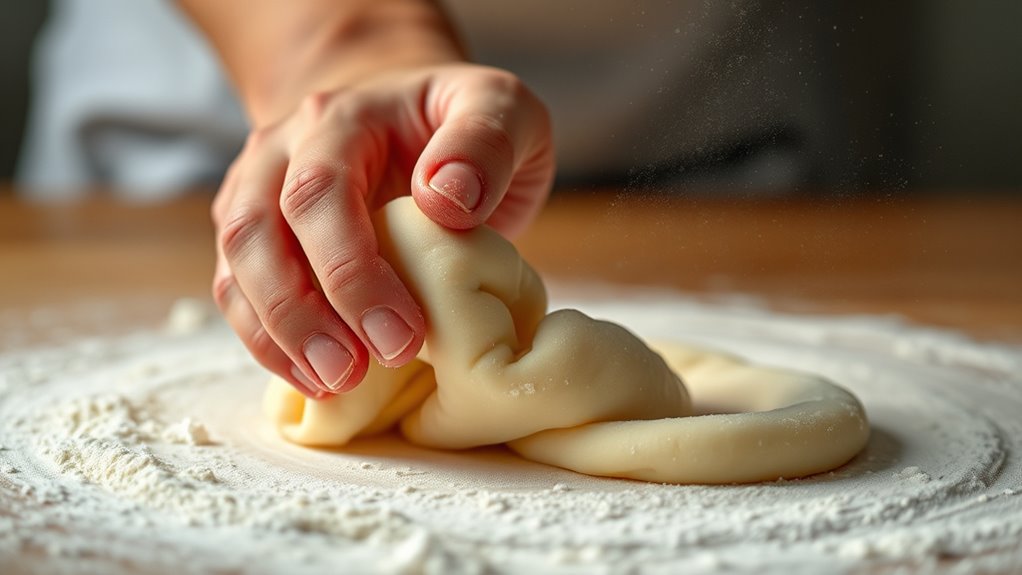
Handling dough roughly or with too much force increases the risk of tearing, which can ruin your progress and compromise the final texture. To prevent this, practice gentle handling at all times. Here are key tips for tearing prevention:
Handle dough gently to prevent tearing and ensure perfect texture.
- Use light, even pressure when stretching, avoiding sudden pulls.
- Support the dough’s edges gently to prevent overstretching in any one area.
- Rest the dough if it resists, allowing gluten to relax and making it easier to stretch without tearing.
Not Understanding the Role of Gluten Development in Stretching
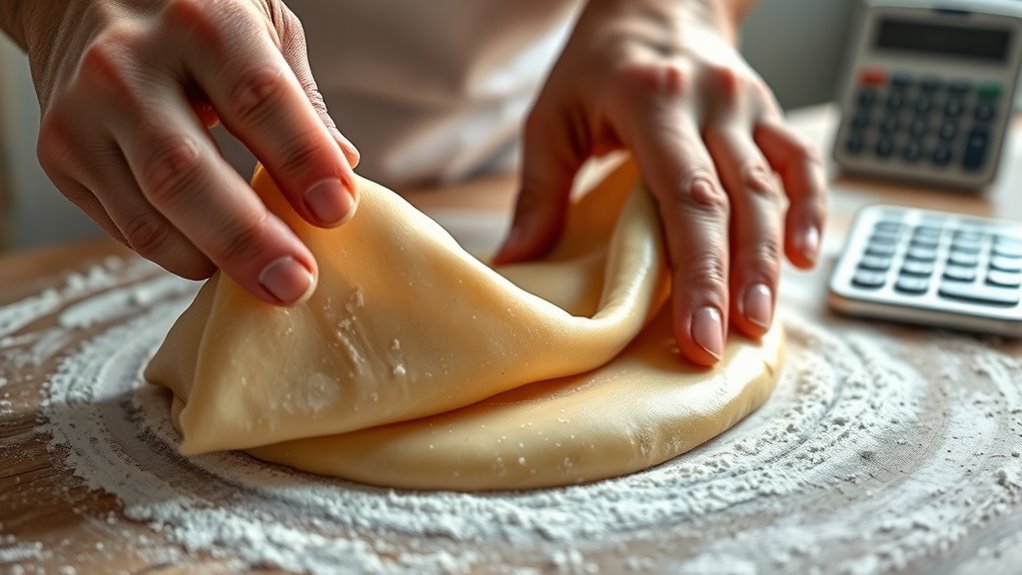
Understanding how gluten develops in your dough can make all the difference when it comes to stretching without tearing. Gluten development is essential because it creates the structure needed for good dough elasticity. When you knead, gluten strands form and strengthen, giving the dough the flexibility to stretch thin without ripping. If you don’t allow proper gluten formation, the dough remains weak and prone to tearing. Overworking the dough can lead to too much gluten development, making it tough and difficult to stretch smoothly. Balancing gluten development ensures your dough is elastic enough to stretch easily, yet resilient enough to hold its shape. Recognizing this balance helps you control the dough’s stretchability and prevents tears, resulting in a perfect, even crust.
Underestimating the Importance of Even Thickness During Stretching
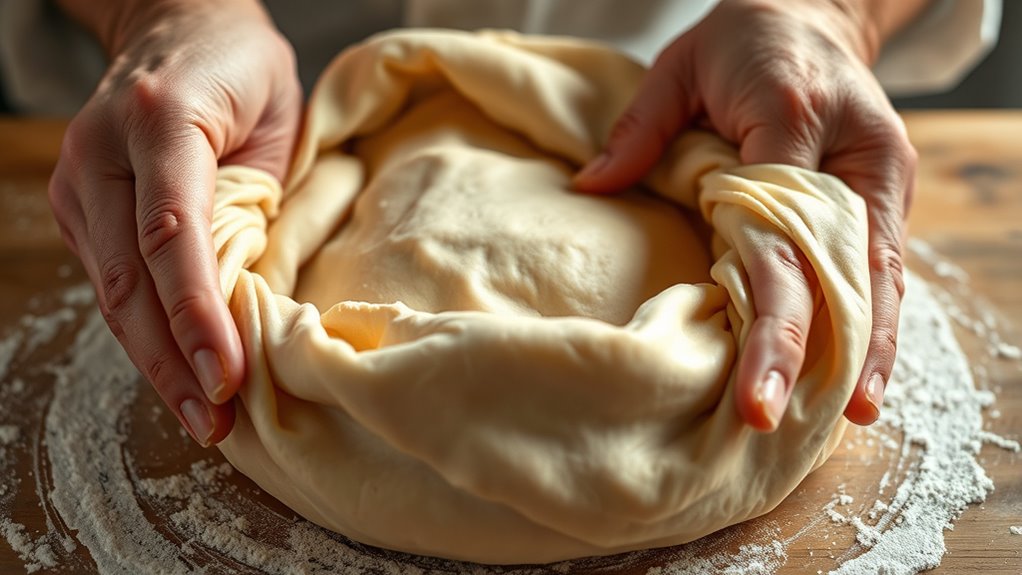
If your dough isn’t stretched to an even thickness, it can cause problems later on. Uneven thickness affects dough elasticity and makes it harder to handle without tearing. When parts are thicker, they resist stretching, while thinner areas may tear easily. To visualize this:
Uneven dough thickness leads to tearing, uneven baking, and handling difficulties.
- Thick spots stay dense and are tough to stretch further.
- Thin areas risk tearing because they lack support.
- Inconsistent thickness leads to uneven baking, affecting texture and appearance.
Achieving thickness uniformity guarantees the dough stretches smoothly, reducing the risk of tearing. It also helps maintain dough elasticity, making the entire process more manageable. Remember, even thickness isn’t just aesthetic; it’s essential for proper structure and consistency throughout your baking. Skipping this step often results in frustrations and imperfect results.
Trying to Stretch Cold Dough Directly From the Fridge
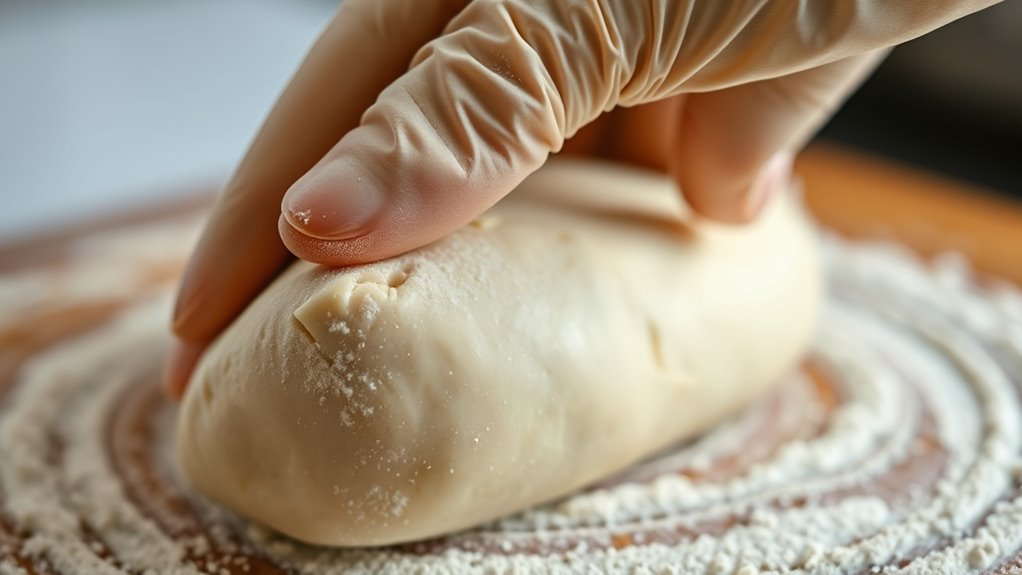
When you try to stretch cold dough straight from the fridge, it often sticks and resists your movements. The firm texture makes it harder to shape smoothly, increasing the chances of tearing. To avoid this, it’s best to let the dough warm slightly before working with it.
Cold Dough Sticks Firm
Trying to stretch cold dough straight from the fridge can be challenging because it’s often firm and resistant to shaping. When dough is cold, its dough elasticity decreases, making it stick and tear more easily. Temperature control is key to improving flexibility, but cold dough sticks firm, requiring extra effort. To visualize this, consider:
- It feels stiff and resistant when you try to stretch it.
- It’s harder to achieve a thin, even layer without tearing.
- You notice more resistance, making the process frustrating.
These issues happen because low temperatures reduce dough elasticity. To work effectively, you need to warm the dough slightly or use gentle techniques, ensuring it becomes more pliable and easier to stretch without tearing.
Difficult to Stretch Easily
Attempting to stretch cold dough straight from the fridge often leads to frustration because it resists shaping and tears easily. Cold dough has low dough elasticity, making it stiff and difficult to manipulate without tearing. This stiffness occurs because temperature control is off; the dough hasn’t warmed enough to become pliable. When dough is too cold, its gluten structure remains tight, limiting elasticity and flexibility. To make stretching easier, allow the dough to sit at room temperature for about 20-30 minutes, which helps improve dough elasticity. This warming process softens the gluten network, making the dough more responsive to gentle stretching. Remember, patience with temperature control is key to achieving a smooth, tear-free stretch every time.
Increased Tearing Risk
Stretching cold dough straight from the fridge considerably increases the risk of tearing because the dough is too stiff and unresponsive. When dough isn’t at room temperature, its dough elasticity drops, making it harder to stretch smoothly. This stiffness heightens the chance of tearing, especially if you pull too quickly or unevenly. To visualize this:
- Cold dough feels firm and resists your movements, increasing tension on the surface.
- Its reduced elasticity means it can’t stretch evenly, leading to weak spots.
- Tearing becomes more likely if you don’t give the dough time to warm up, which is vital for tearing prevention.
Allowing the dough to come closer to room temperature improves dough elasticity, making stretching safer and easier.
Overlooking the Benefits of a Controlled, Even Heat During the Process
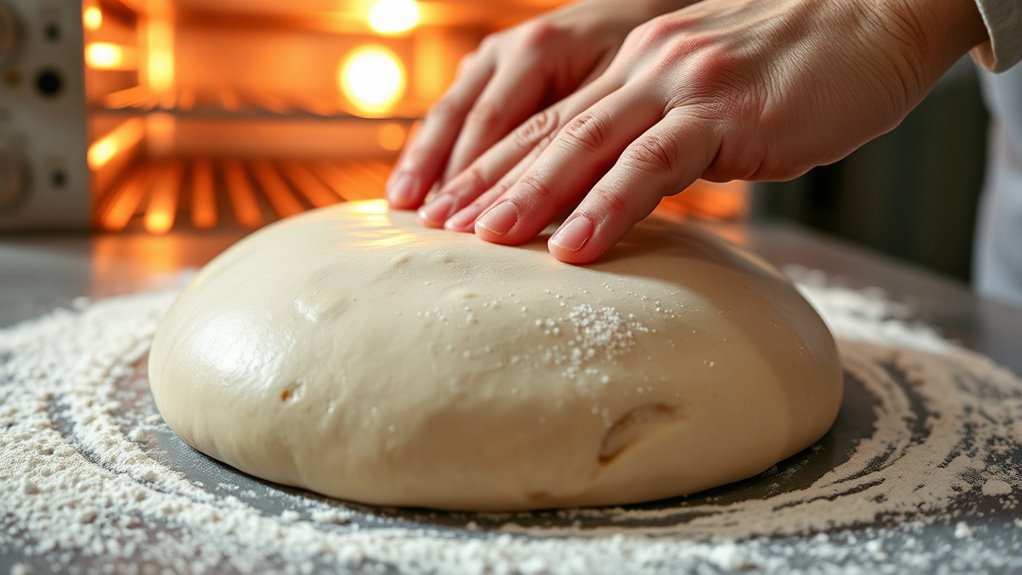
A regulated, even heat is crucial during the dough stretching process because it helps prevent tearing and guarantees consistent results. Proper heat control ensures the dough maintains an ideal dough temperature, which keeps the gluten elastic and supple. When the dough is too cold, it becomes stiff and resistant, increasing the risk of tearing. Conversely, if it’s too warm, it can become sticky and difficult to handle. By maintaining a steady, even heat, you allow the dough to stretch smoothly without sudden resistance. This controlled temperature helps you work efficiently, reducing frustration and waste. Always monitor your dough’s temperature and adjust your environment or technique accordingly to achieve the best stretch without tearing.
Frequently Asked Questions
How Does Dough Hydration Level Affect Stretching Ease?
Higher dough hydration makes stretching easier because it increases dough elasticity and creates a softer, more pliable consistency. When your dough has proper hydration, it’s less likely to tear and more responsive to shaping. Conversely, low hydration results in a stiffer dough that’s harder to stretch without tearing. Achieving the right hydration consistency guarantees you can stretch your dough smoothly and evenly, making baking more successful.
Can Using a Dough Stretching Calculator Improve Results?
Using a dough stretching calculator can drastically improve your results, almost like having a secret weapon. It helps you understand how dough fermentation and different flour types influence elasticity and stretchability. With precise measurements, you’ll avoid tearing and get perfectly thin crusts every time. By adjusting hydration levels and fermentation times, the calculator guides you to the ideal dough consistency, making your baking experience smoother and more successful.
What Are the Best Tools for Stretching Dough Evenly?
You should use a dough scraper or rolling pin to stretch dough evenly. A dough scraper helps maintain control and prevents tearing, especially when your dough has good elasticity. Using a rolling pin allows you to distribute pressure uniformly, which is vital for even stretching. Remember, different flour types impact elasticity; softer flours need gentler handling, while stronger flours can tolerate more pressure for a consistent, tear-free stretch.
How Does Gluten Development Influence Dough Elasticity?
Ever wondered why your dough stretches so smoothly? Gluten development is key—it forms a strong gluten network that enhances dough extensibility and elasticity. When you knead, you’re aligning gluten strands, making the dough more resilient and easier to stretch without tearing. Proper gluten formation guarantees your dough can stretch thin and even, giving you that perfect crust. Without enough gluten, your dough remains fragile and difficult to shape.
Is It Better to Stretch Dough at Room Temperature or Refrigerated?
It’s better to stretch dough at room temperature because dough elasticity improves as fermentation progresses, making it more pliable and less prone to tearing. Refrigerated dough becomes firmer, making it harder to stretch without tearing. Allowing your dough to reach room temperature after refrigeration helps balance fermentation timing and elasticity, giving you a smooth, even stretch. This ensures your dough remains elastic and easy to work with, resulting in better baking results.
Conclusion
Remember, stretching dough is like tending a delicate garden—you need patience, care, and the right conditions. By avoiding common mistakes and understanding the nuances, you’ll turn your dough into a perfect canvas for your culinary masterpiece. Don’t rush or force it; instead, treat it gently, like a fragile bloom. With practice and attention, you’ll master the art of stretching dough smoothly, creating delicious results that rise to the occasion every time.