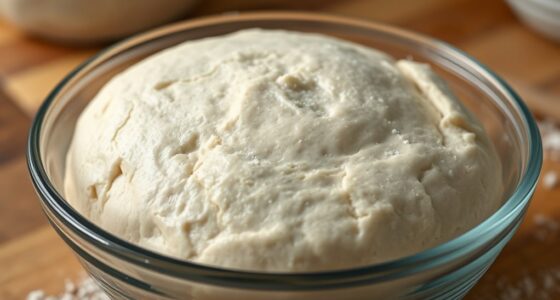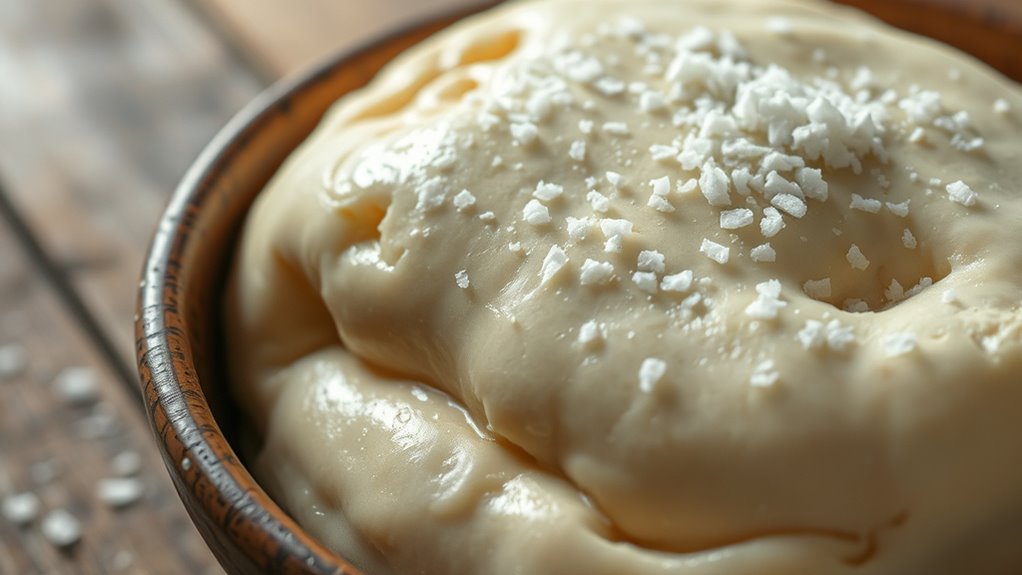

Salt plays a crucial role in your dough by controlling fermentation speed and strengthening gluten. It slows down yeast activity, helping you achieve a gradual, consistent rise, while also enhancing gluten formation for better dough elasticity and structure. Proper salt levels guarantee even fermentation and a resilient crumb. If you want to understand how adjusting salt influences your bread’s texture and flavor, keep exploring these essential effects.
Key Takeaways
- Salt slows yeast activity, ensuring gradual fermentation and preventing overproofing.
- It strengthens gluten networks, improving dough elasticity and gas retention.
- Proper salt levels contribute to dough resilience and manageability during shaping.
- Salt inhibits unwanted microbial growth, promoting a balanced fermentation environment.
- It enhances flavor development and extends the shelf life of baked goods.

Salt and dough fermentation is a traditional method that harnesses natural microbial activity to preserve food and develop unique flavors. When you add salt to your dough, you’re not just seasoning—it plays a vital role in controlling yeast activity and shaping how the dough develops its structure. Yeast, the primary leavening agent, relies on a balanced environment to produce carbon dioxide, which causes the dough to rise. Salt helps regulate this process by slowing down yeast activity, preventing it from fermenting too quickly. This control allows the dough to ferment gradually, leading to better flavor development and a more even rise. Without enough salt, yeast can become overly active, producing excessive gas and resulting in a dough that overproofs or develops a coarse crumb. Proper salt levels also contribute to regulating fermentation, ensuring consistent results in baking. In addition to managing yeast activity, salt greatly influences gluten development. Gluten, the protein network that gives dough its elasticity and strength, forms when water interacts with wheat proteins. Salt enhances gluten formation by strengthening these protein bonds, which results in a dough that’s more resilient and easier to handle. As the gluten network develops, it traps the gases produced by yeast, giving your bread its structure and chewiness. When salt is present in the right amount, it tightens the gluten strands, making the dough less sticky and more manageable during kneading. Conversely, too little salt can lead to weak gluten networks that don’t hold gases well, causing the bread to be dense or flat. Salt’s role extends beyond just controlling fermentation and gluten. It also impacts the overall flavor and shelf life of your baked goods. Proper salt levels ensure that the natural flavors of the ingredients come through and help inhibit unwanted bacterial growth during fermentation. This is especially important in traditional fermentation methods, where natural microbial activity is harnessed to develop complex flavors. By carefully balancing salt, you create an environment where yeast can perform at its best without overpowering the dough’s natural taste, and gluten forms a sturdy framework that supports a well-structured loaf.
Frequently Asked Questions
How Does Salt Influence Yeast Activity During Fermentation?
Salt slows yeast activity during fermentation by causing salt dehydration and yeast osmosis. When you add salt to dough, it draws water out of yeast cells, reducing their ability to produce carbon dioxide. This process decreases fermentation speed, helping you control dough rise. By managing salt levels, you balance fermentation and dough strength, ensuring your baked goods have the right texture and flavor without overproofing.
Can Excess Salt Completely Inhibit Dough Fermentation?
Salt’s osmotic effects can act as a barrier, like a dam blocking yeast osmosis, potentially stopping fermentation if there’s too much. Excess salt doesn’t just slow; it can completely inhibit yeast activity, akin to shutting down a crucial pathway. When you add too much, you’re fundamentally silencing the yeast‘s ability to produce gases, preventing dough from rising. Balance is key to letting your dough flourish and develop its strength.
Does Salt Affect the Gluten Development in Dough?
Salt enhances gluten development in dough by strengthening protein structures, which improves its elasticity and strength. It also impacts dough flavor, adding a savory touch, and plays a crucial role in preservation by inhibiting mold growth. However, too much salt can hinder gluten formation and slow fermentation. Balancing salt levels ensures ideal gluten development, flavor, and preservation, resulting in a better-textured, longer-lasting bread.
How Does Salt Concentration Alter Dough Elasticity?
Higher salt concentration increases dough elasticity by strengthening gluten networks, making the dough more resilient and less sticky. When you add more salt, it tightens the gluten strands, giving the dough greater stretchability and structure. Conversely, low salt levels result in softer, less elastic dough. Adjusting salt concentration allows you to control dough elasticity, helping you achieve the desired texture and firmness in your baked goods.
Are There Alternative Salts That Impact Fermentation Differently?
Yes, alternative salts like sea salt, Himalayan salt, or potassium chloride can impact fermentation differently. These mineral-rich salts influence yeast activity and dough strength by affecting mineral content and osmotic pressure. For example, potassium chloride may promote fermentation without overly strengthening the dough, while Himalayan salt adds trace minerals that can subtly alter yeast performance. Experimenting with these salts lets you customize dough texture and fermentation behavior to suit your baking needs.
Conclusion
Now that you know how salt acts like a quiet conductor, guiding the symphony of fermentation, you can master your dough’s dance. With just a pinch, you tame wild yeast and strengthen your bread’s structure, turning simple ingredients into a flavorful masterpiece. Think of salt as a magic wand, transforming chaos into harmony. So, sprinkle wisely, and watch your dough rise to its full potential, bursting with flavor and strength, ready to delight every bite.