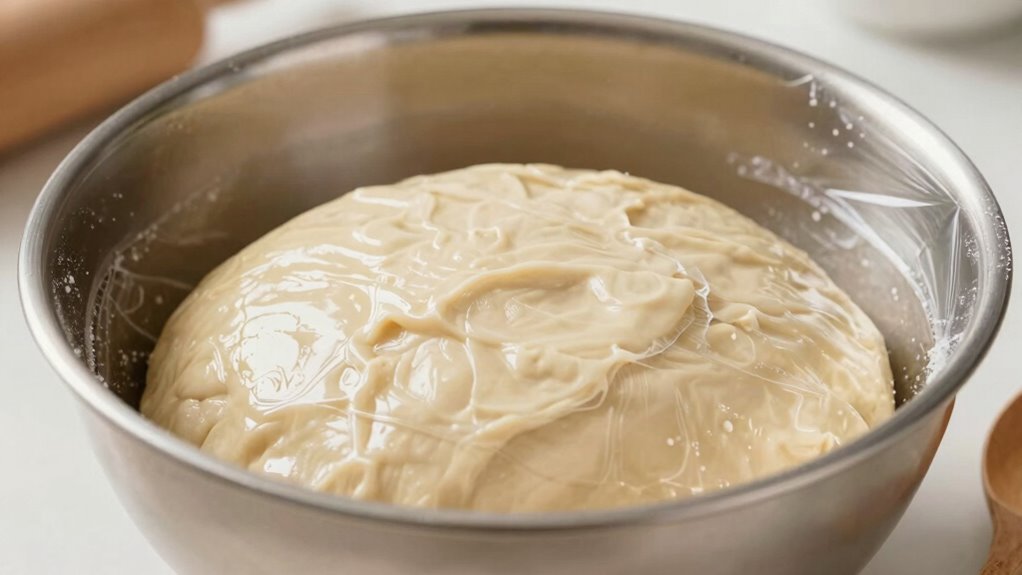

To keep dough from skinning over during service, control the environment by maintaining moderate temperature (75-80°F) and humidity with humidifiers or moist coverings. Work quickly with your dough, misting or re-wrapping it to retain moisture. Keep your hands clean and slightly moist when handling, and cover exposed dough tightly with breathable or airtight material. Managing airflow and dividing larger portions can also help. For more effective strategies, stick with the tips that follow.

Get baking supplies delivered free with Prime
- Fast, free delivery on millions of items
- Prime Video, Amazon Music and more included
- Member-only deals all year
Key Takeaways
- Cover dough tightly with plastic wrap or damp cloth to prevent moisture loss during service.
- Mist the dough surface periodically with water to maintain moisture.
- Keep the dough at a consistent, moderate temperature (75-80°F) to avoid skin formation.
- Use proofing boxes or environmental controls to stabilize humidity and temperature.
- Work quickly on exposed dough and divide into smaller portions to reduce drying risk.
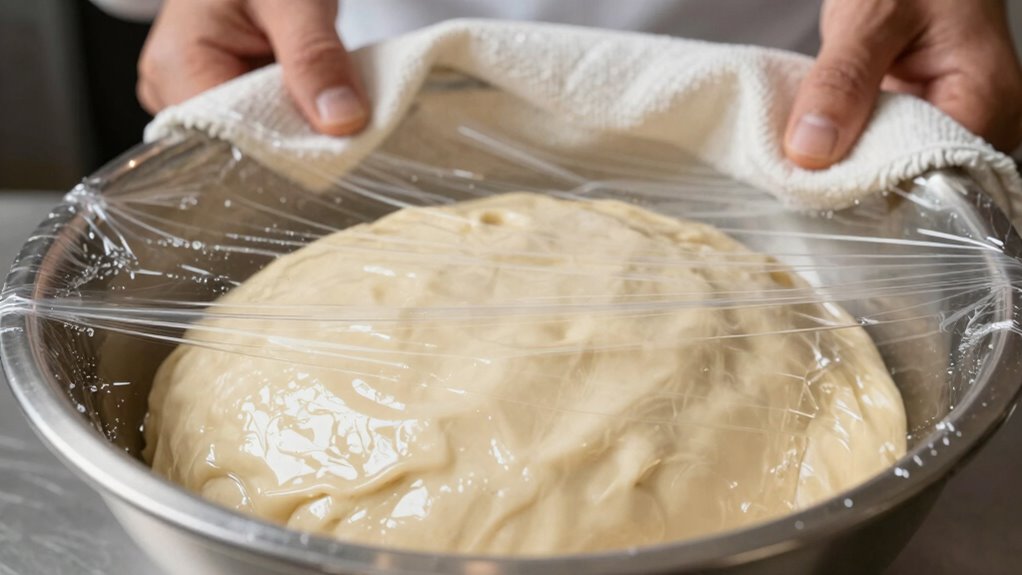
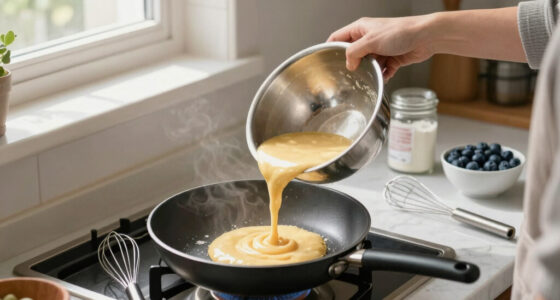
When working with dough during service, it’s common for it to develop a skin—a dry, tough layer that affects texture and workability. To prevent this, you need to control factors like dough temperature and ambient humidity. Dough temperature is critical because if it’s too warm, the moisture evaporates quickly from the surface, forming that undesirable skin. On the other hand, if it’s too cold, the dough becomes stiff and harder to work with. Ideally, keep your dough at a moderate temperature, around 75 to 80°F (24 to 27°C), to maintain best moisture levels and elasticity. Using a thermostatically controlled environment or proofing box can help you achieve consistent dough temperature during service.
Maintaining a moderate dough temperature ensures optimal moisture and elasticity during service.
Ambient humidity also plays a crucial role in preventing skin formation. When the air is dry, moisture evaporates faster from the dough’s surface, leading to that tough, dry skin. Increasing humidity in your workspace can considerably slow down this process. You might do this by placing a humidifier nearby or covering your dough with a damp cloth or plastic wrap when not actively working on it. This creates a microenvironment that retains moisture, keeping the dough surface supple and preventing skin from forming. Make sure the covering is tight but breathable if you’re using cloth, or airtight if plastic wrap is involved, to maintain a stable environment. Additionally, understanding environmental control can help you better manage these conditions for optimal dough preservation. Properly managing airflow around your workspace can also help reduce uneven drying and skin formation.
Furthermore, regularly check and adjust your handling techniques. Keep your hands clean and slightly moist to avoid transferring excess dryness to the dough. When working with dough that’s exposed for extended periods, periodically re-wrapping or misting it with water can help maintain surface moisture. If you notice the dough starting to dry out, work quickly to knead or reshape it, which can rehydrate the surface and reduce skin formation. Incorporating techniques such as proper covering methods can also help create a consistent environment and prevent moisture loss. Also, consider dividing larger portions into smaller pieces, as smaller portions tend to stay more consistent in moisture and are easier to keep from skinning over.
In essence, maintaining proper dough temperature and ambient humidity are your key tools for preventing skin formation during service. By controlling these environmental factors and handling the dough carefully, you’ll keep it soft, pliable, and ready for perfect baking or presentation. Implementing simple measures like using a proofing box, humidifiers, and proper covering techniques will help you preserve the dough’s quality from start to finish.
As an affiliate, we earn on qualifying purchases.
Frequently Asked Questions
What Types of Dough Are Most Prone to Skinning Over?
You’ll find that doughs with low hydration levels, such as certain bread or pasta doughs, are most prone to skinning over because they dry out quickly. The type of flour also matters; high-protein flours like bread flour tend to skin over faster due to their gluten content. To prevent this, cover the dough tightly with plastic wrap or damp cloth, and work efficiently to keep moisture in.
Can Temperature Control Prevent Dough Skinning?
Yes, temperature control can prevent dough skinning. By maintaining ideal temperature regulation, you keep the dough’s hydration level stable, which slows down skin formation. Cooler temperatures help preserve moisture and reduce skinning, especially for high-hydration doughs. You should regularly monitor your environment and adjust storage conditions accordingly. Proper temperature management ensures your dough remains fresh, pliable, and ready for baking, minimizing the risk of skinning during service.
How Long Can Dough Be Left Uncovered Without Skinning?
Did you know dough can skin over in just 20 minutes? If left uncovered, it’s typically safe for up to an hour, but skin formation begins due to evaporation and flour absorption slowing. During dough fermentation, it’s best to cover it after 30 minutes to prevent drying. If you want to keep it uncovered longer, consider lightly misting or covering with a damp cloth to maintain moisture and prevent skinning.
Are There Specific Tools That Help Keep Dough Moist?
Yes, there are moisture-retaining tools like plastic wrap, damp cloths, or airtight containers that help keep dough moist. Alternative storage methods include covering the dough with a silicone lid or using a proofing box with humidity control. These tools trap moisture, preventing skin formation and maintaining the dough’s texture. Make sure to seal everything properly to keep the dough fresh and pliable during your service.
Does Using Plastic Wrap Affect Dough Quality?
Coincidentally, plastic wrap plays a vital role in dough storage, as it helps maintain moisture and prevents skinning over. Using plastic wrap directly on the dough creates a barrier that keeps air out, preserving dough quality and elasticity. When you cover your dough tightly, it stays fresh longer, retains its texture, and is easier to work with later. Properly wrapping your dough with plastic guarantees the best results during and after service.
As an affiliate, we earn on qualifying purchases.
Conclusion
To keep your dough from skinning over during service, stay attentive, stay covered, stay moist. Regularly check, regularly re-cover, regularly re-moisten. By doing so, you’ll guarantee your dough stays fresh, smooth, and ready to serve. Remember, consistency is key—consistently protect, consistently maintain, consistently impress. With these simple steps, you’ll master the art of keeping your dough perfect, no matter how busy the service gets.
As an affiliate, we earn on qualifying purchases.
As an affiliate, we earn on qualifying purchases.
Columbus Day / Indigenous Peoples' Day Picks
long weekend sales
As an affiliate, we earn on qualifying purchases.