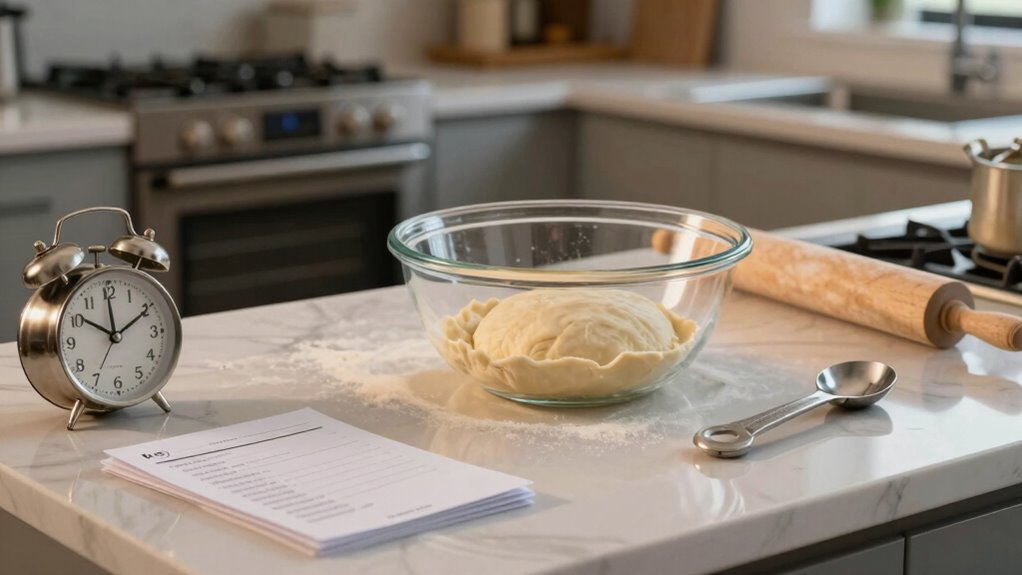
To plan dough timing backward from dinner, first decide your desired serving time. Identify the fermentation duration specified in your recipe, then subtract that from your dinner time to find when to start fermentation. Add extra time for ingredient prep and proofing. Adjust for room temperature, as warmer environments speed up fermentation. Keeping this schedule in mind helps you finish baking just in time for dinner, and you’ll find more tips if you keep exploring.

Get baking supplies delivered free with Prime
- Fast, free delivery on millions of items
- Prime Video, Amazon Music and more included
- Member-only deals all year
Key Takeaways
- Determine your desired dinner time and identify the fermentation duration required by your recipe.
- Calculate the fermentation start time by subtracting the fermentation period from the dinner time.
- Prepare and measure ingredients ahead of time to avoid delays and ensure timely start.
- Monitor room temperature to adjust fermentation timing for optimal dough development.
- Schedule proofing and baking steps to align with dinner, working backward from the serving time.
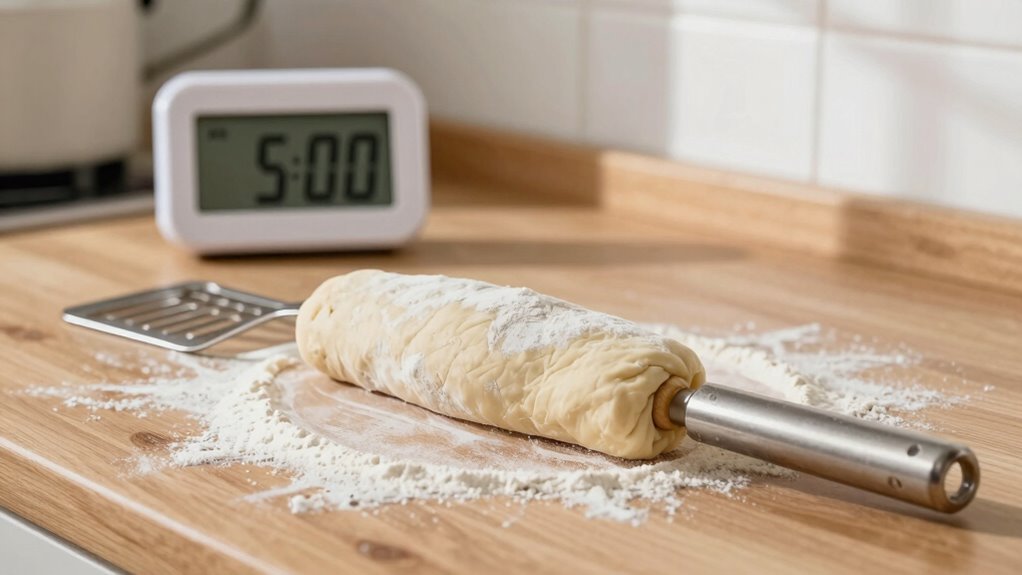
Planning your dough timing backward from dinner might seem tricky, but it’s an effective way to guarantee your baked goods are fresh and perfectly timed. The key lies in understanding the fermentation process and ingredient preparation, which work together to create the ideal rise and flavor development. When you start with your dinner time in mind, you can work backward to determine when to begin mixing your dough, allowing for proper fermentation and proofing. This approach helps ensure your bread or pastry is at its peak freshness when served.
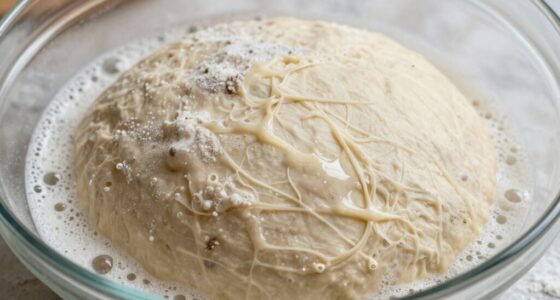
First, consider how long your dough needs to ferment. Different recipes require different fermentation times—some may need only a couple of hours, while others benefit from a slow, cold ferment that can take overnight or even longer. Once you know your recipe’s fermentation process, you can plan the initial mixing accordingly. For example, if your dough needs four hours of fermentation and you want to serve dinner at 6 p.m., you should start the fermentation process around 2 p.m. This way, your dough will be ready to shape, proof, and bake just in time for serving. Keep in mind that longer fermentation can improve flavor, so adjusting timing based on your desired outcome is essential.
Additionally, understanding the fermentation process helps you optimize timing for perfect results and flavor enhancement. Ingredient preparation is equally important. Before you even begin mixing, you need to gather and measure all ingredients precisely. This step ensures consistency and allows you to start on schedule. If your recipe calls for refrigerated ingredients like butter or milk, plan to take them out early enough for them to reach room temperature, which can speed up fermentation and improve dough texture. Proper ingredient preparation also means having your tools ready—bowls, proofing baskets, and a warm spot for fermentation. Being aware of the room temperature in your kitchen can significantly influence fermentation times, so monitoring this factor can help you fine-tune your schedule. When your ingredients are prepared in advance, you eliminate delays and keep the process smooth.
As an affiliate, we earn on qualifying purchases.
Frequently Asked Questions
What Types of Dough Are Suitable for Backward Planning?
You should choose dough types like bread, pizza, or pastry dough for backward planning. These doughs require specific rising or resting times, so you can plan your dough storage and ingredient substitutions accordingly. Consider how long each dough takes to ferment or rise, and adjust your prep schedule. This way, you guarantee your dough is ready at the right time, avoiding last-minute rushes and maintaining quality.
How Do I Adjust Timings for Different Dough Recipes?
Think of your dough as a delicate clockwork, where each recipe’s rhythm varies. To adjust timings, consider ingredient substitutions that might speed or slow fermentation—like honey for sweetness or cold water for longer rise. Keep storage tips in mind: refrigerate for slow fermentation or proof at room temp for quicker results. By tuning these elements, you synchronize your dough’s timing perfectly, ensuring dinner arrives on time and delicious.
Can I Skip Steps When Planning Dough Timing Backward?
Yes, you can skip steps when planning dough timing backward, but it’s not ideal. If you do, adjust ingredient substitutions carefully, ensuring flavors and textures stay balanced. Remember, skipping steps might impact the dough’s rise or texture, so keep an eye on the baking temperature to prevent over- or under-baking. Always consider how each step influences timing, and be flexible with your plan to achieve the best results.
What Tools Help Track Dough Fermentation Schedules?
Think of your tools as a compass guiding your fermentation voyage. A digital thermometer or a temperature-controlled proofing box helps you monitor the fermentation environment, ensuring your dough stays in the ideal zone. A kitchen scale tracks dough hydration levels, maintaining consistency. Additionally, fermentation logs or apps allow you to record timing, temperature, and hydration, helping you navigate your dough’s journey from start to finish with precision and confidence.
How Early Should I Start Preparing Dough for Dinner?
You should start preparing your dough about 12-24 hours before dinner, giving it enough time to ferment and develop flavor. If you’re using ingredient substitutions, adjust the fermentation time accordingly, as some ingredients may extend or shorten it. Store your dough in a cool, airtight container, and follow storage tips to keep it fresh. Planning ahead guarantees your dough is perfectly proofed and ready by dinner time.
kitchen thermometer for fermentation
As an affiliate, we earn on qualifying purchases.
As an affiliate, we earn on qualifying purchases.
Conclusion
By mastering the meticulous method of mapping your dough’s journey backward from dinner, you’ll master the art of anticipation and achievement. With careful calculation and a little patience, you’ll prevent panic and perfect your pastry. Planning precisely, pacing perfectly, and practicing patience will propel your baking prowess to new heights. So, set your schedule, stay steady, and savor the sweet success of your well-timed dough. Your delicious dinner delight is just a well-planned process away!
As an affiliate, we earn on qualifying purchases.
As an affiliate, we earn on qualifying purchases.
Halloween Picks
halloween
As an affiliate, we earn on qualifying purchases.