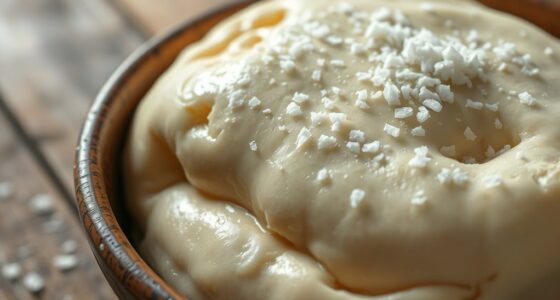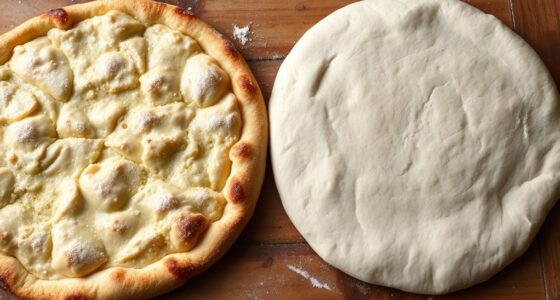

To troubleshoot dough issues related to oil and sugar, focus on balance. Too much oil can make the dough greasy and weak, while too little dries it out and reduces tenderness. Excess sugar can cause dense texture and quick fermentation, whereas too little hampers browning and flavor. Adjust these ingredients gradually for your dough type, ensuring thorough mixing. Keep in mind that proper proportions make all the difference — continue with the steps to master this essential skill.
Key Takeaways
- Balance oil and sugar based on dough type to prevent issues like greasiness or dryness.
- Too much oil weakens gluten; reduce oil for firmer, less greasy dough.
- Excess sugar can cause overproofing; cut back for better rise and texture.
- Incorporate sugar and oil thoroughly for even texture and consistent baking results.
- Adjust oil and sugar gradually to troubleshoot sticky, dry, or tough dough problems effectively.
Understanding the Role of Oil and Sugar in Dough

Oil and sugar play essential roles in dough, influencing texture, flavor, and moisture retention. They help achieve a balanced flavor profile, with sugar adding sweetness and enhancing other flavors, while oil contributes richness. These ingredients also modify texture—oil tenderizes by coating gluten strands, making the dough softer and more pliable. Sugar influences browning and creates a slight crispness, giving the finished product a desirable crust. Understanding how oil and sugar work together allows you to fine-tune your dough’s characteristics. Too much sugar can make the dough overly sweet and dense, while insufficient oil might result in a dry, crumbly texture. Properly balancing these ingredients is crucial for optimal results, and ingredient interaction plays a significant role in the final outcome. By mastering their roles, you can control the flavor balance and texture modification to craft perfect baked goods every time.
Common Problems Caused by Excess or Insufficient Oil and Sugar

When the balance of oil and sugar in your dough is off, it can lead to a range of common issues that affect the final product. Too much oil can hinder gluten development, making the dough greasy, weak, and difficult to shape. Excess sugar, on the other hand, may cause overly rapid fermentation effects, leading to overproofed dough that collapses or develops a dense texture. Insufficient oil can result in dry, crumbly baked goods with poor tenderness, while too little sugar reduces browning and flavor. Both imbalances can compromise the dough’s structure and rise, affecting texture and appearance. Understanding these impacts helps you troubleshoot effectively, ensuring your dough maintains the right balance for ideal gluten development and fermentation. Additionally, sound healing science suggests that proper balance in ingredients can influence the overall harmony of the baking process, contributing to better results.
Adjusting Oil and Sugar Content for Different Dough Types
Different types of dough require specific adjustments to their oil and sugar levels to achieve ideal results. For example, sweet doughs need more sugar for flavor balancing, while savory doughs might use less. When ingredient substitution is necessary, tweak oil and sugar amounts accordingly to maintain texture and consistency. For flaky pastries, increase fat slightly, but keep sugar moderate to avoid over-sweetening. For bread doughs, reduce sugar to improve gluten development, and adjust oil to enhance softness. Use this guide to fine-tune your recipe: proper ingredient ratios can make a significant difference in the final product.
Tips for Properly Incorporating Oil and Sugar Into Your Dough

Wondering how to make sure your oil and sugar are evenly distributed in your dough? Start by mixing the sugar and oil thoroughly before adding other ingredients. This helps achieve a sweet balance and guarantees both ingredients are well incorporated, preventing uneven pockets. Use room temperature oil for smoother blending, and consider creaming sugar and fat if your recipe allows—this technique promotes even texture control. Be patient and mix continuously to avoid clumping or uneven distribution. Incorporating oil and sugar properly creates a consistent dough, which results in better rise and texture. Remember, even distribution is key to achieving the perfect final product, so take your time and focus on thorough mixing during this initial stage. Additionally, understanding the importance of proper ingredient integration can help you troubleshoot and improve your baking results.
Troubleshooting Sticky, Dry, or Tough Dough Related to Oil and Sugar
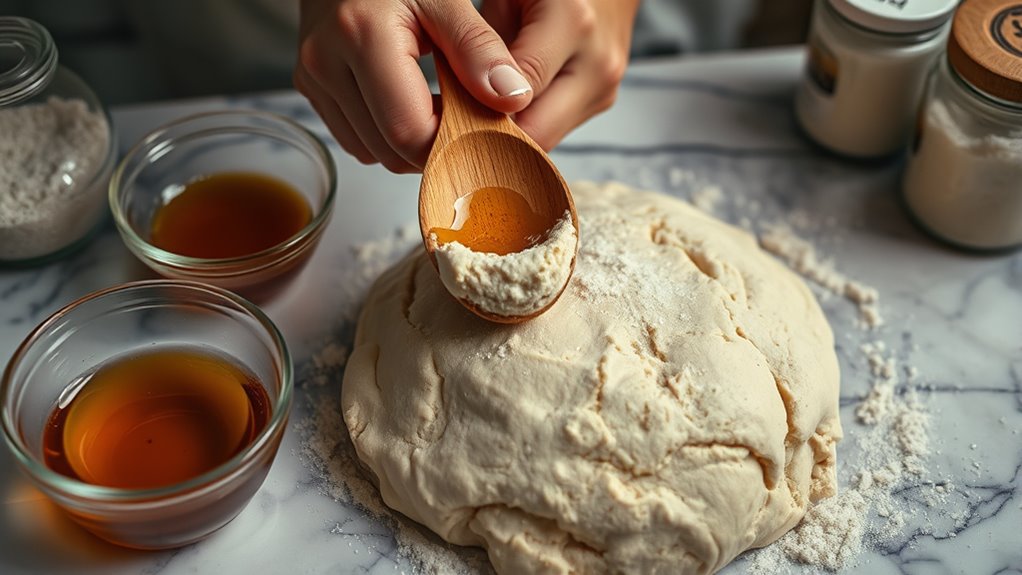
Evenly incorporating oil and sugar during the mixing process helps prevent common dough issues like stickiness, dryness, or toughness. If your dough turns out too sticky, try reducing the oil or using an oil substitution with a lighter consistency. For dry dough, adding a small amount of oil or a liquid sweetener can restore moisture. Tough dough may result from excessive sugar or sugar alternatives that cause gluten to tighten. In this case, reduce the sugar or switch to a different sugar alternative with lower sweetness or moisture content. Adjusting the amount of oil and sugar gradually helps you find the right balance. Remember, small tweaks make a big difference in achieving the perfect dough consistency. Additionally, paying attention to ingredient proportions ensures a more consistent and manageable dough texture.
Frequently Asked Questions
Can Using Alternative Oils or Sugars Affect Dough Consistency?
Yes, using alternative oils or sugar substitutes can affect dough consistency. Alternative oils like coconut or olive oil may alter moisture levels and texture, while sugar substitutes can change dough’s sweetness and structure. You might find your dough becomes denser or less pliable. To maintain the desired consistency, experiment with small quantities first and adjust other ingredients accordingly, ensuring the substitution doesn’t compromise your baking results.
How Does Temperature Influence Oil and Sugar Incorporation?
Temperature effects markedly influence how oil and sugar incorporate into your dough. When ingredients are at room temperature, they blend more smoothly because of better ingredient solubility, leading to a more uniform dough. Cold ingredients can cause clumping and uneven mixing, while warm ingredients help dissolve sugar more fully and disperse oil evenly. Always aim for ingredients close to room temperature for ideal incorporation and consistent dough texture.
Are There Specific Brands of Oil or Sugar Better for Dough?
Think of your dough like a symphony; choosing the right instruments makes all the difference. For better results, opt for brands known for ingredient purity, like organic or specialty oils and sugars. I once used a premium, cold-pressed olive oil that brought a rich flavor to my bread, which cheaper alternatives couldn’t match. Your choice of brand can elevate your baking, ensuring consistent quality and taste every time.
What Are Signs of Over- or Under-Adding Oil and Sugar?
You’ll notice over-adding oil makes your dough greasy, resulting in a heavy texture and possibly a greasy flavor, while too little oil can cause the dough to crack or crumble. Excess sugar leads to overly sweet flavor and might cause the dough to be sticky or overly tender, affecting the texture. Conversely, too little sugar results in a bland taste and may prevent proper browning, impacting both flavor and appearance.
How Do Dietary Restrictions Impact Oil and Sugar Adjustments?
Managing dietary restrictions is like walking a culinary tightrope, especially when adjusting oil and sugar. If you’re gluten-free, you might need to tweak oil for moisture, and vegan substitutions often call for alternative oils or sweeteners to maintain texture. You’ll want to carefully balance these changes, ensuring your dough remains delicious and consistent. Pay close attention to how these modifications affect dough consistency and flavor, making adjustments as needed.
Conclusion
Think of your dough as a lush garden. When you add the right amount of oil and sugar, it blooms beautifully—moist, tender, and flavorful. Too much or too little, and the garden struggles or becomes overgrown. By understanding their roles and adjusting carefully, you’ll nurture a perfect dough every time. With patience and practice, you’ll become the gardener of your baked creations, transforming simple ingredients into delightful, thriving treats.