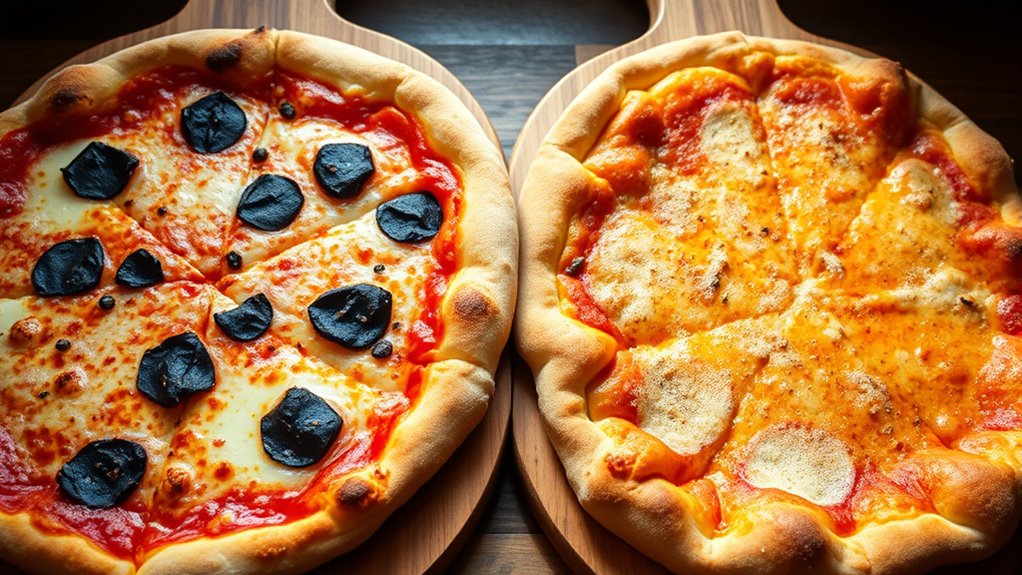

For Neapolitan pizza, aim for a hydration level between 60-65%, which helps create a light, airy crust with good elasticity and open crumb when baked at high temperatures. For home ovens, reduce the hydration to around 55-60%, making the dough easier to shape and preventing it from becoming too sticky. Adjusting hydration based on your oven type guarantees better results; keep exploring to fine-tune your perfect crust.
Key Takeaways
- Neapolitan pizza typically uses 60-65% hydration for an airy, open crumb, while home ovens benefit from slightly lower levels around 55-60%.
- Higher hydration promotes crust crispiness and lightness but can be harder to handle in home ovens due to stickiness.
- Lower hydration in home ovens helps manage dough elasticity and ensures easier shaping and baking at lower heat.
- Adjust hydration based on oven temperature: higher for commercial high-heat baking, lower for home ovens with less intense heat.
- Experiment within the 55-65% range to find the optimal hydration for your specific oven and desired crust texture.
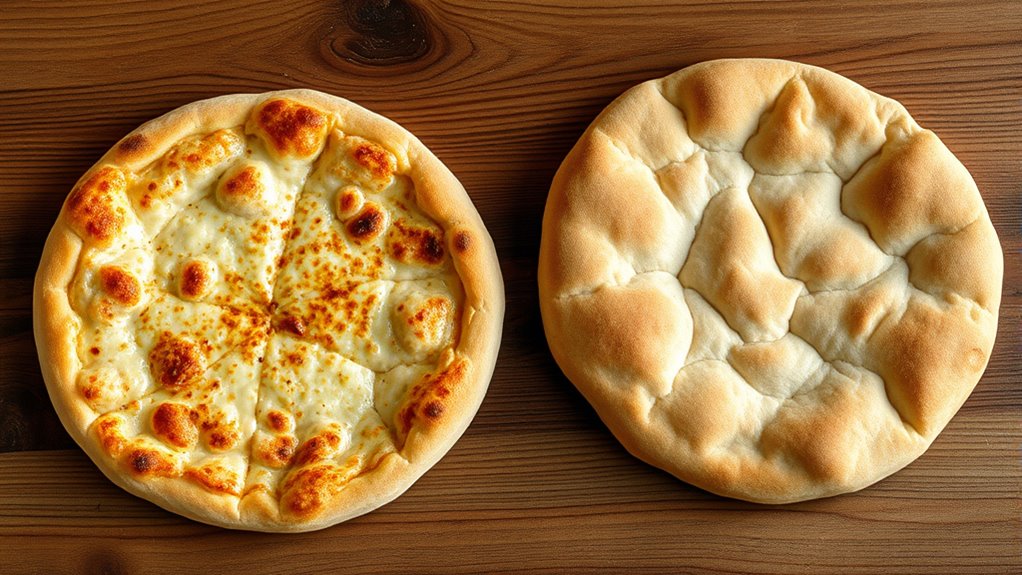
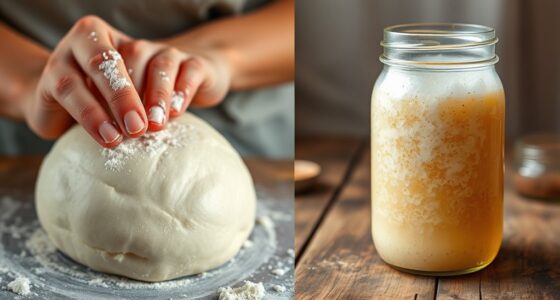
Staying properly hydrated is essential for your overall health and well-being, but determining the right hydration level can be tricky. When it comes to baking pizza, especially Neapolitan style, hydration plays a crucial role in shaping the dough’s properties. The amount of water you add influences dough elasticity, which affects how easily it stretches and holds together during shaping. A dough with optimal elasticity will be smooth, resilient, and easy to work with, but too much water can make it overly sticky and difficult to handle, while too little can result in a stiff, uncooperative dough. Striking the right balance ensures your dough stretches thin without tearing and maintains its structure through baking.
Proper hydration balances dough elasticity for easy handling and perfect baking results.
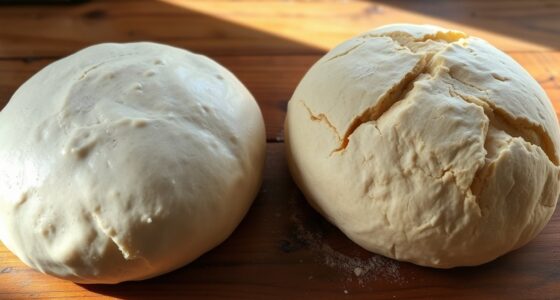
For Neapolitan pizza, a hydration level typically ranges between 60% and 65%. This range helps achieve that characteristic light, airy crust with a tender crumb. Higher hydration levels contribute to a more open crumb structure, which is vital for that authentic texture. However, increased water content also influences crust crispiness. A well-hydrated dough, when baked at high temperatures like in a wood-fired oven, produces a crust that’s crispy on the outside while remaining soft inside. Too much hydration may lead to a wetter dough that’s harder to shape and can cause uneven baking or soggy spots. Conversely, lower hydration levels tend to give a denser, chewier crust that lacks the signature airy quality.
When baking in a home oven, your options for controlling hydration are a bit more limited compared to a commercial or wood-fired oven. Home ovens typically require a slightly lower hydration percentage—around 55% to 60%—to compensate for less intense heat and slower baking times. This ensures the dough remains manageable and develops a good crust without becoming overly soggy or hard. The dough’s elasticity remains a key factor here; too much water can make the dough sticky and challenging to shape, while too little can produce a tough crust that lacks the desired crispiness. Adjusting hydration helps you achieve the perfect balance between dough elasticity and crust crispiness, tailored to your oven’s capabilities. Additionally, understanding how water content impacts your dough’s behavior can significantly improve your baking results.
Ultimately, mastering hydration means understanding how water impacts your dough’s behavior and the final texture of your pizza. Whether you’re aiming for a traditional Neapolitan or a more straightforward homemade style, experimenting within these hydration ranges will guide you toward the ideal dough that’s easy to handle, yields a crisp yet tender crust, and produces that perfect balance of elasticity.
Frequently Asked Questions
How Does Hydration Affect Dough Elasticity in Different Oven Types?
Hydration considerably impacts dough elasticity by enhancing gluten development and moisture retention. Higher hydration levels make your dough more extensible and easier to shape, especially in Neapolitan-style pizzas, where a delicate balance is needed. In home ovens, lower hydration helps maintain structure and prevents over-spreading. Adjust hydration based on your oven type to optimize elasticity, ensuring your dough remains workable and yields a delicious, well-textured crust.
Can Hydration Levels Be Adjusted During Baking for Optimal Crust?
Think of hydration as a dance partner; you can’t change the tune mid-step, but you can adjust your moves. During baking, you can spritz or lightly add water to the dough to tweak water absorption, helping maintain the right dough consistency. This gentle adjustment enhances crust development, allowing you to fine-tune your bread’s texture and crust to perfection, ensuring a harmonious bake even mid-process.
Does Hydration Influence Dough Fermentation Speed Differently in Neapolitan vs. Home Ovens?
Hydration influences dough fermentation speed differently in Neapolitan and home ovens because higher hydration levels boost dough temperature, speeding up fermentation. In a Neapolitan oven, with its high heat, increased hydration can lead to faster fermentation, while in a home oven, the effect is less pronounced due to lower temperatures. Adjusting hydration helps you control fermentation time and dough temperature, ensuring ideal crust development in either baking environment.
How Does Hydration Impact Oven Spring in Various Baking Environments?
Hydration markedly impacts oven spring, with higher hydration doughs increasing the potential for expansion during baking. For example, a 70% hydration dough can produce a 20% greater oven spring than a lower hydration dough in similar conditions. In different baking environments, the dough texture and baking temperature interact; wetter doughs tend to develop more open crumb, especially in high-temperature ovens, maximizing oven spring and resulting in a lighter, airier crust.
Are There Hydration Thresholds Ideal for Specific Flour Brands or Types?
You should aim for hydration thresholds tailored to your flour’s absorption capacity and desired dough consistency. For high-protein bread flours, 70-80% hydration works well, ensuring a sturdy yet extensible dough. Softer flours may need 60-70%, creating a more delicate dough. Adjust hydration based on your flour brand, observing how it absorbs water and how the dough feels. Experimenting helps find the perfect balance for ideal oven spring and texture.
Conclusion
Understanding the ideal hydration level for Neapolitan versus home ovens helps you craft authentic, delicious pizza. Did you know that a hydration level of around 60-65% is perfect for Neapolitan styles, resulting in a light, airy crust? Interestingly, higher hydration levels (up to 70%) can improve dough extensibility for home ovens, making handling easier. By tailoring your hydration, you’ll boost your pizza game and impress every time—so experiment and find what works best for your setup!