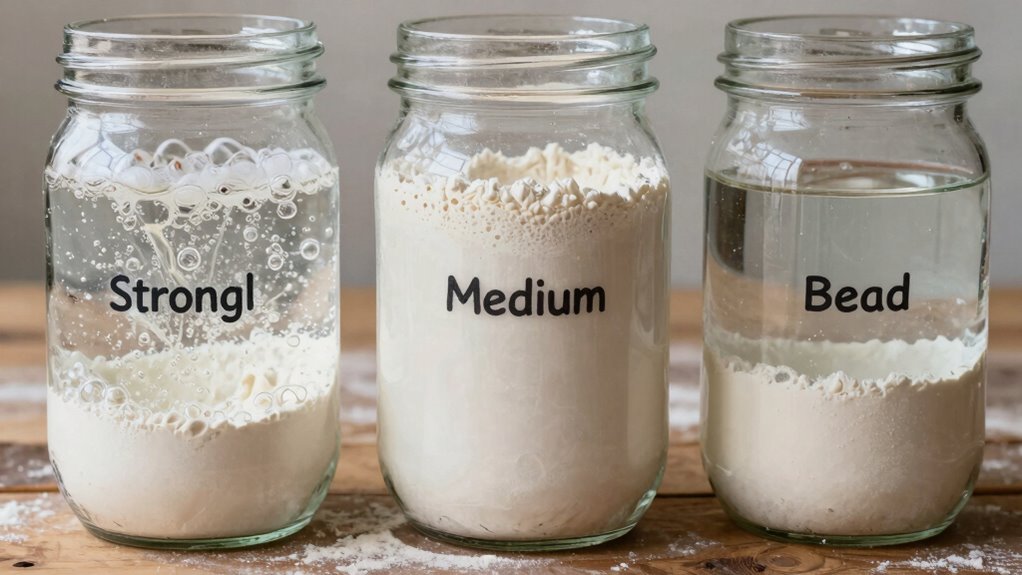
The strength of your flour impacts how long your dough can ferment before overproofing. Higher protein, stronger flours develop more gluten, making your dough more elastic and capable of handling extended fermentation. Weaker flours create more delicate dough that ferments faster and is prone to collapse if overproofed. Understanding this balance helps you control fermentation time and achieve better rise and texture. If you want to master timing and consistency, there’s more to discover about flour strength and fermentation windows.
Key Takeaways
- Stronger flour has higher gluten content, allowing for longer fermentation times without overproofing.
- Weaker flour ferments faster and is more prone to overfermentation if left too long.
- Gluten development in strong flour maintains dough elasticity during extended fermentation.
- Weak flour’s limited gluten network reduces gas retention, shortening optimal fermentation windows.
- Proper flour selection helps control fermentation timing and achieve consistent bread quality.
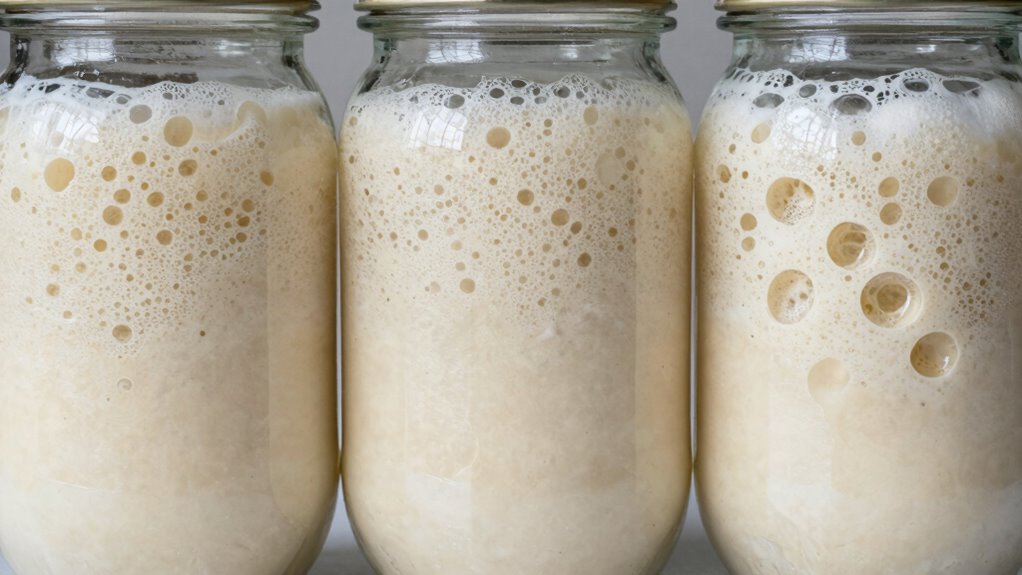
Have you ever wondered how the strength of your flour impacts fermentation? It all comes down to how well the flour can develop gluten and how that influences dough elasticity. Stronger flours, typically made from higher protein wheat, contain more gluten-forming proteins. When you knead this flour, you’re actively encouraging gluten development, which creates a sturdy, elastic network within the dough. This network traps carbon dioxide more effectively during fermentation, leading to a rise that’s both reliable and substantial. Conversely, weaker flours with lower protein content produce less gluten, resulting in a dough that’s less elastic and more delicate.
Stronger flours develop better gluten, creating elastic dough that ferments reliably and produces more substantial rises.
The level of gluten development directly affects how your dough behaves during fermentation. With stronger flour, the dough maintains its shape better and can stretch without tearing. This elasticity allows for a longer fermentation window because the dough can handle extended proofing times without becoming overly slack or collapsing. In contrast, dough made with weaker flour tends to ferment faster. Its limited gluten network can’t hold the gases as effectively, so overfermentation risks are higher. You might notice that the dough becomes overly soft or sticky if left too long, which can compromise the final texture and rise.
Understanding this relationship helps you control your fermentation window more precisely. With high-gluten flour, you can extend proofing times to develop more complex flavors and better crumb structure, knowing that the dough can withstand longer fermentation. But with low-gluten flour, you’ll want to keep a closer eye on the clock, as overproofing can happen quickly. The dough’s elasticity influences not only how much it can rise but also how it responds to shaping and baking. A well-developed gluten network provides strength, allowing you to handle the dough without tearing and to achieve a more uniform, airy crumb.
In essence, the strength of your flour sets the stage for fermentation timing and dough handling. Strong flour supports a more resilient dough with a longer fermentation window, thanks to superior gluten development and elasticity. Weaker flour calls for more immediate use, as its limited gluten network doesn’t sustain extended proofing. Knowing how these factors interplay gives you better control over your baking process, ensuring consistent results whether you’re aiming for a light loaf or a complex, flavor-rich bread. Additionally, understanding the gluten network helps in selecting the appropriate flour for different types of bread and fermentation durations.
As an affiliate, we earn on qualifying purchases.
Frequently Asked Questions
How Does Flour Strength Influence Dough Elasticity?
Flour strength directly impacts dough elasticity by shaping the gluten network. Higher-gluten flour creates a stronger, more resilient gluten network, giving your dough better extensibility and elasticity. This means your dough stretches more without tearing, resulting in a chewier texture. Conversely, lower-gluten flour produces a softer, less elastic dough. By adjusting the flour strength, you control the balance between dough extensibility and firmness, influencing the final baked product’s texture.
Can Low-Strength Flour Lead to Over-Proofing?
Did you know that low-strength flour, with its weaker gluten network, can cause over-proofing in your dough? Because it has a slower fermentation rate, the dough may over-expand if left too long, risking collapse. The weaker gluten structure can’t support the rising process effectively, leading to over-proofed loaves. To avoid this, watch your dough carefully and adjust proofing times based on flour strength to guarantee perfect results.
What Is the Ideal Fermentation Time for High-Strength Flour?
The ideal fermentation time for high-strength flour depends on your dough’s gluten network and desired flavor. Typically, it ranges from 1.5 to 3 hours at room temperature, but watch for the dough to double in size. High-strength flour promotes a stronger gluten network, increasing fermentation speed. Keep an eye on the dough’s rise, and adjust timing accordingly to prevent over-proofing or under-proofing, ensuring best texture and flavor.
Does Flour Strength Affect Sourdough Flavor Development?
They say “you are what you eat,” and this rings true for sourdough too. Flour strength definitely influences flavor development, as it impacts fermentation time and activity. Higher-strength flour often results in a more complex flavor profile, with richer aroma development. You’ll notice deeper sour notes and an enhanced aroma, thanks to the increased gluten and nutrient content that fosters more intricate fermentation, ultimately enriching your sourdough’s overall flavor complexity.
How Do Different Flours Impact Fermentation Temperature?
Different flours impact fermentation temperature because they influence gluten formation and water absorption. High-gluten flours require slightly warmer temperatures to activate yeast effectively, while flours with lower gluten content ferment well at cooler temps. Water absorption also varies, affecting dough hydration and fermentation speed. You should adjust your fermentation temperature based on flour type to optimize yeast activity, gluten development, and overall dough performance.
As an affiliate, we earn on qualifying purchases.
Conclusion
Understanding how flour strength influences fermentation windows helps you craft perfect bread every time. When you choose the right flour, you’re setting yourself up for success and avoiding the pitfalls of rushing or waiting too long. Remember, patience is a virtue in baking—sometimes it’s best to let things take their course. With this knowledge, you can strike the right balance and turn your baking into a well-oiled machine, yielding delicious results that rise to the occasion.
As an affiliate, we earn on qualifying purchases.
As an affiliate, we earn on qualifying purchases.