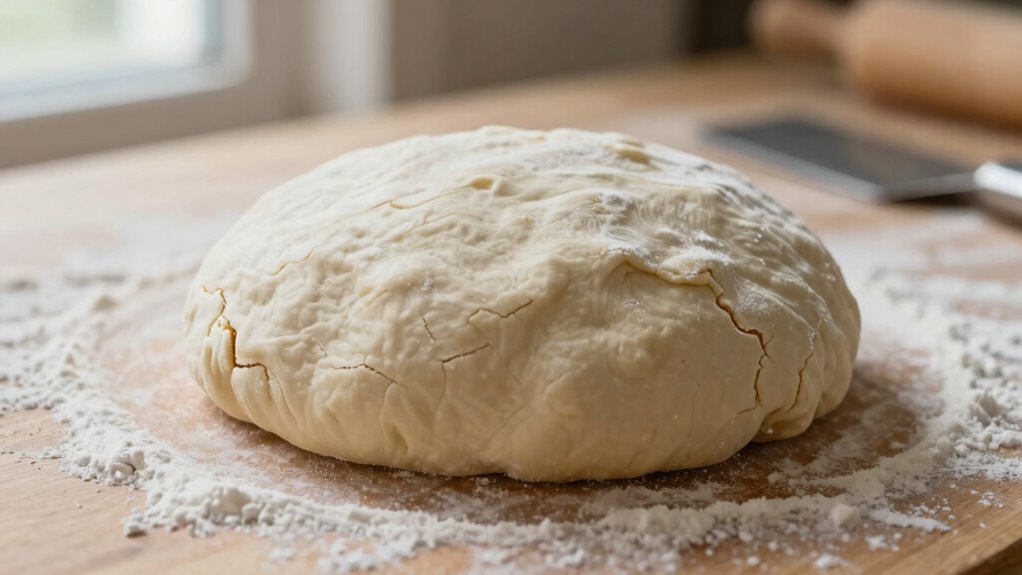

To tell if cold dough needs more bench time, observe its appearance and texture. It should look puffed and smooth, and when you press it, it should feel soft and resilient, not stiff or dry. If it springs back quickly or feels tight, it likely needs more time to develop fully. Watching these cues helps you get perfect fermentation, and there’s more to discover for ideal results.

Get baking supplies delivered free with Prime
- Fast, free delivery on millions of items
- Prime Video, Amazon Music and more included
- Member-only deals all year
Key Takeaways
- The dough feels stiff, dry, or overly tight when pressed.
- It does not appear puffed or smooth after resting.
- Indentation from the poke test springs back quickly.
- The dough looks dense or underdeveloped visually.
- It lacks the soft, resilient feel typical of well-fermented dough.
Ever wonder if your cold dough needs more bench time before you start shaping it? The key to perfect bread often lies in understanding the fermentation process and how temperature regulation impacts it. When you pull your dough out of the fridge, it might not be ready for shaping, even if it feels firm. Cold dough continues to ferment slowly, and this ongoing activity influences its texture, elasticity, and flavor. If you rush into shaping too soon, you risk ending up with dense or uneven bread. To avoid this, you need to observe certain signs that indicate whether your dough has had enough bench time or if it requires more.
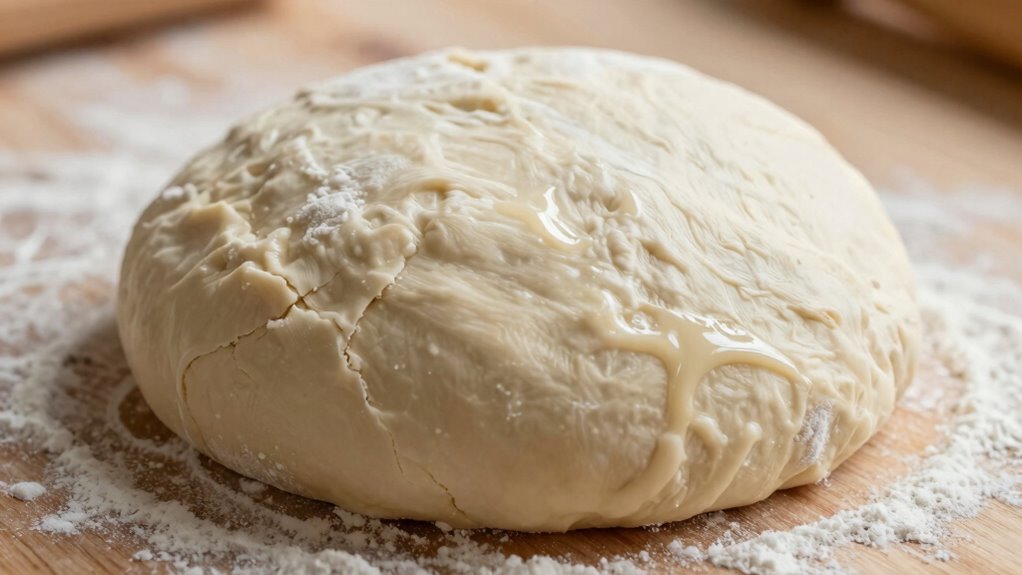
One of the most reliable indicators is the dough’s appearance and texture. Well-fermented cold dough should look slightly puffed up, with a smooth surface, and feel soft yet resilient when you gently press it. If it feels stiff, dry, or overly tight, it likely needs more time to ferment and relax. The fermentation process during cold proofing continues at a slower rate, but it still develops gluten structure and flavor. Proper temperature regulation during this stage is essential because it slows down the yeast activity enough to allow for even fermentation without overproofing. If your dough is kept too cold or too warm, it can either stall or ferment too quickly, making it harder to judge its readiness. Additionally, understanding the impact of temperature on yeast activity can help you better control the fermentation process. Maintaining the right fermentation conditions is crucial for achieving optimal dough development. Being aware of fermentation dynamics helps in planning the timing and environment for your dough. A consistent temperature during bench resting can also prevent unwanted temperature fluctuations that may interfere with proper fermentation.
Well-fermented cold dough appears puffed, smooth, soft, and resilient; avoid stiffness, dryness, or tightness.
A good rule of thumb is to consider how temperature affects yeast activity and adjust your bench time accordingly to ensure the dough reaches its peak. Timing is also fundamental. Typically, cold dough benefits from additional bench time of about 20 to 40 minutes, depending on the recipe and ambient conditions. You can test its readiness by performing a gentle poke test: press your finger into the dough, and if the indentation springs back slowly and partially, it’s usually ready. If it springs back quickly, it might need more time; if it doesn’t spring back at all, it might be overproofed. Remember, temperature regulation during the bench time helps maintain consistent fermentation. Keeping your workspace at a moderate temperature ensures the yeast activity proceeds steadily, avoiding rapid fermentation that could collapse the dough or slow activity that prolongs waiting.
Ultimately, trust your senses. Your eyes, touch, and the slight resilience of the dough are your best guides. Recognizing the signs of proper fermentation and maintaining good temperature regulation will help you determine if your cold dough needs more bench time. Patience during this step ensures you get a beautifully textured loaf with developed flavors, making all your effort worthwhile.
As an affiliate, we earn on qualifying purchases.
Frequently Asked Questions
Can Cold Dough Be Over-Rested?
Yes, cold dough can be over-rested. During the fermentation process, over-resting can lead to excessive gluten development, making the dough tough and difficult to shape. If you notice the dough becoming overly sticky or losing its elasticity, it’s a sign it’s been rested too long. To avoid this, keep an eye on the dough’s texture and fermentation time, and don’t let it sit out beyond the recommended period.
How Does Dough Temperature Affect Bench Time?
Dough temperature is like a hidden conductor guiding fermentation, directly impacting bench time. When your dough’s too cold, fermentation slows down, extending bench time needed for proper gluten development. Conversely, warmer dough accelerates fermentation, reducing bench time, but risks over-proofing. Proper temperature regulation guarantees consistent results, allowing you to strike the perfect balance between fermentation and bench time, ultimately creating beautifully textured baked goods.
Is There a Visual Indicator for Under-Rested Dough?
Yes, there are visual cues for under-rested dough. You’ll notice it appears less elastic, often tearing easily when stretched. The dough might feel stiff or resistant rather than smooth and pliable. Its surface could look uneven or tight, indicating it hasn’t relaxed enough. If you see these signs, give your dough more bench time to develop better elasticity and workability, ensuring a better final product.
Does Dough Type Influence Bench Time Requirements?
Did you know that high-hydration doughs often need 20% more bench time than low-hydration ones? Yes, dough type markedly influences bench time requirements because hydration levels affect gluten development. For example, wetter doughs require longer resting to allow gluten to relax and strengthen, making shaping easier. So, understanding your dough’s hydration and type helps you determine the ideal bench time, ensuring peak gluten development and better baking results.
How Do I Adjust Bench Time in Humid Environments?
In humid environments, you should adjust bench time by focusing on humidity control and ambient conditions. You might need to extend bench time to allow the dough to fully relax and develop, but too much humidity can cause stickiness or over-fermentation. Keep the dough covered and in a controlled environment, monitoring ambient humidity levels. Adjust bench time based on how the dough feels—if it’s still too cool or stiff, give it more time.
As an affiliate, we earn on qualifying purchases.
Conclusion
Remember, cold dough is like a sleeping giant—patience awakens its true potential. If it still feels stiff or resists shaping, give it a little more bench time to relax and develop flavor. Rushing it is like trying to wake a bear with a poke; you might end up with a mess. Trust your intuition and gentle touch, and soon you’ll have perfectly pliable dough ready to transform into something delicious.
kitchen thermometer for dough fermentation
As an affiliate, we earn on qualifying purchases.
As an affiliate, we earn on qualifying purchases.
As an affiliate, we earn on qualifying purchases.
Halloween Picks
halloween
As an affiliate, we earn on qualifying purchases.