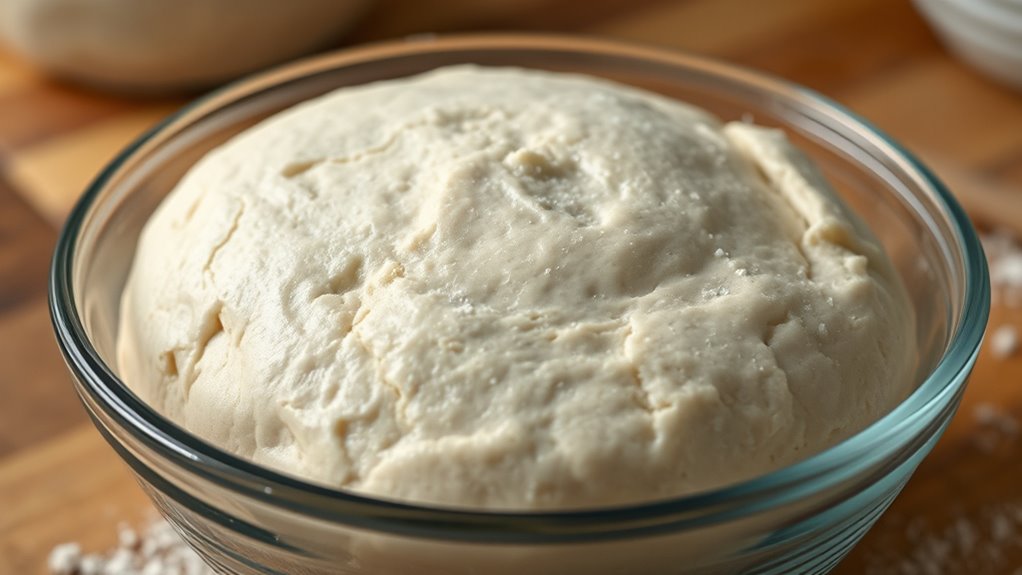

Autolyse is a process where you let your dough rest after mixing only flour and water, which helps develop gluten naturally. This rest period improves dough extensibility, strength, and makes shaping easier—all without kneading too much. The ideal autolyse time varies but usually lasts between 20 to 60 minutes, especially with high-hydration doughs. Staying patient during this step results in better bread crumb and texture; if you keep going, you’ll discover how to maximize these benefits.
Key Takeaways
- Autolyse allows natural hydration of flour, promoting gluten development without kneading.
- Resting dough during autolyse enhances extensibility and strength of gluten strands.
- Proper autolyse duration improves dough handling, shaping, and bread crumb texture.
- Higher hydration doughs benefit more, with longer autolyse boosting gluten formation.
- Avoid adding salt and yeast during autolyse to maximize gluten development and dough resilience.
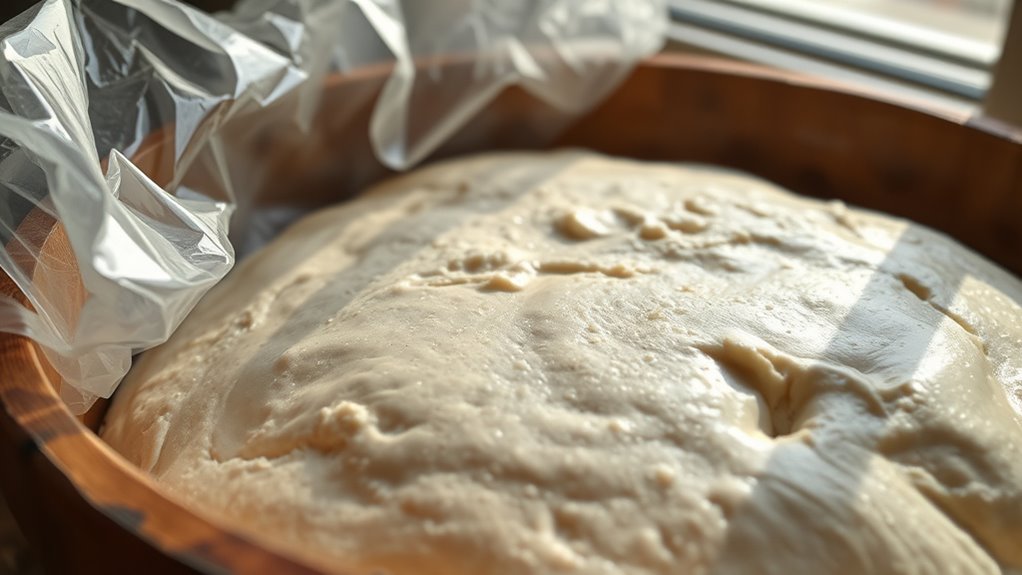
Autolyse is a simple yet effective technique that can considerably improve gluten development in your bread dough. When you let your dough rest after mixing the flour and water, you’re giving the gluten proteins time to hydrate and start forming their network naturally. This process enhances dough extensibility and strength, making it easier to shape and resulting in a better crumb. To maximize these benefits, pay attention to fermentation timing and dough hydration, as both influence how well your autolyse works.
Autolyse improves gluten development, dough extensibility, and bread crumb quality through natural hydration.
Fermentation timing plays a vital role in autolyse because it determines how long you should let the dough rest. Typically, a period of 20 to 60 minutes is sufficient, but longer autolyses can be beneficial, especially with higher hydration doughs. During this time, enzymes break down starches and proteins, improving gluten formation and dough extensibility. You want to give the dough enough time to hydrate fully without risking over-fermentation, which could weaken the gluten structure. Adjusting the autolyse duration based on your fermentation schedule ensures that your dough develops ideal gluten strength without compromising flavor or texture.
Dough hydration directly impacts how effectively autolyse works. Higher hydration doughs, those with a greater ratio of water to flour, benefit greatly from autolyse because more water means better gluten hydration. When the flour absorbs adequate water during the rest, gluten strands form more easily and uniformly, leading to a stronger and more elastic dough. Conversely, low-hydration doughs may not see as dramatic an improvement but still benefit from the rest period by developing better extensibility. The key is to maintain proper dough hydration before autolyse so that the flour can fully hydrate, which accelerates gluten development and improves dough handling.
Incorporating autolyse into your bread-making process is simple: mix your flour and water, then let it rest for the appropriate amount of time, considering your fermentation schedule and dough hydration. Avoid rushing this step, as patience here pays off in a more cohesive, resilient dough. You don’t need to add salt or yeast during this phase; these ingredients can be incorporated afterward. This technique allows the gluten network to develop naturally, resulting in a dough that’s easier to shape, rises better, and produces a superior crumb.
Frequently Asked Questions
How Long Should an Autolyse Typically Last?
You should autolyse for about 20 to 60 minutes, depending on your hydration levels and fermentation timing. During this period, your dough absorbs water fully, helping gluten develop more effectively. If your dough has higher hydration, extend the autolyse slightly to allow better hydration. Keep in mind, longer autolyse can improve elasticity, but too long might start fermentation, so balance it based on your recipe and timing needs.
Can Autolyse Be Used With Whole Grain Flours?
Think of autolyse as a gentle sunrise for your dough; it works beautifully with whole grain flours, promoting better gluten development despite their hearty nature. Whole grain compatibility may require a slightly longer autolyse, allowing the grains to soften and absorb water. This patience helps create a resilient dough, making your bread chewier and more flavorful. Embrace the process, and your whole grain loaves will rise with strength and character.
Does Autolyse Affect the Dough’s Final Flavor?
Yes, autolyse can enhance your dough’s final flavor by allowing enzymes to break down starches and proteins, which boosts flavor complexity. It also improves gluten structure, making the dough easier to handle and shaping more consistent. During autolyse, the natural sugars develop, adding a subtle sweetness that elevates your bread’s taste. Overall, this resting period benefits both flavor enhancement and gluten development, leading to a better-quality final product.
Is Autolyse Necessary for All Bread Recipes?
Autolyse isn’t necessary for all bread recipes, but it’s highly beneficial. It helps with gluten formation by allowing the flour to hydrate fully, which results in better dough extensibility and improved texture. If you’re making a simple loaf or quick bread, you might skip it, but for longer fermentation recipes, autolyse makes your dough easier to handle and enhances the final crumb. It’s a helpful step for most traditional bread baking.
How Does Temperature Influence the Autolyse Process?
Imagine you’re in a medieval kitchen, adjusting your oven’s fire—temperature control is key during autolyse. Cooler temperatures slow enzymatic activity, reducing fermentation rate and gluten development, while warmer temps accelerate both. To optimize autolyse, keep the dough at a consistent, moderate temperature—around 75-80°F. This guarantees a balanced fermentation rate, promoting better gluten formation without overproofing or underdeveloping your dough’s structure.
Conclusion
Now, picture your dough resting peacefully, slowly waking up like a sunrise over a calm morning. As it relaxes, the gluten strands stretch and embrace each other, forming a sturdy, elastic web. This gentle autolyse transforms your mixture into a supple, resilient dough, ready to rise beautifully. When you finally shape it, you’ll feel its strength and tenderness—like a well-crafted sculpture, perfectly poised to become your delicious bread.