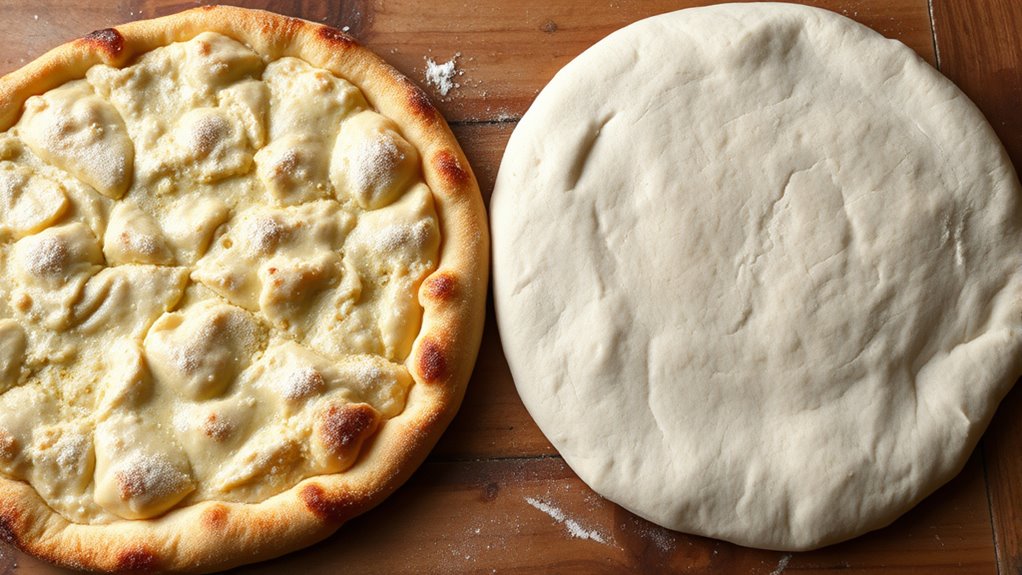

To master advanced yeast versus sourdough pizza crusts, focus on understanding fermentation fundamentals, flavor development, and texture outcomes. Yeast offers quick, consistent rises with a clean taste, perfect for faster schedules, while sourdough provides complex flavors and chewier crusts through slow fermentation. Choosing the right method depends on your flavor goals and time constraints. Keep exploring as you go deeper into techniques, starters, and troubleshooting to elevate your pizza game.
Key Takeaways
- Compare fermentation speed, flavor development, and crust texture differences between yeast and sourdough for pizza.
- Detail starter creation, maintenance, and microbial activity influencing dough leavening and complexity.
- Explain advanced fermentation control, including timing, temperature, and ingredient adjustments for optimal results.
- Highlight style preferences, including quick yeast-based versus traditional sourdough approaches, based on flavor and schedule.
- Offer troubleshooting, innovation tips, and ingredient variations to craft unique, high-quality pizza crusts with each method.
Understanding the Fundamentals of Yeast and Sourdough Fermentation
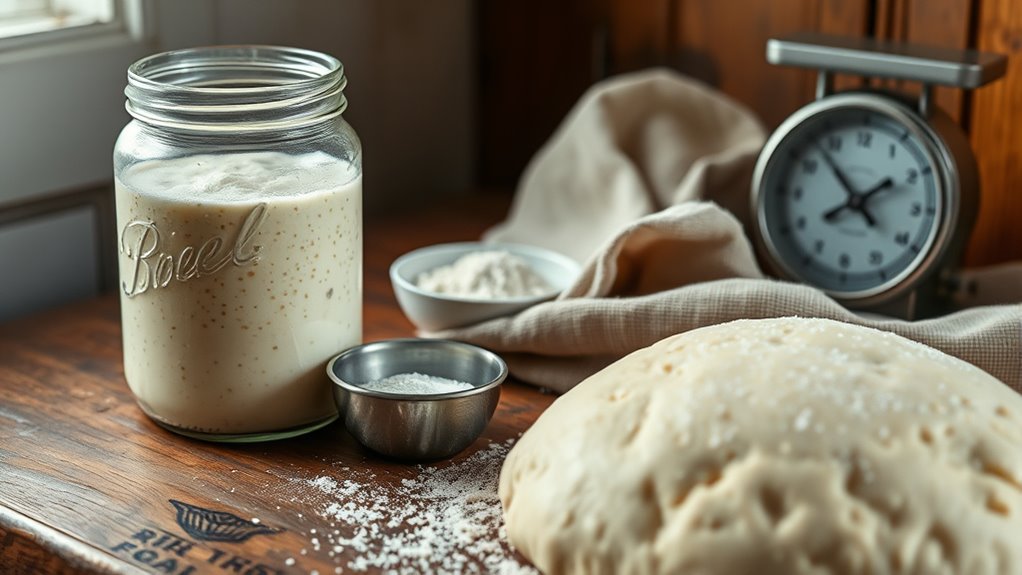
While both yeast and sourdough are used to ferment dough, they rely on different biological processes to develop flavor and leaven the crust. Yeast activation occurs quickly when you add commercial yeast to dough, triggering rapid carbon dioxide production that leavens the bread. This process is straightforward and predictable, making it ideal for consistent results. Sourdough fermentation, on the other hand, involves sourdough maturation, where naturally occurring wild yeasts and bacteria develop over time. This slow process enhances flavor complexity and creates a more resilient dough. During sourdough maturation, the natural microbes break down starches and proteins, contributing to unique taste and texture. Understanding these fundamental differences helps you choose the right fermentation method for your pizza.
Key Differences in Flavor Profiles and Texture Outcomes
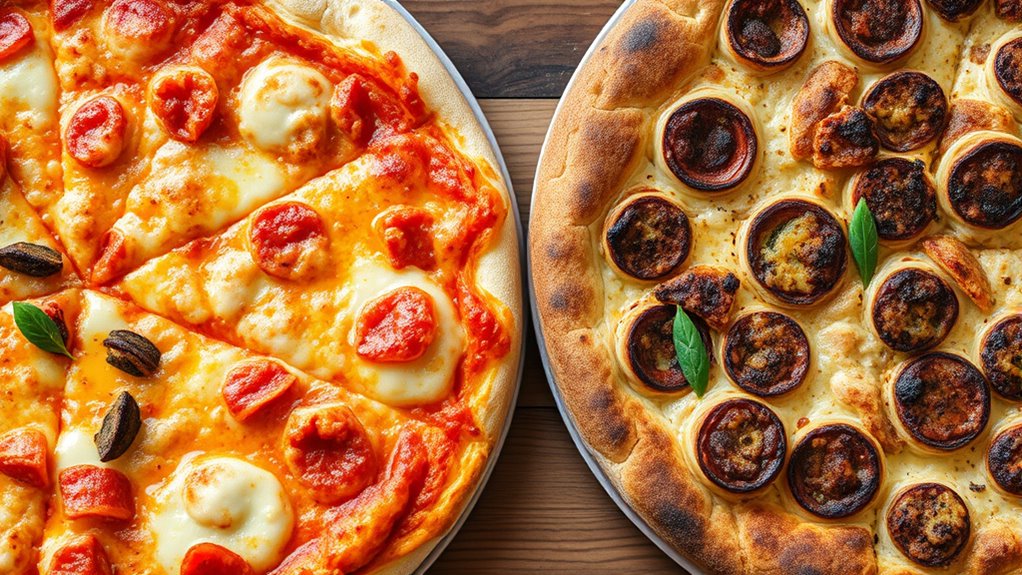
The choice between yeast and sourdough considerably impacts your pizza’s flavor and texture. Sourdough offers deep flavor complexity, with tangy, nuanced notes that develop over long fermentation. Yeast, on the other hand, provides a cleaner, more straightforward taste, emphasizing dough’s freshness.
Consider these key differences:
Consider these key differences to craft your perfect pizza crust.
- Flavor depth – Sourdough’s fermentation creates rich, tangy layers, while yeast yields a bright, subtle profile.
- Texture variation – Sourdough often results in a chewier, airier crust, whereas yeast produces a softer, more uniform crumb.
- Aroma – Sourdough’s complex aroma heightens sensory enjoyment; yeast’s aroma is simpler and cleaner.
- Mouthfeel – Sourdough’s crust feels more substantial and textured, while yeast-based crust feels lighter and delicate.
- Impact of fermentation time – Longer fermentation in sourdough enhances color accuracy and flavor complexity, contributing to a more developed crust.
Your choice shapes not just taste but the entire eating experience.
Selecting the Right Leavening Method for Your Pizza Style
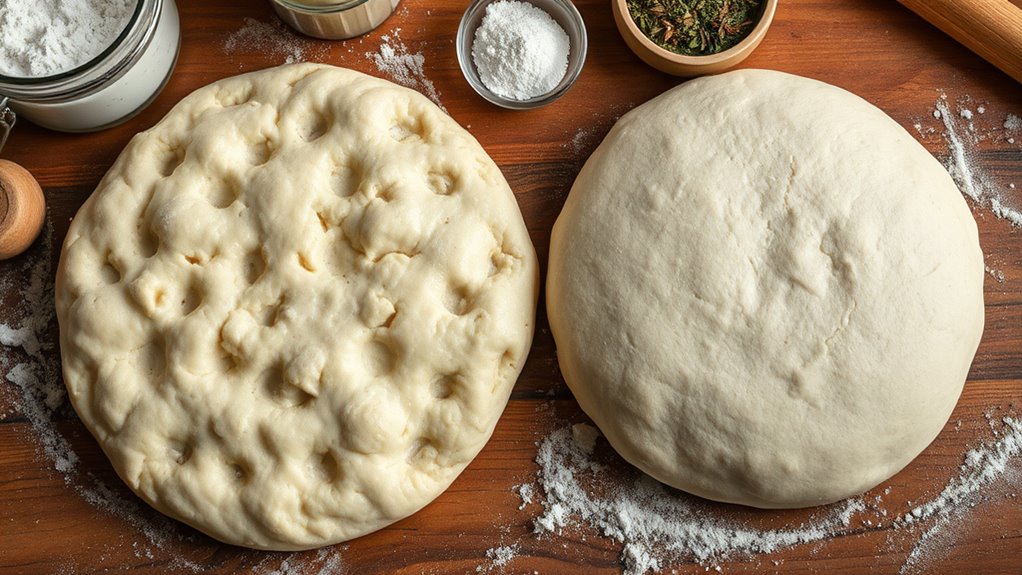
Choosing the right leavening method directly influences your pizza’s overall style and character. If you prefer a quick, reliably risen crust, yeast activation is your best bet. It offers predictable fermentation and straightforward sourdough maintenance, making it ideal for consistent results. On the other hand, sourdough fermentation develops complex flavors and a chewier texture, but requires more attention to maintaining your starter and managing fermentation times. Consider your desired flavor profile, time constraints, and the crust’s texture when selecting your leavening method. Yeast provides speed and ease, while sourdough offers depth and character. Additionally, understanding the tuning options available for different Honda models can help you optimize your vehicle’s performance to match your driving style and needs. By understanding these differences, you can choose the leavening method that best aligns with your pizza style and baking rhythm.
Preparing Your Starter: From Commercial Yeast to Sourdough Culture
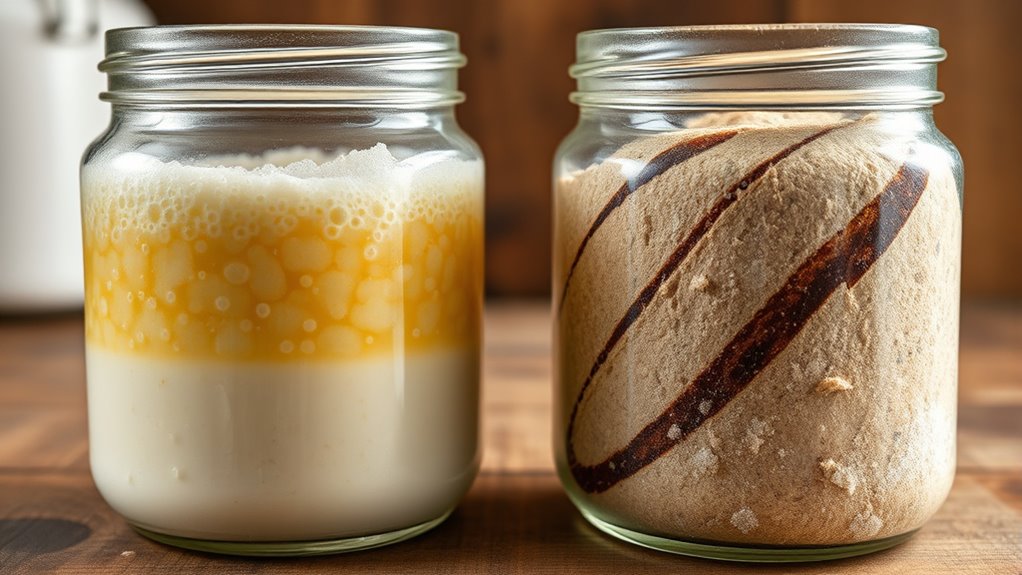
Transforming your starter from commercial yeast to a sourdough culture requires understanding the foundational steps involved. First, you’ll need to create a starter culture by mixing flour and water, allowing natural fermentation to develop. This process kicks off the fermentation process, cultivating wild yeast and bacteria.
Here are the key steps:
- Discard and feed regularly to encourage healthy fermentation.
- Adjust hydration levels to support active growth.
- Maintain consistent temperature for reliable fermentation.
- Patience is essential—your starter will evolve and strengthen over time.
- Incorporating nutrient-rich ingredients can enhance fermentation activity and improve the development of beneficial microbes.
Hydration, Fermentation Time, and Temperature Control Techniques
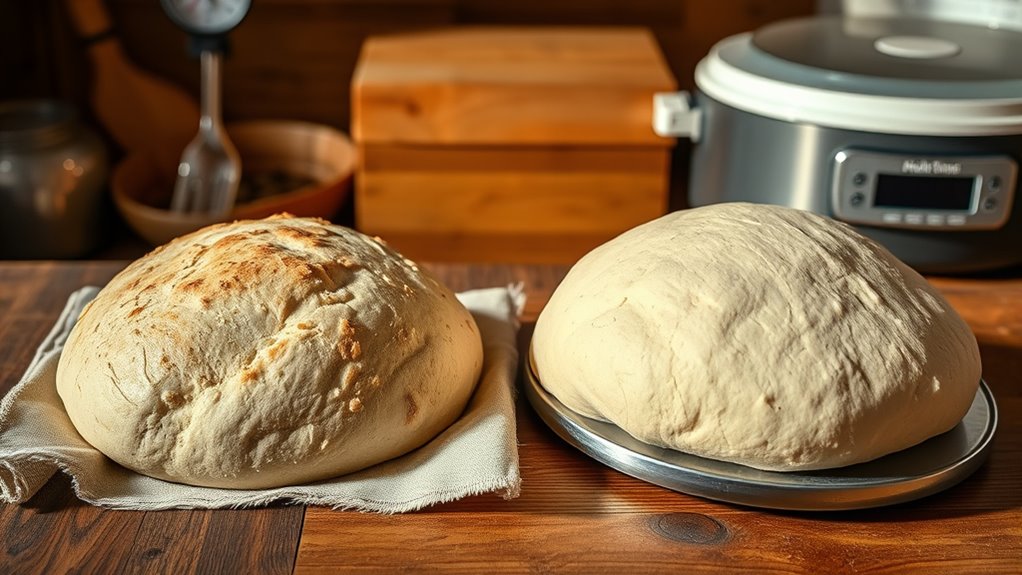
To achieve ideal fermentation, you need to carefully control hydration levels, fermentation time, and temperature. Proper hydration levels influence dough extensibility and oven spring; too much water makes it sticky, too little results in dense crust. Temperature control is essential—maintain a consistent environment to regulate yeast activity and sourdough fermentation. Warmer temperatures speed up fermentation, but risking overproofing, while cooler temps slow it down, enhancing flavor development. Monitor fermentation time closely; underfermented dough lacks flavor, overfermented can collapse. Use a thermometer to guarantee your dough stays within the best temperature range, typically around 75-78°F (24-26°C). Fine-tuning these variables allows you to achieve the perfect balance of rise, flavor, and texture in your pizza dough. Incorporating sensory toys into your process can help you better understand the dough’s fermentation progress through tactile feedback.
Step-by-Step Process for Advanced Yeast-Based Pizza Doughs
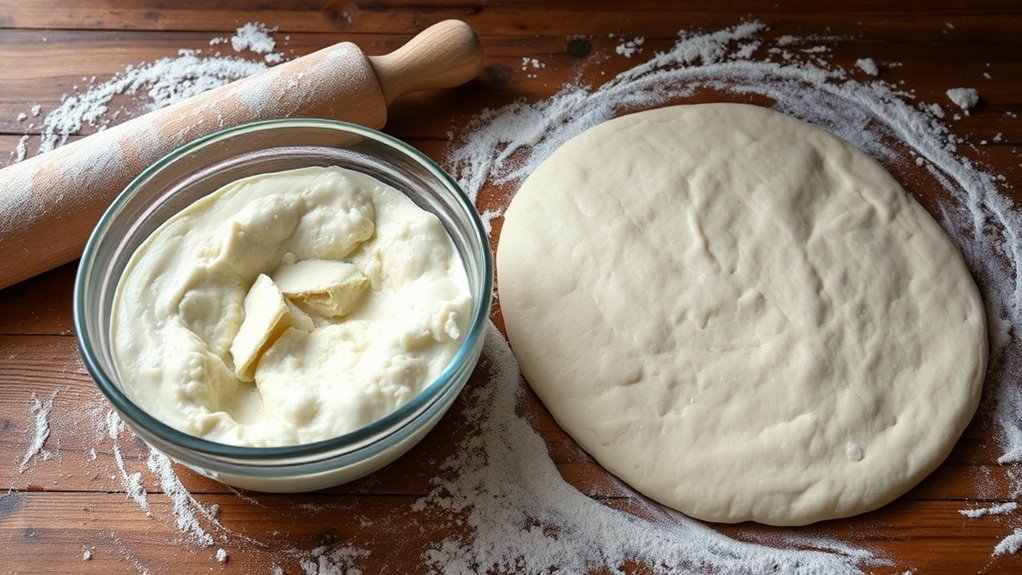
To make the best advanced yeast-based pizza dough, you need to focus on proper dough preparation techniques and fermentation optimization. Your process starts with precise ingredient measurements and kneading methods that develop gluten structure. By controlling fermentation conditions, you can enhance flavor and texture for a superior crust. Additionally, selecting the right fermentation environment is crucial for achieving the desired rise and flavor complexity.
Dough Preparation Techniques
Creating an advanced yeast-based pizza dough involves precise steps to guarantee ideal fermentation and texture. To achieve perfect dough elasticity, focus on proper mixing and kneading techniques. Start by measuring ingredients carefully, and consider ingredient replacement options to enhance flavor or accommodate dietary needs.
Here’s your step-by-step approach:
- Mix ingredients until well combined, ensuring the dough develops good elasticity.
- Knead thoroughly for at least 8-10 minutes to strengthen gluten structure.
- Rest the dough covered, allowing it to relax and improve elasticity.
- Adjust hydration or flour type if needed, tailoring ingredient substitution to your desired texture.
Mastering these techniques ensures your dough will be supple, easy to stretch, and full of flavor, setting the stage for a perfect pizza.
Fermentation Optimization
Optimizing fermentation is key to revealing the full potential of your advanced yeast-based pizza dough. To do this, focus on adjusting fermentation variables like temperature, time, and hydration. Warmer temperatures increase yeast activity, speeding up fermentation, while cooler temps slow it down, developing more complex flavors. Control fermentation time carefully—longer fermentations promote better flavor and dough extensibility. Keep an eye on yeast activity; vigorous activity indicates proper fermentation, but overactive yeast can lead to over-proofing. Use consistent conditions and monitor dough behavior to fine-tune the process. By managing these variables precisely, you’ll liberate optimal gluten development, flavor complexity, and dough strength, resulting in a superior pizza crust. Proper fermentation optimization guarantees your dough reaches its highest quality potential. Additionally, leveraging remote hackathons can facilitate collaboration with experts worldwide to refine your fermentation techniques and innovate new dough formulations.
Crafting Sourdough Pizza Crusts: Tips for Optimal Rise and Flavor
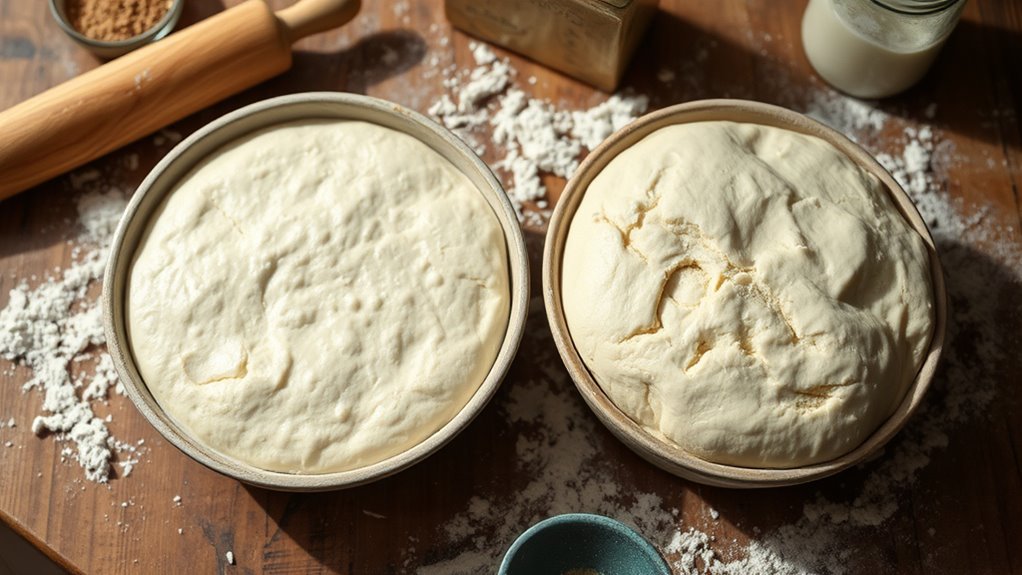
To get the best sourdough pizza crust, you need to master fermentation timing to guarantee proper rise and flavor development. Paying attention to dough temperature and fermentation duration helps enhance depth of taste while creating a fluffy, airy texture. Implementing advanced fraud detection techniques can also help protect against fraudulent activity that might compromise your ingredients or supplies. With the right adjustments, you can achieve a crust that’s both flavorful and perfectly risen.
Perfecting Fermentation Timing
Achieving the perfect rise and flavor in sourdough pizza crust hinges on mastering fermentation timing. Proper dough proofing ensures the yeast and bacteria develop flavor and structure. To optimize fermentation timing:
- Monitor dough temperature: Keep it around 75-78°F for consistent proofing.
- Adjust proofing time: Longer fermentation (12-24 hours) enhances complexity, but avoid over-proofing.
- Observe dough signs: Look for a puffy, bubbly surface—this indicates readiness.
- Use the poke test: Gently press your finger; if the indentation slowly springs back, it’s perfect.
- Maintain proper cookie categories: Using the right type of cookies can influence fermentation and dough development.
Getting fermentation timing right allows your dough to develop depth of flavor and ideal rise, creating a light, airy crust with excellent texture.
Enhancing Dough Flavor
Once you’ve nailed the fermentation timing, focusing on ways to enhance your dough’s flavor can take your sourdough pizza to the next level. To boost flavor complexity and aroma enhancement, consider adding ingredients like roasted garlic, herbs, or a splash of olive oil during mixing. Longer fermentation also allows natural flavors to develop fully, creating richer taste profiles. Incorporate techniques such as cold fermentation overnight for deeper aroma and nuanced flavor. Additionally, understanding artificial intelligence’s role in optimizing fermentation processes can provide innovative insights for bakers seeking precision and consistency.
Achieving Fluffy Texture
For your sourdough pizza crust to turn out fluffy and light, focusing on proper fermentation and shaping techniques is essential. Achieving the perfect rise depends on maintaining dough elasticity and controlling baking temperature. Here are key tips:
- Ensure Proper Fermentation: Allow your dough to ferment until it develops good elasticity, which traps gas and creates an airy structure.
- Gentle Shaping: Handle the dough carefully to preserve its internal air pockets, promoting a fluffy texture.
- Optimal Baking Temperature: Bake at a high temperature (around 500°F/260°C) to quickly set the crust and maximize puffiness.
- Use a Hot Oven and Stone: Preheat thoroughly and bake on a hot surface to encourage rapid oven spring.
- Monitor Automation Trends: Keeping an eye on automation in business can help streamline your pizza-making process and improve consistency.
These steps will help you craft a crust that’s irresistibly fluffy and flavorful.
Troubleshooting Common Issues in Yeast and Sourdough Pizza Making

Troubleshooting common issues in yeast and sourdough pizza making often starts with identifying the root cause of each problem. If your dough isn’t rising properly, it’s likely due to insufficient yeast activation or weak gluten development. Confirm your yeast is fresh and activated at the right temperature—around 100-110°F—to kickstart fermentation. Poor gluten development can lead to a dense or flat crust; knead the dough thoroughly and give it ample time to rest so the gluten network forms properly. If your dough is sticky or tough, adjust hydration levels or kneading time. Also, verify your fermentation conditions—too cold or too warm environments can hinder yeast activity. Correcting these issues will help you achieve a well-risen, flavorful crust.
Experimenting With Blends and Variations for Unique Pizza Crusts
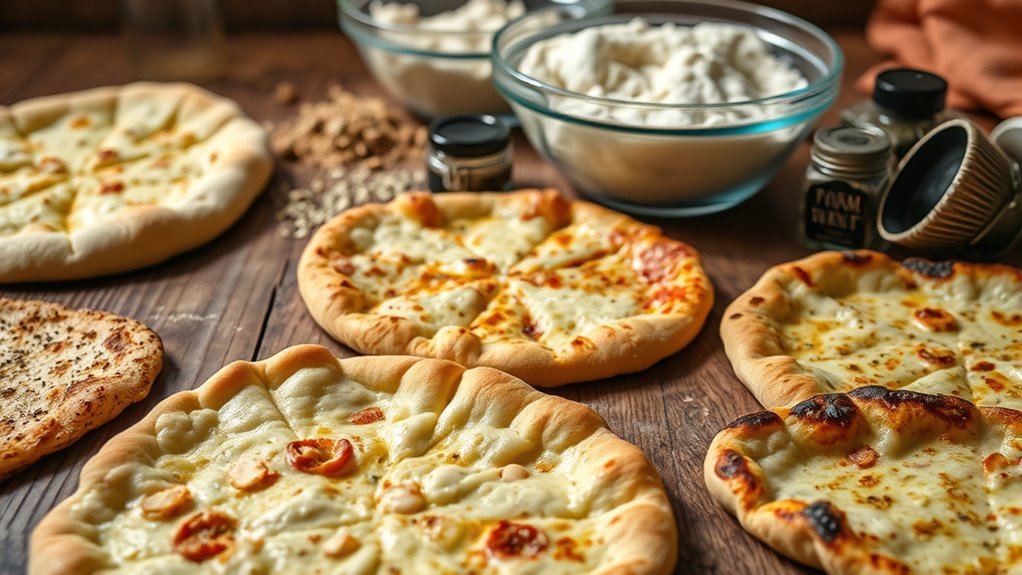
Experimenting with different flour blends and ingredient variations opens up a world of possibilities for creating pizza crusts with unique textures and flavors. By adjusting ingredients, you can influence gluten development and dough elasticity, resulting in a crust that’s chewy, crispy, or tender. Here are four ideas to inspire your experiments:
- Mix whole wheat and bread flour for added flavor and a hearty bite.
- Incorporate rye or spelt flour to introduce subtle nuttiness and complexity.
- Add a touch of olive oil or honey to enhance dough elasticity and browning.
- Try using a blend of sourdough starter and commercial yeast for a distinct tang and improved gluten structure.
These variations allow you to craft crusts that stand out, elevating your pizza game with each experiment.
Frequently Asked Questions
How Do I Prevent Sourdough From Over-Fermenting During Long Fermentation?
To prevent sourdough from over-fermenting during long fermentation, you should carefully monitor fermentation timing and temperature control. Keep the dough in a cooler environment, ideally around 38-42°F (3-6°C), to slow down fermentation. Adjust the timing based on your dough’s activity; shorter times at higher temperatures or longer times at lower temperatures work best. Regularly check your dough to avoid over-proofing and guarantee perfect flavor and texture.
Can I Use Wild Yeast for Commercial Pizza Production?
Imagine a bustling kitchen where wild yeast cultivation brings a natural, lively aroma to your dough. Yes, you can use wild yeast for commercial pizza production, but it requires careful control of fermentation conditions and consistency. For reliable results, you’ll need to develop a robust starter culture, monitor fermentation times, and maintain strict hygiene. This approach adds unique flavor and character, but it demands dedication to achieve uniform, high-quality pizzas.
What Are the Best Storage Methods for Sourdough Starters?
You should store your sourdough starter in a clean, airtight container to maintain freshness and prevent contamination. For daily maintenance, keep it at room temperature and feed regularly. If you don’t bake often, refrigerate the starter, but remember to bring it back to room temperature and feed it before using. Proper storage containers and consistent starter maintenance guarantee your sourdough remains healthy and active for perfect pizza dough every time.
How Does Hydration Level Affect Pizza Dough Elasticity?
Ever wondered how hydration impacts your dough’s stretchability? Higher hydration levels make your pizza dough more elastic by enhancing gluten development, allowing it to stretch easily without tearing. Conversely, lower hydration results in a firmer dough with less elasticity. By adjusting hydration, you control elasticity development, ensuring your crust is both tender and chewy. So, don’t be afraid to experiment—finding the perfect hydration reveal the ideal dough stretchability for your pizza.
Are There Gluten-Free Options for Advanced Yeast and Sourdough Pizza?
Yes, you can make gluten-free pizza using advanced yeast or sourdough starters. You’ll want to use gluten-free flours like rice, almond, or tapioca flour, and consider yeast substitutes such as baking soda or baking powder for leavening. Keep in mind that gluten-free dough behaves differently, so you may need to adjust hydration levels and add binders like xanthan gum to achieve the right texture and elasticity.
Conclusion
Whether you choose yeast or sourdough, mastering these methods is like tending a garden—you’ll nurture flavors and textures that truly stand out. With patience and practice, you’ll create crusts that are as lively as a bustling pizzeria. Trust your instincts, experiment, and enjoy the journey of perfecting your pizza craft. In the end, your dough will rise to meet your passion, just like a well-loved recipe coming to life.