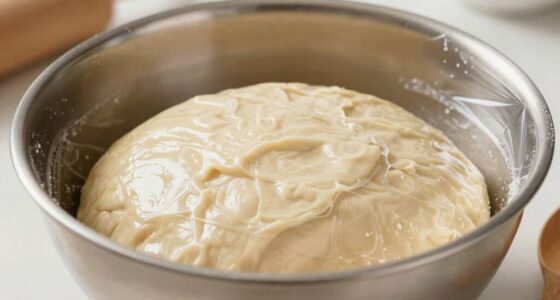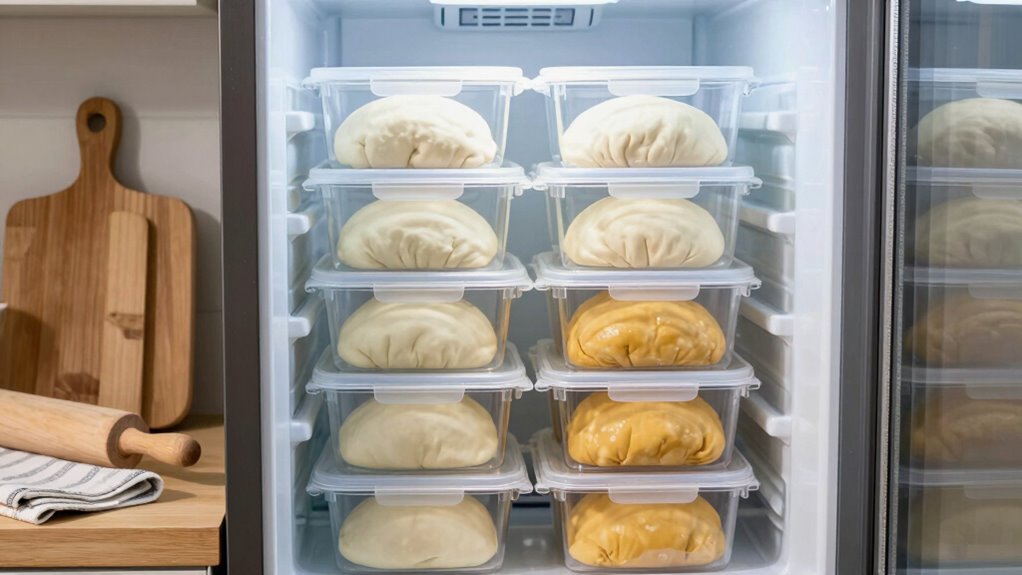

To keep dough management simple in the fridge, focus on controlling the temperature between 35°F and 40°F to prevent overproofing. Cover your dough tightly to prevent drying and odors, and avoid opening the fridge too often to maintain a steady environment. Check your dough periodically for signs of overfermentation, and punch it down if needed. Staying consistent with these easy steps helps you master fermentation without overcomplication—there’s more to discover if you keep going.

Get baking supplies delivered free with Prime
- Fast, free delivery on millions of items
- Prime Video, Amazon Music and more included
- Member-only deals all year
Key Takeaways
- Maintain a consistent fridge temperature between 35°F and 40°F to keep dough stable.
- Use proper covering like plastic wrap or containers to prevent drying and odors.
- Avoid opening the fridge frequently to prevent temperature fluctuations.
- Monitor dough for signs of overfermentation, such as excessive rise or sour smell.
- Adjust fermentation time based on dough type and desired flavor development.
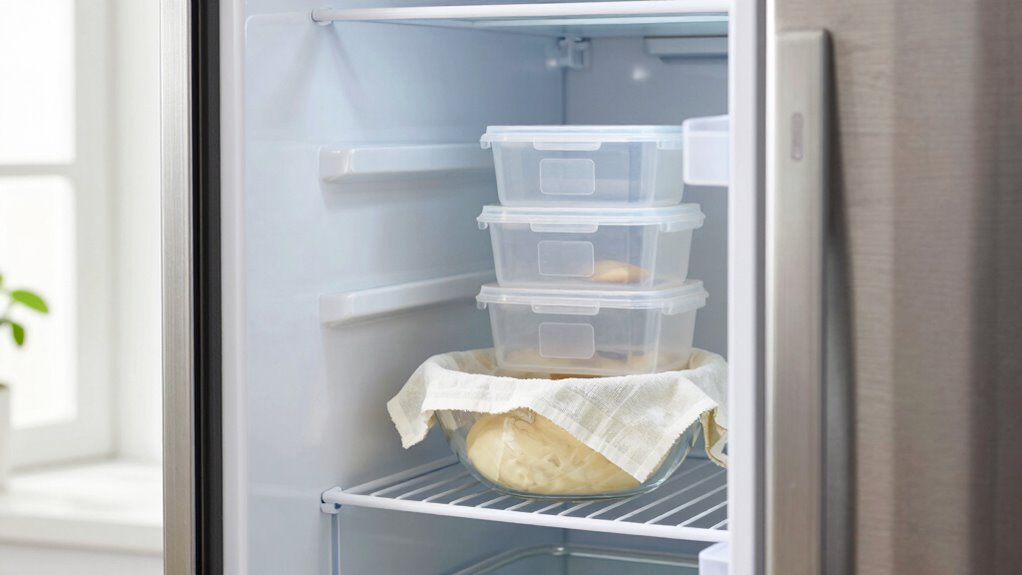
Managing dough in the fridge doesn’t have to be complicated. When you’re refrigerating dough, the key is to control fermentation and keep the storage temperature just right. Too often, people overthink the process, but with a few simple tips, you can easily manage your dough without stress. The main goal is to slow down fermentation, preventing the dough from overproofing or developing unwanted flavors, and that’s where temperature plays an essential role.
First, always remember that fermentation control depends largely on the storage temperature. The cooler the environment, the slower the yeast activity. Most home refrigerators are set between 35°F and 40°F (1.5°C to 4°C), which is ideal for slowing fermentation without stopping it completely. If your fridge runs warmer, your dough will ferment faster, and you might risk overproofing. If it’s colder, fermentation will slow down considerably, giving you more flexibility. To keep things predictable, aim for a consistent temperature, and avoid frequent door openings that cause temperature fluctuations. Temperature management is crucial for consistent results. Maintaining a stable environment helps prevent fluctuations that can negatively impact fermentation and dough quality.
Control fermentation by maintaining a consistent fridge temperature between 35°F and 40°F for best dough storage.
Next, consider the type of dough you’re working with. For bread dough that requires a long fermentation, maintaining a steady, cool storage temperature helps develop flavor and texture without overproofing. For shorter fermentations, a slightly warmer temp might be suitable, but always stay within the safe range to prevent unintended yeast activity. If you’re refrigerating dough for an extended period, you can even adjust the temperature slightly lower or use a dedicated fermentation drawer if your fridge has one. Controlling fermentation is crucial for achieving the best results. Being aware of microplastics in dust and other potential contaminants can also be helpful, especially if you keep your kitchen environment very clean, which contributes to overall food safety.
Another tip is to cover your dough properly before refrigerating. Use plastic wrap or a tight-fitting container to prevent it from drying out or absorbing odors from other foods. Proper coverage also helps maintain a stable environment, which is essential for fermentation control. If you plan to store your dough for more than 24 hours, check on it periodically. If it looks overly risen or has a sour smell, it might have overfermented. In such cases, gently punch it down and reshape it before baking.
Finally, don’t forget that timing matters. Most doughs can be refrigerated for anywhere from a few hours to several days, depending on the recipe. The longer the fermentation, the more flavor develops, but overdoing it can lead to a loss of structure or sour flavors. By keeping an eye on storage temperature and understanding how fermentation progresses, you can manage your dough effortlessly, making your baking process much smoother and more predictable.
refrigerator dough storage container
As an affiliate, we earn on qualifying purchases.
As an affiliate, we earn on qualifying purchases.
Frequently Asked Questions
How Long Can Dough Stay Fresh in the Fridge?
You can keep dough fresh in the fridge for up to 3 to 5 days. During this time, fermentation control is essential to prevent overproofing, which can affect the dough texture. Make certain to store it in an airtight container or wrap it tightly. Check for signs of over-fermentation, like a sour smell or overly bubbly surface, to guarantee it remains good to use without sacrificing quality.
Can I Freeze Dough Instead of Refrigerating?
A stitch in time saves nine, so freezing dough is a smart choice to preserve freshness. You can definitely freeze dough instead of refrigerating; it extends freshness and keeps your ingredients intact. Just wrap it tightly to prevent freezer burn and label it with the date. Dough freezing allows you to prepare in advance, and when you’re ready, thaw it in the fridge for best results, simplifying your baking process.
What’s the Best Container for Storing Dough?
The best container for storing dough offers container versatility, ideally a large, airtight plastic or glass container. This helps manage dough fermentation by keeping it at a consistent temperature and preventing air exposure. Look for one with a snug-fitting lid that allows room for rising. This way, you avoid messes, keep your dough fresh longer, and make fermentation easier to monitor without overcomplicating your dough management process.
How Do I Know if Dough Has Gone Bad?
Think of your dough like a loyal friend — if it smells sour or off, like a spoiled adventure, it’s time to say goodbye. Check for a strange dough aroma that’s sharper or nastier than fresh bread. Also, examine for mold appearance; fuzzy or discolored spots signal it’s past its prime. Trust your senses — if it smells and looks wrong, toss it out and start fresh.
Should I Punch Down Dough Before Refrigerating?
Yes, you should punch down the dough before refrigerating to control fermentation and maintain dough elasticity. Punching helps release excess gas, preventing over-proofing and ensuring a better texture later. It also redistributes the yeast and nutrients, which promotes even fermentation. Just gently punch down the dough, then cover it tightly before placing it in the fridge. This simple step keeps your dough manageable and results in a more consistent, delicious final product.
dough proofing box with temperature control
As an affiliate, we earn on qualifying purchases.
As an affiliate, we earn on qualifying purchases.
Conclusion
Storing dough in the fridge can be simple and stress-free if you follow these tips. Remember, dough often develops better flavor after a day or two chilling, with some recipes improving by up to 25% in taste. Keep it covered, label it, and don’t overthink the process. By keeping things straightforward, you’ll enjoy fresh, perfectly managed dough every time, making your baking experience more enjoyable and less complicated.
As an affiliate, we earn on qualifying purchases.
refrigerator temperature thermometer
As an affiliate, we earn on qualifying purchases.
As an affiliate, we earn on qualifying purchases.
Halloween Picks
halloween
As an affiliate, we earn on qualifying purchases.