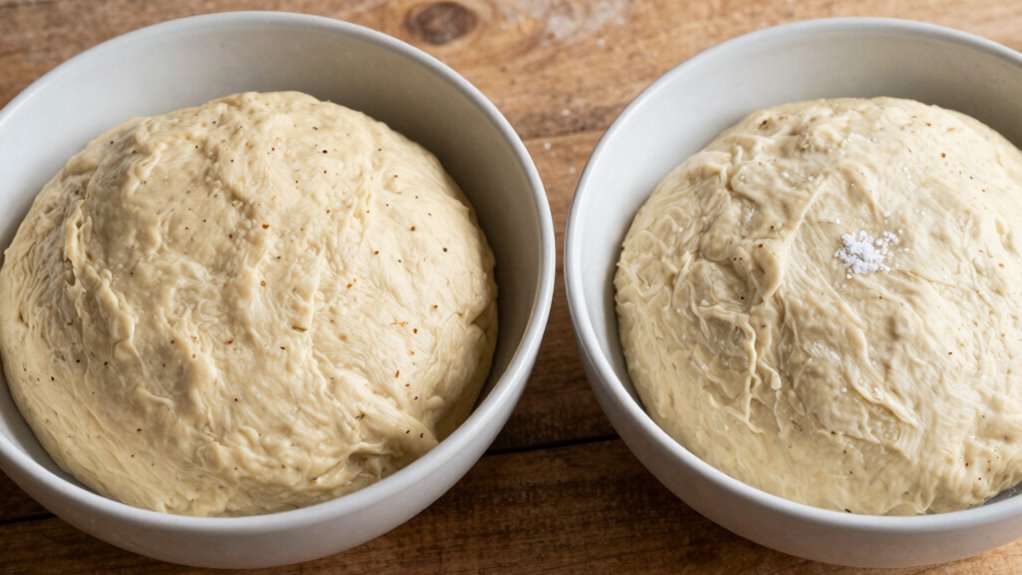

When you keep the recipe the same, fermentation still enhances dough flavor because it activates enzymes that break down starches into sugars, feeding the yeast and creating more complex flavors. Yeast and bacteria produce alcohols, acids, esters, and phenolic compounds, which deepen and diversify taste. Plus, longer fermentation allows for more ingredient interaction, developing richer and more nuanced flavors. Exploring these processes further will reveal how subtle changes can unlock even more flavor potential.

Get baking supplies delivered free with Prime
- Fast, free delivery on millions of items
- Prime Video, Amazon Music and more included
- Member-only deals all year
Key Takeaways
- Fermentation duration and conditions influence flavor development despite minimal recipe changes.
- Longer or optimized fermentation allows more ingredient interactions, enhancing complexity.
- Variations in temperature and time activate enzymes, producing richer flavors.
- Ingredient quality and freshness contribute to deeper, more vibrant flavors over time.
- Proper fermentation management amplifies natural flavors without altering the core recipe.
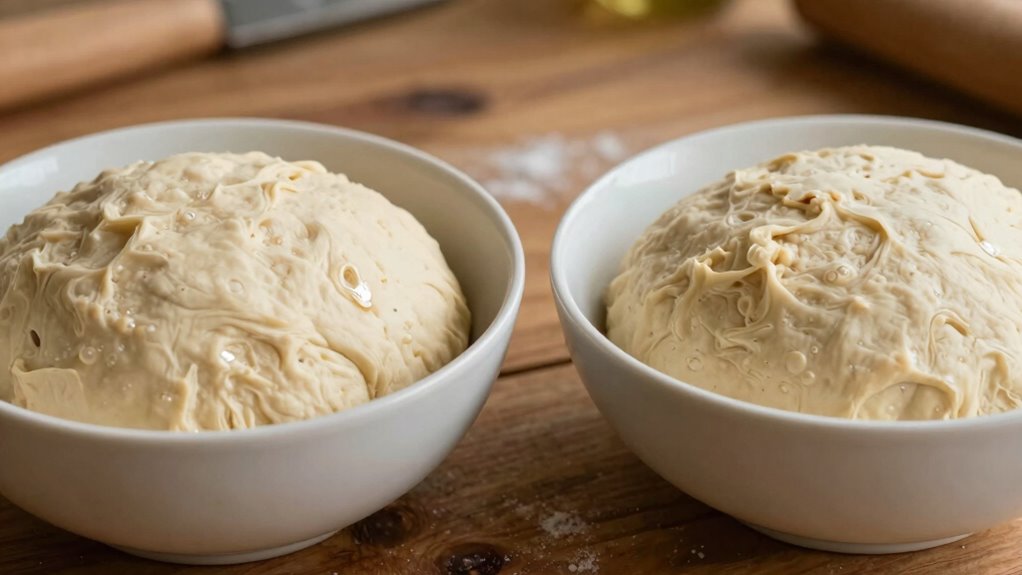
Improving the flavor of dough can considerably enhance the final taste of baked goods, making your creations more appealing and delicious. Even when you stick to a nearly identical recipe, subtle changes in the fermentation process can significantly impact flavor development. This process is where yeast and bacteria transform sugars into alcohols, acids, and gases, creating complex flavors that deepen the dough’s profile. As fermentation progresses, these byproducts interact with the other ingredients, resulting in a richer, more nuanced taste. The longer fermentation allows for more ingredient interactions, giving the dough time to develop its character beyond just rising.
You might notice that even minor adjustments in fermentation time or temperature can lead to noticeable flavor differences. When fermentation occurs slowly at cooler temperatures, it encourages the formation of organic acids and phenolic compounds, which lend a tangy or slightly sour note to your baked goods. Conversely, quicker fermentation at warmer temperatures tends to produce a milder, yeasty flavor. It’s not just about how long you let the dough ferment but also about how these conditions influence ingredient interactions. For example, enzymes activated during fermentation break down starches into simpler sugars, providing more food for the yeast and resulting in a sweeter, more developed taste.
Even small variations in fermentation conditions can amplify the flavor profile, thanks to the complex interactions between ingredients. As yeast consumes sugars, it produces alcohols and esters, which add fruity or floral notes. These compounds are highly sensitive to the fermentation environment, meaning that adjusting temperature or fermentation duration can bring out different aromatic qualities. The interaction between the dough’s ingredients—flour, water, salt, and yeast—is dynamic, and fermentation acts as the catalyst that reveals their full potential. This is why, even with a nearly unchanged recipe, your dough can taste markedly better simply because of how you manage fermentation.
Furthermore, the quality of ingredients influences this process. Fresh flour and active yeast will produce more vibrant flavors through ingredient interactions during fermentation. Over time, as these interactions deepen, the dough gains complexity, which translates into a more layered taste in the final baked product. So, the key isn’t always adding more ingredients or changing your recipe drastically but understanding and controlling the fermentation process. By doing so, you *unleash* natural flavor enhancements that are already present, making your baked goods more flavorful and satisfying without any major recipe overhauls. Additionally, understanding the fermentation process helps bakers optimize flavor development by manipulating environmental factors.
artisan bread fermentation starter kit
As an affiliate, we earn on qualifying purchases.
As an affiliate, we earn on qualifying purchases.
Frequently Asked Questions
How Does Fermentation Time Affect Dough Flavor?
You’ll find that longer fermentation duration enhances dough flavor by allowing natural yeasts and bacteria to develop more fully. This process increases flavor complexity, creating richer, more nuanced tastes. As fermentation time extends, the dough’s acidity and aroma deepen, resulting in a more flavorful final product. So, giving your dough more time to ferment boosts its overall flavor, making your baked goods more delicious and aromatic.
Can Ingredient Quality Impact Flavor More Than Recipe Changes?
Imagine opening your pantry, feeling the crispness of fresh ingredients—these can dramatically elevate your dough’s flavor. Yes, ingredient quality impacts flavor more than minor recipe tweaks, especially through ingredient freshness. When you use fresh, high-quality ingredients, the flavor complexity blossoms, making your bread richer and more satisfying. So, prioritize ingredient quality; it’s the secret to revealing extraordinary flavor, even if your recipe stays the same.
What Role Does Dough Temperature Play in Flavor Development?
Dough temperature greatly influences flavor development by affecting dough moisture and yeast activity. Warmer temperatures boost yeast activity, producing more flavorful byproducts, while cooler temps slow fermentation, leading to milder flavors. Maintaining an ideal temperature guarantees balanced yeast fermentation, enhancing dough moisture retention and allowing complex flavors to develop. Controlling dough temperature is key to achieving richer, more nuanced flavors without changing your recipe, simply by maximizing fermentation conditions.
Do Different Flour Types Influence Flavor Even With Minimal Recipe Changes?
Think of your dough as a symphony, where different flour types add unique instruments. Even with minimal recipe tweaks, these flours influence flavor nuances through ingredient interactions, shaping the overall taste. Whole wheat, rye, or bread flours each bring distinct notes, enriching the dough’s depth. By selecting different flours, you subtly alter the flavor profile, making each bake a new composition, even with just slight adjustments.
How Does Kneading Affect the Final Dough Flavor?
Kneading plays a key role in the taste evolution and texture enhancement of your dough. As you knead, you develop gluten, which traps flavors and gases, leading to a more complex taste profile. It also evenly distributes ingredients, ensuring consistent flavor. Plus, kneading helps activate enzymes that deepen flavor and improve texture, creating a richer, more enjoyable final product. So, your hands-on effort considerably boosts both taste and texture.
As an affiliate, we earn on qualifying purchases.
Conclusion
Think of your dough like a sponge soaking up flavors over time. Even when your recipe stays the same, lingering fermentation acts like a gentle storyteller, revealing subtler notes and richer aromas. I once left a simple loaf to ferment overnight, and the next morning, it tasted like a whole new masterpiece—more complex, more inviting. So, trust the process. Sometimes, patience turns a basic recipe into a flavorful journey, one delightful bite at a time.
As an affiliate, we earn on qualifying purchases.
natural flavor enhancer for baking
As an affiliate, we earn on qualifying purchases.
As an affiliate, we earn on qualifying purchases.
Halloween Picks
halloween
As an affiliate, we earn on qualifying purchases.