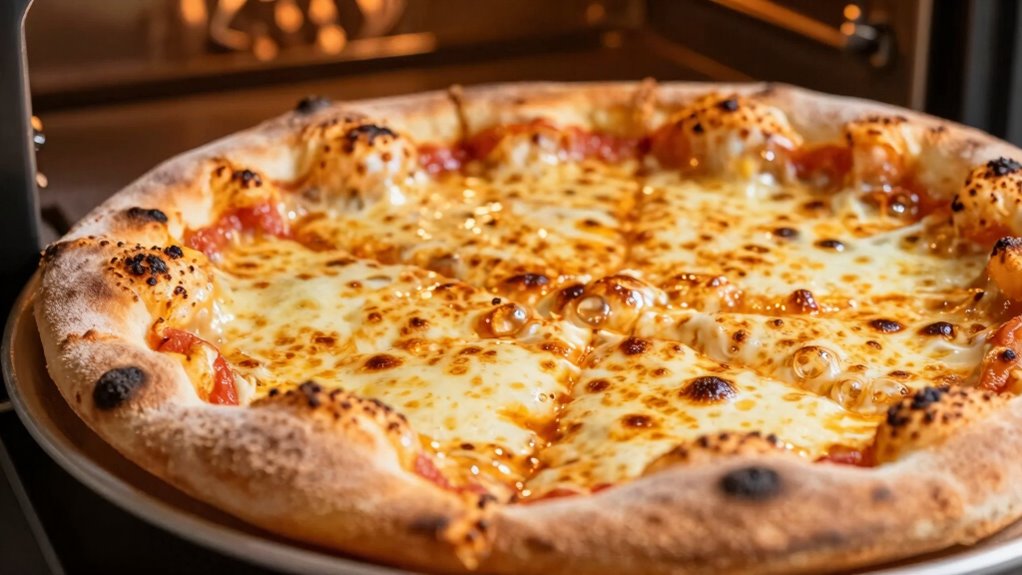
If your pizza bottom burns before the toppings are done, your oven temperature may be too high or heat isn’t evenly distributed. Home ovens often run hotter than ideal, and hotspots can cause uneven cooking. Using a pizza stone or steel, preheated properly, helps distribute heat more evenly. Adjusting the temperature slightly lower and rotating the pizza mid-bake can prevent burning. Keep these tips in mind, and you’ll find out what else can improve your pizza results.

Get baking supplies delivered free with Prime
- Fast, free delivery on millions of items
- Prime Video, Amazon Music and more included
- Member-only deals all year
Key Takeaways
- Oven temperature may be too high, causing the bottom to burn before toppings are cooked properly.
- Using a hot pizza stone or steel without proper preheating can lead to uneven heat and burning.
- Dough thickness that’s too thin heats quickly, risking burning before toppings are fully baked.
- Hotspots in the oven cause uneven cooking, burning the bottom while the top remains undercooked.
- Not rotating the pizza during baking can result in uneven heat exposure and burnt bottoms.
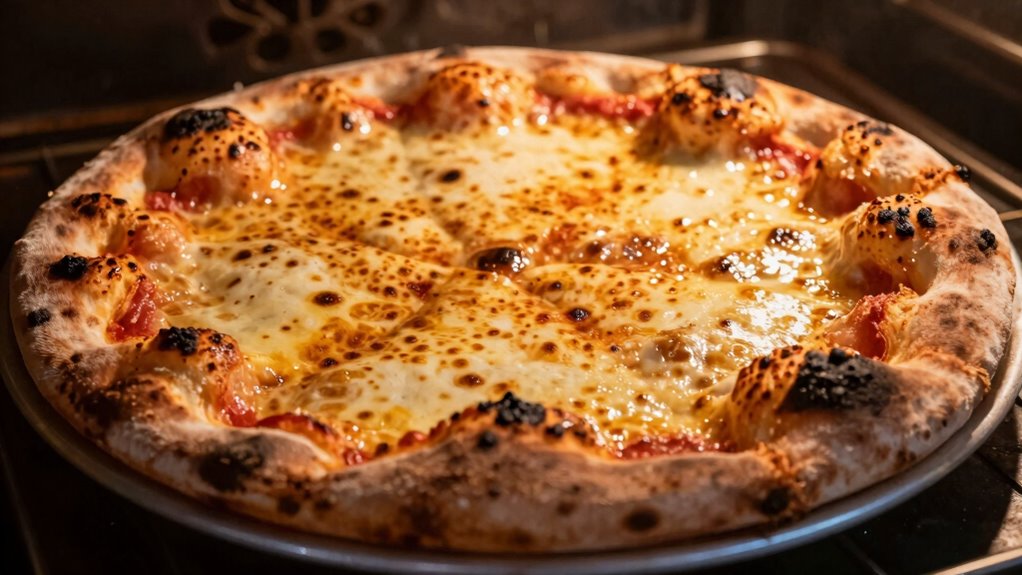
If your pizza bottom keeps burning, it’s often because the oven temperature is too high or the heat isn’t distributed evenly. This is a common issue, especially when you’re eager to get that crispy crust, but it ends up charred before the toppings are cooked through. One key factor to consider is your oven temperature. Many home ovens run hotter than the ideal pizza baking range, which is typically around 475-500°F (245-260°C). When you set your oven too high, the bottom of your pizza can quickly burn while the top remains underdone. Lowering the temperature slightly can give the heat more time to cook the toppings without sacrificing the crust’s quality.
Lower your oven temperature slightly to prevent burning and ensure even cooking of both crust and toppings.
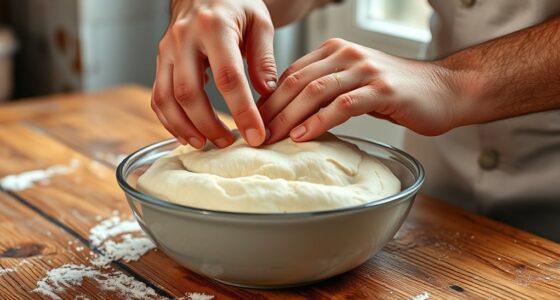
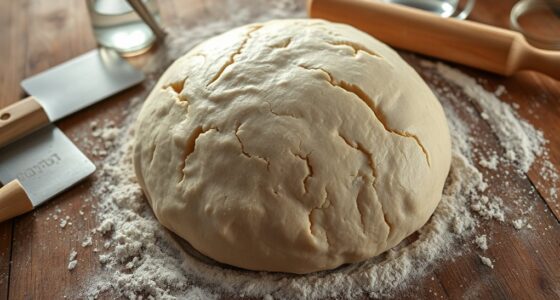
Another crucial aspect is dough thickness. If your dough is too thin, it heats up and crisps too fast, leading to burning before the toppings are cooked. Conversely, if your dough is too thick, the heat struggles to penetrate deeply, and you might end up with a soggy or undercooked center, or a crust that burns on the bottom before the rest of the pizza is ready. Finding the right dough thickness helps ensure even heat transfer. A thinner crust cooks quickly and crisps nicely, but if it’s too thin, it’s more prone to burning. Thicker dough needs more time and possibly a lower oven temperature to prevent burning, giving the heat enough time to cook through evenly. Additionally, understanding the importance of heat distribution in your oven can help prevent hot spots that cause uneven cooking. Using a pizza stone or steel can help distribute heat more evenly, which is especially crucial for achieving a perfect crust. Proper oven calibration is also essential to ensure your oven heats accurately and consistently.
Your oven’s heat distribution plays a huge role, too. Many home ovens have hotspots, which can cause parts of your pizza to burn while other areas remain undercooked. To counter this, always use a pizza stone or steel, which helps distribute heat more evenly. Preheating the stone for at least 30 minutes ensures consistent heat transfer, reducing the risk of burning the bottom. Also, consider rotating your pizza midway through baking to promote even cooking. If your oven has a convection setting, using it can improve heat circulation, but keep an eye on the temperature, as convection ovens tend to cook faster and might cause burning if not adjusted properly. Knowing how to manage oven settings effectively can help you prevent uneven results and achieve a more balanced bake. Regularly checking your oven’s temperature with an external thermometer can also help you make more precise adjustments for perfect results.
Ultimately, managing oven temperature and dough thickness, along with proper heat distribution, makes the difference between a perfectly baked pizza and one with a burnt bottom. Adjusting these factors allows you to control the baking process, giving your toppings enough time to cook fully without sacrificing your crust to burning. With some tweaks, you’ll be able to enjoy a pizza that’s crispy on the bottom and perfectly topped on top.
pizza stone for even heat distribution
As an affiliate, we earn on qualifying purchases.
As an affiliate, we earn on qualifying purchases.
Frequently Asked Questions
How Does Oven Type Affect Pizza Burning Issues?
Oven type considerably impacts pizza burning issues. If your oven isn’t properly calibrated, it might be too hot, causing the bottom to burn before the top cooks. You should make cooking time adjustments and monitor your oven’s temperature regularly. For example, a convection oven heats more evenly, reducing burn risks, while a traditional oven may require lower temperatures. Proper calibration and timing help guarantee your pizza cooks evenly without burning.
Can Dough Thickness Influence Uneven Baking?
Thicker dough can cause uneven baking, making your crust darker at the edges but undercooked in the center. You might think of it like a cushion—too thick, and heat struggles to penetrate evenly. A dough with good elasticity helps distribute heat, ensuring crust coloration is balanced. To prevent burning, opt for a thinner layer or adjust your oven temperature, allowing both the top and bottom to cook uniformly.
What Role Does Cheese Placement Play in Burning?
Cheese placement plays a vital role in burning because uneven cheese layering or poor cheese distribution can cause hot spots. If cheese is piled too thick or placed too close to the edges, it burns faster than the toppings or crust. To prevent this, spread cheese evenly across the pizza, avoiding thick layers near the edges. This guarantees consistent heat transfer, helping your pizza cook evenly without burning the cheese.
How Does Moisture Content in Toppings Impact Baking?
You might think toppings don’t matter much, but they really do. High moisture content in toppings releases steam during baking, which can prevent cheese from browning evenly and cause uneven cooking. Too much moisture keeps the heat from reaching the pizza bottom quickly, leading to burning before the top is cooked. To avoid this, use drier toppings and pre-cook excess moisture, ensuring your pizza bakes perfectly from bottom to top.
Should I Preheat My Pizza Stone or Tray?
You should preheat your pizza stone or tray before baking. Doing so guarantees the pizza crust gets crispy from the start, preventing burning or sogginess. Make sure your oven is properly calibrated for accurate temperature control, which helps cook the pizza evenly. Preheating the stone or tray allows heat to transfer effectively, giving you a perfectly cooked crust and ensuring the top finishes without burning.
As an affiliate, we earn on qualifying purchases.
Conclusion
So, next time your pizza bottom threatens to turn into a charred disaster before your toppings even get a chance to shine, remember—you’re in control. Adjust your oven temperature, use a pizza stone, or tweak your baking time. With a little practice, you’ll turn pizza mishaps into perfect slices faster than you can say “extra cheese.” Before you know it, you’ll be wielding pizza mastery like a culinary superhero—your oven’s worst nightmare!
oven thermometer for pizza baking
As an affiliate, we earn on qualifying purchases.
As an affiliate, we earn on qualifying purchases.
As an affiliate, we earn on qualifying purchases.
Halloween Picks
halloween
As an affiliate, we earn on qualifying purchases.