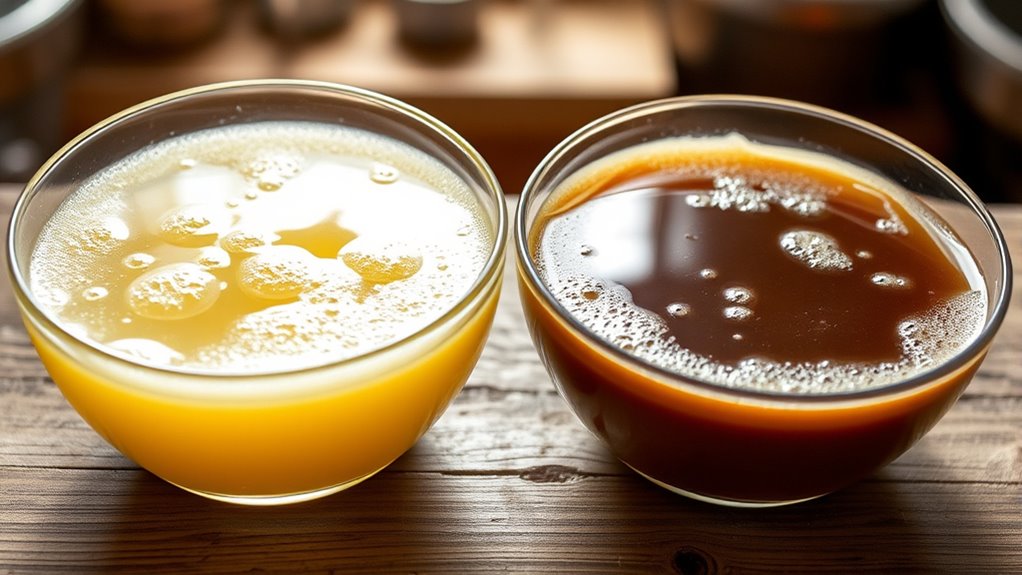

Poolish and biga are pre-ferments that boost your bread’s flavor and texture. Poolish uses equal parts flour and water, fermenting quickly for a light, airy crumb, while biga has less water and ferments longer, creating a richer, chewier loaf. Both improve taste and aroma, but with different effects. Understanding these differences will help you choose the right pre-ferment for your desired bread—keep exploring to see how to maximize their benefits.
Key Takeaways
- Poolish ferments quickly, producing a tangy flavor and a light, airy crumb in bread.
- Biga requires longer fermentation, developing a nutty, complex flavor and a denser texture.
- Both pre-ferments enhance bread flavor but differ in hydration and fermentation time.
- Poolish creates a softer crust and open crumb, ideal for baguettes and ciabatta.
- Biga yields a chewier bread with richer flavor, suitable for traditional Italian loaves.
Pre-ferments are a simple yet powerful way to enhance the flavor and texture of your baked goods. When you incorporate pre-ferments like poolish and biga into your bread-making process, you *release* layers of complexity that are hard to achieve with straight doughs. These types of pre-ferments involve fermenting a portion of your flour and water ahead of time, often with a small amount of yeast, which kickstarts fermentation and develops gluten structure. Understanding the differences between poolish and biga can help you choose the right one for your baking goals.
Pre-ferments like poolish and biga boost flavor, texture, and dough extensibility in baking.
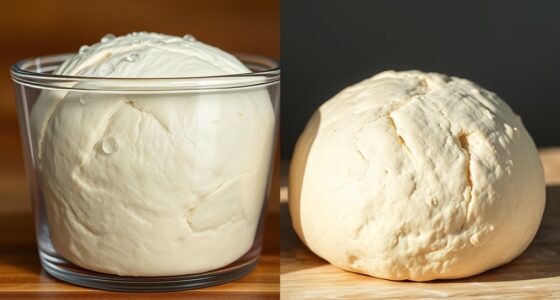
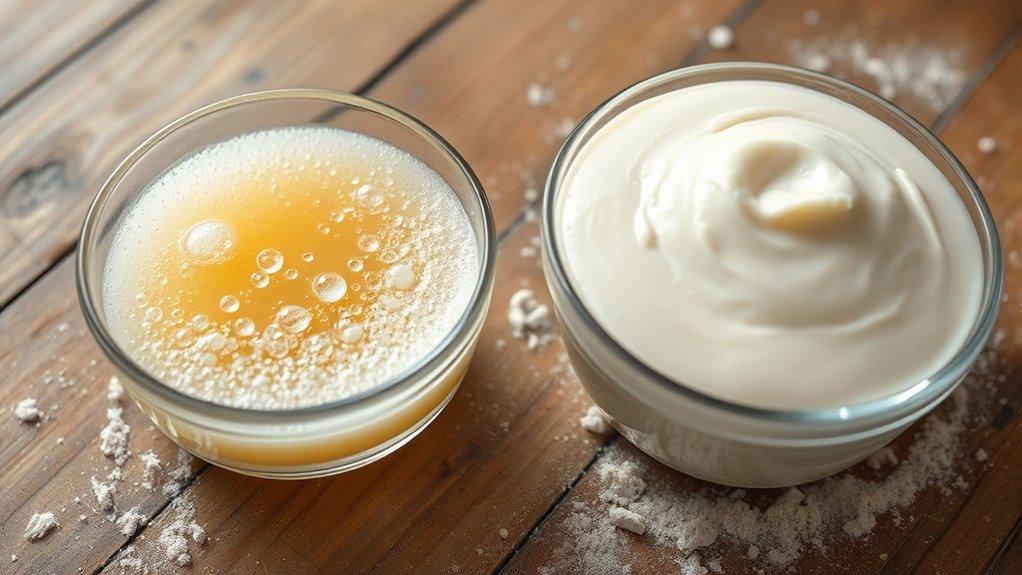
Poolish is a wet, bubbly pre-ferment that typically uses equal parts flour and water by weight, with a tiny bit of yeast. Its high hydration creates a loose, pudding-like consistency. Because of its hydration level, poolish ferments quickly, usually within 12 to 16 hours, producing a tangy aroma and enhancing the bread’s flavor. Its impact on bread texture is noticeable — it results in an open crumb with irregular holes and a light, airy feel. The high moisture content also contributes to a softer crust and a moist interior, making it ideal for baguettes, ciabatta, or any bread where a delicate crumb is desired.
Biga, on the other hand, is a firmer, less hydrated pre-ferment, often with a hydration level around 50-60%. It has a stiff, dough-like consistency that takes longer to ferment, usually 16 to 20 hours or more. Because of its firmer nature, biga tends to develop a more complex, nutty flavor profile and adds a chewy texture to the finished bread. Its impact on bread texture is significant: it produces a more structured crumb with a slightly denser but still airy interior. Biga’s slow fermentation allows for more flavor development, making it a favorite for traditional Italian breads like ciabatta or pane rustico.
Both poolish and biga influence the final bread’s texture in distinctive ways. Poolish creates a lighter, more open crumb with a tender interior, while biga produces a denser, more structured crumb with enhanced flavor. Regardless of which you choose, incorporating these pre-ferments will not only boost flavor but also improve dough extensibility, making shaping easier. The choice between them depends on your desired bread characteristics: if you want a light, airy loaf, go for poolish; if you prefer a bread with more chew and depth of flavor, biga is your best bet. In either case, experimenting with pre-ferments elevates your baking and helps you craft more flavorful, textured loaves.
San Francisco Sourdough Starter Culture- 100+ Year Old Dehydrated Heirloom Style Sourdough Starter Kit for Sourdough Bread, Pizza, Buns, Pancakes, Muffins | Easy to follow instructions. By Captain Sourpants
Authentic San Francisco Sourdough Culture: this starter brings the distinct tangy flavor of traditional West Coast sourdough straight…
As an affiliate, we earn on qualifying purchases.
As an affiliate, we earn on qualifying purchases.
Frequently Asked Questions
Can Pre-Ferments Be Used in Gluten-Free Baking?
Yes, you can use pre-ferments in gluten-free baking for flavor enhancement. Since traditional pre-ferments like poolish and biga rely on gluten development, you’ll need gluten-free substitutions like sourdough starters or fermented rice. These add depth and complexity to gluten-free bread, mimicking the flavor benefits of wheat-based pre-ferments. Just verify your substitutions are compatible with your recipes, and you’ll enjoy richer, more flavorful baked goods.
How Long Do Pre-Ferments Need to Ferment?
Have you ever wondered how long pre-ferments should ferment? The fermentation duration depends on the recipe and desired flavor, but generally, pre-ferments like poolish or biga need about 12 to 16 hours for ideal timing. During this period, they develop flavor and improve dough structure. Keep in mind, longer fermentation can deepen flavor, but avoid over-fermenting, which may weaken gluten and affect your final baked good.
Are Pre-Ferments Suitable for Sweet Bread Recipes?
Yes, pre-ferments like poolish and biga are suitable for sweet bread recipes. They boost flavor enhancement by adding complexity and depth, making your sweet bread more aromatic and delicious. You can incorporate them into your dough, adjusting sugar levels as needed. Using pre-ferments not only improves flavor but also enhances the bread’s texture, giving you a richer, more satisfying final product.
Do Pre-Ferments Affect Bread Shelf Life?
Pre‑ferments act like a shield, extending your bread’s shelf life and preventing mold from creeping in. They encourage a lively fermentation, which helps lock in freshness and slows down staling. By building flavor and acidity, pre‑ferments create an environment less inviting for spoilage. So, yes, they do influence shelf life, making your bread stay fresher longer and reducing the risk of mold taking hold.
Can Pre-Ferments Be Made in Advance and Stored?
Yes, you can make pre-ferments in advance and store them. Use proper storage methods like refrigerating them in airtight containers to slow fermentation timing. This helps you manage your baking schedule and guarantees the pre-ferment maintains its flavor and activity. For best results, use the pre-ferment within 24-48 hours, as longer storage can weaken its effectiveness. Proper storage keeps your pre-ferments fresh and ready to enhance your bread.

Sourdough Proofing Basket Gift Set, 9" Round and 10" Oval Banneton Bread Baking Supplies, Sourdough Baskets with Bread Lame, Danish Whish, Bowl Scraper, Sourdough Scraper, and Linen Liner
What You Get: 1 9-inch round banneton bread proofing basket , 1 10-inch oval proofing basket, 2 liners,…
As an affiliate, we earn on qualifying purchases.
As an affiliate, we earn on qualifying purchases.
Conclusion
By choosing between poolish and biga, you’re revealing deeper flavor layers in your bread. These pre-ferments aren’t just about fermentation; they’re about elevating your baking craft. Isn’t it worth the extra step for a crust that sings and a crumb that delights? Next time you bake, consider how these simple starters can transform your loaf into something truly memorable. After all, great bread starts long before it hits the oven.

Homemade Sourdough: Mastering the Art and Science of Baking with Starters and Wild Yeast
As an affiliate, we earn on qualifying purchases.
As an affiliate, we earn on qualifying purchases.

Complete Sourdough Starter Kit, Bread Baking Supplies, 9'' Round Banneton Bread Proofing Basket with Glass Sourdough Starter Jar & Tools, Bakery Accessories for Bread Making Baking Fermentation
Complete Sourdough Starter Kit: Everything you need to bake delicious, homemade sourdough bread is right here. Includes a…
As an affiliate, we earn on qualifying purchases.
As an affiliate, we earn on qualifying purchases.