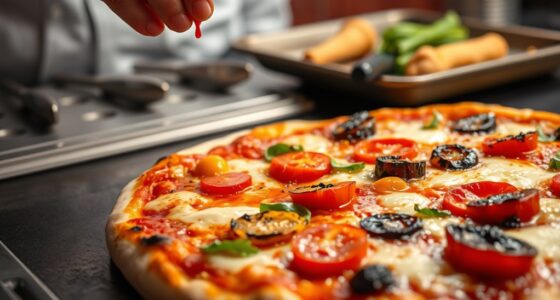
When you spot blackened spots on your pizza, it’s likely charred, which adds crunch without ruining the flavor, while burnt pizza tastes bitter and is hard or crispy in an unpleasant way. To fix overcooking, lower your oven temperature, keep an eye on the pizza, and rotate it during baking. Recognizing the difference helps you avoid ruined pizzas, and the next steps can make your next batch perfectly cooked—keep going to find out how.

Get baking supplies delivered free with Prime
- Fast, free delivery on millions of items
- Prime Video, Amazon Music and more included
- Member-only deals all year
Key Takeaways
- Burnt pizza has a bitter taste and hard texture, while charred spots are blackened but may add crunch without ruining flavor.
- High oven temperatures cause surface burning; maintaining 450°F–500°F ensures even cooking without overcharring.
- Proper topping placement and thin slices prevent excessive burning and uneven charring during baking.
- Monitoring the pizza for rapid darkening and rotating it helps avoid overcooking and uneven charring.
- Removing burnt spots carefully preserves flavor; adjusting oven heat and baking time helps prevent overcooked pizzas.
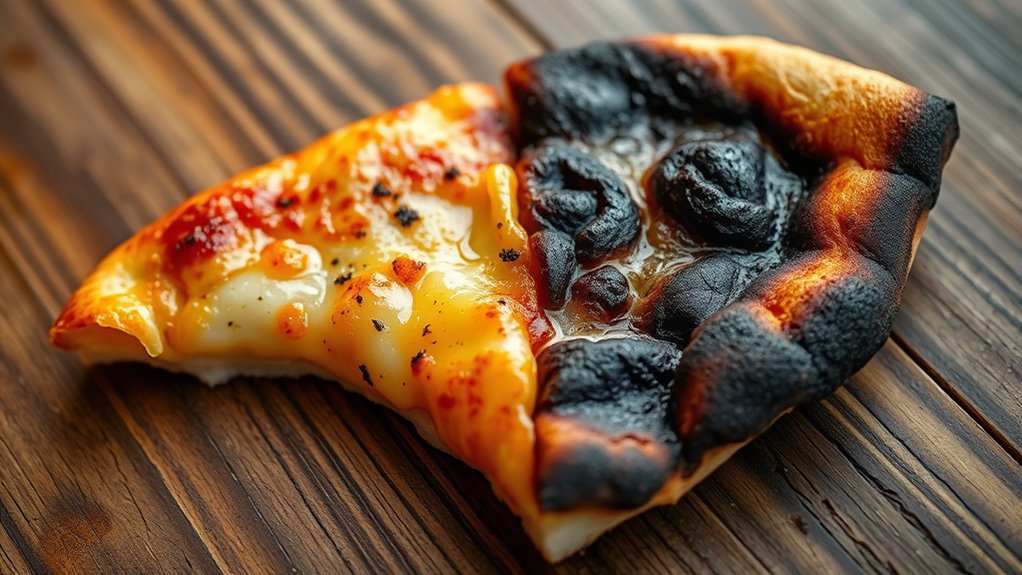
When your pizza comes out of the oven with a dark, uneven surface, it’s easy to mistake it for being perfectly crispy, but understanding the difference between burnt and charred can save you from ruining your meal. Burnt pizza typically has a bitter taste, a hard texture, and sometimes even a smoky smell. Charred pizza, on the other hand, features blackened spots that are often crisp but don’t necessarily ruin the flavor. Recognizing this distinction is key, especially since many mistakes stem from oven temperature issues or improper pizza toppings placement.
Burnt pizza is bitter and hard; charred spots can be crisp without ruining flavor.
Your oven temperature plays a major role in avoiding overcooking. If it’s too high, the pizza’s surface can burn quickly before the inside is cooked through. For most home ovens, a temperature between 450°F and 500°F provides a good balance—allowing the crust to crisp up while keeping toppings from burning. When you set your oven too hot, the toppings, especially delicate ones like fresh herbs or thinly sliced vegetables, can quickly turn black and bitter. To prevent this, always preheat your oven thoroughly, and consider using a pizza stone or steel, which helps distribute heat evenly, reducing hot spots that cause uneven charring.
Next, pay attention to your pizza toppings. Certain toppings, like cheese, can burn faster if placed too close to the heat source or if layered excessively. Avoid piling toppings too thick or scattering them unevenly, as this can cause some parts to burn while others remain undercooked. Thin slices of toppings tend to cook more evenly and are less likely to char. Also, consider the placement of toppings—placing delicate ingredients toward the center rather than the edges can minimize burning and ensure a more uniform cook.
Another tip is to keep an eye on your pizza as it bakes. If you notice the surface darkening too quickly, you can reduce the oven temperature slightly or move the pizza to a lower rack. Using a pizza peel or a baking sheet to rotate the pizza halfway through baking helps prevent hot spots from creating burnt patches. If you see blackened spots but the rest of the pizza looks fine, carefully remove those areas or scrape off the burnt parts before serving to preserve the flavor.
As an affiliate, we earn on qualifying purchases.
Frequently Asked Questions
Can the Flavor Be Salvaged From a Burnt Pizza?
Yes, you can salvage flavor from a burnt pizza. To do so, remove the pizza from the oven promptly, and brush off any burnt spots to reduce the burnt aroma. You might also try adding fresh toppings or a drizzle of olive oil to mask the burnt flavor. While some flavor salvage is possible, keep in mind that deep burnt aroma and taste are difficult to fully eliminate, so prevention is best.
Does the Type of Oven Affect Burning or Charring?
The type of oven definitely affects burning or charring because oven effects and heat distribution vary. For example, a wood-fired oven produces intense, uneven heat, increasing charring risk, while a convection oven offers even heat, reducing burning chances. Understanding your oven’s heat effects helps you adjust cooking times and temperatures, preventing overcooking. So, always consider your oven’s specific heat distribution to achieve perfectly cooked pizza without charring.
How Long Is Too Long to Cook a Pizza?
You shouldn’t cook a pizza longer than 12-15 minutes, depending on thickness and oven type. Thin crusts typically need less time, around 8-10 minutes, while thicker ones may take 12-15 minutes. Watch for the cheese melting completely and bubbling, and the crust turning golden. If it starts to burn or char, you’ve gone too long. Keep an eye on it to prevent overcooking and make sure perfect results.
Are There Specific Toppings That Burn More Easily?
Think of toppings like delicate dancers on stage—they can easily steal the spotlight by burning quickly. Ingredients like fresh herbs, thinly sliced garlic, or sugary toppings are more sensitive to heat. To avoid mishaps, choose ingredients with higher heat tolerance and add delicate toppings later in cooking. This way, you safeguard your toppings from burning and ensure your pizza stays perfectly balanced, flavorful, and visually appealing.
Can Pre-Cooking the Crust Prevent Burning?
Pre-cooking the crust can definitely help prevent burning, especially if you control the oven temperature carefully. By pre-baking, you create a sturdy base that resists overcooking once toppings go on. Just keep the oven at a moderate temperature—around 375-400°F—and monitor closely. This technique guarantees your crust stays golden without charring, giving you a perfectly cooked pizza every time.
As an affiliate, we earn on qualifying purchases.
Conclusion
Remember, even the most beautifully crafted pizza can have an imperfect moment. A slightly burnt edge or a touch of char doesn’t mean your whole creation is lost. With a gentle hand and a keen eye, you can turn that overcooked pizza into a delicious reminder of your culinary journey. Embrace these small imperfections—they add character and warmth to your cooking story. After all, every mistake is just a step toward pizza perfection.
As an affiliate, we earn on qualifying purchases.
As an affiliate, we earn on qualifying purchases.
Fall Picks
fall essentials
As an affiliate, we earn on qualifying purchases.