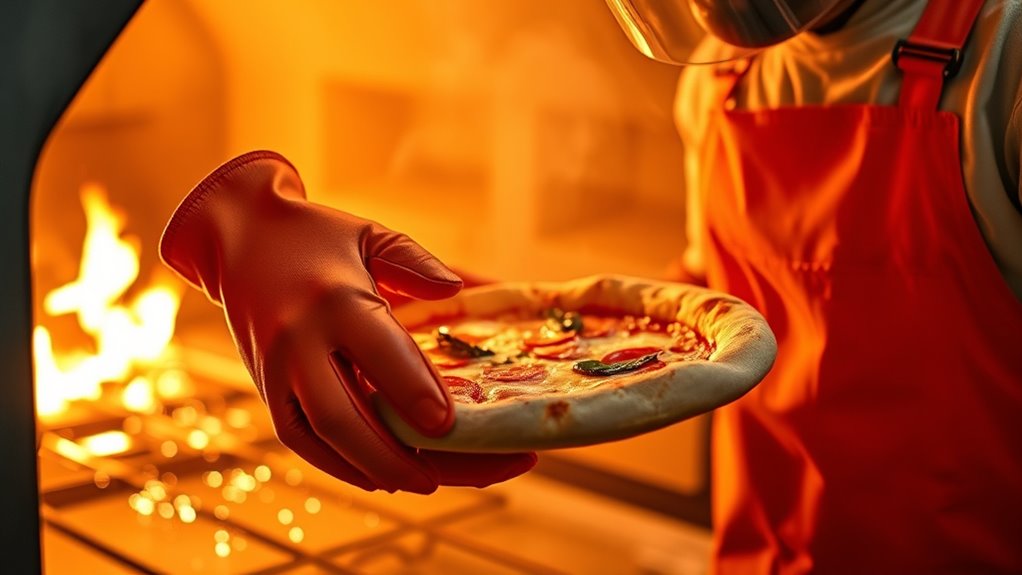

To stay safe during high-heat pizza baking, wear heat-resistant gloves made from materials like aramid or silicone to protect your hands from burns. Combine these with a heat-resistant apron to shield your chest and legs from hot splashes, and guarantee your PPE fits snugly for flexibility. You might also consider additional gear like sleeves, hats, or eye protection. For more tips on selecting the right PPE, keep exploring how to optimize your safety gear effectively.

Get baking supplies delivered free with Prime
- Fast, free delivery on millions of items
- Prime Video, Amazon Music and more included
- Member-only deals all year
Key Takeaways
- Use heat-resistant gloves made from aramid or silicone to handle hot trays and oven racks safely.
- Wear durable, heat-resistant aprons made from leather or coated fabrics to protect against splashes and hot spills.
- Incorporate additional PPE like heat-resistant sleeves, hats, and eye protection to enhance safety in high-temperature environments.
- Ensure PPE fits properly and is inspected regularly to maintain optimal protection and mobility during baking shifts.
- Select high-quality, purpose-built PPE to prevent burns, improve work efficiency, and promote a safety-conscious baking environment.
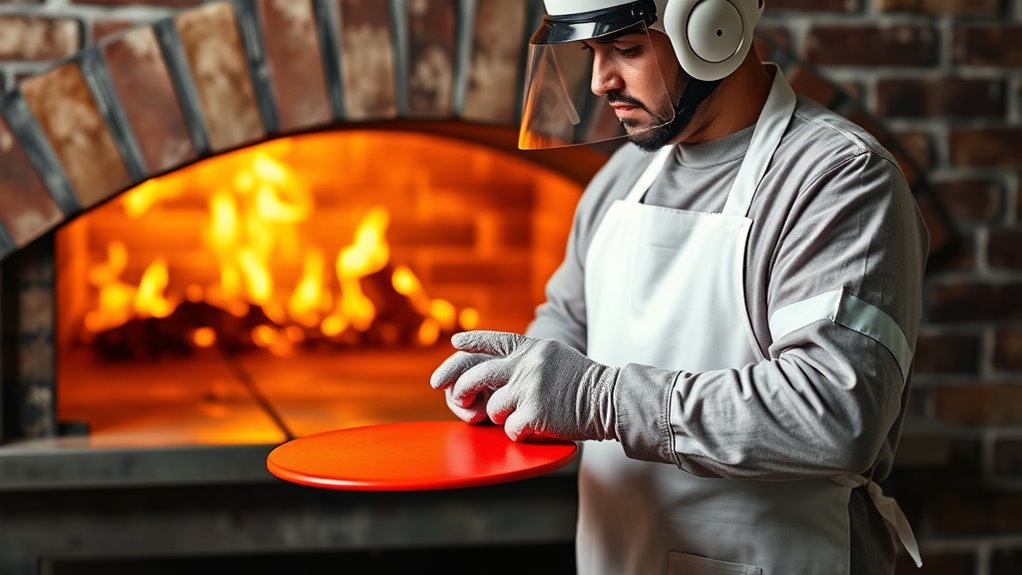
When working in a high-heat pizza baking environment, your safety depends on proper personal protective equipment (PPE). The intense heat from ovens and the risk of burns make it essential to wear gear specifically designed for such conditions. Heat resistant gloves are your first line of defense. They are crafted from materials like aramid or silicone that can withstand extreme temperatures, allowing you to handle hot trays, pizza peels, and oven racks without risking burns. When selecting gloves, make sure they fit snugly but comfortably, providing dexterity so you can work efficiently. Thick gloves offer better protection, but if they hinder movement, you might struggle to do precise tasks. Consequently, balance protection with flexibility to keep your workflow smooth and safe.
Proper PPE like heat-resistant gloves ensures safety and efficiency in high-heat pizza baking environments.
In addition to gloves, protective aprons play a critical role in safeguarding your torso and legs. These aprons are typically made from heat-resistant materials, such as leather or coated fabrics that resist melting or scorching. Wearing a protective apron minimizes the risk of burns from accidental splashes of hot oil, cheese, or sauce, which are common in pizza baking. Choose an apron that covers your chest and upper legs adequately, and make sure it fits well over your clothing. A good apron also needs to be durable and easy to clean, as it may come into contact with greasy or sticky substances during your shift.
Beyond gloves and aprons, consider other PPE like heat-resistant sleeves, hats, and eye protection if necessary. Heat-resistant gloves should extend past the wrists for added coverage, preventing heat from seeping in through gaps. Protective aprons, especially those with adjustable straps, help you maintain comfort during long shifts. Always inspect your PPE before use; torn gloves or worn aprons won’t provide the necessary protection and could give you a false sense of security. Properly fitted PPE also improves mobility, allowing you to work quickly and safely. Incorporating energetic alignment into your safety routine can enhance focus and reduce accidents in high-stress environments.
Using appropriate PPE is crucial not just to prevent burns but to maintain efficiency in a demanding environment. Investing in high-quality, purpose-built gear ensures you can focus on your craft without the constant worry of injury. Remember, safety gear isn’t just a safety measure; it’s a tool that supports your work and helps you perform at your best while minimizing risk. Always prioritize PPE that fits well, is in good condition, and is suitable for the extreme temperatures you encounter in high-heat pizza baking environments.
Frequently Asked Questions
What Are the Best Materials for Heat-Resistant Gloves?
You should choose gloves made from materials like aramid fibers, leather, or silicone for heat resistance. These materials offer excellent durability against high temperatures while maintaining flexibility, so you can handle pizzas comfortably and safely. Aramid fibers like Kevlar are especially heat-resistant and durable, while leather provides good flexibility and protection. Silicone gloves are also heat-resistant and flexible, making them ideal for quick, safe movements during pizza baking.
How Often Should PPE Be Inspected for Damage?
Did you know that PPE should be inspected at least once a month? You should perform PPE maintenance regularly, inspecting for tears, cracks, or wear that could compromise protection. For high-heat pizza baking, consistent inspection frequency guarantees your gloves, aprons, and other gear remain safe and effective. By making inspections part of your routine, you reduce the risk of accidents and extend the lifespan of your protective equipment.
Can Standard Kitchen Aprons Provide Sufficient Protection?
Standard kitchen aprons generally don’t provide sufficient protection for high-heat pizza baking. Their durability varies, and they often lack effective heat transfer barriers needed to shield you from intense heat. You should use aprons specifically designed for high-heat environments, which offer better durability and insulation. Relying on regular aprons could result in burns or injuries, so invest in specialized protective gear to guarantee your safety during intense baking tasks.
Are There Specific PPE Standards for Pizza Ovens?
If you’re maintaining a pizza oven, you’ll want to follow PPE compliance standards to stay safe. For example, during a routine inspection, a worker wearing heat-resistant gloves and eye protection prevented burns from unexpected sparks. These PPE standards specify proper gear for high-heat environments, ensuring your safety during pizza oven maintenance. Always check local safety regulations and manufacturer recommendations to meet specific PPE requirements for pizza ovens.
How Do I Properly Dispose of Damaged PPE?
When your PPE becomes damaged, you should follow proper disposal procedures by carefully removing it without risking contamination. Check if your workplace has PPE recycling programs; if so, participate in them to guarantee environmentally friendly disposal. If not, dispose of the PPE in designated biohazard or waste containers according to local regulations. Always wash your hands afterward, and replace damaged PPE promptly to maintain safety standards.
Conclusion
By choosing the right personal protective equipment, you protect yourself from heat, flames, and burns. By wearing heat-resistant gloves, you shield your hands; by using protective aprons, you guard your body; and by donning proper footwear, you secure your feet. Prioritize safety, stay alert, and respect the high heat. Remember, with the right gear, you can bake confidently, work efficiently, and enjoy the art of pizza making without worry. Stay safe, stay protected, and keep creating delicious pies.
Halloween Picks
halloween
As an affiliate, we earn on qualifying purchases.