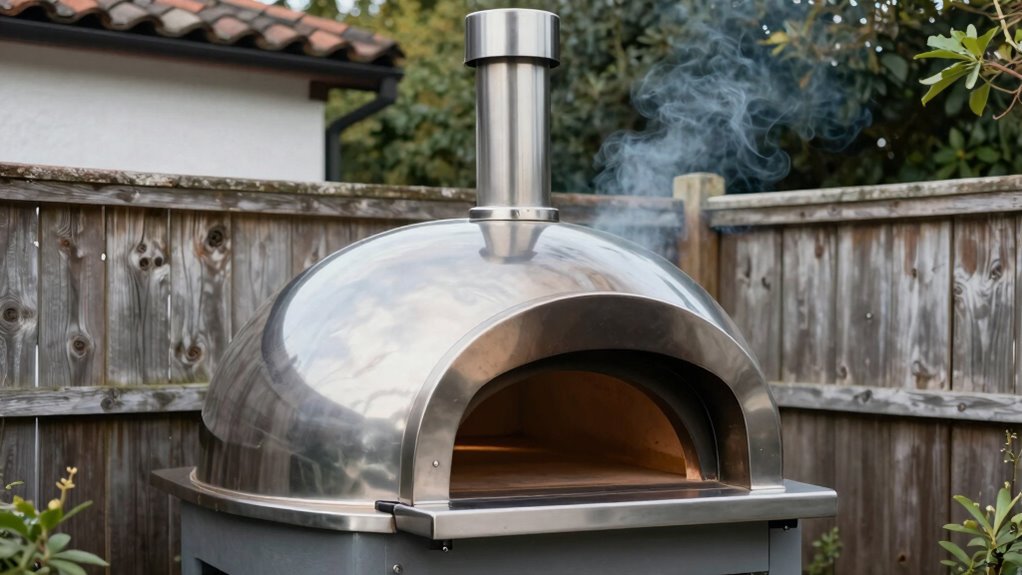
For safe operation, keep your pizza oven at least 3 feet away from fences, walls, or rooflines, especially if they’re made of combustible materials like wood. Maintain the distance to 4 or 5 feet if the structures reflect significant heat or produce radiant warmth. Proper clearances help prevent fire hazards, guarantee good ventilation, and protect your surroundings. To learn more about ideal spacing and safety tips, continue exploring helpful guidelines.

Get baking supplies delivered free — and shop member deals
- Fast, free delivery on millions of items
- Access to Prime Big Deal Days deals on October 6–7
- Prime Video, Amazon Music and more included
Key Takeaways
- Maintain at least 3 feet of clearance from fences, walls, or rooflines to ensure safety and proper ventilation.
- Increase clearance to 4-5 feet when dealing with wooden fences or overhanging roofs.
- Keep sufficient distance to prevent heat reflection, warping, or ignition of nearby materials.
- Follow local building codes and manufacturer guidelines for specific clearance requirements.
- Adjust spacing based on climate conditions like wind or snow to ensure safety and durability.

When installing a pizza oven outdoors, understanding the proper clearances from fences, walls, and rooflines is vital for safety and ideal performance. The distance you keep isn’t just about aesthetics; it’s about guaranteeing proper ventilation, preventing fire hazards, and complying with safety clearance guidelines. The pizza oven generates high heat and smoke, so it’s essential to position it where these elements won’t cause problems or pose risks to your home or neighbors. Proper ventilation requirements are crucial to ensure smoke and heat dissipate safely, preventing heat buildup that could ignite nearby materials. First, consider ventilation requirements. Adequate airflow around the oven allows smoke and heat to dissipate safely, reducing the chance of heat buildup that could ignite nearby materials. When placing your pizza oven, leave enough space on all sides—generally at least 24 to 36 inches—to promote proper ventilation. This gap helps prevent heat from reflecting onto fences or walls, which could lead to damage or fire. If your oven is built into a structure or has a chimney, ensure the venting system is correctly installed according to manufacturer specifications. Proper ventilation not only prevents smoke from accumulating but also improves the oven’s efficiency, making your pizza cooking experience more enjoyable. Additionally, proper clearance ensures the longevity of your outdoor structures and prevents unnecessary repairs. Next, follow safety clearance guidelines. These guidelines are set to prevent accidental fires and to keep your outdoor space safe. Most manufacturers recommend maintaining a minimum distance of 3 feet from combustible structures like fences, walls, and rooflines. This clearance prevents the heat from warping or igniting nearby materials. If your fence is wooden or an overhanging roof, it’s wise to increase this distance. For example, if your fence is close, consider extending the clearance to 4 or 5 feet, especially if the oven produces a lot of radiant heat. Remember, the goal is to keep the heat source isolated enough so that it doesn’t compromise the integrity of surrounding structures. Additionally, take into account local building codes and fire safety regulations. These may specify specific distances or additional precautions you need to follow. Proper installation practices also contribute to safety and efficiency, so consulting with a professional can help ensure compliance. Additionally, considering climate conditions can influence the necessary clearances, especially in areas prone to strong winds or heavy snowfall. When positioning your pizza oven, also think about ease of access for maintenance and operation. Clear pathways help you prevent accidents and allow for quick adjustments if needed. Ensuring your setup adheres to safety standards can provide peace of mind and help avoid costly repairs or hazards.
As an affiliate, we earn on qualifying purchases.
Frequently Asked Questions
Are There Specific Building Codes for Pizza Oven Placement?
Yes, there are specific building codes for pizza oven placement. You need to check local regulations regarding building permits and fire regulations before installing your oven. These codes ensure safe distances from structures, fences, and roofs to prevent fire hazards. It is crucial to comply with these standards to avoid fines or safety issues. Contact your local building department to get detailed requirements, ensuring your pizza oven is installed safely and legally.
Can I Place a Pizza Oven on a Wooden Deck Safely?
You can place a pizza oven on a wooden deck, but you need to be cautious about fire hazards. It’s a coincidence that many accidents happen because people overlook proper safety measures. Make certain your oven has a stable, fire-resistant base and maintain a safe distance from the deck’s wooden surface. Using a heat-resistant mat or platform considerably reduces the risk of sparks or heat damage, keeping your outdoor cooking safe and enjoyable.
How Does Wind Affect the Safe Distance for a Pizza Oven?
Wind safety plays a vital role in determining the safe distance for your pizza oven. Strong gusts can affect oven stability, causing it to tip or shift dangerously. To guarantee safety, keep your oven away from open areas where wind can hit directly. Placing it on a stable, sheltered surface minimizes risks, maintaining both oven stability and safety during windy conditions. Always consider local wind patterns before setting up your pizza oven.
What Insulation Is Recommended for Outdoor Pizza Ovens?
For outdoor pizza ovens, you should use high-quality insulation materials designed for outdoor insulation. Firebricks, ceramic fiber blanket, and vermiculite are excellent choices because they withstand high temperatures and provide effective thermal protection. These materials help retain heat, improve efficiency, and guarantee safety. Make certain the insulation layer is thick enough to prevent heat loss and protect surrounding structures, especially when installing your oven outdoors.
Are There Fire Safety Tips for Installing a Pizza Oven Near Structures?
To guarantee fire safety when installing a pizza oven near structures, use fire-resistant materials around the oven and avoid combustible materials nearby. Make sure your setup meets ventilation requirements to prevent heat buildup and smoke accumulation. Keep a fire extinguisher nearby, and maintain a safe distance from fences, walls, or rooflines. Regularly inspect for any signs of heat damage or wear, and follow local fire safety codes for outdoor cooking installations.
As an affiliate, we earn on qualifying purchases.
Conclusion
So, as tempting as it is to get your pizza oven as close to the fence or roofline as possible for that perfect backyard look, remember—fire safety isn’t the place to cut corners. Ironically, squeezing it in tight might give you a cozy setup, but it also risks turning your backyard into a fiery disaster. Play it safe, keep that oven at the recommended distance, and enjoy your pizza nights without the fiery surprises!
fireproof fencing for pizza oven
As an affiliate, we earn on qualifying purchases.
As an affiliate, we earn on qualifying purchases.
As an affiliate, we earn on qualifying purchases.
Fall Picks
fall essentials
As an affiliate, we earn on qualifying purchases.