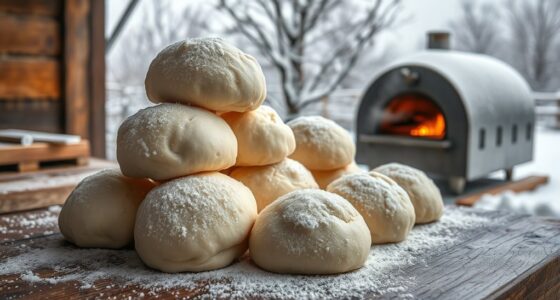
To stop guessing about humidity’s effects on dough, understand that high humidity makes dough softer and more elastic, while low humidity dries it out and makes it tough. Don’t believe all myths—adjust your water or flour as needed and store dough properly. Using tools like a hygrometer helps you monitor conditions closely. Keep these tips in mind, and you’ll master dough behavior regardless of humidity—there’s much more to improve your baking comfort and skill.
Key Takeaways
- Humidity affects dough moisture, elasticity, and workability; high humidity softens dough, low humidity dries it out.
- Proper air circulation and storage prevent moisture imbalance, ensuring consistent dough behavior regardless of humidity levels.
- Adjust hydration by reducing or increasing water content based on ambient humidity to maintain optimal dough texture.
- Use accurate tools like digital hygrometers and calibration methods to monitor humidity and adapt baking processes accordingly.
- Myths about humidity ruining baked goods are false; understanding its nuanced effects allows better recipe adjustments and consistent results.
The Impact of Humidity on Dough: What Really Happens

Humidity directly affects the moisture content of your dough, which can alter its texture and workability. When the air is humid, moisture from the environment can be absorbed into your dough, making it softer and more pliable. Good air circulation helps regulate this moisture exchange, preventing your dough from becoming overly sticky or too dry. As humidity increases, your dough’s elasticity can improve, allowing it to stretch more easily without tearing. Conversely, low humidity can dry out the dough, making it stiff and harder to work with. By understanding how humidity influences air circulation and dough elasticity, you can adjust your technique—perhaps by modifying hydration levels or covering your dough appropriately—to achieve consistent results. Additionally, air circulation plays a vital role in maintaining optimal humidity levels around your dough, ensuring consistent results.
Common Myths About Humidity and Baking Debunked

Many bakers believe that high humidity always ruins baked goods, but this isn’t entirely true. This is a common humidity misconception that oversimplifies how moisture affects dough texture. While excessive humidity can make dough sticky or difficult to handle, it doesn’t inevitably lead to poor results. In fact, some bakers adapt recipes and techniques to accommodate humidity changes, ensuring consistent texture. Conversely, low humidity can dry out dough faster, causing cracks or tough crusts. The key is understanding that humidity impacts dough behavior in nuanced ways, not just negatively. For example, humidity levels can influence dough elasticity, which is crucial for achieving the desired crumb. By debunking these myths, you realize that humidity isn’t an enemy but a factor to manage thoughtfully. Proper knowledge helps you control dough texture, regardless of environmental conditions, leading to better baking outcomes.
How to Adjust Your Baking Process for Humidity Changes

Adjusting your baking process for humidity changes starts with understanding how moisture levels influence dough behavior. When humidity rises, your dough may become sticky and require less water; in dry conditions, it might need extra liquid. To adapt, consider ingredient substitution—using less water or adding extra flour during high humidity. Proper storage methods also matter; keep ingredients airtight to prevent moisture absorption or loss. You can modify your techniques by:
- Using a slightly different flour brand with better moisture control
- Adjusting hydration levels based on the day’s humidity
- Storing proofed dough in a humid environment to prevent drying out
- Adding small amounts of water or flour during mixing
- Monitoring dough consistency regularly to make real-time adjustments
- Remember that coolers are not completely airtight, so controlling ambient conditions can help maintain consistent dough behavior despite humidity fluctuations.
Tools and Techniques for Monitoring Humidity Levels in the Kitchen

To effectively monitor humidity levels in your kitchen, you need reliable tools that provide accurate readings. A digital hygrometer is essential for precise measurement, allowing you to track humidity without guesswork. Regular hygrometer calibration ensures your device remains accurate over time, preventing misleading readings. Humidity control devices, like humidifiers or dehumidifiers, help maintain ideal levels for dough preparation. Use a hygrometer to check ambient humidity regularly, especially before baking. For best results, calibrate your hygrometer as per the manufacturer’s instructions, typically using a salt test or calibration kit. This practice ensures your readings are trustworthy, enabling you to make informed adjustments and create the ideal environment for dough fermentation and proofing. Proper humidity management is crucial for consistent baking results. Accurate tools and proper calibration are key to mastering humidity control in your kitchen.
Practical Tips for Maintaining Consistent Dough Quality Regardless of Humidity

Maintaining consistent dough quality despite fluctuating humidity levels requires practical strategies to keep your baking predictable. First, adjust your ingredient quantities based on humidity; for example, if it’s dry, slightly increase water or use ingredient substitution to maintain hydration. Proper storage optimization guarantees ingredients stay fresh and less affected by moisture changes. Keep your dough covered and in a controlled environment to prevent unwanted moisture absorption or loss. Use a digital scale for precise measurements, and consider adding a small amount of flour or water gradually rather than all at once. Also, observe your dough’s feel and adapt accordingly, rather than relying solely on recipes. Being aware of humidity’s impact on dough can help you anticipate how your ingredients will behave in different conditions. These tips help you adapt to humidity variations, ensuring your dough remains consistent regardless of external conditions.
Frequently Asked Questions
How Does Humidity Affect Yeast Activity During Fermentation?
Humidity influences yeast activity by impacting yeast metabolism and dough elasticity. High humidity creates a moist environment, boosting yeast fermentation by speeding up metabolism, which leads to quicker rising times. It also keeps the dough supple and elastic, making it easier to work with. Conversely, low humidity can slow yeast activity and cause the dough to become dry and less elastic. Adjust your environment accordingly for consistent fermentation results.
Can Humidity Levels Influence the Flavor Development in Baked Bread?
Like a painter blending colors, humidity levels can influence the flavor development in your bread. Higher humidity fosters aroma development, enriching aroma complexity and creating a more layered flavor profile. Conversely, low humidity can lead to drier, less flavorful crusts. By controlling humidity, you help guarantee your bread develops deeper flavors and inviting aromas, elevating your baking from simple to extraordinary.
Are There Specific Types of Flour More Affected by Humidity?
Certain flours, like whole wheat and rye, are more affected by humidity because they absorb moisture more readily during storage. You’ll notice this impacts how they behave when you bake, making dough stickier or harder to work with. To manage this, store your flour in airtight containers to control ingredient absorption. This way, you can maintain consistent dough behavior and avoid unexpected results in your baking process.
How Does Humidity Impact Gluten Formation in Dough?
Humidity effects markedly influence gluten development in your dough. When the air is humid, it adds extra moisture, making the flour easier to hydrate and develop gluten faster. Consequently, your dough becomes more elastic and easier to handle. On dry days, you might need to add a bit more water to achieve ideal gluten formation. Paying attention to humidity helps you control dough consistency and improve your baking results.
What Are the Signs of Over- or Under-Hydrated Dough in Different Humidity Conditions?
Did you know that proper hydration balance affects 80% of dough issues? If your dough feels too sticky and slack, it’s over-hydrated, especially in high humidity. Conversely, if it’s dry, crumbly, and tough to knead, it’s under-hydrated, common in low humidity. Check your dough’s consistency regularly; it should be smooth and elastic. Adjust water accordingly to achieve ideal hydration for consistent, perfect baking results.
Conclusion
Next time you step into your kitchen, imagine the air around you as a silent partner in your baking. By understanding humidity’s true effects, you can confidently shape your dough, transforming sticky messes into perfect loaves. With the right tools and tips, you’ll master the art of baking in any climate. So, embrace the changing air — your baked goods will rise beautifully, no matter what the humidity whispers.