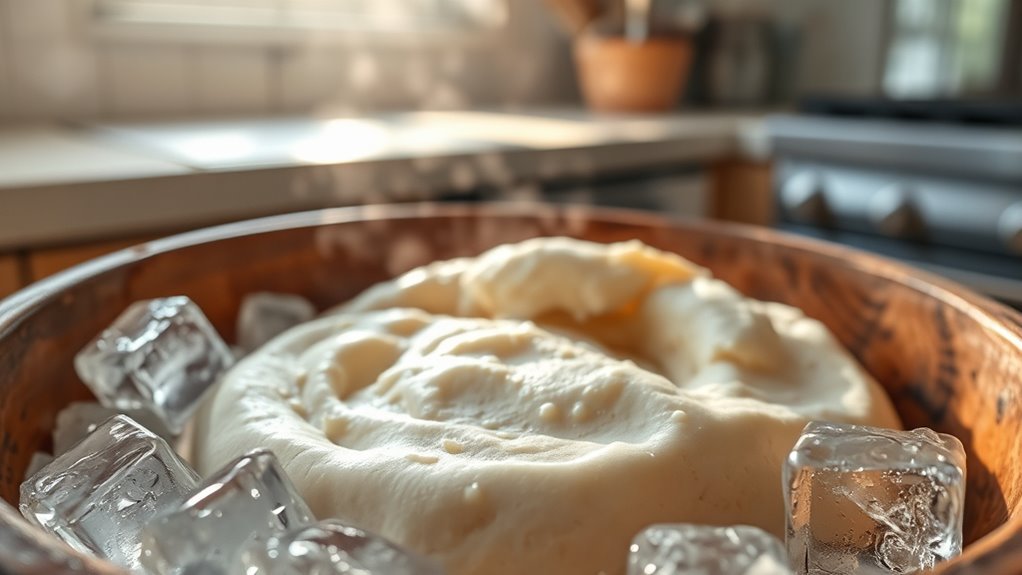

In hot weather, you should use ice water when mixing dough to keep the temperature cool, which helps prevent over-activation of yeast and sticky textures. Additionally, lowering the yeast amount slows fermentation, giving you better control over rising and texture. By managing water temperature and yeast levels, you’ll find it easier to handle and shape your dough. Keep exploring how these techniques can improve your baking or crafting experience even further.
Key Takeaways
- Use ice water during mixing to keep dough temperature below 80°F and prevent over-activation of yeast.
- Lower yeast amounts in recipes to slow fermentation and avoid over-rising in hot weather.
- Monitor dough temperature with a thermometer and adjust water temperature accordingly for optimal consistency.
- Refrigerate dough periodically to maintain a cool temperature and improve handling and shaping.
- Work in a cool environment and keep dough chilled to prevent sticky, over-active yeast conditions.
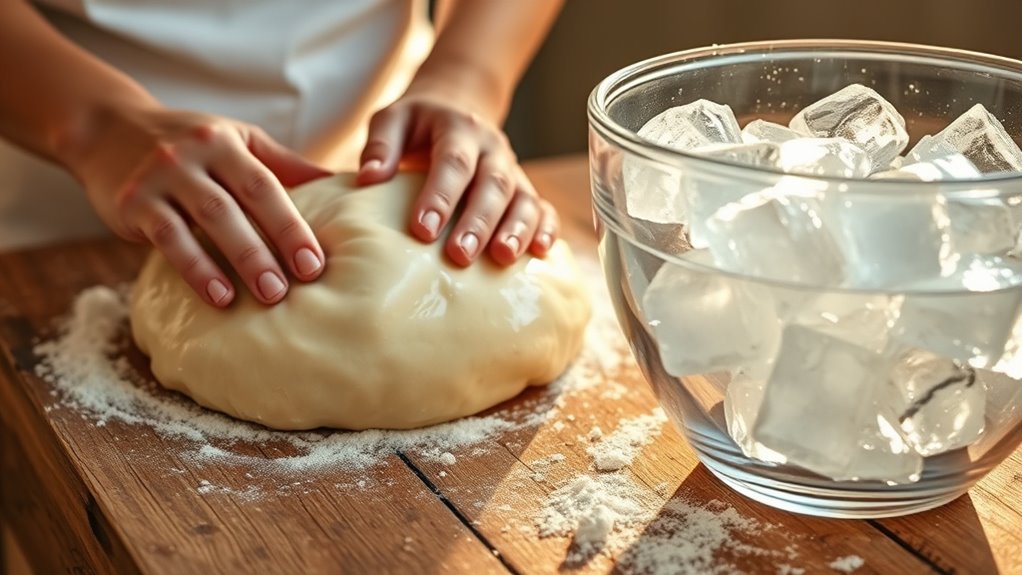
When the temperature rises, traditional playdough can become too soft and sticky to work with, making it frustrating to mold and shape. To keep your dough manageable in hot weather, you need to control the dough temperature carefully. One effective way is by using ice water during mixing. Ice water helps slow down yeast activation and keeps the dough cool, preventing it from becoming overly sticky. When you add ice water, you reduce the overall temperature of the dough, which maintains a better consistency for kneading and shaping.
Yeast activation is sensitive to temperature. If the dough gets too warm, yeast becomes more active, producing carbon dioxide rapidly. This over-activation can lead to a sticky, slack dough that’s hard to work with. By using ice water, you slow down the yeast’s activity, giving you more control over the dough’s texture. This is especially important if you’re making bread or other yeast-leavened treats in hot weather. Keeping the dough at a lower temperature ensures it doesn’t over-rise or become excessively sticky before you’re ready to bake or shape it.
Along with ice water, paying attention to your dough temperature as you knead is essential. Use a thermometer if needed to check the temperature; ideally, aim for about 75°F to 80°F for most yeast doughs. If it’s warmer than that, add more ice water or refrigerate the dough briefly. Conversely, if it’s too cold, a little warm water can bring it up to the right range. Maintaining the proper dough temperature prevents the yeast from activating too quickly and helps you achieve a consistent, workable dough.
In hot weather, it’s also wise to work in a cool space or refrigerate the dough between steps. This further prevents unwanted over-activation and sticky textures. When you keep the dough cool, it’s easier to knead, mold, and shape without frustration. This approach not only makes your baking process smoother but also ensures your finished product has the right texture and rise. So, by controlling dough temperature with ice water and mindful handling, you can turn a challenging hot day into an opportunity for successful baking and crafting. Keeping these factors in mind helps you stay in control, producing better results no matter how high the temperature climbs. Additionally, understanding yeast activity can help you optimize your dough’s performance in warm conditions.
Frequently Asked Questions
Can I Substitute Ice Water With Chilled Tap Water?
Yes, you can substitute chilled tap water for ice water, but keep in mind the water temperature affects yeast activity. Chilled tap water is usually warmer than ice water, so it may increase fermentation slightly. To better control yeast substitution, aim for water around 50-60°F (10-15°C). This helps slow fermentation without risking over-activation, ensuring your dough develops properly even in hot weather.
How Does Lower Yeast Affect Dough Flavor?
Lowering the yeast amount slows yeast activity, which results in a more subtle flavor development. You’ll notice less of the yeasty, sour notes and a cleaner, more nuanced taste in your dough. This method allows the dough to ferment more slowly, enhancing complex flavors and creating a richer aroma. So, by using less yeast, you get a dough with a delicate, refined flavor profile, perfect for those wanting a mild, sophisticated taste.
Is There an Ideal Temperature Range for Hot Weather Dough?
Surprisingly, there’s no one-size-fits-all ideal temperature for hot weather dough. You should aim for 75-80°F to balance fermentation and dough consistency, but don’t forget—temperature control is key. Too hot, and your dough overferments; too cold, and it stalls. Keep things steady with ice water and careful yeast adjustments. After all, the perfect dough is just a well-managed temperature away from being your masterpiece.
Can I Freeze Dough Made With Ice Water Overnight?
Yes, you can freeze dough made with ice water overnight. For proper dough storage, shape it into a ball or loaf, then wrap it tightly in plastic wrap or place it in an airtight freezer bag. Use freezing techniques like labeling the date to keep track. When you’re ready to bake, thaw it in the fridge overnight, then let it come to room temperature before baking for best results.
Does Using Less Yeast Extend Fermentation Time Significantly?
Think of yeast activity as a busy highway, where more yeast speeds up traffic, and less slows it down. Using less yeast does extend fermentation time, but not dramatically—it’s like adding a few extra cars during rush hour. You’ll notice a slightly slower rise, but it’s manageable. In hot weather, reducing yeast helps maintain flavor and texture without sacrificing too much fermentation speed.
Conclusion
As you embrace these gentle tweaks, you’ll find baking in the heat becomes a little more graceful. Using ice water and lowering the yeast helps keep your dough just the right touch, making your baking journey smoother and more enjoyable. So, trust that these small adjustments will lead to beautiful loaves, even on the warmest days. With patience and care, you’ll discover baking can be a calming, delightful experience—no matter how hot it gets outside.