When baking pizza at high altitude, you might think standard recipes work, but they often don’t. You need to reduce yeast, increase hydration, and bake at higher temperatures. Don’t forget to adjust proofing times and monitor dough closely, as gases expand more quickly. Using the right equipment and experimenting with settings helps prevent dryness and collapse. Stick with these tips, and you’ll discover how to perfect your high-altitude pizza craft.
Key Takeaways
- Standard dough ratios don’t work at high altitude; reduce yeast and increase hydration for proper rise and texture.
- Faster fermentation requires adjusting proofing times and yeast amounts to prevent overproofing and dough collapse.
- Higher oven temperatures and preheating longer improve baking results due to quicker heat loss at altitude.
- Reduced atmospheric pressure expands gases more, so decrease leavening agents and monitor dough carefully.
- Patience in resting and monitoring dough ensures a tender, well-structured crust despite rapid fermentation and baking challenges.
Assuming Standard Recipe Ratios Will Work at Any Altitude

Many bakers assume that the same pizza dough ratios will work at any altitude, but that’s a mistake. In altitude baking, ingredients like flour, water, and yeast often need modifications because the thin air affects dough elasticity. At higher elevations, the reduced atmospheric pressure causes the dough to rise faster and become less elastic if you stick to standard recipes. You might find your crust too dry or overly airy, which indicates you’re using the wrong ratios. To compensate, you should reduce the yeast slightly and add a bit more liquid to improve dough elasticity. This helps your dough maintain the right texture and rise properly. Additionally, understanding altitude effects on baking can help you make more precise adjustments to your recipe. Remember, adjusting ratios ensures your pizza turns out just right, regardless of altitude.
Underestimating the Impact of Reduced Atmospheric Pressure on Dough Rise
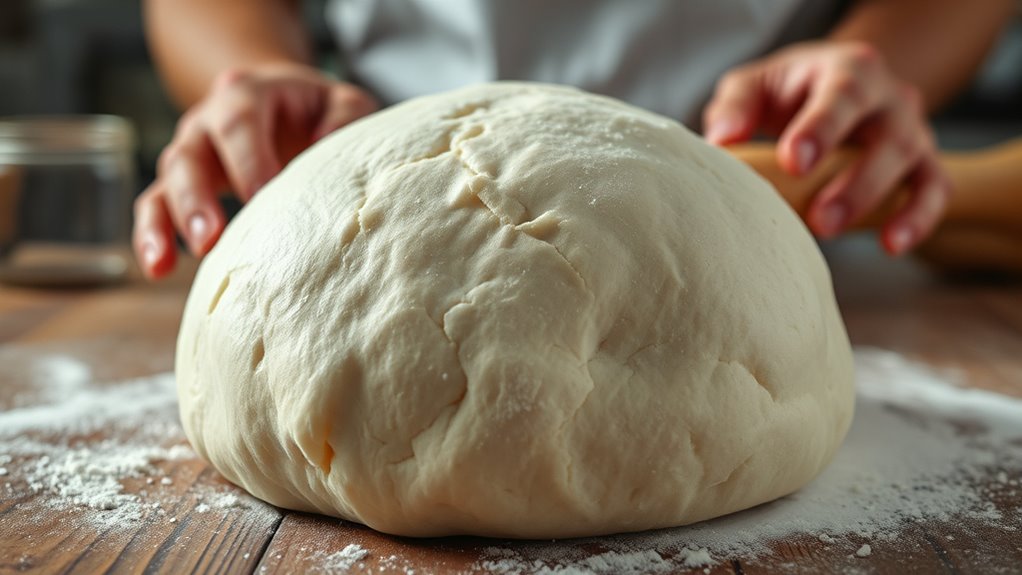
At high altitudes, lower atmospheric pressure markedly affects how your dough rises. You’ll notice differences in gas expansion, which can cause your bread to over-proof or collapse if you don’t adjust. Understanding how yeast activity and dough structure respond to these changes helps you get better results every time. Additionally, adjusting ingredients like flour and water ratios can help compensate for these environmental factors retail hours today.
Gas Expansion Differences
When baking at high altitudes, the reduced atmospheric pressure causes gases in your dough to expand more than you might expect. This increased gas expansion can lead to over-risen crusts or dough collapsing if not managed properly. Because atmospheric pressure is lower, the gases generated during fermentation and baking have more room to expand rapidly. If you don’t adjust your recipe, the dough may rise too quickly or unevenly. To counteract this, you might need to decrease leavening agents or modify proofing times. Understanding how atmospheric pressure influences gas expansion helps you maintain dough stability and achieve consistent results. Recognizing this difference is vital for adapting your baking process effectively at high altitudes. Additionally, being aware of how city dynamics affect ingredient behavior can help you fine-tune your recipe for optimal results.
Yeast Activity Changes
Reduced atmospheric pressure at high altitudes doesn’t just affect gas expansion; it also accelerates yeast activity. This speeds up yeast fermentation, causing your dough to rise faster than expected. If you don’t adjust, your dough might overproof, losing dough elasticity and becoming too airy or weak. To manage this, consider these tips:
- Shorten proofing times to prevent overfermentation.
- Use slightly less yeast to slow fermentation.
- Keep dough cooler to slow yeast activity.
- Watch for rapid rise, then punch down the dough.
- Test dough elasticity frequently to avoid overproofing.
- Additionally, understanding the yeast activity changes at high altitude helps you adapt your process effectively.
Understanding how yeast activity changes helps you control the rise better, ensuring your pizza crust remains chewy and perfect. High altitude baking demands these tweaks to keep your dough balanced and delicious.
Dough Structure Variations
Lower atmospheric pressure at high altitudes directly influences how your dough rises, often leading to unexpected dough structure issues. Reduced pressure can cause dough to over-expand quickly, resulting in a weaker gluten development and a looser crumb. To counter this, you need to adjust your fermentation control, slowing down yeast activity to promote better gluten formation. Proper gluten development is essential for maintaining dough elasticity and structure, especially at high altitudes. You might also consider reducing the amount of yeast or shortening fermentation times to prevent over-rising. By understanding how pressure impacts dough behavior, you can refine your techniques, ensuring your pizza crust maintains the desired texture and strength despite the challenging environment. Additionally, paying attention to dough structure variations can help you better adapt your recipe to high-altitude conditions.
Ignoring the Need for Higher Baking Temperatures
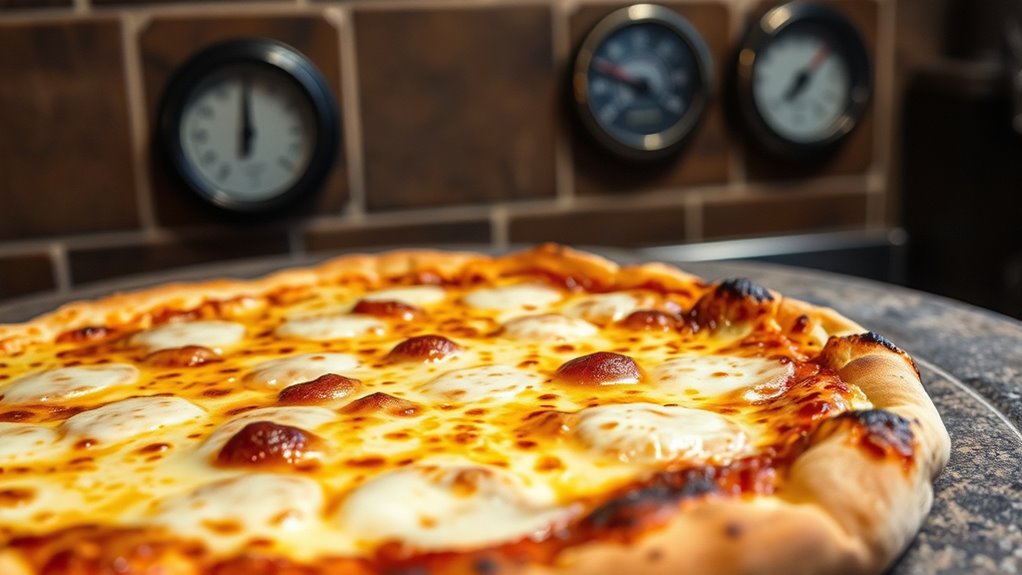
At high altitudes, the air is thinner, which means heat escapes your oven more quickly and your baked goods, including pizza, need more intense heat to cook properly. Ignoring this can lead to undercooked crust and toppings. To fix this, you should focus on baking temperature adjustments and altitude-specific oven calibration. Without increasing the temperature, your pizza might not develop that perfect crispy crust. Here’s what you can do:
At high altitudes, increase oven temperature and preheat longer for perfect pizza crusts.
- Raise your oven temperature by 15-25°F
- Use a pizza stone for better heat retention
- Preheat your oven longer for consistent heat
- Check your oven’s calibration regularly
- Avoid opening the oven door too often
- Remember that baking techniques at high altitude may require additional adjustments to achieve the ideal texture and doneness.
These tweaks ensure your pizza bakes evenly and achieves the desired texture, even at high elevations.
Overlooking the Importance of Adjusting Hydration Levels
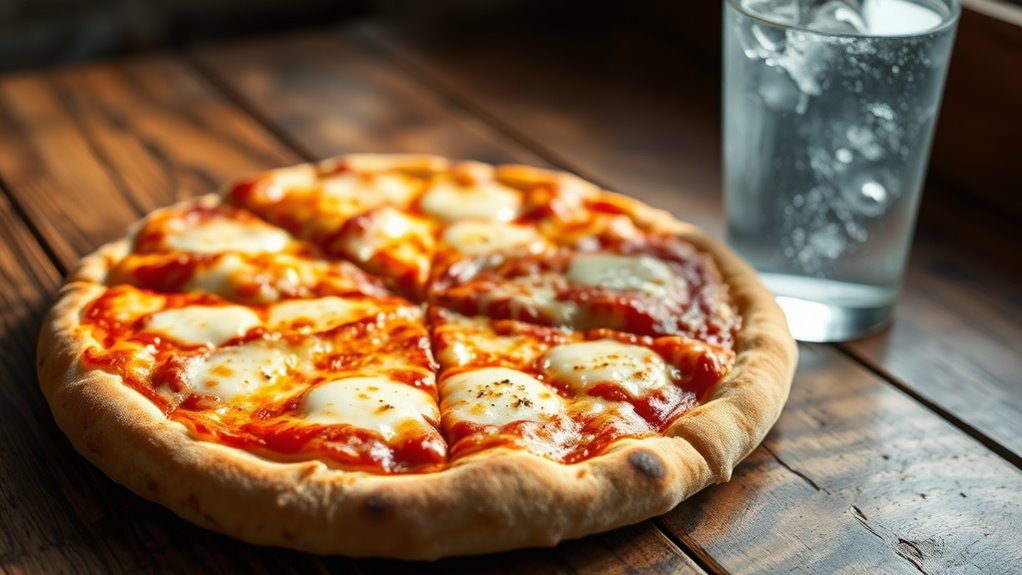
At high altitude, your dough loses more moisture, so you need to adjust your hydration levels accordingly. Thicker batter or dough requires a hydration boost to prevent it from drying out or becoming too tough. Implementing strategies like adding extra water can help you achieve the perfect crust every time. Additionally, maintaining proper color accuracy during the baking process ensures your pizza has vibrant, appealing toppings and crust.
Increased Fluid Loss
When you’re baking at high altitude, your dough loses moisture more quickly due to increased evaporation, which means your body also needs more fluids to stay properly hydrated. Failing to adjust your hydration management can lead to dehydration, affecting both your health and baking results. To stay ahead, keep these tips in mind:
- Drink extra water throughout the day
- Monitor your urine color for hydration cues
- Sip fluids during baking sessions
- Limit caffeine and alcohol intake
- Replenish electrolytes if sweating excessively
- Be mindful of pressure changes that can influence hydration needs during altitude adjustments
Thicker Batter Needs
If you notice your batter turning out thicker than usual at high altitude, you might be tempted to add more flour or make ingredient substitutions to compensate. However, a thicker batter isn’t always about extra flour; it often indicates inadequate hydration. Instead of simply adding flour, focus on adjusting your liquid ingredients to maintain proper consistency. This helps ensure your batter isn’t overly dense and results in a lighter, more tender crust. Ingredient substitutions, like using a different type of flour or adding a bit more water or milk, can help improve hydration levels. Remember, at high altitude, moisture evaporates faster, so tweaking hydration is key to preventing a thick batter and achieving the right dough texture. Proper hydration levels are essential for consistent results and optimal texture in high-altitude baking.
Hydration Boost Strategies
A common mistake at high altitude is neglecting to adjust hydration levels in your dough or batter. You might need to increase water content to compensate for dry air and quicker evaporation. Proper hydration helps with crust thickness adjustments and ensures a tender, chewy texture. To optimize hydration, consider these strategies:
- Use slightly more water than usual in your recipe
- Opt for alternative topping choices that retain moisture
- Adjust flour quantities to match increased water levels
- Keep dough covered to prevent drying out during proofing
- Experiment with hydration levels to find your ideal crust thickness
- Remember that proper headphone connection can also influence your overall baking experience by providing clear instructions or guidance during your process.
Not Accounting for Faster Evaporation of Liquids During Baking
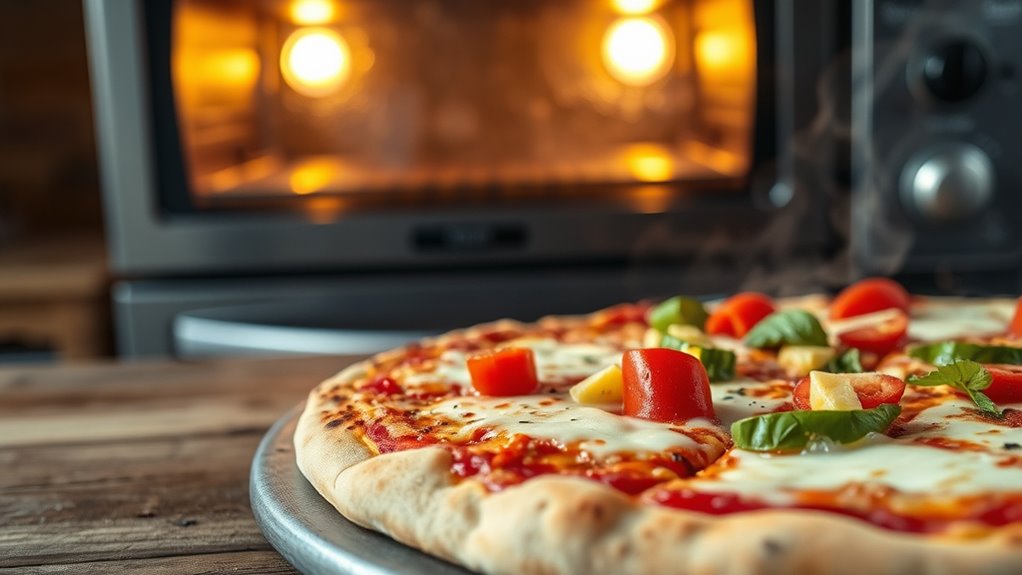
At high altitudes, liquids in your pizza—like sauce, cheese, and toppings—evaporate more quickly during baking. This faster liquid evaporation leads to increased moisture loss, which can dry out your crust and toppings if not addressed. To counteract this, consider slightly reducing oven time or covering your pizza briefly during baking to retain moisture. You can also apply thicker sauces or cheese layers to help hold in liquids. Here’s a quick comparison:
| Effect of Liquid Evaporation | How to Adjust |
|---|---|
| Increased moisture loss | Use thicker toppings |
| Faster evaporation during bake | Cover pizza temporarily |
| Drier crust and toppings | Shorten baking time |
Being mindful of moisture loss ensures your pizza stays juicy and tender even at high elevations.
Failing to Modify Yeast Quantities Appropriately
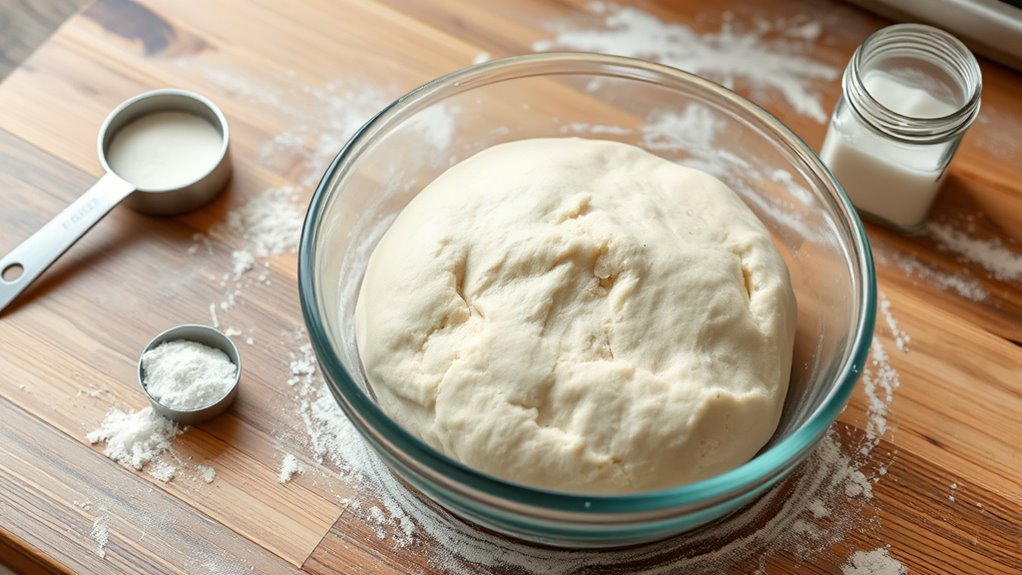
Adjusting the amount of yeast in your high-altitude pizza recipe is just as important as modifying baking time or moisture control. Too much yeast accelerates fermentation, causing overproofed dough and loss of dough elasticity. Too little yeast slows fermentation, resulting in dense, flat crusts. To get it right, consider reducing yeast by about 25% at higher elevations. This helps maintain proper dough elasticity and prevents over-fermentation.
- Use less yeast to slow down yeast fermentation
- Monitor dough rise times closely
- Adjust based on your ambient temperature
- Avoid overproofing, which weakens dough structure
- Keep yeast quantities consistent for predictable results
Getting this tweak right ensures your dough remains elastic and easy to work with, leading to a better rise and chewy crust. Proper yeast adjustment is key to mastering high-altitude pizza baking.
Neglecting the Significance of Longer Resting or Proofing Times

Neglecting to extend resting or proofing times at high altitude can lead to underdeveloped dough with poor structure. Because of the faster evaporation and quicker yeast activity, your dough ferments more rapidly, which can cause it to collapse or become dense if not given enough proofing duration. Longer resting times allow the dough to fully ferment, developing flavor and gluten strength essential for a good crust. Skipping this step or rushing proofing results in a less airy, less chewy pizza. At high altitude, patience is key; you need to give your dough extra time to properly proof. This ensures proper gluten development and better dough elasticity, ultimately creating a more balanced, flavorful, and well-textured pizza.
Using the Same Oven Settings as at Sea Level Without Adjustments
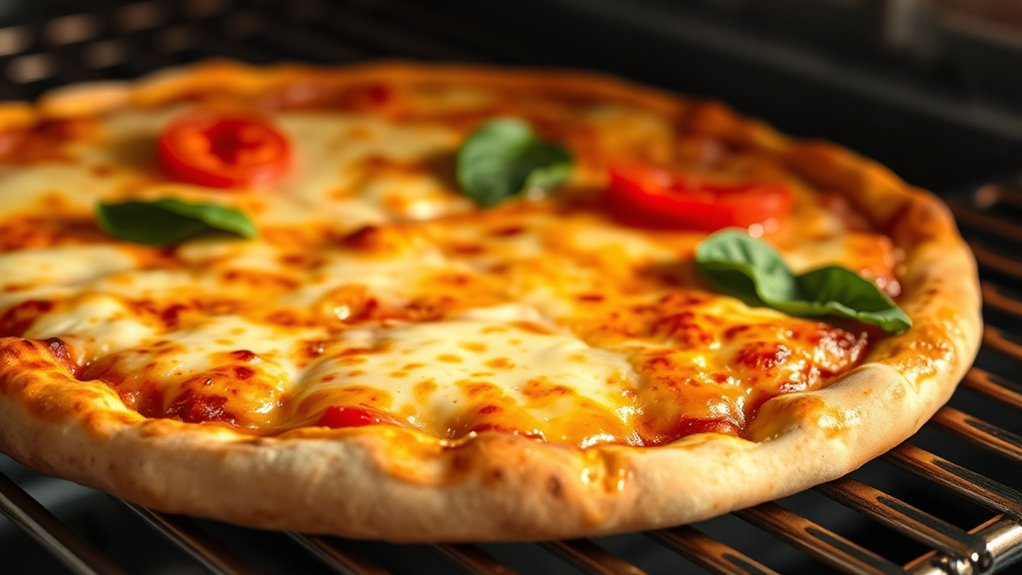
Since oven temperatures and settings are calibrated for sea level, using the same settings at high altitude can cause your pizza to cook unevenly or burn quickly. High altitude affects oven calibration, so your usual temperature might not produce the desired results. To improve your pizza, consider adjusting your oven’s temperature or cooking time. Also, remember that ingredient sourcing matters; drier air can affect dough hydration, impacting baking performance. Here are some tips:
- Lower oven temperature by about 15-25°F to prevent burning
- Increase baking time slightly for thorough cooking
- Use an oven thermometer to verify actual temperature
- Adjust your ingredient sourcing to account for drier air
- Keep notes on your adjustments for consistent results
Making these tweaks ensures your high-altitude pizza turns out just right.
Forgetting to Experiment and Keep Notes for Fine-Tuning
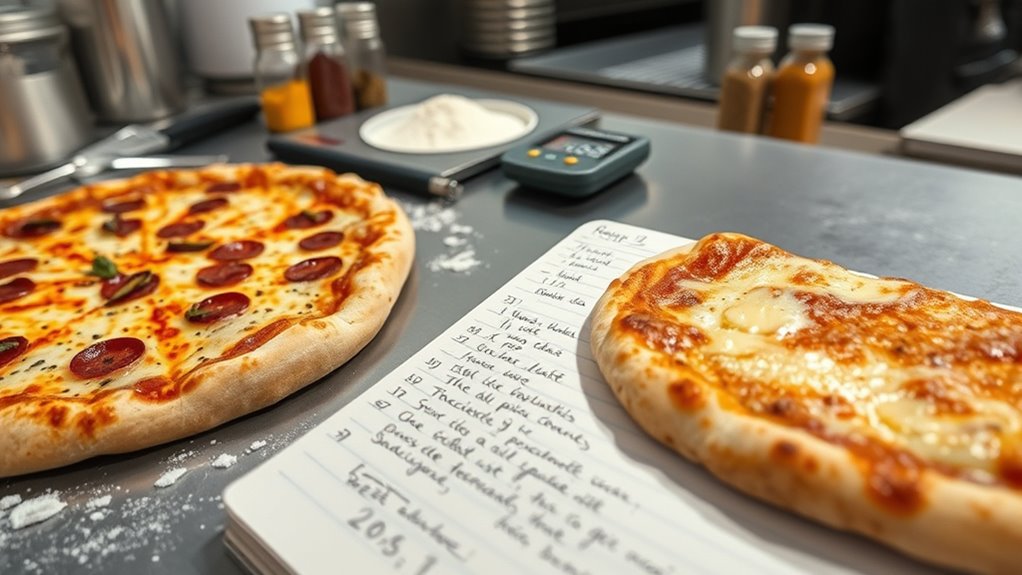
Once you’ve tweaked your oven settings for high altitude, the next step is to experiment and keep detailed notes on what works best. Keeping detailed notes helps you track how different adjustments affect your pizza’s crust, rise, and flavor. Without systematic experimentation, it’s easy to forget which modifications produced the best results. Record variables like baking temperature, hydration levels, and fermentation times, along with outcomes. This approach allows you to identify patterns and refine your process efficiently. Remember, fine-tuning at high altitude isn’t a one-time fix—it’s an ongoing process. By staying organized and methodical, you’ll learn what adjustments make the biggest difference, ultimately perfecting your pizza recipe for your specific location.
Frequently Asked Questions
How Does Altitude Affect Pizza Crust Texture and Flavor?
At high altitude, the lower air pressure causes dehydration of your pizza dough, making the crust crispier and more brittle. You’ll notice less crust elasticity because the dough loses moisture faster. To get the perfect texture and flavor, you need to tweak your recipe by reducing water or increasing hydration. This helps counteract altitude dehydration, ensuring your crust remains tender and flavorful while maintaining good elasticity.
Can I Use My Usual Toppings at High Altitude Without Adjustments?
Imagine your favorite toppings, fresh and vibrant, dancing atop your pizza. You can usually use your usual toppings at high altitude, but consider topping compatibility and ingredient substitutions. Some ingredients might need adjusting for better adherence or flavor. For instance, if your cheese melts differently or toppings cook faster, tweak accordingly. Trust your instincts, and don’t hesitate to experiment—your classic favorites can still shine, just with a few mindful tweaks.
What Signs Indicate My Dough Isn’t Rising Properly at High Altitude?
You’ll notice your dough isn’t rising properly if it remains dense or doesn’t double in size within the expected fermentation time. Look for inconsistent dough consistency, such as it feeling overly sticky or overly firm, which can signal fermentation issues. You might also see little to no bubbles forming, indicating active fermentation is lacking. These signs suggest your dough needs adjustments, like longer rising times or altered ingredient ratios, to succeed at high altitude.
Is It Necessary to Change Baking Times Along With Temperature Adjustments?
You should definitely adjust both baking time and oven temperature for high-altitude pizza. Lowering the temperature prevents over-baking, but you might need to increase the baking time slightly to ensure the crust cooks through. Keep an eye on your pizza, and don’t be afraid to experiment with different times and temperatures until you find the perfect balance for your altitude. This way, you get a well-cooked, delicious pizza every time.
How Do I Store Leftover Pizza to Maintain Freshness at High Altitude?
You should store leftover pizza in an airtight container or wrap it tightly with aluminum foil to preserve freshness at high altitude. This prevents moisture loss and keeps the crust crisp. According to food safety research, airtight storage extends pizza’s freshness longer by limiting exposure to air and bacteria. Proper pizza storage is essential for maintaining its flavor and texture, especially when high altitude can accelerate spoilage or staling.
Conclusion
So, there you have it—your foolproof guide to ruining pizza at high altitudes. Ignore these tweaks, stick to sea-level recipes, and watch your dough deflate faster than your hopes of perfect pie. Who needs experimentation and notes, right? Just wing it, trust the standard rules, and enjoy that delightful, undercooked, or overcooked disaster. After all, if your pizza doesn’t leave you questioning your life choices, are you really trying?