At high altitude, you’ll need to adapt hydration and cook times because water boils at a lower temperature, causing foods to cook more slowly or dry out faster. Increase your water or liquid in recipes to prevent dryness, and set longer cooking times to ensure doneness. Reducing leavening agents and slightly raising oven temperatures also help improve baked goods. Continue exploring tips to perfect your cooking and baking for high-altitude conditions.
Key Takeaways
- Increase liquid ingredients in recipes to compensate for faster moisture loss during baking at high altitude.
- Reduce leavening agents like baking powder to prevent over-rising and achieve proper baked goods structure.
- Extend cooking times for boiling and simmering foods due to lower boiling points and slower tenderization.
- Monitor baked goods earlier for doneness to avoid overbaking because cooking times are shorter at high altitude.
- Consider raising oven temperature slightly (15-25°F) to help set baked items and improve texture.
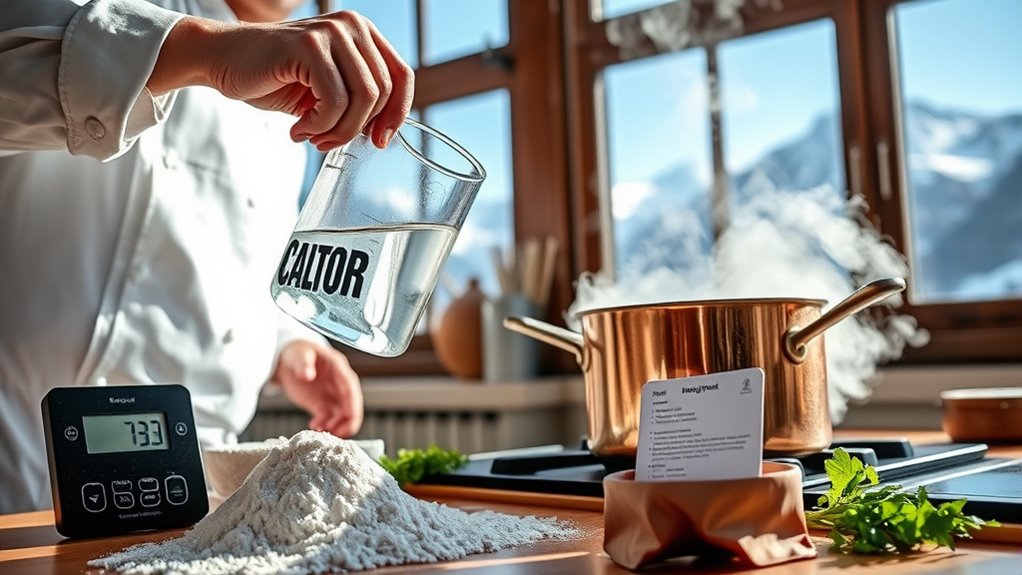
Cooking at high altitude presents unique challenges because the lower air pressure causes water to boil at a lower temperature. This change affects how food cooks, especially when it comes to boiling, simmering, and baking. As you raise altitude, you’ll notice that recipes often don’t turn out as expected unless you make specific adjustments. Baking adjustments are particularly important because they directly impact the texture, rise, and moisture of baked goods.
Cooking at high altitude requires adjustments due to lower air pressure affecting boiling, baking, and recipe outcomes.
When you’re raising altitude, the most noticeable change is the boiling point of water. Since water boils at a lower temperature, foods that rely on boiling or simmering may take longer to cook thoroughly. You might find that pasta, rice, or beans need extra time to become tender. To compensate, you can increase cooking times or use a pressure cooker to reach higher temperatures. For baked goods, the lower boiling point means that moisture escapes more quickly, which can cause cakes and bread to be dry or not rise properly. Adjusting your baking recipes becomes essential.
Baking adjustments at high altitude often involve modifying ingredients and oven settings. You should increase the amount of liquid in recipes to counteract faster moisture loss, which helps improve the texture and prevent dryness. Additionally, decreasing the amount of baking powder or baking soda is recommended because leavening agents tend to cause baked goods to rise rapidly and then collapse in lower pressure environments. Reducing leavening agents ensures a more stable rise and better structure. You might also need to slightly increase the oven temperature—by about 15 to 25 degrees Fahrenheit—to help baked goods set properly before over-expanding.
Another key tip is to pay attention to recipe timing. Since food may cook faster or slower depending on the specific altitude, keep a close eye on your dishes. For example, when baking bread or cakes, start checking for doneness a few minutes earlier than usual. Use a toothpick or cake tester to confirm when baked goods are ready, rather than relying solely on time. Remember, every high-altitude location is different, so some experimentation might be necessary to perfect your recipes. Additionally, understanding boiling point changes at different elevations can help you better adjust your cooking methods for optimal results.
Frequently Asked Questions
How Does Altitude Affect Baking Powder and Baking Soda?
At higher altitudes, leavening from baking powder and baking soda accelerates because of lower air pressure, making your baked goods rise too quickly. You might find baking powder becomes more effective, so you need less of it to avoid over-leavening. Adjust your recipes by reducing these leavening agents and increasing liquid, ensuring your baked items turn out just right despite the altitude’s effects on leavening.
What Are Signs of Undercooked High-Altitude Baked Goods?
You’ll notice undercooked high-altitude baked goods through texture changes like a doughy or gooey center, and flavor loss, resulting in blandness. These signs indicate your baked item needs more time in the oven. To prevent this, keep an eye on the texture and use a toothpick to check doneness. Addressing these cues guarantees your baked goods cook thoroughly and maintain their intended flavor and consistency.
Can Pressure Cookers Reduce High-Altitude Cooking Challenges?
Pressure cookers markedly reduce high-altitude cooking challenges by providing altitude adaptation benefits. They generate higher pressure and temperature, cooking food faster and more evenly. This helps you overcome issues like longer cook times and undercooked dishes, ensuring consistent results. Using a pressure cooker is especially helpful for tough cuts of meat, beans, and grains, making high-altitude cooking more manageable and reliable for you.
How Do Humidity Levels Influence Hydration Adjustments?
Think of humidity as nature’s own moisture gauge—when humidity drops, it’s like your ingredients are losing their water buddies. The humidity impact means you need to increase moisture adjustments, like adding a bit more water or broth, to prevent dryness. Conversely, high humidity levels can reduce your need for extra hydration. Keep an eye on the weather, and adjust your moisture accordingly to keep your dishes perfectly tender and flavorful.
Are There Specific Herbs or Spices That Need Modification at Altitude?
At high altitude, you should modify herb flavors and spice potency to suit the environment. You might find that herbs like basil or thyme lose some flavor, so consider increasing their quantity slightly. Similarly, spices like cayenne or cinnamon can become more potent, so you should reduce their amounts to avoid overpowering dishes. Adjusting herb flavor and spice potency guarantees your flavors remain balanced and vibrant at altitude.
Conclusion
Cooking at high altitude can be challenging, but with the right adjustments, you’ll succeed. Remember, water boils about 4°F lower and evaporation speeds up, so you might need more liquid and longer cook times. Did you know that over 500 million people worldwide live at high elevations? Embracing these changes guarantees your dishes turn out perfect every time. So, keep experimenting and enjoy your culinary adventures above sea level!