
When dealing with frozen dough in cold weather, it’s best to thaw it slowly in the refrigerator overnight to guarantee gentle activation of the yeast. Avoid rushing the process or using high heat, as cold temperatures slow yeast activity and can prevent proper rising. Keep the dough in a draft-free spot and give it time to reach about 70°F before baking. Staying patient and following proper steps helps you achieve bakery-quality results every time. Keep exploring for detailed tips.
Key Takeaways
- Thaw frozen dough slowly in the refrigerator overnight to ensure proper yeast activation in cold weather.
- Keep dough in a draft-free, warm spot (around 70°F) after thawing to promote fermentation.
- Avoid microwave thawing to prevent uneven heating and potential yeast damage.
- Allow extra time for dough to rest and rise in cold conditions, as yeast activity slows down.
- Gently punch down and shape the dough after fermentation to achieve bakery-quality results.
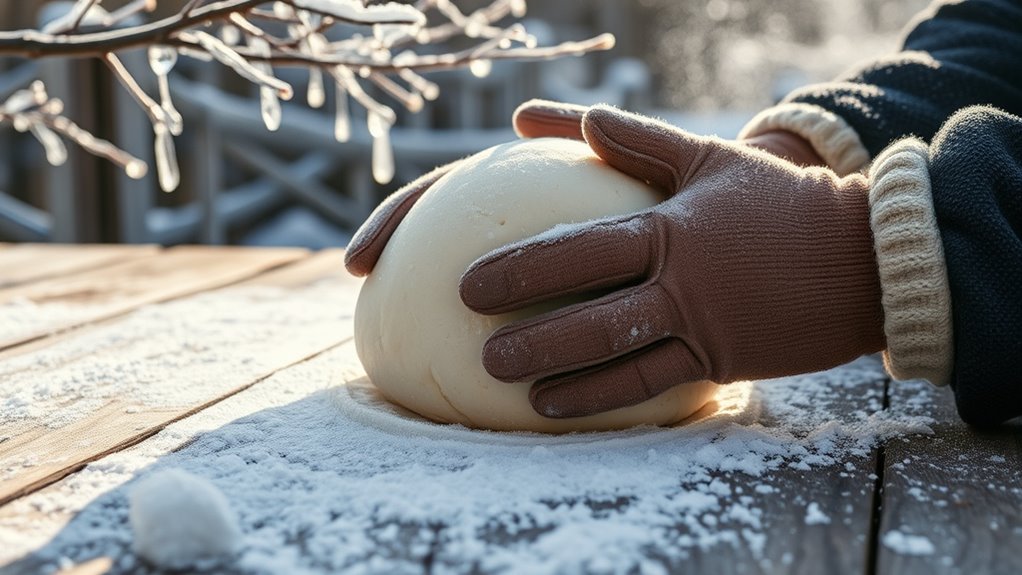
Have you ever wondered how to properly handle frozen dough so it turns out just right? When dealing with frozen dough, especially in cold weather, the process of yeast activation and dough thawing becomes essential. If you don’t give your dough the right attention, it can lead to poor rise, dense texture, or uneven baking. To start, you need to understand that yeast activation is sensitive to temperature. Yeast, which is the leavening agent, needs warmth to wake up and start fermenting. If you try to bake directly from the freezer, your dough won’t rise properly because the yeast remains dormant in the cold. That’s why dough thawing is a vital step in ensuring your baked goods come out perfect.
Proper dough thawing and yeast activation are key to perfect baked goods, especially in cold weather.
When thawing your frozen dough, the goal is to bring it to a warm, consistent temperature that encourages yeast activity without killing it. The best way is to transfer the dough from the freezer to the refrigerator and let it thaw slowly overnight. This gradual process allows yeast to activate gently and evenly, giving your dough a better chance to develop good structure. If you’re in a rush, you can also thaw the dough at room temperature, but you need to keep a close eye on it. Place it in a warm, draft-free spot, covered with a damp cloth, to prevent it from drying out. Avoid using microwave thawing, as it can create uneven heating and kill the yeast, ruining your dough’s ability to rise.
Once the dough has thawed and reached a warm room temperature—around 70°F (21°C)—you should give it some time to rest. During this period, the yeast will become fully active, producing carbon dioxide that helps the dough expand. This is the perfect moment to gently punch down the dough if needed, redistributing the yeast and gases, and then allowing it to proof or rise further. Proper dough thawing ensures that yeast activation happens smoothly, resulting in a light, airy texture once baked. Keep in mind that in cold weather, the ambient temperature can slow down dough thawing and yeast activity. So, patience is key. Rushing the process by speeding up thawing can compromise the dough’s texture. Always check for signs of proper fermentation—bubbles, increased volume, and a pleasant yeasty smell—before baking. Handling frozen dough with care, allowing enough time for dough thawing, and supporting yeast activation will make a noticeable difference in your final baked goods. With these steps, you’ll enjoy bakery-quality results, even in the coldest weather. Proper dough thawing techniques and understanding yeast behavior are essential for achieving the best results.
Frequently Asked Questions
Can I Refreeze Dough After It Has Thawed?
You can refreeze dough after it has thawed, but only if you handle it properly. For refreezing safety, make sure the dough hasn’t been out at room temperature for more than two hours. Keep in mind that refreezing can affect dough texture, making it less elastic and potentially affecting the final product. To maintain quality, it’s best to divide the dough into portions before freezing and use it quickly once thawed.
How Long Does Frozen Dough Typically Last in Cold Weather?
Frozen dough usually lasts about 3 to 6 months in cold weather, depending on how well you store it. Keep it tightly wrapped to prevent freezer burn, which can affect texture and flavor. If you notice any signs of freezer burn or if the dough has been stored beyond this period, it’s best to discard it. Proper storage duration helps maintain dough quality and avoids spoilage.
Should I Adjust Recipes When Using Thawed Frozen Dough?
Yes, you should adjust recipes when using thawed frozen dough. As you work with it, you might notice changes in dough texture that can affect how it rises or bakes. Don’t ignore these signs—tweak your recipe as needed to guarantee perfect results. Whether it’s adding a bit more flour or letting it rest longer, paying attention to texture helps you master the process and avoid surprises later.
Is It Better to Thaw Dough Slowly or Quickly?
You should thaw dough slowly for the best results. Temperature control is key, and a gradual thawing process helps maintain dough texture and gluten structure. Using a refrigerator or a cool, consistent environment allows for even thawing, preventing overproofing or uneven rise. Quick thawing might save time but risks compromising dough quality. For ideal results, prioritize slow, controlled thawing to ensure your dough stays perfect for baking.
What Are Signs That Frozen Dough Has Gone Bad?
If your frozen dough’s texture feels overly slimy or sticky, it’s a gentle sign to check further. Unusual odors, like sour or off-putting smells, also indicate it’s time to say goodbye. Trust your senses—if the dough no longer feels firm or smells strange, it’s best to discard it, as these signs suggest it’s gone past its prime and might affect your baked goods’ quality.
Conclusion
When your dough feels like a block of ice, remember it’s just waiting for the warmth of your patience and care. Like a seed buried deep in winter, it needs gentle treatment to blossom into perfect bread or rolls. Handle it with love, give it time, and soon you’ll see it rise, ready to bring warmth and joy to your table. Don’t let frozen fears freeze your baking spirit—trust in your process and enjoy the sweet reward.