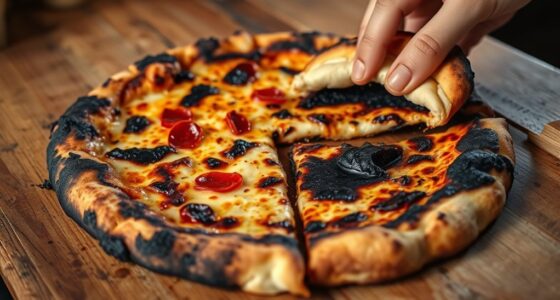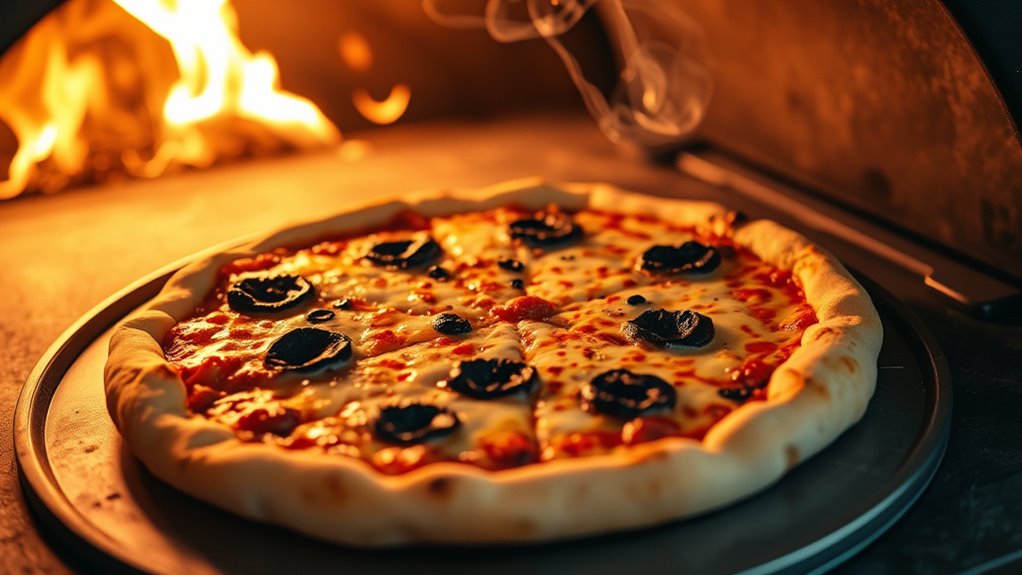

To manage hot spots and prevent uneven pizza cooking, you should rotate your pizza halfway through the baking process. This helps counteract uneven heat distribution that can cause burnt edges or undercooked centers. Ensuring your oven is properly calibrated and using a pizza stone can further improve results. If you keep hot spots in mind and rotate accordingly, you’ll get more consistent, delicious slices. Keep in mind, there are more tips to perfect your technique.
Key Takeaways
- Rotate the pizza halfway through baking to evenly expose all sides to heat and counteract hot spots.
- Use an oven thermometer to identify temperature inconsistencies and adjust oven settings accordingly.
- Properly calibrate the oven to ensure the actual temperature matches the set temperature, reducing hot spots.
- Employ a pizza stone to improve heat distribution and retain consistent oven heat during cooking.
- Combine oven calibration with rotation techniques for more uniform cooking and better results.
Have you ever noticed that your food sometimes cooks unevenly, leaving some parts overdone while others remain undercooked? If so, you’re not alone. Uneven cooking is a common issue, especially when making foods like pizza that require high, consistent heat. One key to improving this is understanding how your oven works and how to use tools like a pizza stone effectively. A pizza stone can help distribute heat more evenly, but only if your oven is properly calibrated. If your oven isn’t calibrated correctly, you might experience hot spots that cause certain areas of your pizza to cook faster than others. This is why oven calibration is essential—ensuring the temperature settings match the actual heat inside. Without proper calibration, even the best pizza stone can’t prevent uneven cooking.
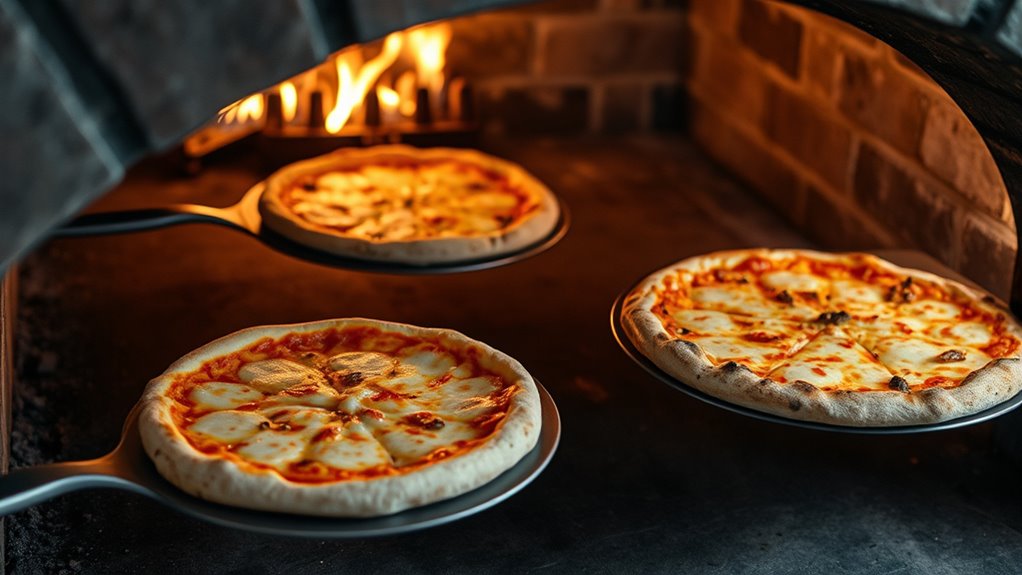
Using a pizza stone is a smart move because it mimics the traditional brick oven environment, absorbing and radiating heat efficiently. However, if your oven has uneven heat distribution, placing the pizza directly on the stone won’t solve the problem; it might make it worse. To counteract this, you should rotate your pizza during cooking. By turning your pizza midway, you give all sides a chance to cook evenly, especially if your oven has hot spots. Hot spots are areas where heat concentrates, making parts of your pizza cook faster or burn. Rotating helps to balance this out, ensuring each slice gets the same attention from the heat.
Another critical step is to confirm your oven’s calibration. Many home ovens tend to drift from the set temperature over time. You can test this by using an oven thermometer—place it inside and see if the actual temperature matches the dial. If it doesn’t, you might need to recalibrate your oven or adjust your cooking times accordingly. Proper calibration means your oven will heat more uniformly, reducing the need for frequent rotation or guesswork. When your oven is correctly calibrated, your pizza stone will perform at its best, evenly distributing heat across your pizza surface. This combination of a well-calibrated oven and a pizza stone greatly reduces the chances of uneven cooking.
Frequently Asked Questions
How Often Should I Rotate My Pizza During Cooking?
You should rotate your pizza every 2-3 minutes during cooking, especially if you’re using a pizza stone. This helps make certain of even heat distribution, especially if your oven isn’t perfectly calibrated. Keep an eye on hot spots, and turn the pizza accordingly to prevent burning or uneven cooking. Regular rotation guarantees a crispy crust and perfectly cooked toppings, making your homemade pizza taste as good as store-bought.
What Tools Can Help Identify Hot Spots in My Oven?
Think of your oven as a battlefield where hot spots are the enemy’s sneaky ambushes. To spot them, you can wield infrared thermometers, which laser-focus on temperature differences, or use oven thermocouples that provide real-time heat readings. These tools help you map out the oven’s hot zones, so you can strategize your pizza placement, ensuring even cooking and defeating those pesky hot spots.
Does Pizza Type Affect How I Should Rotate It?
Yes, different pizza types affect how you should rotate them. Thicker crusts and cheese-heavy toppings may need more frequent rotation to guarantee even cooking and cheese melting. Thin crust pizzas cook faster, so rotate less often to avoid burning. Keep an eye on the crust color and cheese melting progress, and adjust your rotation timing accordingly. This helps achieve a perfectly cooked crust and evenly melted cheese across all pizza styles.
Can Oven Temperature Adjustments Improve Even Cooking?
Yes, adjusting your oven temperature can improve even cooking. First, check your oven calibration to make certain the temperature setting matches the actual heat. If your oven has temperature zones, you can set different temperatures for each area to compensate for hot spots. This way, you can distribute heat more evenly, reducing the need for frequent rotating and ensuring your pizza cooks uniformly.
How Do I Prevent Toppings From Sliding off During Rotation?
Think of your pizza as a delicate dance partner—you want to keep it steady. To prevent toppings from sliding off during rotation, focus on topping stability by using less moisture-rich ingredients and applying a thin, even layer of cheese. Master rotation techniques by using a pizza peel to gently turn the pizza, supporting the toppings. This way, you keep everything in place and enjoy a perfectly cooked, well-topped pie every time.
Conclusion
Just like a skilled conductor guarantees every instrument plays in harmony, rotating your pizza and managing hot spots brings balance to your oven’s symphony. When you pay attention to these small adjustments, you prevent uneven cooking from turning your pizza into a wild, unpredictable solo. Instead, you craft a masterpiece with perfectly cooked slices every time. So, keep rotating and managing those hot spots — your pizza will thank you with a delicious, even finish.