
Many people assume their oven is perfectly calibrated or that higher heat always improves browning, but inaccurate temps and hot spots cause uneven results. You might rely solely on cooking time or skip proper rack placement, which leads to inconsistent color. Poor air circulation, skipping preheating, or not turning food can also cause problems. By understanding these common mistakes and adjusting your methods, you’ll find it easier to achieve evenly browned dishes—there’s more to learn if you keep going.
Key Takeaways
- Relying solely on increasing oven temperature can worsen uneven browning; precise calibration and heat control are more effective.
- Improper rack placement, especially not using the middle rack, can cause hot spots and uneven browning.
- Ignoring the importance of ingredient thickness and preparation leads to inconsistent color and texture.
- Failing to rotate or turn food during cooking allows hot spots to cause uneven browning and undercooked areas.
- Overlooking proper oven calibration and ventilation can result in inaccurate heat distribution and uneven results.
Assuming Uniform Oven Temperatures Are Always Accurate
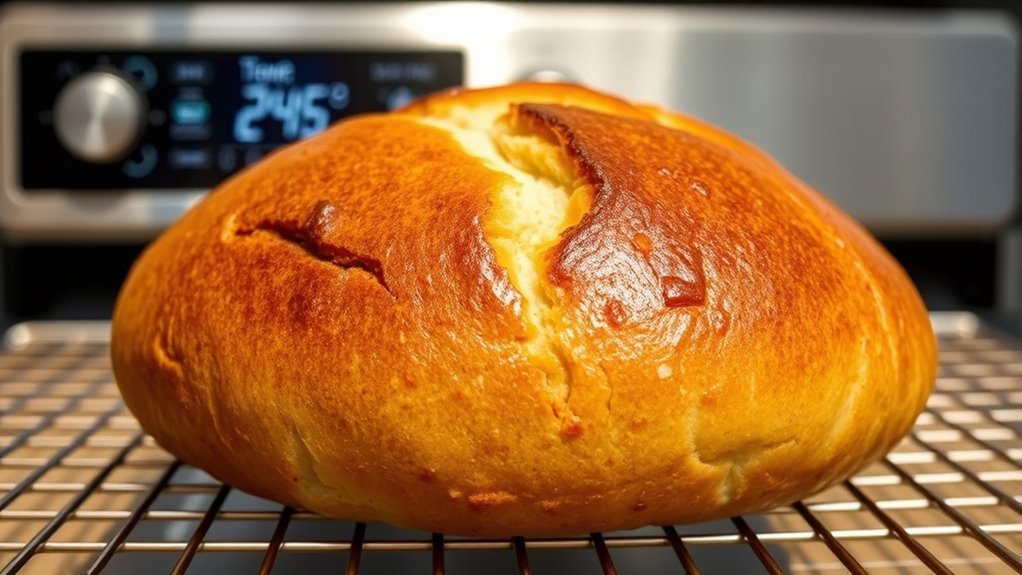
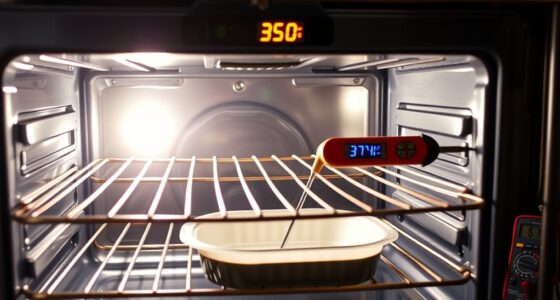
Even though many ovens come with a temperature dial, the actual temperature inside can vary considerably from what’s displayed. This temperature variability means that relying solely on the dial can lead to uneven browning. Your oven may be uncalibrated, causing hot spots or cooler zones that affect your cooking results. To guarantee consistent browning, it’s essential to perform oven calibration regularly. Calibration adjusts the oven’s thermostat, matching the displayed temperature to the actual heat. Without it, you risk assuming the oven is precise when it’s not, leading to unpredictable baking outcomes. Remember, even a minor calibration adjustment can profoundly improve heat consistency, helping you achieve evenly browned dishes every time. Don’t overlook oven calibration—it’s key to controlling temperature variability. Additionally, understanding temperature fluctuations within your oven can help you better anticipate and compensate for uneven heat distribution.
Believing That Higher Temperatures Lead to Better Browning
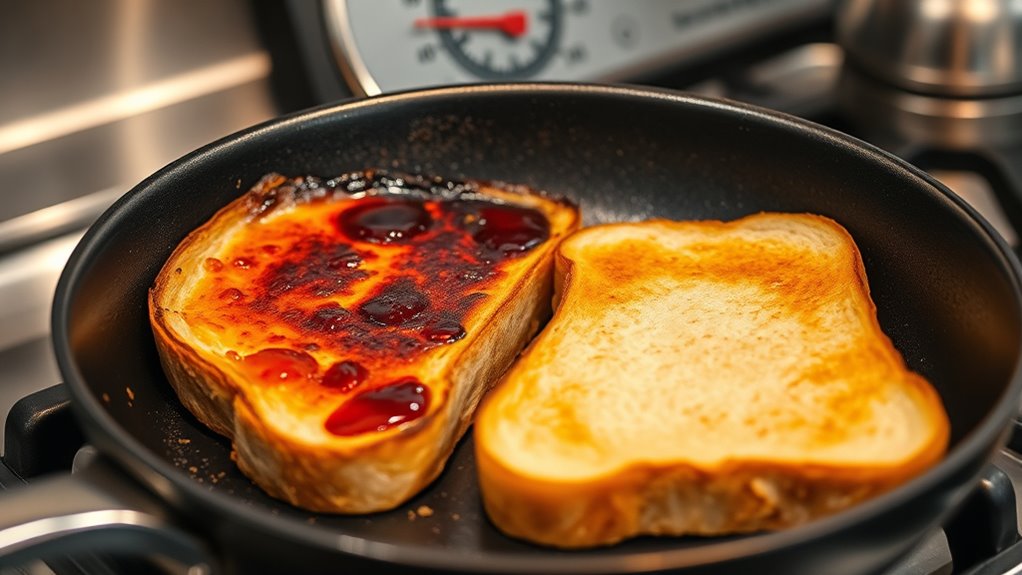
Many people assume that turning up the oven temperature will result in faster or better browning, but this isn’t always true. Higher temperatures can cause uneven browning because they disrupt proper heat distribution, leading to hot spots and cold spots inside the oven. Instead of relying solely on increasing the temperature, focus on precise temperature control to achieve consistent results. A stable, even heat allows the food to brown evenly without burning or undercooking certain areas. Remember, more heat doesn’t guarantee better browning; it often worsens unevenness. Proper temperature control and understanding your oven’s heat distribution are key to fixing uneven browning. Adjusting the temperature carefully and monitoring how heat spreads will help you get that perfect, uniform golden-brown finish. Additionally, paying attention to heat flow within your oven can prevent hot spots and promote even cooking across all areas.
Overlooking the Importance of Proper Rack Placement
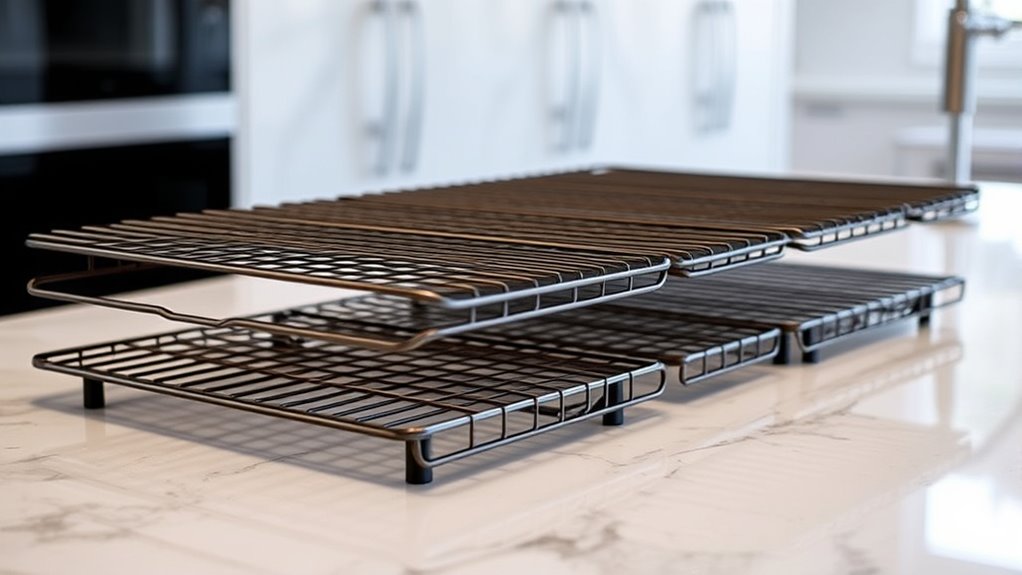
If your browning isn’t even, rack placement might be the culprit. Proper positioning guarantees heat circulates evenly, leading to consistent results. Overlooking this step can cause uneven browning despite other adjustments. Ensuring the correct oven temperature and maintaining a consistent cooking environment are also crucial factors in achieving uniform browning.
Optimal Rack Positioning
Proper rack placement plays a crucial role in achieving even browning, yet it’s often overlooked. Correct rack positioning ensures heat circulates evenly around your baked goods, preventing hot spots that cause uneven results. Before adjusting your rack, check your oven calibration to confirm the temperature is accurate; a miscalibrated oven can undermine even the best rack positioning. Typically, placing the rack in the middle offers the most balanced heat distribution, but some recipes may benefit from positioning it slightly higher or lower. Always consider the specific oven’s hot spots and your baked item’s needs. Utilizing proper oven settings and the correct rack placement can significantly improve browning consistency. Proper rack placement, combined with a well-calibrated oven, helps you achieve consistent, professional-looking browning every time, reducing the need for troubleshooting later.
Impact on Browning Results
Neglecting the importance of proper rack placement can considerably impact your browning results. When you don’t position your baked goods correctly, you’ll notice uneven browning and inconsistent browning quality. This issue often stems from overlooking factors like oven calibration and rack level. Improper placement can cause hot spots or cooler zones, affecting browning consistency. Ensuring your oven is properly calibrated and selecting the right rack position helps distribute heat evenly. Additionally, understanding how wall organization systems can influence heat distribution in your oven environment may help optimize baking results. Paying attention to rack placement ensures your baked goods brown uniformly, saving you time and frustration.
Relying Solely on Cooking Time to Achieve Even Color
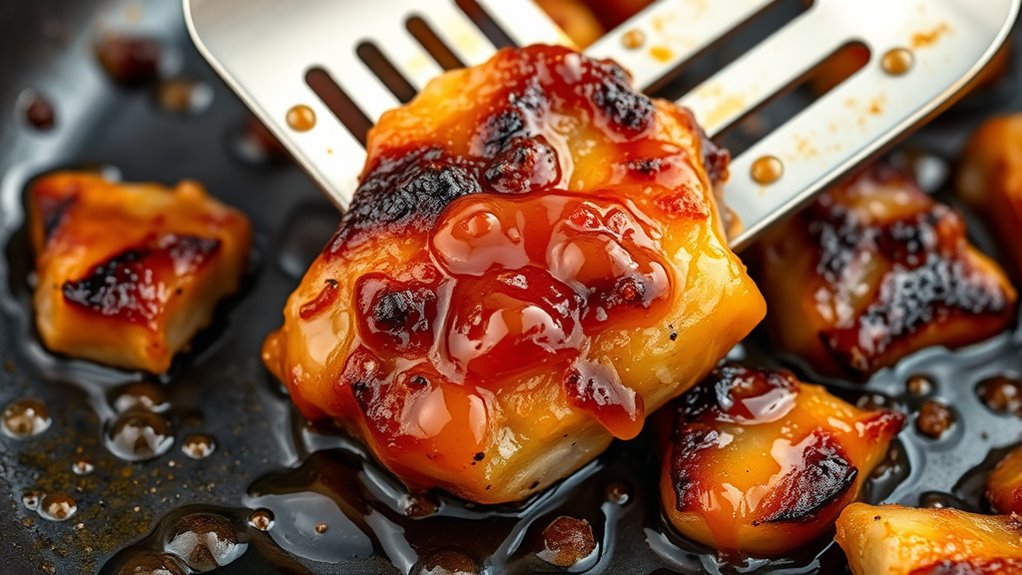
Relying solely on cooking time to achieve an even browning can be misleading because different parts of the food may cook at different rates. You might think that setting a timer guarantees perfect color, but uneven heat distribution can cause some areas to brown faster while others remain pale. Instead, focus on seasoning techniques that promote uniform flavor and color, like brushing with oil or butter evenly. Proper plating aesthetics also depend on controlling heat and preparation, not just timing. If you depend only on cooking time, you risk overcooking or undercooking sections, leading to inconsistent results. Pay attention to visual cues and adjust your approach accordingly. Achieving even browning requires a combination of timing, technique, and attention to how your food looks and feels during cooking. Additionally, using consistent heat sources can help promote more uniform browning across your dish.
Ignoring the Impact of Air Circulation and Ventilation
Ignoring air circulation and ventilation can lead to uneven browning and longer cooking times. Proper airflow techniques help distribute heat more evenly and prevent hotspots. Good ventilation also helps your dish heal properly, reducing the risk of burning or undercooking. Additionally, understanding sound effects libraries and how they enhance trailer sound design can be crucial for creating immersive audio experiences.
Proper Airflow Techniques
Proper airflow techniques are essential for achieving even browning, but many people overlook how airflow direction and movement can influence the process. Optimizing airflow efficiency ensures heat is evenly distributed, preventing hot spots or undercooked areas. Correct ventilation strategies help maintain consistent temperature and humidity, which are vital for uniform results. To improve airflow, consider these key ideas:
- Position fans or vents to direct air evenly across the surface
- Avoid creating drafts that blow air away from the target area
- Use adjustable vents to control airflow intensity
- Maintain consistent airflow speed for uniform heat transfer
- Understanding air circulation principles can help you fine-tune your setup for optimal results.
Ventilation’s Role in Healing
Effective ventilation plays a vital role in the healing process, especially when addressing uneven browning. Proper airflow optimization ensures that your environment promotes uniform healing by preventing moisture buildup and excess heat. Ventilation design directly impacts how well air circulates, influencing the overall outcome. Without adequate ventilation, healing slows, and uneven browning persists. Consider this emotional impact:
| Frustration | Hope | Success |
|---|---|---|
| Waiting longer | Improved healing | Restored confidence |
| Uneven results | Better airflow | Flawless finish |
| Uncertainty | Proper ventilation | Natural balance |
Effective airflow is essential for maintaining the ideal environment for healing and ensuring consistent results.
Neglecting to Preheat Equipment Properly
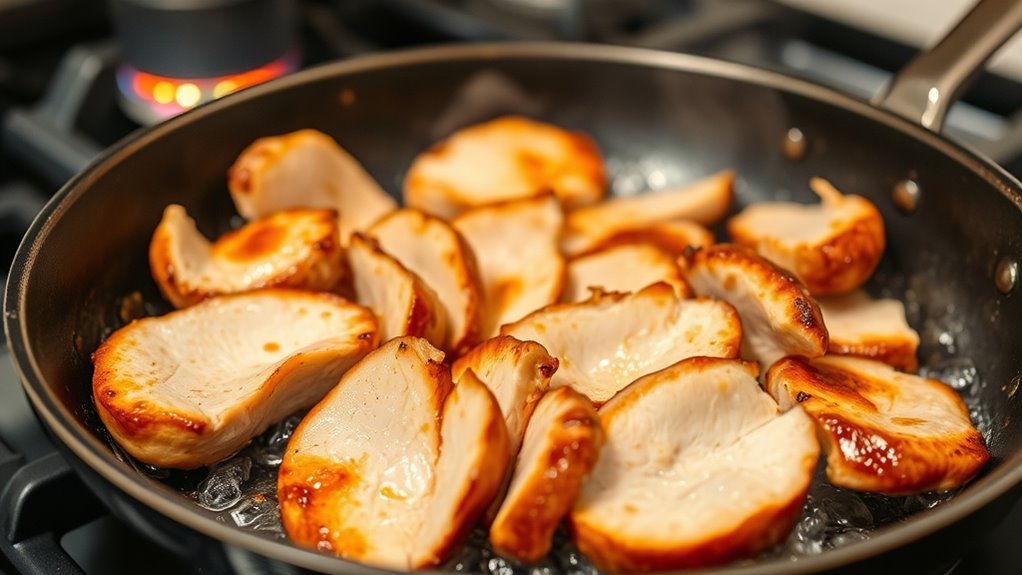
Before you start browning, make sure to preheat your equipment thoroughly; skipping this step can lead to uneven results. Proper preheating guarantees even heat distribution, which is essential for consistent browning. Check your oven calibration regularly to avoid temperature inaccuracies that cause hot spots. Pay attention to cookware material—metal pans heat faster, while glass or ceramic may need longer preheating. Failing to preheat can result in uneven browning and wasted effort. Additionally, exfoliation with glycolic acid prior to browning can help create a more even surface for better results.
Using the Same Settings for Different Types of Dishes
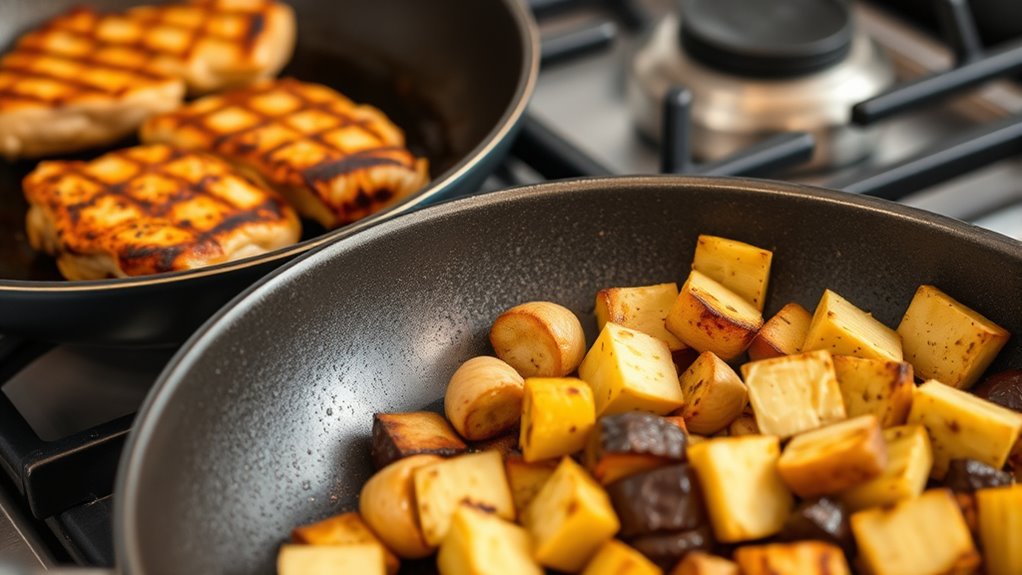
Using the same oven settings for different types of dishes can lead to uneven browning and compromised results. For example, a baking sheet with cookies requires a different temperature and time compared to roasting vegetables or baking bread. Relying on one setting can cause overbrowning or undercooking. Additionally, seasoning techniques matter; some dishes benefit from high heat to develop a crust, while others need gentle heat to preserve delicate flavors. Adjust your oven temperature and position based on the dish’s needs. Keep in mind that the type of baking sheet also impacts browning—dark sheets absorb heat faster, increasing browning risk. Tailoring your settings guarantees consistent, even browning, and better overall dish quality. Don’t forget to modify your approach depending on the dish’s nature.
Underestimating the Role of Ingredient Preparation and Thickness
Have you ever noticed uneven browning even when using the right oven settings? One common mistake is underestimating the role of ingredient preparation and thickness consistency. If your ingredients aren’t prepared evenly, they’ll cook at different rates, causing uneven browning. Thicker pieces take longer to cook through, leading to burnt edges or undercooked centers. Ensuring uniform ingredient preparation helps promote even heat distribution. Here are key points to consider:
- Slice ingredients to similar thicknesses for consistent cooking.
- Use a mandoline or sharp knife for precise cuts.
- Adjust cooking times based on thickness variations.
- Pre-treat or marinate to promote even heat absorption.
Paying attention to ingredient preparation and maintaining consistent thickness ensures better control over browning outcomes.
Forgetting to Rotate or Turn Food During Cooking
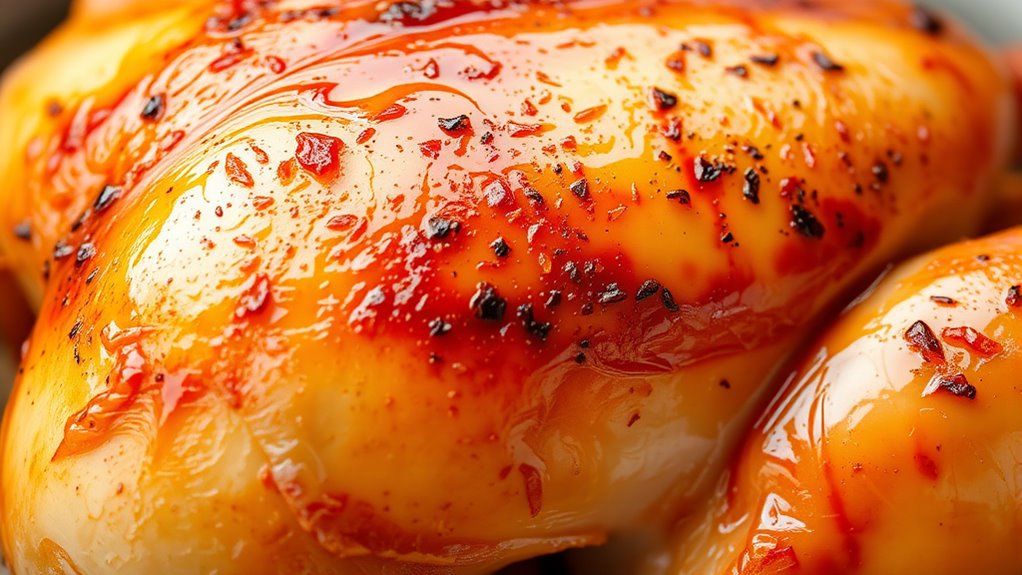
Neglecting to rotate or turn food during cooking can lead to uneven browning and inconsistent results. When you don’t adjust the food’s position, certain areas may cook faster, causing over-browning while others remain undercooked. This is especially true if your pan material conducts heat unevenly or retains heat differently. Additionally, food moisture can build up in spots, creating steam that hampers browning. Turning food ensures even exposure to heat and helps escape excess moisture, promoting consistent color and texture. If you’re using a thin or uneven pan, rotating your food becomes even more critical to prevent hot spots. By regularly turning your food, you give each side equal opportunity to brown, ensuring a more uniform and appealing finish.
Frequently Asked Questions
Can Uneven Browning Occur Even With Correctly Calibrated Ovens?
Yes, uneven browning can happen even if your oven calibration and baking temperature are correct. Factors like hot spots in your oven, placement of the baking sheet, or inconsistent heat distribution can cause uneven browning. You might think your oven’s calibrated properly, but local temperature variances still affect your baked goods. To fix this, rotate items during baking and use an oven thermometer to double-check your actual temperature.
How Does Humidity Affect Browning Consistency?
Sure, humidity impact is often underestimated, but it can totally sabotage your browning efforts. When humidity levels rise, moisture control becomes tricky, causing uneven browning instead of a golden finish. You might think your oven’s perfect, yet high moisture content in the air hampers heat transfer, leading to inconsistent results. Keep the kitchen dry, use a dehumidifier if needed, and watch how your browning becomes more even and predictable.
Do Different Baking Pans Influence Browning Outcomes?
Yes, different baking pans influence browning outcomes. Baking pan material, like metal or glass, affects heat transfer, with metal pans promoting more even, quicker browning. Pan size variations also matter; a larger pan results in thinner batter, leading to faster, more uniform browning, while smaller pans can cause uneven results. Always choose your pan based on your recipe for the best browning and overall baked good quality.
Is It Necessary to Adjust Recipes for Uneven Browning?
You don’t usually need to adjust recipes for uneven browning if you use proper baking techniques. Instead, focus on even ingredient distribution and preheating your oven thoroughly. If you want to experiment, ingredient substitutions like switching to lower-fat or different flours can impact browning, but they typically don’t require recipe adjustments. Keep an eye on your baked goods to prevent overbrowning, and rotate pans if needed for more uniform results.
How Do Ingredient Freshness and Temperature Impact Browning?
You’ll see ingredient freshness and temperature impact browning considerably. Fresh ingredients promote even browning and richer flavor development, while older or less fresh items might brown unevenly. Temperature variations also matter—higher heat speeds up browning but can cause texture variation or burning if not controlled. To avoid these issues, keep ingredients at a consistent, ideal temperature and use fresh components for the best, evenly browned results with balanced flavor and texture.
Conclusion
Remember, even the best recipes can go wrong if you’re not mindful of basic oven habits. Nearly 80% of home cooks overlook rack placement, leading to uneven browning. So, double-check your oven’s temperature accuracy, preheat properly, and rotate your food. Small adjustments make a big difference, and paying attention can turn uneven browning into perfectly cooked dishes every time. Don’t let simple mistakes ruin your meal—stay attentive and get it just right!