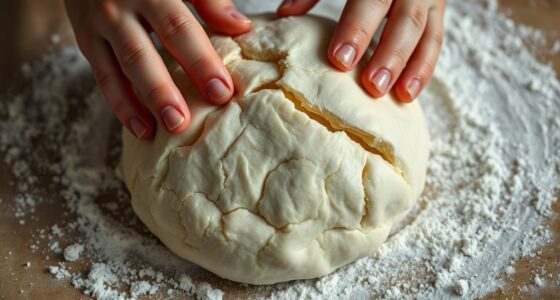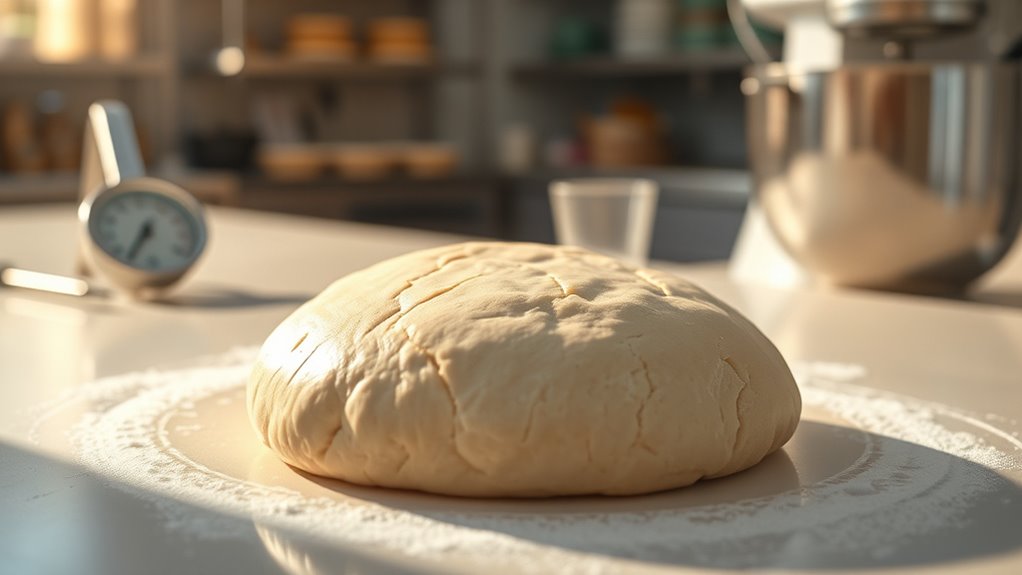

Identifying undermixed dough is vital for consistent quality and regulatory compliance. Look for dry patches, uneven texture, or dough that feels gritty or sticky—these signs mean you haven’t mixed thoroughly. Improper mixing can lead to poor rise, dense texture, and safety issues if standards aren’t met. Paying attention to visual and tactile cues helps guarantee your dough adheres to industry codes. Stick around to learn how proper techniques and tools can prevent undermixing altogether.
Key Takeaways
- Visual cues like dry patches, streaks, or uneven texture indicate undermixed dough and can compromise product quality.
- Proper mixing techniques, equipment calibration, and staff training are essential to meet industry standards and consistency.
- Adhering to regulatory guidelines ensures safe ingredient ratios, proper temperatures, and compliance with food safety codes.
- Documenting ingredient sources, substitutions, and mixing procedures helps maintain traceability and regulatory compliance.
- Regular equipment maintenance and safety protocols protect workers and prevent contamination or accidents during dough preparation.
Common Indicators of Insufficient Dough Mixing
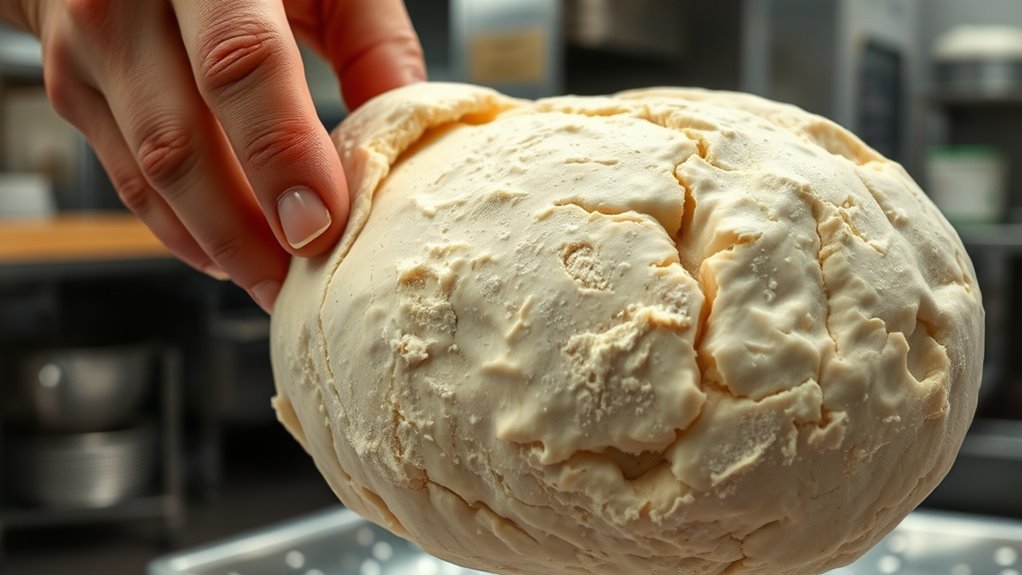
Insufficient dough mixing often reveals itself through several clear signs that you can easily spot. One key indicator is inconsistent ingredient ratios; if some parts of the dough seem drier or wetter than others, the mixing duration was likely too short. This uneven distribution can lead to pockets of dry flour or clumps of unmixed ingredients. Another sign is a dough that feels stiff or lumpy instead of smooth and elastic, showing that the ingredients haven’t fully combined. Additionally, if the dough resists shaping or stretching easily, it might not have been mixed long enough. Paying attention to mixing time and ensuring ingredients are thoroughly incorporated helps prevent these issues, resulting in a uniform dough that bakes evenly.
The Impact of Undermixed Dough on Texture and Rise

When dough isn’t mixed enough, it can substantially affect both its texture and ability to rise properly. Poor mixing reduces dough elasticity, making it less capable of trapping gas during fermentation. This leads to uneven fermentation consistency, resulting in dense or flat baked goods. The dough may feel sticky or crumbly, and its rise will be inconsistent. Here’s how undermixing impacts specific qualities:
| Effect | Result |
|---|---|
| Reduced elasticity | Less stretchable, prone to tearing |
| Poor fermentation | Uneven rise, denser texture |
| Texture | Gummy or crumbly crust |
| Rise | Flat or uneven, lacking volume |
| Overall quality | Inconsistent results, compromised crumb |
Ensuring thorough mixing helps develop dough elasticity and uniform fermentation, leading to better texture and rise. Additionally, proper mixing techniques are essential for achieving consistent results in baking.
Essential Mixing Techniques for Consistency and Quality

Mastering essential mixing techniques is crucial for achieving consistent dough quality. Proper mixing ensures ingredient integration and uniform texture. To do this effectively, focus on these key methods:
Achieving consistent dough quality relies on mastering proper mixing techniques for optimal results.
- Use the right mixing method for your dough type—whether kneading, folding, or batter mixing.
- Combine ingredients gradually, starting with dry and wet components, to promote even distribution.
- Adjust mixing speed and duration to prevent undermixing or overmixing, which can compromise dough integrity.
- Scrape down the sides of your bowl frequently to ensure all ingredients are incorporated evenly.
- Understanding the importance of Honda Tuning techniques can inspire better equipment choices and mixing practices, especially when working with specialized ingredients or equipment.
Applying these techniques helps maintain consistency and quality. By mastering mixing methods, you ensure proper ingredient integration, leading to a better rise, texture, and overall product.
Recognizing Visual and Tactile Signs of Undermixing

You can spot undermixed dough by its uneven texture and the presence of visible flour clumps. When you handle it, the dough may feel inconsistent or gritty, indicating incomplete mixing. Additionally, look for color variations, as areas with unmixed flour can cause an uneven appearance. Proper mixing ensures a homogeneous dough, resulting in better texture and structure in your baked goods.
Uneven Dough Texture
Uneven dough texture often indicates that the dough hasn’t been mixed thoroughly enough. You’ll notice areas that feel drier or wetter, revealing inconsistent dough hydration. To identify this, pay attention to these signs:
- Pockets of dry flour or flour streaks remain visible.
- Some sections are sticky or overly wet, while others are crumbly.
- The dough feels uneven in firmness, with certain parts resisting shaping.
- Insufficient mixing duration leaves the ingredients unevenly distributed.
Proper dough hydration and adequate mixing duration help achieve a uniform texture. If you see these signs, extend your mixing time slightly. This ensures all ingredients blend evenly, preventing undermixing and promoting consistent results.
Visible Flour Clumps
Visible flour clumps are clear indicators that the dough hasn’t been mixed enough. When you see pockets of flour remaining, it means your mixing consistency isn’t right yet. These flour clumps can be felt when you touch the dough or seen visually. They suggest uneven hydration and can lead to dense or tough baked goods. To help you recognize these signs, here’s a quick guide:
| Sign | What It Looks Like | Why It Matters |
|---|---|---|
| Flour clumps | Small, dry patches within the dough | Indicates incomplete mixing |
| Uneven texture | Bumpy or gritty surface | Affects final product quality |
| Tactile inconsistency | Feels rough or granular when touched | Shows mixing hasn’t been thorough |
Keep an eye out for flour clumps to ensure proper mixing consistency and ideal results.
Inconsistent Dough Color
Sometimes, even when flour clumps aren’t obvious, the dough’s appearance can reveal signs of insufficient mixing. Inconsistent dough color is a key indicator of mixing accuracy issues. Look for these signs:
- Uneven coloration, with lighter and darker patches throughout the dough.
- A streaky or marbled appearance instead of a uniform hue.
- Variations in dough consistency, feeling lumpy or gritty in certain areas.
- A dull, matte surface rather than a smooth, glossy finish.
- Recognizing these visual cues can help prevent cybersecurity vulnerabilities from affecting your baking process or data security.
These visual and tactile cues suggest the dough hasn’t been mixed enough for even color distribution. Recognizing these signs helps you adjust your mixing process, ensuring proper dough consistency and avoiding undermixing. Consistent dough color is essential for quality and compliance.
Industry Standards and Regulatory Codes for Dough Preparation

Industry standards and regulatory codes for dough preparation set essential guidelines to guarantee product quality, safety, and consistency across the food industry. These standards ensure ingredient consistency and proper use of mixing equipment, which are crucial for achieving uniform dough. Regulations specify acceptable mixing times, temperatures, and ingredient ratios to avoid undermixed dough. You should think of this as a framework that keeps your process aligned with industry best practices. Adhering to industry standards helps prevent common issues like uneven texture or inconsistent flavor, ensuring a reliable product every time.
Safety and Compliance Considerations in Commercial Baking
Ensuring safety and compliance is critical when working in commercial baking. You need to follow regulatory standards and codes to protect yourself and your team. By understanding these requirements, you can prevent accidents and maintain a safe working environment. Additionally, implementing proper food allergen management protocols is essential to accommodate diverse dietary needs and prevent cross-contamination.
Regulatory Standards and Codes
Regulatory standards and codes play a critical role in maintaining safety and compliance in commercial baking operations. They ensure your processes meet legal and safety requirements. To stay compliant, you must understand key aspects such as:
- Proper ingredient substitutions to prevent contamination and ensure quality.
- Maintaining correct baking temperature to avoid underbaked or unsafe products.
- Documenting ingredient sources and substitutions for traceability.
- Following sanitation and storage regulations to prevent spoilage and contamination.
- Regularly reviewing industry regulations and updates to adapt your practices accordingly.
Adhering to these standards helps you avoid penalties and guarantees product safety. Remember, consistent monitoring of ingredient substitutions and precise control of baking temperature are essential. Staying informed about evolving regulations guarantees your operation remains compliant and delivers safe, high-quality baked goods.
Ensuring Worker Safety
Because commercial baking involves handling hot equipment, sharp tools, and potentially hazardous ingredients, prioritizing worker safety is essential. Ensuring ingredient quality is vital, as contaminated or improper ingredients can cause health risks. Proper training on mixing equipment helps prevent accidents, such as burns or cuts, and maintains a safe workspace. Regular maintenance of mixers and other machinery reduces failure risks, protecting staff from injuries. Use personal protective equipment, like gloves and aprons, to minimize exposure to hot surfaces or sharp edges. Clear safety protocols should be in place for handling ingredients and cleaning equipment. Implementing proper equipment maintenance further reduces the risk of malfunctions that could lead to accidents. By focusing on ingredient quality and maintaining mixing equipment, you create a safer environment that promotes compliance and reduces the likelihood of accidents.
Tools and Equipment That Help Achieve Proper Mix
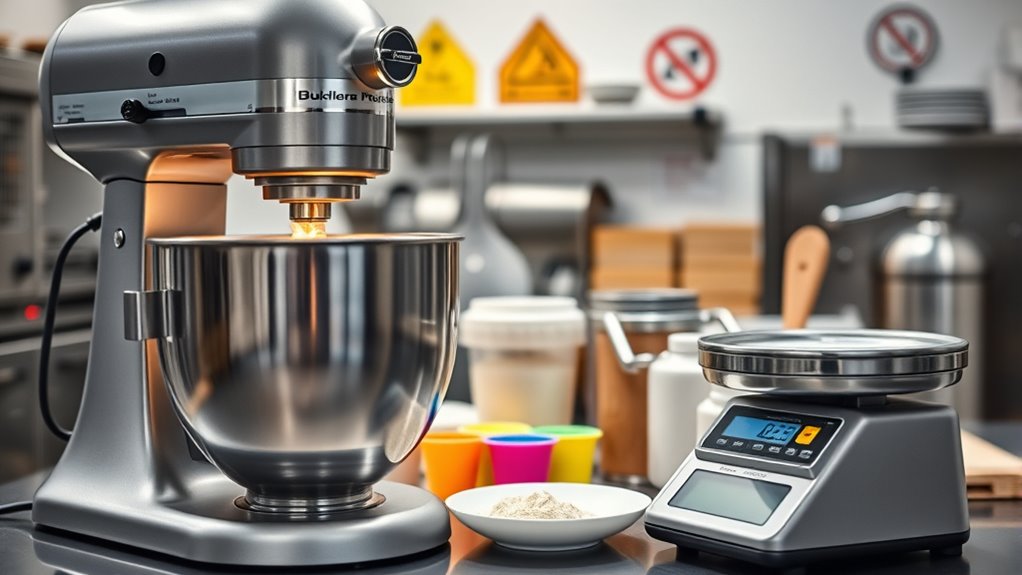
Achieving a proper mix starts with selecting the right tools and equipment designed for precision and consistency. High-quality mixing equipment ensures thorough blending, which is crucial for ingredient quality and uniform dough. Here are four essential tools to consider:
- Stand Mixers – These provide consistent power and control for thorough mixing, reducing the risk of undermixed dough.
- Dough Whisks and Scrapers – Perfect for manual adjustments and ensuring all ingredients combine evenly.
- Measuring Scales – Accurate ingredient measurement supports proper mixing and maintains quality.
- Mixing Bowls with Non-slip Bases – Help keep everything steady during mixing, preventing uneven blends.
- Using proper technique and the right equipment together helps ensure the dough is mixed thoroughly and safely, meeting safety and quality standards efficiently.
Troubleshooting Tips for Fixing Undermixed Dough

When you notice your dough is undermixed, addressing the issue promptly is vital to guarantee product quality and safety. Start by evaluating dough hydration; if the dough feels dry or crumbly, gradually add small amounts of water while mixing to improve consistency. Adjust the mixing speed—if it’s too slow, the ingredients won’t combine fully. Increase the speed incrementally, ensuring you don’t overmix, which can lead to other issues. Pay attention to mixing time as well; sometimes, simply extending the mixing duration at the correct speed helps achieve proper gluten development. Using a timer or visual cues can help you monitor progress. Always aim for a uniform, elastic dough, indicating thorough mixing and ideal dough hydration.
Best Practices for Ensuring Proper Mixing in Commercial Settings

To guarantee proper mixing in a commercial setting, establishing standardized procedures and consistent practices is key. First, select the right mixing equipment suited to your batch size and dough type. Second, always measure ingredient ratios precisely to ensure uniform consistency. Third, follow a set mixing sequence to prevent under- or over-mixing. Fourth, regularly calibrate your equipment to maintain accuracy. By adhering to these practices, you minimize the risk of undermixed dough and ensure compliance with codes. Proper training for staff on equipment operation and ingredient handling also plays a vital role. Consistency in these steps leads to better dough quality, reduces waste, and keeps your operation compliant with industry standards.
Frequently Asked Questions
How Can I Test Dough for Proper Mixing Without Specialized Equipment?
To test dough for proper mixing without specialized equipment, start with a visual inspection—look for a uniform texture and no streaks of flour or ingredients. Then, perform a pinch test: pinch a small piece of dough and stretch it. If it stretches smoothly without tearing and forms a thin, elastic membrane, your dough is well mixed. These simple checks help verify consistent quality without needing advanced tools.
Are There Specific Industry Certifications Related to Dough Mixing Standards?
Yes, there are industry certifications related to dough mixing standards. You should look into programs like the Safe Food Certification or the ServSafe certification, which emphasize adherence to industry standards for food safety and quality. These certification programs help guarantee your dough mixing techniques meet professional benchmarks, enhance your credibility, and maintain compliance with health regulations. Pursuing such certifications demonstrates your commitment to high standards and consistent product quality.
What Are the Long-Term Consequences of Consistently Undermixed Dough?
If you consistently undermine mix dough, you’ll notice reduced dough elasticity and poor mixing uniformity. Over time, this weakens gluten development, leading to bread with less structure and chewiness. Your baked goods may become dense or uneven, affecting quality and customer satisfaction. Long-term, undermixed dough compromises the final product’s consistency, making it harder to meet standards and potentially increasing waste and rework costs.
How Does Dough Temperature Affect Mixing Efficiency and Compliance?
Imagine a symphony where each instrument must tune perfectly; dough temperature directly influences mixing efficiency. If your dough is too cold, it slows down gluten development, making mixing less effective and risking inconsistent results. Conversely, warm dough enhances mixing, ensuring proper ingredient integration and compliance with standards. Keeping dough at ideal temperature helps you achieve uniform consistency, improves quality, and keeps your process running smoothly—just like a well-conducted orchestra.
Can Improper Mixing Lead to Legal Liability or Recalls in Commercial Baking?
Improper mixing can indeed lead to legal risks and recalls in commercial baking. If your dough isn’t mixed properly, it may violate food safety regulations and compromise quality assurance standards. This can result in product recalls, fines, or lawsuits if customers get sick or if labels are inaccurate. Ensuring proper mixing helps you stay compliant, reduces liability, and maintains the safety and quality of your baked goods, protecting your business.
Conclusion
Ensuring your dough is properly mixed is key to consistent quality and compliance. Did you know that improperly mixed dough can lead to product rejections rates of up to 15% in some commercial bakeries? By recognizing signs of undermixing and following industry standards, you can improve your process and avoid costly mistakes. Invest in the right tools and techniques, and you’ll consistently produce top-quality baked goods that meet safety and regulatory requirements.