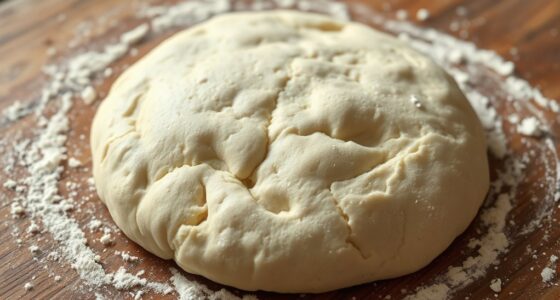

To spot undermixed dough, look for uneven textures like streaks, dry patches, or pockets of flour. Feel the dough; it should be elastic, smooth, and springy, not sticky or rough. Common mistakes include rushing mixing or using incorrect ratios. Make certain you follow safety standards by using clean equipment and precise measurements. Mastering these signs and techniques will help you achieve consistent results—keep going to discover more tips for perfect dough every time.
Key Takeaways
- Visual cues include uneven texture, dry patches, and streaky ingredient distribution indicating insufficient mixing.
- Tactile signs such as elastic, smooth, and resilient dough suggest proper gluten development.
- Rushing mixing or incorrect ingredient ratios commonly cause undermixed dough.
- Use sanitized equipment, precise measurements, and proper temperature controls to ensure compliance and safety.
- Regular quality checks and adherence to safety standards help maintain consistency and prevent undermixing issues.
Recognizing the Visual Cues of Undermixed Dough
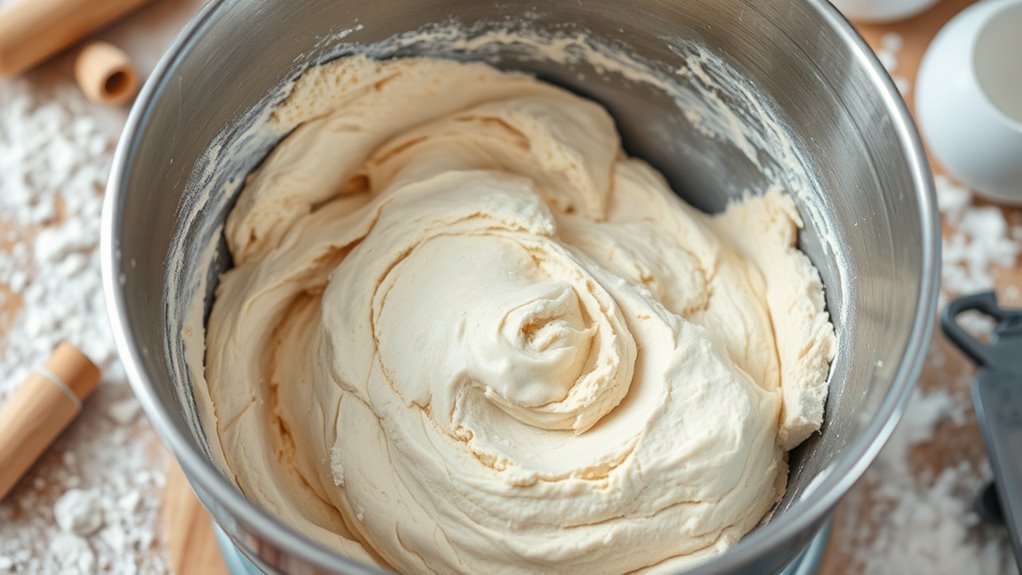
Recognizing the visual cues of undermixed dough is essential to guaranteeing proper consistency and quality. When dough is undermixed, you’ll notice uneven ingredient distribution, which can affect flavor balance. The dough may appear patchy or streaky, with pockets of flour or dry spots that haven’t incorporated fully. These visual signs indicate that the flavors won’t blend smoothly, and ingredient freshness may be compromised if dry patches persist. Properly mixed dough will look smooth, cohesive, and uniform, with well-distributed ingredients that enhance flavor balance. If the dough looks inconsistent or rough, it’s a clear sign it needs more mixing to achieve evenness. Spotting these visual cues early helps maintain ingredient freshness and ensures your final product has consistent taste and quality. Additionally, understanding the visual indicators of proper mixing can help prevent overmixing, which might lead to a tough or dense texture in baked goods.
Tactile Indicators: Feeling for Proper Gluten Development

Feeling for proper gluten development is a key tactile indicator that your dough has been mixed adequately. When you perform texture testing, you’ll notice the dough becomes elastic and smooth, signaling even ingredient distribution. Proper gluten development results in a dough that feels firm yet pliable. To assess this, knead gently and pay attention to how it responds.
Imagine:
- A dough that springs back when pressed lightly
- A surface that feels consistently smooth and cohesive
- Resistance when stretching, indicating strong gluten networks
- No sticky patches or uneven textures
- An overall feel of resilience and elasticity
These tactile cues confirm that gluten has developed sufficiently, ensuring your dough will rise well and produce a desirable final texture.
Common Mistakes That Lead to Insufficient Mixing
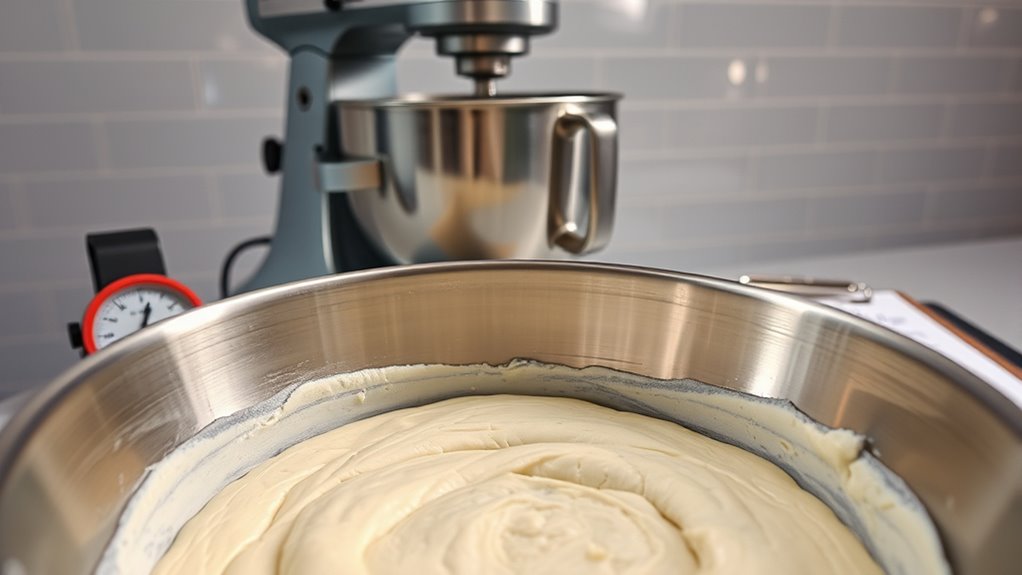
One common mistake that hampers proper gluten development is rushing the mixing process or stopping too soon. If you don’t give ingredients enough time to combine, the dough won’t develop the right structure. Ensuring correct ingredient ratios is vital; too much liquid or insufficient flour can hinder proper mixing. Using the wrong mixing equipment, like a small spatula instead of a stand mixer, can also lead to uneven incorporation. Inadequate mixing results in inconsistent dough texture, which affects compliance and quality. Pay attention to mixing times and speeds, and avoid the temptation to cut corners. Properly mixing ingredients thoroughly with suitable equipment guarantees proper gluten formation, reducing the risk of undermixed dough and ensuring your product meets codes and standards. Additionally, understanding the importance of consistent mixing can help prevent common issues and improve overall dough quality.
Relevant Safety and Quality Standards for Dough Preparation

Ensuring your dough preparation meets safety and quality standards is essential for compliance and consumer safety. Proper standards focus on correct ingredient ratios and the use of suitable mixing equipment to prevent undermixing and ensure consistency. Adhering to these standards helps avoid contamination, spoilage, and product recalls. Imagine:
- Precise ingredient ratios that balance flavor and texture
- Clean, sanitized mixing equipment ready for use
- Proper temperature controls during mixing
- Clear labeling of ingredients and batch details
- Regular quality checks during production
- Essential oil considerations can enhance the sensory qualities of your dough products, provided they are used appropriately and in compliance with safety standards.
Key Ingredients and Their Role in Mixing Consistency

Achieving consistent mixing results depends heavily on selecting and balancing key ingredients correctly. Your ingredient ratios, especially flour, water, and leavening agents, directly influence dough texture and uniformity. Proper mixing techniques ensure these ingredients combine thoroughly, preventing undermixing or overmixing. For example, accurate water-to-flour ratios promote elasticity, while careful incorporation of yeast or baking powder affects rise and structure. When ingredients are measured precisely and added in the correct order, it’s easier to achieve the desired consistency. Maintaining a steady mixing pace and avoiding abrupt changes helps distribute ingredients evenly. Remember, understanding how each ingredient behaves during mixing allows you to adjust ratios and techniques accordingly, resulting in a dough that’s well-mixed and compliant with standards. Additionally, understanding how the drivetrain components function can help optimize your technique for a smoother mixing process.
Best Practices to Ensure Proper Dough Mixing and Compliance
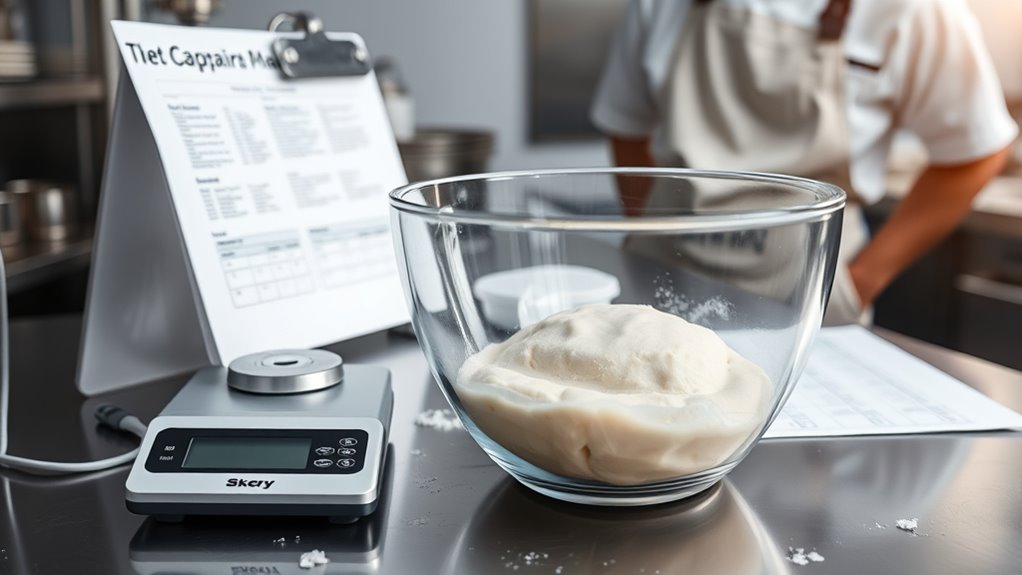
To maintain proper dough mixing and stay compliant with industry standards, you need to follow established best practices consistently. Focus on accurate ingredient ratios to ensure uniform texture and quality. Use the right mixing equipment tailored to your dough type, preventing under- or over-mixing. Monitor mixing times closely to avoid undermixing, which can lead to inconsistent products. Keep equipment clean and calibrated to maintain consistency and prevent contamination. Always follow manufacturer guidelines for mixing speeds and durations. Incorporate quality ingredients and measure them precisely to meet regulatory standards. Visualize your process:
Consistently follow best practices, measure ingredients precisely, and maintain equipment to ensure quality dough mixing and industry compliance.
- Measuring ingredients with precision
- Selecting appropriate mixers for small or large batches
- Maintaining a clean, organized workspace
- Adjusting mixing speeds based on dough texture
- Regularly checking equipment performance
- Proper workspace organization helps facilitate efficient and compliant dough mixing processes.
Troubleshooting Tips for Achieving Perfectly Mixed Dough

When your dough isn’t mixing properly, identifying the root cause quickly can secure time and guarantee product quality. First, check your mixing equipment for any malfunctions or improper settings that might hinder proper blending. Sometimes, using the wrong ingredient substitution or adding ingredients in the wrong order can cause uneven mixing. Adjust your mixing speed or duration if necessary, as under-mixing leads to undermixed dough. If you suspect ingredient substitution is affecting consistency, revert to original ingredients or adjust ratios accordingly. Also, ensure all ingredients are at the correct temperature, as cold or warm components can impact mixing performance. Regularly inspecting your equipment and understanding how ingredient variations influence the process will help you troubleshoot effectively and achieve a perfectly mixed dough every time. Additionally, understanding Volkswagen Tuning principles can help optimize your equipment setup for more consistent results.
Frequently Asked Questions
How Does Humidity Affect Undermixed Dough Consistency?
Humidity fluctuation impacts your undermixed dough’s consistency by affecting dough elasticity. When humidity is high, your dough absorbs more moisture, making it softer and harder to handle. Conversely, low humidity causes moisture loss, leading to a drier, tougher dough. This variability can hinder proper mixing and fermentation. To maintain ideal consistency, monitor humidity levels and adjust your ingredients or environment accordingly, ensuring your dough remains elastic and easy to work with.
Are There Specific Tools Recommended for Checking Dough Uniformity?
You absolutely need the right tools to check dough uniformity—don’t rely on guesswork! For dough texture analysis, a bench scraper, a dough thermometer, and a clear, flat surface are essential. Mixing tool recommendations include using a stand mixer with a dough hook for consistency and a visual inspection with your eyes or a scale to guarantee even mixing. These tools help you achieve perfect dough every time.
What Are Legal Penalties for Non-Compliance With Dough Safety Standards?
If you don’t comply with dough safety standards, you could face serious legal consequences, including regulatory fines and potential shutdowns. Authorities enforce these rules to guarantee food safety, and non-compliance can lead to hefty penalties that harm your business’s reputation and finances. Stay vigilant by following all regulations and maintaining proper documentation to avoid legal issues and ensure your dough meets safety standards.
How Often Should Equipment Be Calibrated to Ensure Proper Mixing?
You should calibrate your equipment regularly—typically every one to three months—to prevent surprises in your dough quality. Ignoring calibration frequency risks inconsistent mixing, which can lead to subpar products and potential compliance issues. Prioritize ongoing equipment maintenance to catch problems early. Staying vigilant with calibration guarantees your dough remains perfect every time, giving you confidence and keeping your operation running smoothly. Don’t wait—set a schedule and stick to it.
Can Ingredient Substitutions Impact the Visual or Tactile Signs of Proper Mixing?
Yes, ingredient substitutions can impact the visual and tactile signs of proper mixing. Variability in ingredients, like flour or liquids, affects mixing uniformity. You might notice changes in dough consistency, such as uneven texture or inconsistent elasticity. These differences can make it harder to achieve the desired dough quality. Always monitor the dough closely, especially when using substitutions, to guarantee proper mixing and maintain product standards.
Conclusion
Mastering dough mixing isn’t just about avoiding lumps or skimpy gluten; it’s about balancing precision with patience. Like a musician tuning an instrument, your attention to detail guarantees harmony in every batch. When you recognize the cues of undermixed dough, you prevent setbacks and create bakery perfection. So, embrace the process, stay vigilant, and remember—great baked goods come from understanding both the science and the art behind each mix.