To prevent doughy or underbaked pizzas, make certain your dough has proper hydration (around 60-65%) to develop the right texture, and use high oven temperatures of at least 475°F to that crisp crust quickly. Preheat a pizza stone or steel for better heat transfer and even baking. Adjust baking time and temperature as needed, and don’t forget to balance the oven’s heat with your dough’s moisture. Keep exploring to discover more tips to perfect your pizza.
Key Takeaways
- Ensure proper dough hydration (60-65%) for balanced gluten development and even baking.
- Preheat your oven and baking surface (stone or steel) to high temperatures (475°F–500°F) for better heat transfer.
- Use a sufficiently hot oven and preheated baking surface to promote thorough crust cooking.
- Adjust baking time and temperature if the crust is undercooked or doughy, avoiding underbaking or burning.
- Consider dough thickness and ensure it’s rolled out evenly to promote uniform baking and prevent sogginess.
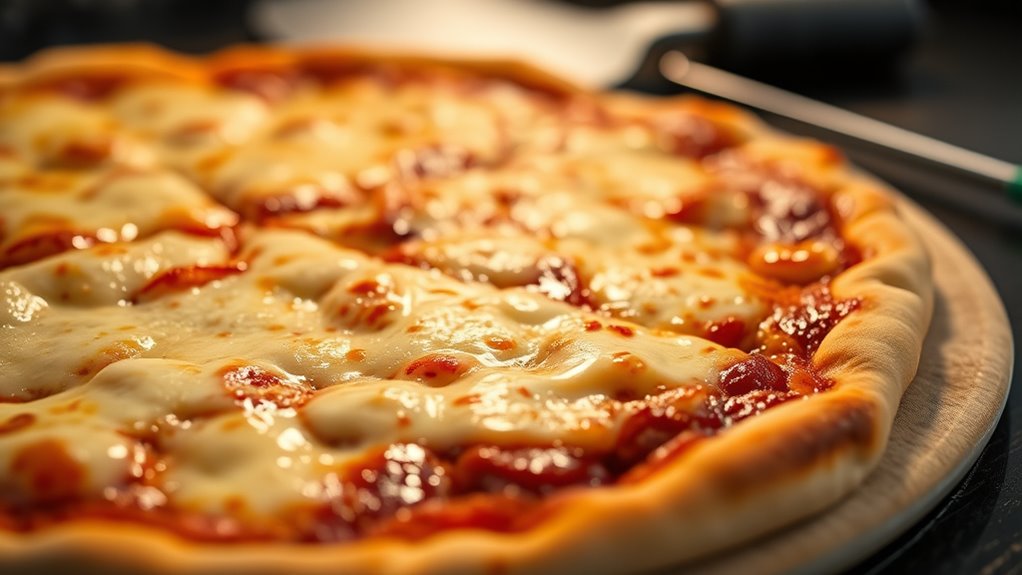
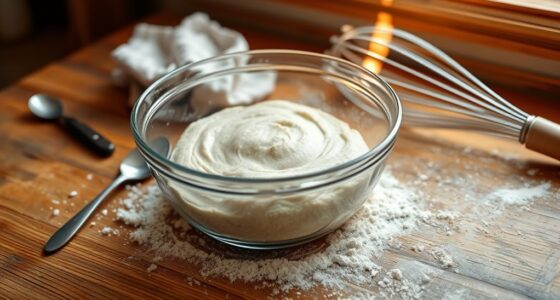
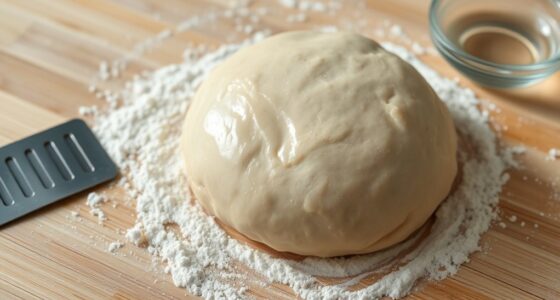
If you want perfectly baked pizza, preventing a doughy or underbaked crust is vital. One of the key factors influencing this is dough hydration. If your dough isn’t hydrated enough, it can turn out dense and undercooked inside, while excessive hydration can make it too sticky to handle and result in a soggy crust. Achieving the right dough hydration means balancing flour and water carefully. Typically, a hydration level of around 60-65% works well for most pizza doughs, but adjusting slightly based on your flour type and climate can make a big difference. Too little water, and the dough won’t develop enough gluten structure, leading to a dense, underbaked crust. Too much, and it can be hard to work with, and the excess moisture may prevent thorough baking. Proper dough hydration guarantees even heat distribution during baking, giving you a crust that’s crispy on the outside and fully cooked inside. Additionally, understanding dough hydration and its impact on texture can help you refine your technique for consistently better results.
Another essential aspect is oven temperature. Many home ovens don’t reach the high temperatures needed for authentic pizza, but you can still optimize your heat setting to prevent underbaking. Preheat your oven thoroughly—at least 30 minutes before baking—to guarantee the entire chamber reaches a consistent, high temperature. Ideally, aim for a temperature of 475°F to 500°F (245°C to 260°C), or higher if your oven allows. When the oven is properly heated, it helps cook the crust quickly and evenly, preventing the interior from remaining doughy. It’s also a good idea to use a pizza stone or steel, which retains and radiates heat efficiently, mimicking a traditional brick oven. By placing your pizza on a preheated surface, you improve heat transfer, making the crust crisp and thoroughly cooked without overdoing it.
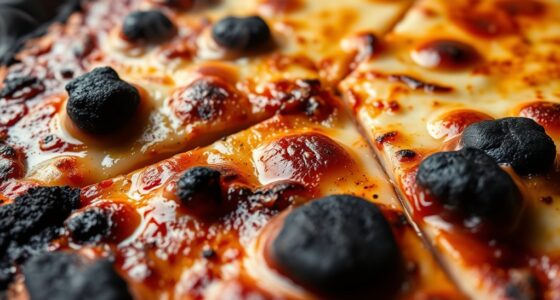
Balancing dough hydration with an appropriate oven temperature is the secret to avoiding underbaked or doughy crusts. If your crust still turns out undercooked, consider increasing the oven temperature slightly or preheating your baking surface longer. Conversely, if the crust is too crispy or burnt on the outside but doughy inside, you might need to lower the heat or shorten baking time. Remember, every oven behaves a little differently, so some trial and error might be necessary to find your perfect combination. Paying close attention to these factors will help you consistently produce pizza with a perfectly baked crust—crispy, golden, and fully cooked through, with no doughy or underbaked surprises.
Frequently Asked Questions
How Does Oven Type Affect Pizza Baking?
Your oven type greatly impacts pizza baking by influencing oven calibration and heating consistency. A traditional brick or pizza oven provides high, even heat, ensuring a crispy crust and well-cooked toppings. Conversely, a standard home oven may have uneven heating, so you need to monitor calibration and use a pizza stone or steel for consistent results. By understanding your oven’s characteristics, you can adjust baking times and temperatures for perfect pizza every time.
What Role Does Flour Type Play in Crust Texture?
Think of your crust’s texture as a dance, where flour type sets the rhythm. Using high-protein flour, rich in gluten development, creates a chewier, more structured crust, perfect for holding toppings. Conversely, lower-protein flour yields a softer, tender bite. Your choice influences how the dough stretches and bakes, giving you control over the crust’s final feel. Select your flour wisely to craft the ideal pizza experience.
Can Toppings Influence Baking Time and Dough Doneness?
Toppings can definitely influence baking time and dough doneness. If you add toppings with high moisture content, like fresh tomatoes or mozzarella, they release steam, which can prolong baking and prevent the crust from crisping properly. Dense toppings, such as thick vegetables or meats, also take longer to cook through, meaning you might need to extend baking time or pre-cook them slightly to make sure everything cooks evenly without leaving the crust underdone.
How Does Pizza Thickness Impact Baking Requirements?
Your pizza thickness directly impacts baking requirements; thicker pizzas need longer baking times to make certain the dough cooks through. With thicker crusts, you should also consider dough hydration—more hydrated dough can help achieve an evenly baked crust without dryness. Thin crusts bake faster and require less time, so adjust your oven temperature accordingly. Always keep an eye on the crust’s color and firmness to prevent underbaking or burning.
What Are Signs of an Underbaked Pizza Besides Dough Texture?
You’ll notice an underbaked pizza if the crust remains pale or doughy, and the cheese hasn’t fully melted or browned. Look for dough color change, which indicates insufficient baking. Uneven cooking spots, with some areas overdone and others undercooked, are also signs. Additionally, if toppings slide off easily or the bottom isn’t crispy, it’s a clear sign your pizza needs more time in the oven.
Conclusion
By paying attention to your oven temperature, dough thickness, and baking time, you can prevent doughy or underbaked pizzas. Don’t be afraid to experiment with your techniques until you find what works best. Remember, a perfectly baked pizza isn’t just about following rules—it’s about understanding your equipment and ingredients. So, next time you bake, ask yourself: are you doing everything possible to achieve that crispy, golden crust you crave?