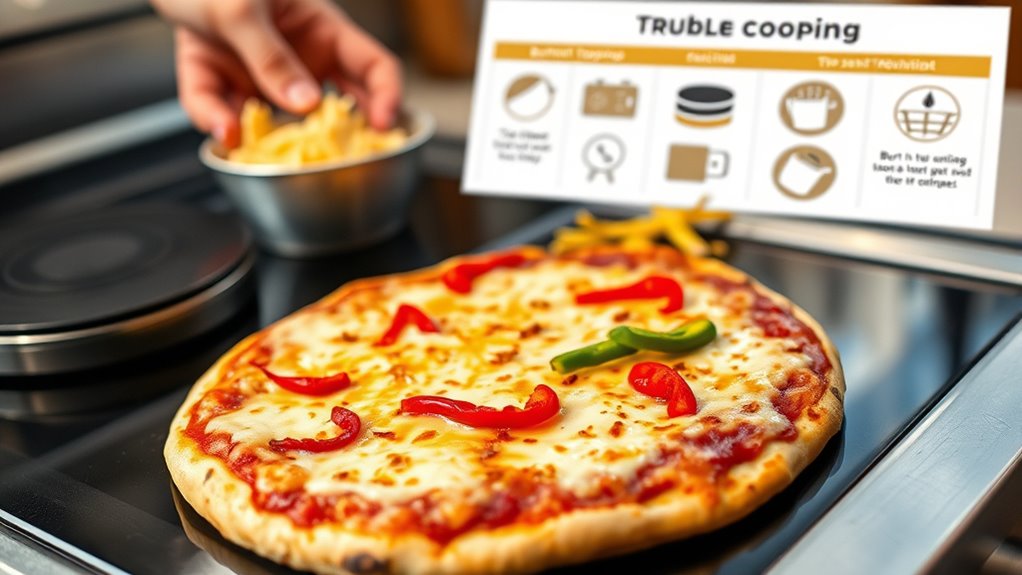

Before you start, know that toppings like caramelized fruits, fatty cheeses, and moist ingredients burn easily due to their high sugar, fat, or water content. Keep an eye out for early signs such as bubbling, darkening around edges, or a burnt smell. Control oven temperature carefully and use foil for delicate toppings. If you notice trouble, adjusting heat and airflow can help. Want to master perfect toppings? Continue on to discover expert troubleshooting tips.
Key Takeaways
- Identify toppings with high sugar, fat, or moisture content that are prone to quick burning.
- Adjust oven temperature and placement to prevent delicate toppings from overcooking.
- Use an oven thermometer to ensure accurate temperature control before baking.
- Cover sensitive toppings with foil during baking to shield them from direct heat.
- Monitor baking closely, looking for early signs of browning or bubbling to prevent burning.
Common Toppings Prone to Burning and Why

Certain toppings are more likely to burn during cooking because they contain high sugar, fat, or moisture content. Topping consistency plays a vital role—toppings with a loose or uneven consistency tend to burn faster, especially if they have high ingredient moisture. Moist ingredients like fresh tomatoes, fruit preserves, or cheeses release more water during cooking, which can cause uneven browning and charring. Sugary toppings, such as caramelized fruits or sweet sauces, also burn easily because sugar caramelizes quickly at high heat. Fatty toppings like greasy cheeses or oily meats can overcook and burn if exposed to direct heat for too long. To avoid this, you need to monitor the topping’s moisture and consistency carefully, adjusting cooking times or layering techniques accordingly.
Recognizing Early Signs of Burning During Preparation
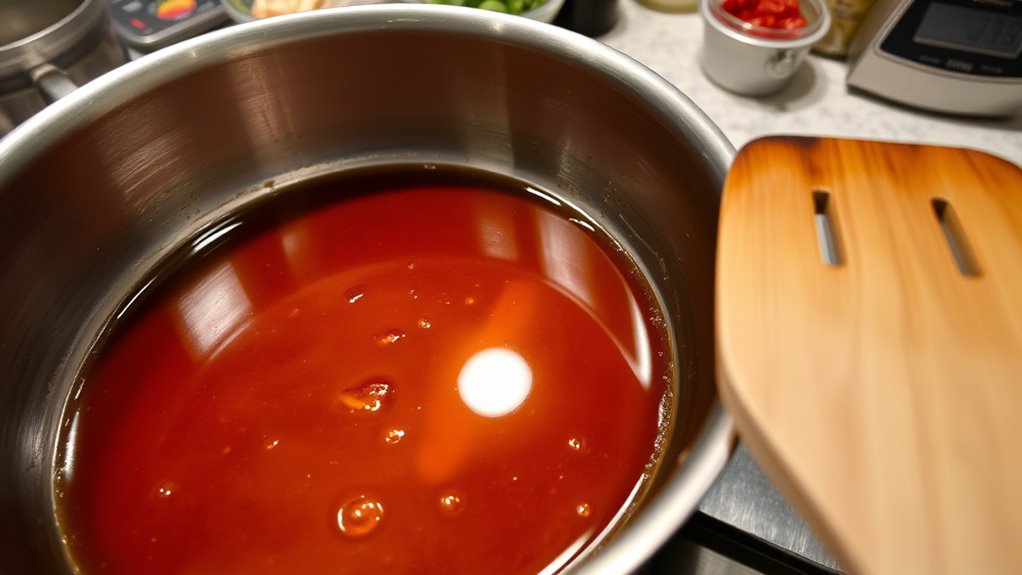
When you’re preparing toppings prone to burning, keeping a close eye on them from the start can save you from overcooking or charring. Early signs of burning include darkening edges, bubbling, or a burnt smell. Pay attention to the oven temperature; if it’s too high, toppings may start to brown prematurely. Regularly check the placement of your toppings—those placed too close to the heat source tend to burn faster. You might notice uneven coloring or patches that darken quickly, indicating that heat is affecting those spots more intensely. Recognizing these signs early allows you to adjust oven settings or reposition toppings before they become overdone. Monitoring heat distribution helps prevent hot spots that can cause uneven cooking. Staying vigilant during preparation helps ensure your toppings cook evenly and avoid unwanted burns.
Essential Tips for Controlling Temperature and Timing
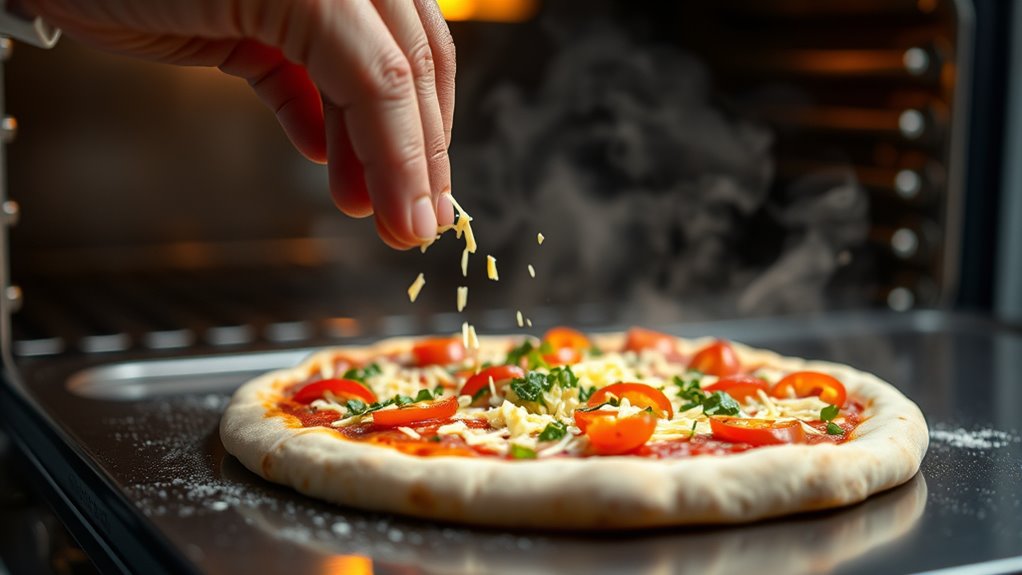
Controlling the temperature and timing is essential to prevent toppings from burning. Always prioritize oven safety by using the correct temperature settings recommended for your recipe. Keep a close eye on cooking times, as even a minute too long can lead to burnt toppings. If you need to adjust ingredients, consider ingredient substitution to reduce cooking risks—for example, using a thinner layer of cheese or lighter toppings. Use an oven thermometer to ensure accuracy, as oven gauges can be misleading. Lowering the oven temperature slightly can give you more control, especially when baking delicate toppings. Remember, consistent timing and proper temperature management help prevent burning and ensure your toppings turn out perfectly cooked every time. Incorporating somatic therapy techniques such as mindful awareness can also help you stay attentive to your cooking process and make adjustments as needed.
Fixes and Adjustments When Toppings Start to Burn
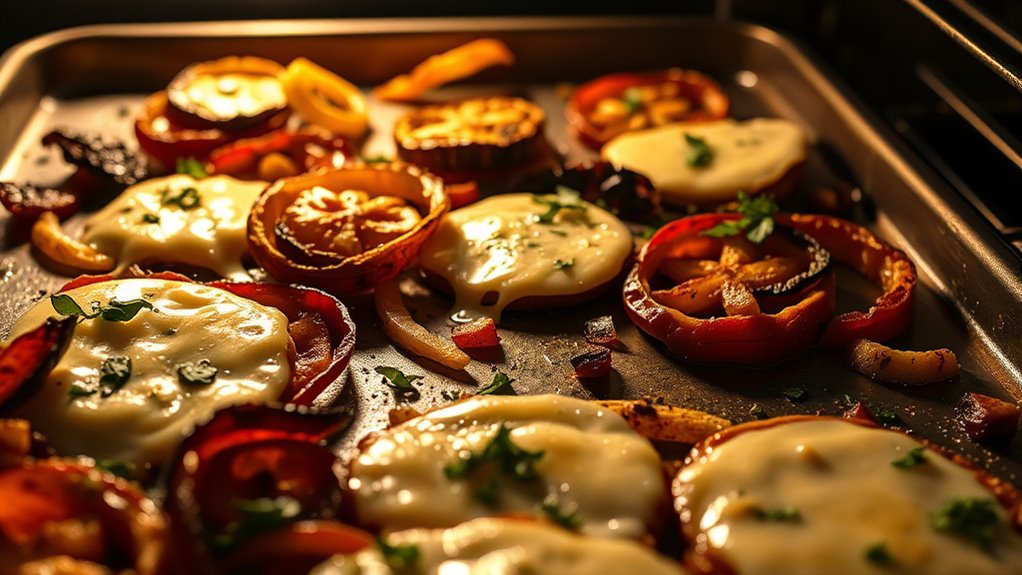
If you notice your toppings starting to burn halfway through baking, act quickly to salvage your dish. To prevent further damage, gently shield the toppings with aluminum foil, focusing on areas where sugar caramelization or cheese melting are most intense. Lower the oven temperature slightly to slow the browning process, giving the toppings a chance to cook evenly. You might also try increasing airflow by opening the oven door briefly to release excess heat. Visualize these adjustments:
- Covering the toppings with foil to prevent direct heat contact
- Lowering oven temperature to slow sugar caramelization and cheese melting
- Increasing airflow to reduce hot spots and uneven browning
- Monitoring oven temperature helps maintain consistent cooking conditions and prevent burning.
These steps help control burning, giving your toppings a chance to finish cooking without turning dark or bitter.
Preventative Measures for Future Baking Success
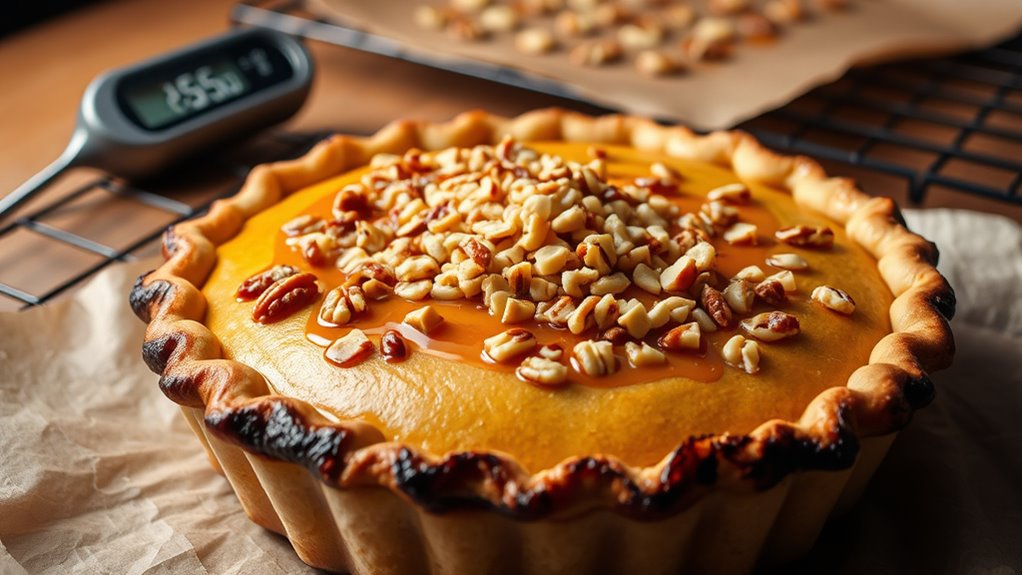
To prevent toppings from burning in future bakes, start by choosing the right oven temperature and monitoring it with an oven thermometer, since many ovens run hotter or cooler than their settings indicate. Proper oven calibration guarantees consistent heat, reducing the risk of burnt toppings. Additionally, managing topping moisture is essential; too much moisture can lead to uneven browning, while too little increases the risk of burning. Use a light hand with sugary or oily toppings, and consider covering delicate toppings with foil if they tend to burn quickly. Regularly check your oven’s calibration and adjust the temperature accordingly. Being aware of how automation’s role in business intelligence can streamline your baking process—by providing real-time insights—can help you better control oven conditions and improve overall results. By maintaining accurate oven settings and controlling topping moisture, you’ll achieve more evenly baked, perfectly topped dishes every time.
Frequently Asked Questions
Can Using Different Oven Types Affect Topping Burning?
Yes, using different oven types can affect topping burning. You need to pay attention to oven rack positioning, as placing the dish too close to the heat source can cause toppings to burn faster. Additionally, you should make baking time adjustments depending on your oven’s heat distribution. Convection ovens, for example, may cook faster, so monitor your toppings closely and reduce baking time if necessary.
Are There Specific Utensils That Increase Burning Risk?
Using the wrong utensils can turn your cooking experience into a fiery trap. Non-stick pans or thin metal utensils often increase the risk of burning toppings because they heat unevenly or transfer heat too quickly. Stick to sturdy, heat-resistant cooking utensils made from materials like silicone or thick stainless steel. These pan material impacts help distribute heat evenly, reducing hotspots and making sure your toppings stay perfectly cooked without burning.
How Do Ingredient Variations Influence Burning Tendencies?
Ingredient variations influence burning tendencies because inconsistent ingredient consistency can cause uneven heating, leading to burnt spots. Thicker or drier ingredients tend to burn faster, while wetter, more uniform ones cook evenly. Flavor variations also matter, as some ingredients release sugars or oils that caramelize quickly, increasing burn risk. Adjust your cooking time accordingly, and monitor toppings closely to prevent burning caused by these ingredient differences.
What’s the Best Way to Test Oven Temperature Accuracy?
You should test your oven temperature accuracy by using an oven thermometer, placing it in the center of your oven. Keep the oven calibrated by comparing the thermometer’s reading to your oven’s dial setting. If there’s a discrepancy, adjust the oven’s calibration if possible, or remember the difference when cooking. Regularly checking thermometer accuracy guarantees your oven maintains the correct temperature, preventing toppings from burning.
Do Altitude Changes Impact Topping Burning During Baking?
Altitude changes can definitely impact topping burning during baking. Think of it like climbing a mountain; the air thins, and heat behaves differently. You need to make altitude adjustments, like lowering oven temperature or increasing baking time, to prevent toppings from burning. Since toppings are sensitive, small tweaks help. So, if you’re baking at high altitude, keep a close eye and adjust your recipe to avoid burning those delicate toppings.
Conclusion
Now that you know which toppings burn easily and how to spot the signs early, you’re better equipped to prevent mishaps. By controlling your oven temperature and making quick adjustments, you’ll keep your toppings perfectly baked every time. Isn’t the goal to enjoy a flawless dish without the stress of burnt toppings? With these tips, you’ll master the art of baking and create delicious results that impress every time.