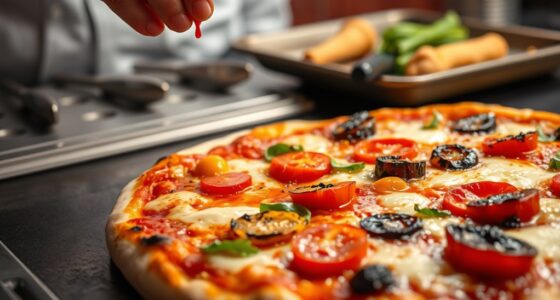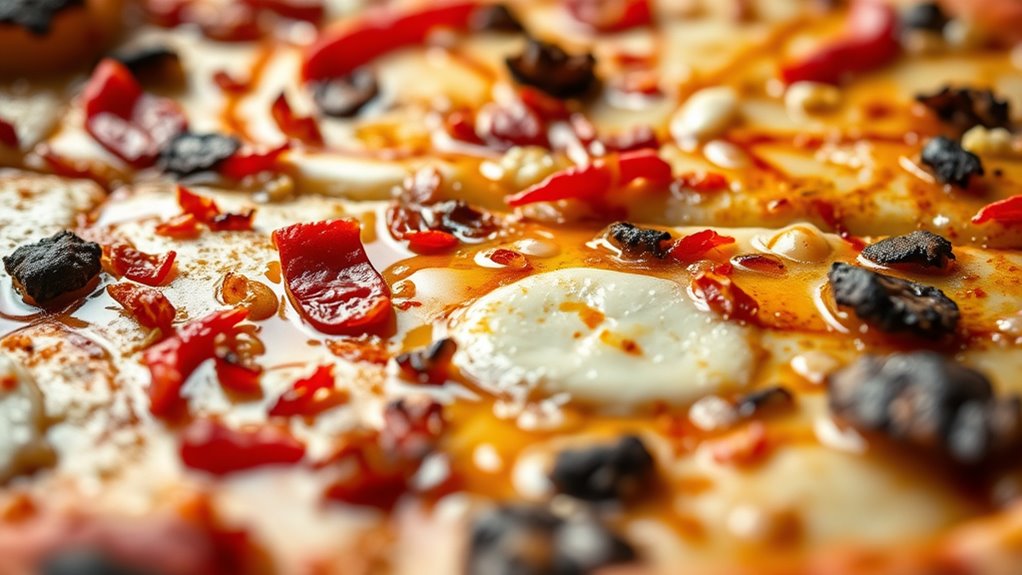

To prevent toppings that burn easily, you should add delicate herbs, greens, and soft cheeses toward the end of cooking or after baking. Thinly sliced vegetables and fruits need proper tools and quick handling to prevent uneven cooking or browning. Nuts, seeds, and spices should be toasted or seasoned at lower heat, monitoring closely. Avoid high heat with raw meats, seafood, or microgreens, and keep sugary toppings like glazes on low. Keep these tips in mind, and you’ll master perfectly handled toppings — just keep going.
Key Takeaways
- Add delicate herbs, greens, and soft cheeses toward the end of cooking or after baking to prevent burning.
- Use sharp knives or slicers for even, thin slices of fruits and vegetables to avoid scorching.
- Toast nuts, seeds, and spices at low temperatures, stirring frequently, and add them late in the cooking process.
- Handle raw meats, seafood, and microgreens gently, adding them at the end or after cooking to prevent burning.
- Monitor sugary, glaze, and caramelized toppings closely on low to medium heat to achieve a shiny finish without burning.
Herbs and Delicate Greens
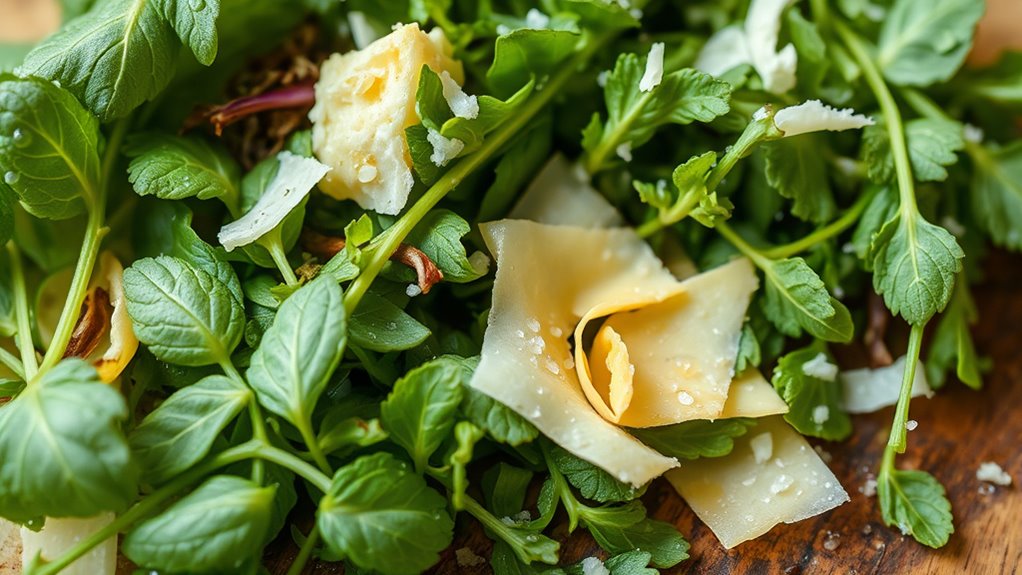
Herbs and delicate greens are among the toppings most prone to burning quickly, especially when exposed to high heat. Their herb flavor profiles can turn bitter or lose their vibrant aroma if overcooked, so timing is critical. To preserve delicate greens’ freshness, add them toward the end of cooking or after baking to keep their texture and color intact. Herbs like basil, parsley, and cilantro are especially sensitive and can scorch easily, so use lower heat settings or add them after removing the dish from direct heat. By paying close attention, you prevent burning and ensure the flavors remain fresh and bright. Proper handling of these toppings enhances your dish’s aroma, color, and overall appeal.
Thinly Sliced Vegetables and Fruits
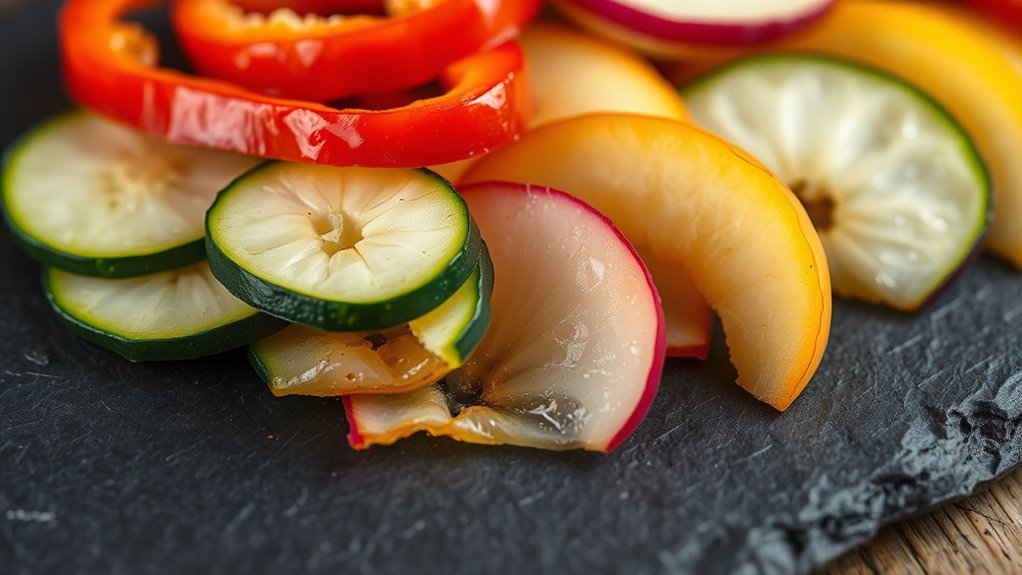
To keep your thinly sliced vegetables and fruits from burning or browning too quickly, focus on proper slicing techniques that promote even cooking. You’ll also want to choose the best fruits and vegetables that hold up well under heat and prevent bleeding or discoloration. Getting these details right guarantees your toppings stay fresh and vibrant without overcooking. Additionally, selecting produce with consistent texture and moisture levels can help maintain quality during heat application.
Optimal Slicing Techniques
Achieving perfectly thin slices of vegetables and fruits is essential for ensuring even cooking and preventing burning, especially for toppings that tend to scorch easily. To do this, prioritize proper slicing techniques. Use sharp knives to maintain control and reduce the risk of accidents—this is vital for knife safety. Invest in quality slicing equipment, such as mandolins or adjustable slicers, for uniform slices. When slicing, keep your fingers curled under your hand to avoid cuts and work with steady, even pressure. Take your time, and don’t rush through the process. Consistent slices help toppings cook evenly and prevent hot spots that can cause burning. Incorporating appropriate tools can further improve precision and safety during slicing. With careful technique and the right tools, you’ll achieve ideal thin slices that enhance your dishes without risking scorch marks.
Preventing Browning and Bleeding
Since thinly sliced vegetables and fruits are prone to browning and bleeding, taking quick action is essential to preserve their color and appearance. To prevent this, focus on techniques that maintain color preservation and moisture control. Using acidic solutions like lemon juice or vinegar can also help inhibit enzymatic browning reactions that occur when the produce is exposed to air. Proper storage and handling are crucial to maintaining freshness and visual appeal. Keep slices covered with plastic wrap or damp cloth to limit moisture loss. Store slices in airtight containers to prevent oxidation. Work quickly to minimize exposure to air, which accelerates browning and bleeding.
These steps help maintain vibrant colors and reduce bleeding, ensuring your toppings look fresh and appealing on your dish. Proper moisture control and swift handling are key to stunning presentation.
Best Fruits and Vegetables
Selecting the right fruits and vegetables for thin slicing can make a significant difference in your presentation and taste. Choose fruit varieties like apples, pears, and berries, which hold their shape and flavor when sliced thinly. For vegetables, options such as zucchini, cucumbers, and carrots work well because they’re firm and crisp. Proper vegetable selection guarantees even cooking and a clean appearance. Keep in mind that softer fruits like bananas or strawberries may not withstand slicing and heat. Here’s a quick comparison:
| Fruit Varieties | Vegetable Selection |
|---|---|
| Apples, pears | Zucchini, cucumbers |
| Berries | Carrots, radishes |
| Firm and crisp | Holds shape during slicing |
| Less ideal for thin slices | Softer fruits like bananas |
Choosing wisely guarantees beautiful, flavorful toppings. To ensure the best results, always check the drivetrain components of your produce, as their condition directly impacts slicing quality and presentation.
Fresh and Soft Cheeses
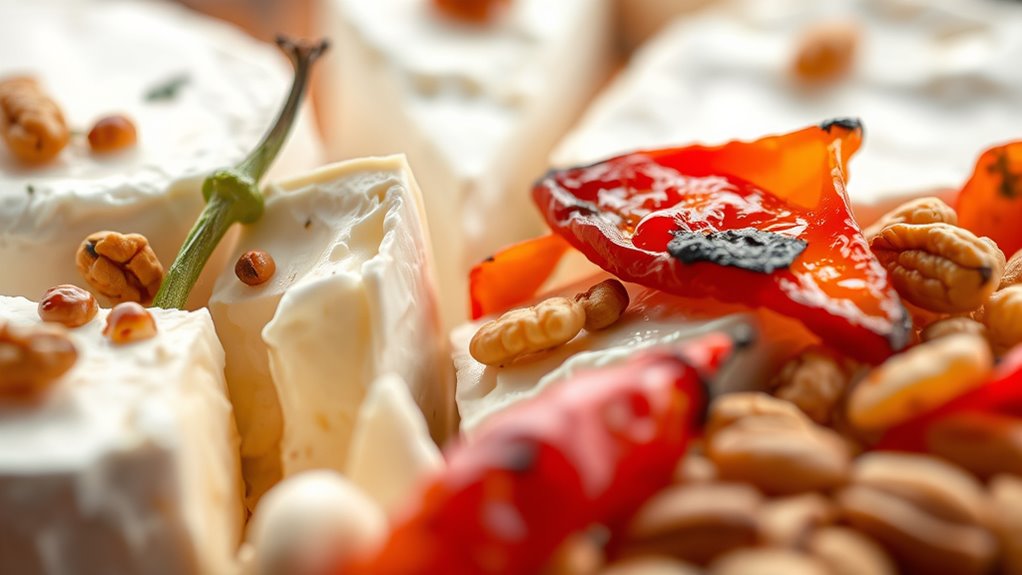
When choosing fresh and soft cheeses, select varieties like ricotta, fresh mozzarella, or chèvre that melt well without burning easily. Keep these cheeses properly stored in airtight containers in the fridge and handle them gently to maintain their texture. Pair them with toppings that complement their mild flavors, and avoid high heat to prevent burning. To prevent issues during cooking, use moderate temperatures and monitor the process closely, especially since some toilet flushing mechanisms can influence kitchen water pressure and flow.
Ideal Fresh Cheese Types
Fresh and soft cheeses are ideal toppings because they melt quickly and add a creamy texture that complements many dishes. Their cheese melting properties make them perfect for achieving a smooth, gooey finish without burning easily. When choosing ideal fresh cheese types, consider their cheese flavor profiles to enhance your dish’s taste. Here are top options to try:
- Ricotta: mild flavor, excellent for spreading and melting
- Cream cheese: creamy texture, melts smoothly
- Fresh mozzarella: mild, slightly tangy, melts evenly
- Farmer’s cheese: soft, crumbly, melts gradually
- Feta (fresh): tangy, crumbles easily, adds flavor without excessive melting
These cheeses excel in melting properties and flavor profiles, making them perfect choices for toppings that require gentle heat. Vetted
Storage and Handling Tips
To keep fresh and soft cheeses at their best, proper storage and handling are essential. Store them in airtight storage containers to prevent contamination and moisture loss. Always keep cheeses at the recommended handling temperature, typically between 35°F and 45°F, to maintain freshness and prevent spoilage. When you’re not using the cheese, wrap it tightly if it’s not in a container, and place it in the refrigerator’s coldest section. Avoid leaving soft cheeses out at room temperature for extended periods, as this can lead to bacterial growth. Handle cheeses with clean hands or utensils to prevent bacteria transfer. Regular cleaning of storage containers and proper maintenance of your refrigerator can further enhance food safety and prolong freshness. Paying attention to storage containers and temperature guarantees your soft cheeses stay flavorful, fresh, and safe to enjoy.
Pairing With Toppings
Pairing soft cheeses with the right toppings can elevate their flavor and texture, making your cheese experience even more enjoyable. To optimize flavor pairings and enhance texture complementarity, consider toppings that balance richness and freshness. Fresh fruits like berries or sliced apples add sweetness and acidity, cutting through the cheese’s creaminess. Nuts such as walnuts or almonds introduce crunch and depth. Honey drizzles provide a touch of sweetness, while herbs like basil or thyme add aromatic freshness. Vegetables like cherry tomatoes or roasted peppers bring vibrant flavor and texture contrast. These simple combinations create harmony, highlighting the cheese’s delicate qualities while adding exciting layers of taste. Experiment with these toppings to discover your ideal pairing and maximize the enjoyment of soft cheeses. Incorporating mindful selection of toppings can also reduce waste and promote more sustainable consumption habits.
Nut and Seed Toppings
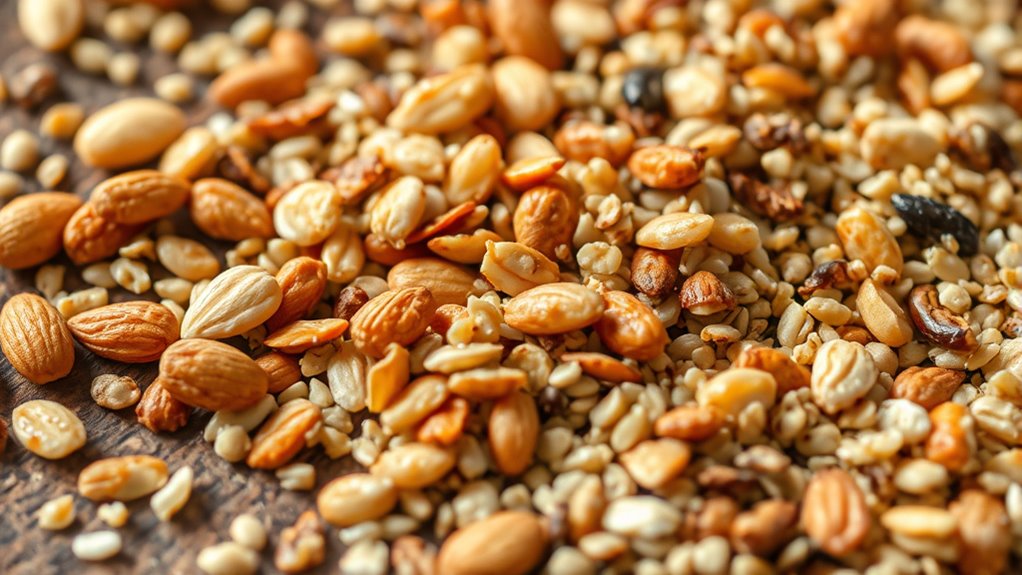
Nut and seed toppings add a delightful crunch and rich flavor to your dishes, but they can burn quickly if not monitored carefully. When using nut and seed toppings, keep a close eye on them during toasting or baking to prevent overbaking. Their crunchy texture enhances salads, yogurt, or baked goods, providing a satisfying bite. To avoid burning, toast them at a lower temperature and stir frequently. Toasting nuts and seeds brings out their natural oils and flavor, but rushing the process increases the risk of burning. Once they turn golden brown and emit a fragrant aroma, remove them from heat immediately. Properly toasted nut and seed toppings add texture and depth without the bitterness of burnt bits, elevating your dishes effortlessly. Additionally, understanding AI safety measures can help ensure that your cooking tools and appliances operate reliably and securely, minimizing risks in your kitchen.
Lightly Dusted Spices and Seasonings

Lightly dusting spices and seasonings can elevate your dishes with subtle flavor and visual appeal, but they can also burn quickly if not handled carefully. To prevent this, use proper seasoning blends and spice application techniques. Keep your hand light and apply spices evenly to avoid hotspots. Consider adding seasonings toward the end of cooking or when the heat is lower. Here are tips to master the process:
- Use a fine sieve or shaker for even dusting
- Combine spices with herbs for balanced flavor
- Apply seasonings in small, controlled amounts
- Toast spices lightly before dusting for depth
- Keep heat moderate to avoid burning delicate seasonings
Raw or Uncooked Meats and Seafood
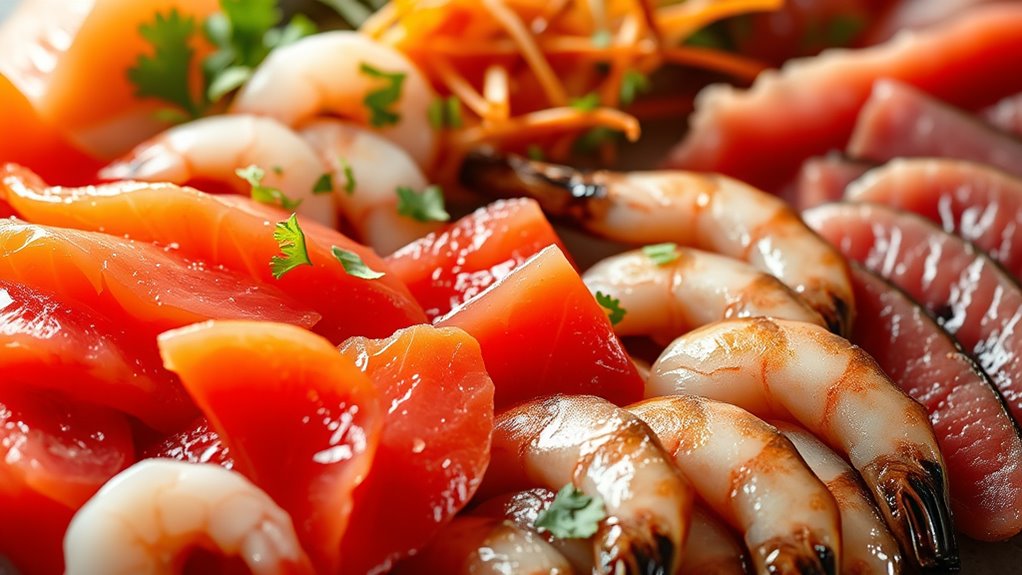
Handling raw or uncooked meats and seafood requires careful attention to prevent foodborne illness and guarantee safety. Always use proper food handling techniques, keep meats chilled, and avoid cross-contamination. When adding raw proteins as toppings, consider suitable cooking techniques like searing or marinating to enhance flavor and safety. Pair meats and seafood with complementary ingredients such as citrus, herbs, or spices to boost flavor pairings. Use a food-safe thermometer to check doneness and ensure safety. Keep in mind that some toppings, like sushi-grade fish, are safe raw but require high-quality sourcing. Here’s a quick guide:
| Meat/Seafood | Recommended Preparation |
|---|---|
| Salmon | Sushi-grade, raw, marinated |
| Chicken | Fully cooked, grilled |
| Shrimp | Cooked, boiled or grilled |
| Beef | Rare to medium, seared |
| Tuna | Sashimi-grade, raw |
Additionally, be aware of retail hours for stores that supply fresh meats and seafood to ensure you can purchase ingredients at optimal times.
Sprouts and Microgreens
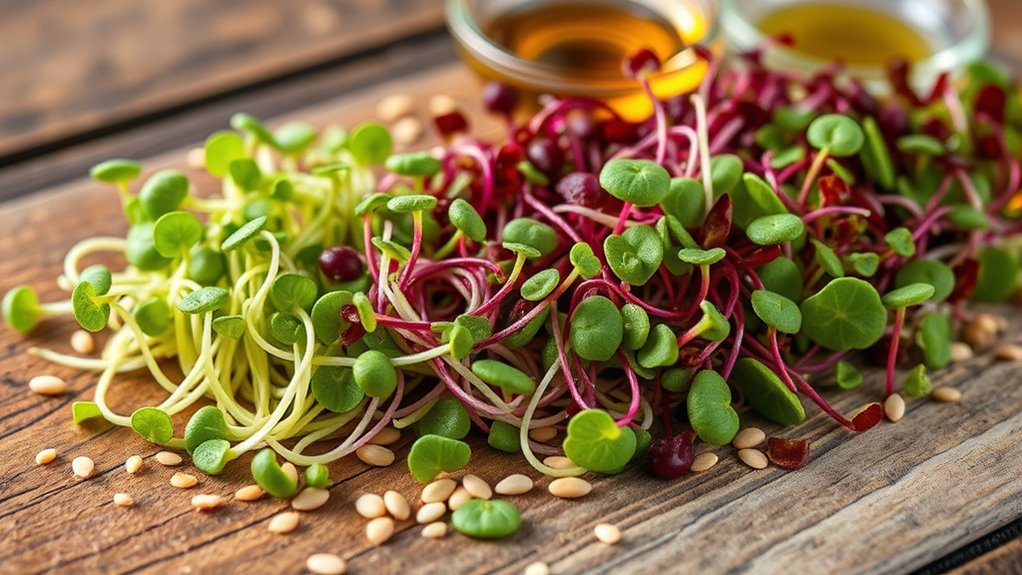
Sprouts and microgreens add vibrant color and fresh flavor to your dishes, but their delicate nature means you need to handle them with care. They are packed with nutrients, offering impressive sprouts nutrition that boosts your health. When it comes to microgreens cultivation, proper techniques ensure healthy, flavorful greens. Keep in mind:
Handle sprouts and microgreens gently to preserve their vibrant color, fresh flavor, and nutritional benefits.
- Use gentle handling to prevent crushing or bruising
- Avoid exposing them to high heat, which can damage delicate leaves
- Rinse carefully to remove dirt without soaking them
- Store in a breathable container to maintain freshness
- Add microgreens last to preserve their texture and flavor
Because of their fragility, these toppings are best added at the end of cooking or just before serving. Proper care ensures you enjoy their nutritional benefits without risking burning or wilting.
Sugary and Glaze Toppings
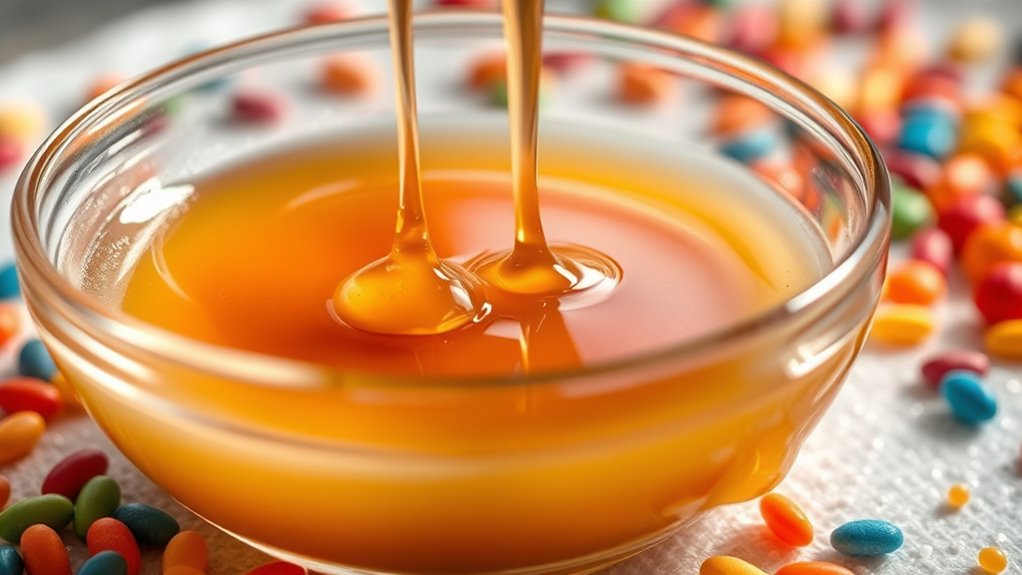
Sugary and glaze toppings can enhance the flavor and appearance of your dishes, but they require careful application to prevent burning. When working with sugar art or glaze application, it’s essential to monitor heat levels closely. Sugar art involves melting sugar precisely to create decorative shapes, so too much heat can cause it to burn quickly. Similarly, when applying a glaze, you want a smooth, even coat without overheating it. Use low to medium heat and keep a close eye on the topping as it cooks or sets. If you notice bubbling or darkening, remove it immediately. Proper timing and gentle heat are key to achieving shiny, beautiful results without risking burnt spots or a bitter taste.
Frequently Asked Questions
How Can I Prevent Herbs From Burning During Baking?
To prevent herbs from burning during baking, add them later in the cooking process or sprinkle them on top just before serving. Store herbs properly in a cool, dark place to preserve their flavor enhancement. Consider chopping herbs finely and mixing them with oil or butter, then add this mixture toward the end of baking. This technique helps maintain their delicate aroma and flavor without risking burning.
Are There Specific Fruits That Are More Prone to Burning?
You’ll find that delicate fruits like berries are more prone to burning during baking because they oxidize quickly and spoilage occurs faster, which affects their texture and flavor. To prevent this, you should add berries later in the baking process or cover them with a layer of sugar or foil. This helps slow oxidation and reduces berry spoilage, ensuring your fruit stays fresh and vibrant without burning.
What’s the Best Way to Keep Cheeses From Melting Too Quickly?
To keep cheeses from melting too quickly, you should regulate the heat during cooking. Use lower temperatures and add cheese later in the process to prevent rapid cheese melting. Covering the dish lightly can help with cheese preservation by maintaining moisture. Avoid high heat, which causes cheeses to burn easily, and consider using cheeses with higher melting points for better control. This way, you guarantee your cheese melts evenly without burning.
How Do Nut Toppings Burn More Easily Than Other Options?
Nut toppings burn more easily because they have a lower moisture content and a higher oil concentration, which makes them more susceptible to heat. Their texture differences, such as being crunchy or oily, also cause them to toast quickly. If you or someone has nut allergies, be cautious with these toppings. To prevent burning, add nuts later in the cooking process or toast them at lower temperatures, ensuring they stay crisp without burning.
Can Seasoning Powders Be Pre-Cooked to Avoid Burning?
Yes, seasoning powders can be pre-cooked to prevent burning. For example, you might store your seasoning powders in airtight containers to maintain their freshness and consistency. When pre-cooking, keep the powder’s consistency in mind—thinner powders heat faster and burn more easily. By lightly toasting or simmering the powders before adding them to your dish, you can avoid burning and enhance their flavor without compromising texture.
Conclusion
Now that you know which toppings burn easily, you can plan your pizza like a pro. Did you know that over 60% of home bakers report burned toppings at least once? By following these tips, you’ll prevent that and enjoy perfectly cooked, flavorful creations every time. Keep an eye on delicate herbs, thin slices, and soft cheeses, and you’ll master the art of topping with confidence. Happy baking!