
To fix soggy crusts, focus on controlling moisture from your sauce and toppings. Use a thinner sauce layer and drain excess liquid before spreading. Pat dry juicy vegetables and pre-cook high-moisture toppings to reduce water content. Pre-baking the crust briefly helps create a moisture barrier, while placing the pizza on a hot stone or steel assists moisture evaporation. Proper oven temperature and placement further improve crispness—learn more ways to keep your crust crunchy with these tips.
Key Takeaways
- Use a thinner sauce layer and drain excess liquid to prevent moisture from seeping into the crust.
- Pat toppings dry and pre-cook high-moisture ingredients to reduce water content before assembling.
- Pre-bake the crust briefly to create a moisture barrier and promote crispness.
- Bake on a preheated pizza stone or steel to enhance heat transfer and moisture evaporation.
- Increase oven temperature and place the pizza on the lowest rack for optimal moisture removal.

Have you ever pulled a pizza or pie from the oven only to find the crust soggy and limp? It’s frustrating, especially after all the effort you put into preparing your dish. The key to fixing this issue lies in understanding crust texture and moisture balancing. When moisture seeps into the crust, it turns from crispy to floppy, ruining the overall experience. To prevent this, you need to carefully manage how much moisture is present from your sauce and toppings.
First, consider how much sauce you’re applying. An overly wet sauce can release excess moisture during baking, soaking into the crust. To avoid this, use a thinner layer of sauce or drain excess liquid from it before spreading. This simple step helps the crust stay crisp and prevents moisture from accumulating beneath the toppings. Similarly, be mindful of your toppings. Juicy vegetables or wet ingredients like fresh tomatoes release moisture as they cook. To counteract this, pat them dry before adding, or pre-cook high-moisture toppings to reduce their water content. This way, you’re actively controlling the moisture levels that could seep into the crust.
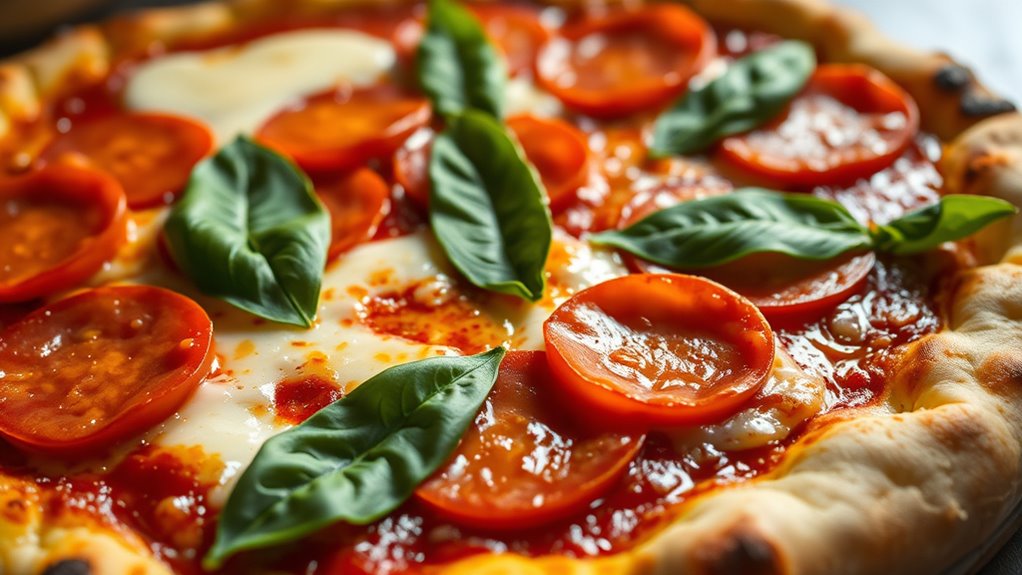
Use a thinner sauce layer and pat toppings dry to keep crust crisp and prevent sogginess.
Another effective technique is to bake your crust separately for a few minutes before adding toppings. This pre-baking, or blind baking, creates a barrier that helps the crust develop a firm, crispy texture. When you add your sauce and toppings afterward, the crust’s surface is already set, reducing the chance of sogginess. Additionally, placing your pizza on a hot baking surface, like a pizza stone or steel, can do wonders. These surfaces absorb and radiate heat efficiently, promoting moisture evaporation and crisping the crust from below. Make sure to preheat the stone or steel thoroughly to maximize its effectiveness.
Throughout the baking process, keep an eye on the oven temperature. Higher heat encourages moisture to evaporate quickly, leading to a crisper crust. If your oven runs cooler, your crust may absorb more moisture, turning soggy. Also, consider the placement of your pizza in the oven. Positioning it on the lowest rack allows the intense heat to directly contact the crust, aiding in moisture evaporation and enhancing crust texture.
Frequently Asked Questions
How Can I Prevent Soggy Crusts With Watery Toppings?
To prevent soggy crusts with watery toppings, choose a thicker crust to act as a barrier. Place toppings carefully, avoiding excessive moisture-rich ingredients directly on the crust. Pre-cook or drain watery toppings before adding them, and layer toppings strategically to minimize moisture transfer. Additionally, bake your pizza at a high temperature to quickly set the crust and evaporate excess moisture, keeping it crisp and delicious.
What Types of Sauces Are Best for Moisture Control?
Think of your sauce as a shield for your crust. Thicker sauces like marinara or barbeque absorb less moisture, acting as barriers that prevent sogginess. They also reduce excess ingredient absorption, keeping toppings from releasing too much water. Using a sauce with the right thickness guarantees moisture stays under control, so your crust stays crisp. Remember, a well-chosen sauce balances flavor and moisture, sealing your pizza’s integrity.
How Long Should I Bake to Avoid Sogginess?
You should bake your pizza at a high temperature, around 475°F to 500°F, to prevent sogginess. Keep an eye on your crust thickness—thinner crusts bake faster and stay crisper, while thicker ones may need a slightly longer bake. Typically, bake for 10-15 minutes, but adjust based on your oven and crust type. Check for a golden color and crispy edges to make certain moisture is properly evaporated.
Can Pre-Baking the Crust Reduce Moisture Issues?
Pre-baking crusts can be a game-changer for moisture issues, acting as a moisture barrier that keeps sogginess at bay. By pre-baking, you effectively seal the crust, preventing excess moisture from seeping in when you add sauce and toppings. It’s like putting a shield between the dough and moisture, giving you a crisp, sturdy base. Just keep an eye on the baking time to avoid overdoing it.
Are Certain Cheeses More Likely to Cause Sogginess?
Certain cheeses, like fresh mozzarella and ricotta, are more likely to cause sogginess because of their high moisture content, affecting cheese melting and moisture release. For better results, choose cheeses with lower moisture, such as aged mozzarella or cheddar, which melt well without releasing excessive water. Proper cheese selection helps maintain a crisp crust and guarantees your pizza remains delicious and not soggy.
Conclusion
Now that you know the secrets to a crispy crust, you’re all set to serve up sensational slices. Remember, moisture management matters—moderate your toppings, master your methods, and maintain your oven’s heat. With these tips, you’ll turn soggy struggles into stunning, crunchy creations. So, stay savvy, spice things up, and savor the satisfaction of a perfectly crispy crust every time. Your pizza perfection awaits—go get that glorious, golden glow!