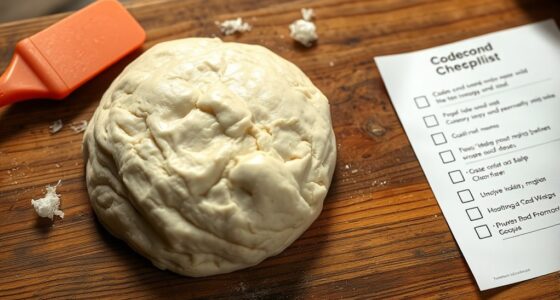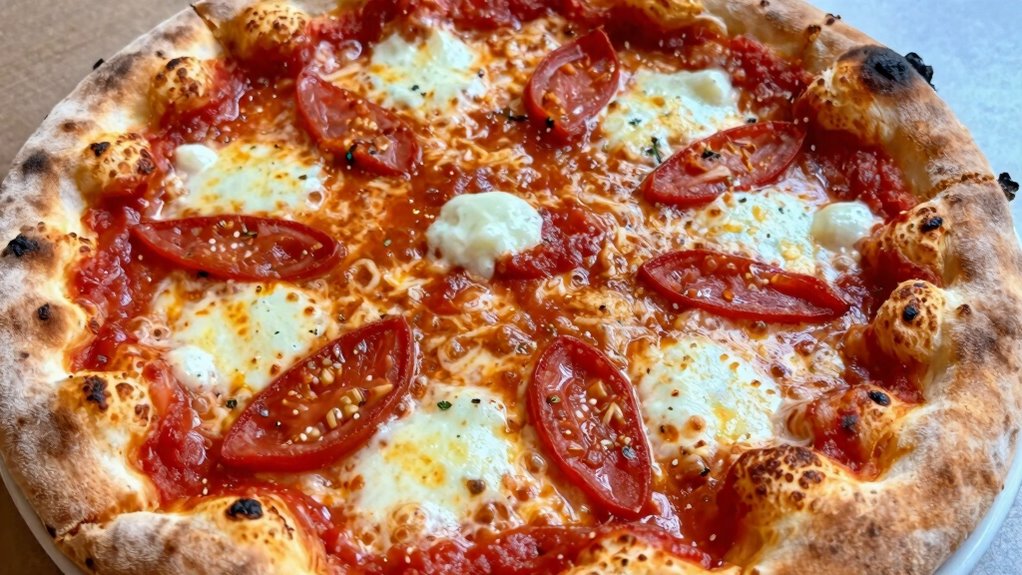

To stop sauce from sliding off your pizza’s center, start with a well-baked, sturdy crust that can hold toppings. Use a thick sauce by simmering and adding tomato paste to reduce moisture, then spread gently using the back of a spoon, keeping it moderate and avoiding the edges. Bake at a high temperature to set everything quickly. For more tips on keeping your pizza perfect, see what else you can do.
Open a free Amazon Business account
Business pricing, bulk buying and tax-exempt orders.
As an affiliate, we earn on qualifying purchases.
Key Takeaways
- Use a thick, well-reduced sauce to prevent it from sliding during baking.
- Spread the sauce evenly, leaving a border around the crust edges to contain it.
- Bake the crust fully beforehand and allow it to cool slightly before adding sauce.
- Apply toppings after the sauce has set to minimize weight and movement.
- Bake at a high temperature (around 475°F) to quickly set the sauce and prevent sliding.
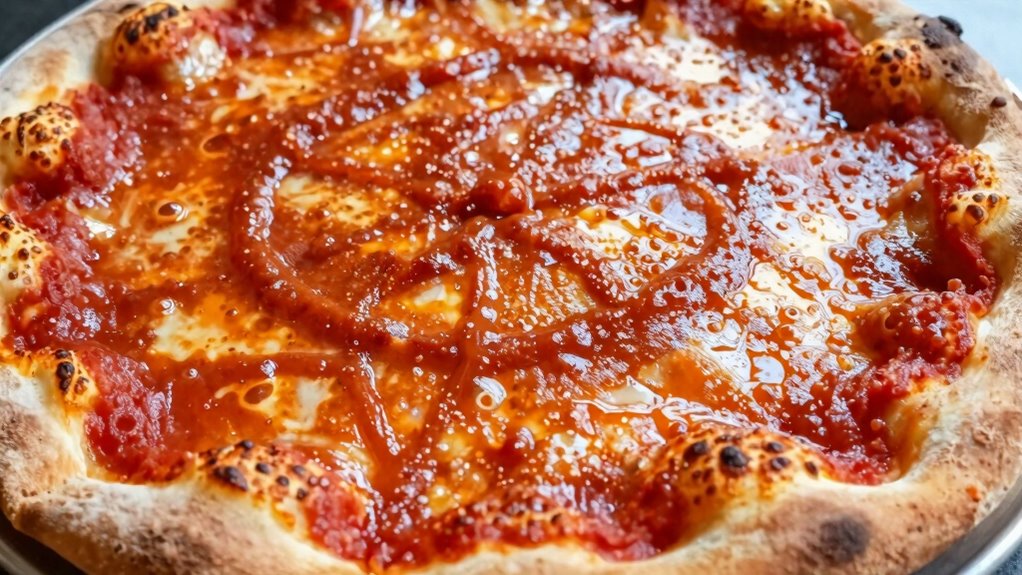
If you’ve ever made a homemade pizza, you know that uneven sauce distribution can be frustrating, especially when the sauce slides off the center. To prevent this, start with your pizza crust. A well-prepared crust provides a sturdy base that can support the weight and moisture of the sauce. If your crust is too thin or not baked enough, it may not hold the sauce well, causing it to slide off. Use a thicker crust or bake it a bit longer before adding the toppings to create a solid foundation. Additionally, ensure your crust has cooled slightly after baking so it doesn’t become overly soft when you add the sauce, which can lead to sliding.
Next, pay close attention to your sauce consistency. If the sauce is too runny, it’s more likely to slide off the pizza. You want a sauce that’s thick enough to stay put but not so dense that it becomes difficult to spread. To achieve the right consistency, simmer the sauce longer to reduce excess moisture or add a small amount of tomato paste to thicken it up. Using a spoon or ladle to spread the sauce gently and evenly across the crust helps maintain control. Applying the sauce in a circular motion from the center outward allows you to distribute it more evenly without pooling or dripping.
Ensure your sauce is thick enough to stay put, but easy to spread evenly for a perfect homemade pizza.
The way you spread the sauce also makes a difference. Instead of pouring it directly from the ladle, use the back of the spoon to gently spread the sauce, leaving a small border around the edge of the crust. This prevents the sauce from reaching the edges, which can cause sliding and messiness during baking. An even, moderate layer of sauce is key—too much sauce, even if it’s thick, can become heavy and slide off as it heats. Conversely, too little can lead to dry bites and uneven flavor. Find that sweet spot where the sauce covers the pizza evenly without overwhelming the crust.
Finally, consider the baking process. Bake the pizza at the right temperature—usually around 475°F (245°C)—to quickly set the sauce and crust. If you’re adding toppings after the sauce has set, it minimizes the chance of sliding. Also, avoid adding too many toppings that could weigh down the sauce, making it more prone to sliding. Proper content structure and the right baking techniques are essential for ensuring the sauce stays where it belongs—firmly on your pizza, ready to enjoy in every flavorful slice.
As an affiliate, we earn on qualifying purchases.
Frequently Asked Questions
What Types of Sauces Are Best for Preventing Sliding?
You should choose thicker sauces like tomato paste-based or creamy options, as their viscosity helps prevent sliding. These sauces also pair well with various flavor combinations, enhancing your pizza experience. Thin sauces tend to slide easily, so opting for a sauce with good thickness guarantees it stays in place. By balancing sauce thickness and flavor, you can enjoy a well-coated pizza that stays appealing and delicious with every bite.
Does the Type of Cheese Affect Sauce Stability?
Think of cheese melting as the glue binding your pizza’s toppings. The type of cheese definitely affects sauce adhesion; cheeses like mozzarella melt smoothly, creating a gooey layer that holds sauce better, while crumblier cheeses can cause sliding. Choosing a cheese with good melting properties helps secure the sauce in place, preventing sliding and ensuring each bite is flavorful and perfectly balanced.
How Does Oven Temperature Influence Sauce Sliding?
Oven heat considerably affects sauce sliding because higher temperatures cause the sauce viscosity to decrease, making it runnier and more likely to slide off. To prevent this, you should bake your pizza at a moderate oven heat, around 450°F (232°C), which helps maintain the sauce’s thickness. Too high heat can melt the sauce too quickly, increasing the risk of sliding, so aim for a balanced temperature for better sauce stability.
Can Different Crust Styles Help Keep the Sauce in Place?
Yes, choosing different crust styles can help keep sauce in place. Thicker crusts, like pan or deep-dish, provide a sturdy base that prevents sauce from sliding. Thin crusts may need careful baking techniques, such as pre-baking or using less sauce, to avoid sliding. Experimenting with crust thickness and adjusting your baking methods can improve sauce retention, resulting in a more enjoyable, mess-free pizza experience.
Are There Specific Tools to Apply Sauce More Evenly?
Think of applying sauce like painting a canvas—you want even strokes for perfect coverage. Using a silicone spatula or a squeeze bottle helps with precise sauce spread and topping distribution. These tools let you control the amount and placement, avoiding uneven patches or sliding sauce. With a steady hand and the right tools, you’ll achieve a beautifully balanced pizza, where every slice boasts just the right amount of sauce and toppings.
As an affiliate, we earn on qualifying purchases.
Conclusion
Think of your pizza as a tiny world where each ingredient plays a crucial role. When the sauce stays centered, it’s like a steady heart, keeping the whole creation alive and flavorful. By following these tips, you’re not just preventing sliding; you’re nurturing harmony on your plate. So, take control and balance your toppings—because a well-tended pizza is like a well-tuned symphony, satisfying every craving with perfect unity.
As an affiliate, we earn on qualifying purchases.

Etekcity Infrared Thermometer Laser Temperature Gun 774
- Versatile Measurement Applications: Measures objects indoors and outdoors
- High Accuracy: 12:1 distance-to-spot ratio for precise readings
- Easy to Use: Quick temperature readings on bright LCD display
As an affiliate, we earn on qualifying purchases.
As an affiliate, we earn on qualifying purchases.
NFL season / tailgating Picks
team gear
As an affiliate, we earn on qualifying purchases.