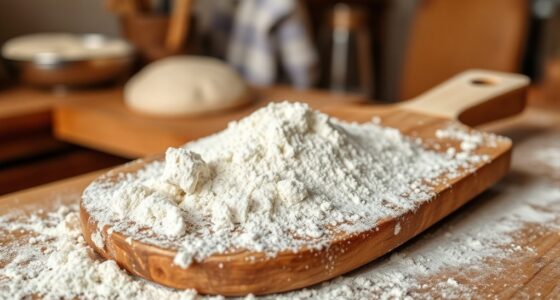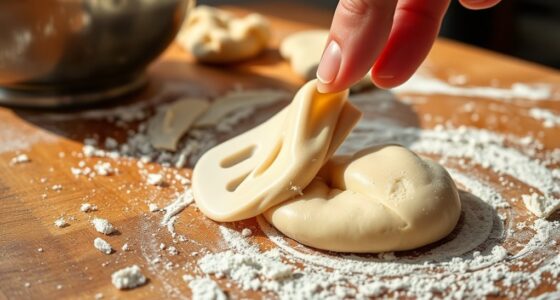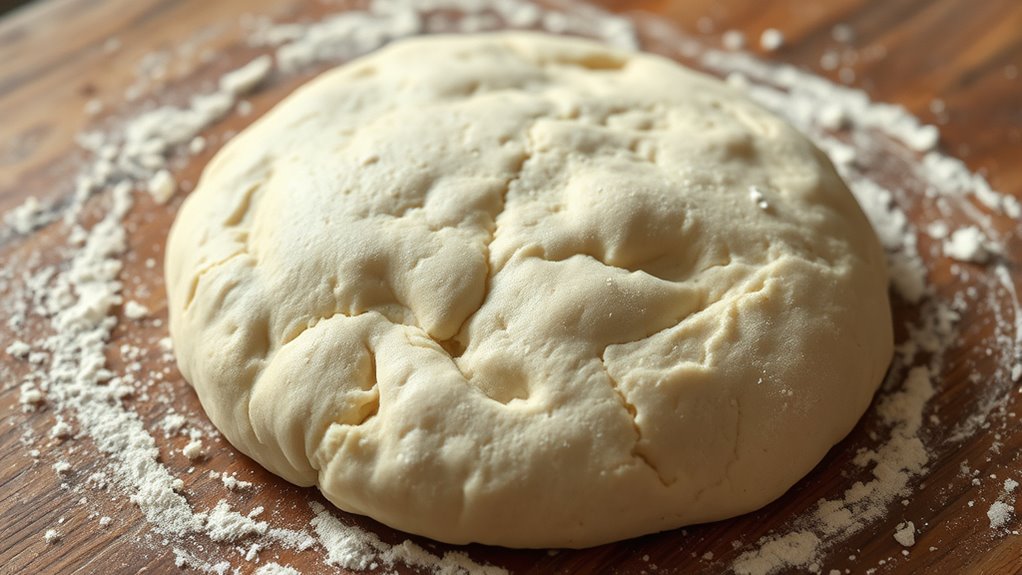

If your pizza isn’t rising, it’s likely because your yeast or sourdough starter isn’t active enough, or you’ve made proofing mistakes. Make sure your starter is bubbly, doubled in size, and fresh before using. Warmth and proper hydration are essential, so keep your dough in a warm environment and proof it correctly—usually 1-2 hours for the first rise. Continuing to check these factors can help you fix the issue and get perfect rise.
Key Takeaways
- Inactive or old starter reduces yeast activity, preventing proper dough rise.
- Improper proofing time, either too short or too long, can hinder gas development.
- Incorrect dough hydration or temperature slows yeast fermentation and gluten development.
- Using a cold environment or not maintaining warmth can stall yeast activity.
- Handling and feeding the starter improperly weakens yeast health and dough leavening ability.
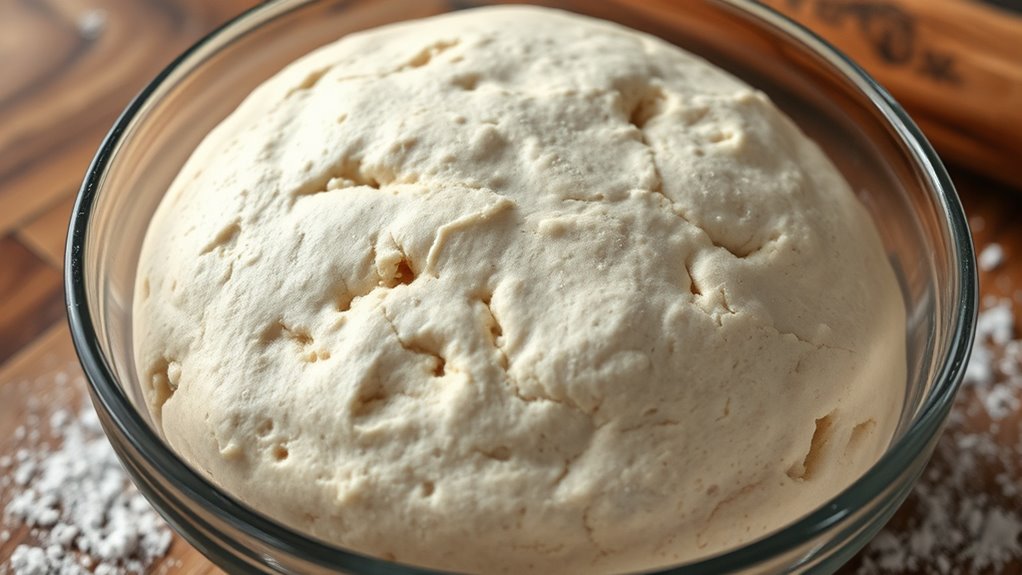
If your pizza dough isn’t rising, the problem often comes down to how you handle the ingredients or the environment. One of the main factors is starter fermentation, which is how your yeast or sourdough starter processes the sugars in the dough to produce carbon dioxide. If fermentation isn’t happening properly, your dough won’t develop the necessary rise. This can happen if your starter is too old, inactive, or improperly fed. Making sure your starter is bubbly, active, and has doubled in size before mixing it into your dough is essential. If it’s sluggish or flat, it won’t produce enough gas to lift the dough. Additionally, dough hydration plays an important role; dough that’s too dry or too wet can hinder yeast activity. The right dough hydration creates an environment where yeast can thrive, producing the carbon dioxide needed for proper rise. Too much water can dilute the yeast’s environment, slowing fermentation, while too little can make the dough tough and resistant to expansion.
Temperature also impacts starter fermentation and dough rising. Yeast is most active in warm environments, around 75-85°F (24-29°C). If your kitchen is too cold, fermentation slows or stalls altogether. Conversely, if it’s too hot, yeast may become overactive initially but then die off, leading to poor rise. Covering your dough with a damp cloth or plastic wrap helps maintain consistent warmth and humidity, encouraging steady fermentation. Pay attention to dough hydration levels—if your dough feels stiff and difficult to knead, it may need a bit more water. Conversely, if it’s sticky and slack, reducing hydration slightly can improve structure and rise.
Another common mistake involves proofing times. Rushing the process can prevent proper gluten development and yeast activity, resulting in a dense crust. Give your dough enough time to ferment fully—usually, a minimum of 1 to 2 hours for the first rise, and longer if you’re doing a slow fermentation in the fridge. Proper proofing ensures that yeast has enough time to produce enough gas, which creates the airy structure you want in your crust. Underproofed dough will feel dense and won’t rise well in the oven. Also, make sure your dough isn’t overproofed; if it’s left too long, the yeast can exhaust their food supply, leading to a collapse during baking.
Frequently Asked Questions
Can I Use Alternative Leavening Agents Instead of Yeast?
Yes, you can use alternative leavening agents instead of yeast. Substituting baking powder works well for quick rises, but you’ll need to adjust the recipe since it reacts immediately. Using a sourdough starter is another great option, providing natural fermentation and flavor. Keep in mind, sourdough takes longer to rise, so plan accordingly. Both methods can produce delicious, leavened pizza without traditional yeast.
How Does Altitude Affect Pizza Dough Rising?
Did you know that at high altitudes, dough can rise up to 25% faster? During altitude baking, the lower air pressure causes gases in the dough to expand more quickly, affecting dough density. You should adjust your recipe by decreasing yeast and increasing liquids to prevent over-proofing. Keep an eye on your dough, and don’t be afraid to experiment to get the perfect rise at your altitude.
Is It Okay to Reuse Old Yeast?
Reusing old yeast isn’t usually recommended because yeast freshness declines over time, which can affect your dough’s rise. If you decide to reuse it, guarantee proper storage methods—keep it in an airtight container in the fridge or freezer to preserve activity. Always check for signs of spoilage, like a sour smell or no bubbling during proofing. Fresh yeast ensures your pizza dough rises perfectly every time.
What Are Signs of Dead Yeast?
You’ll know your yeast is dead if it doesn’t foam or bubble when you activate it, indicating poor yeast freshness. Also, if your dough temperature is too cold or too hot, yeast activity slows or stops. Check for a sour or off smell, which can signal dead yeast. Fresh yeast should produce a lively foam, and maintaining proper dough temperature helps guarantee active yeast. If these signs appear, it’s time to get new yeast.
How Do I Troubleshoot Uneven Rising?
If your dough’s rising unevenly, don’t worry—it’s usually due to inconsistent temperature control. Check your dough’s texture; if parts are denser, it might be too cold or warm in spots. To fix this, make certain uniform warmth during proofing, like using a warm, draft-free spot or covering it with a damp cloth. Regularly rotating the dough helps maintain even rising, giving you a perfect, airy crust every time.
Conclusion
If your pizza isn’t rising, it’s tempting to blame your yeast, but sometimes it’s the proofing process. Some say cold temperatures or overproofing kill yeast activity, preventing dough from rising. remarkably, research suggests that a slight delay in proofing allows yeast to develop stronger gluten, resulting in better rise. So, next time your dough stalls, consider adjusting your proofing environment instead of just blaming the yeast—sometimes, patience and proper conditions make all the difference.